



LED Signage for Business: Complete Guide 2026
Modern businesses face unprecedented competition for customer attention. In this environment, led signage for business has emerged as one of the most powerful tools for visibility, brand communication, and customer engagement. Unlike traditional static signage, LED technology offers dynamic content capabilities, superior brightness, and remarkable energy efficiency that can transform how businesses connect with their audiences. Whether you're operating a retail storefront, corporate facility, construction site, or pharmaceutical outlet, understanding the strategic advantages of LED signage can significantly impact your bottom line.
The Technology Behind LED Signage Solutions
LED (Light Emitting Diode) technology has revolutionised the signage industry through continuous innovation. Modern LED displays utilise semiconductor components that emit light when electrical current passes through them, creating vibrant, consistent illumination that far surpasses conventional lighting methods.
Understanding Pixel Pitch and Resolution
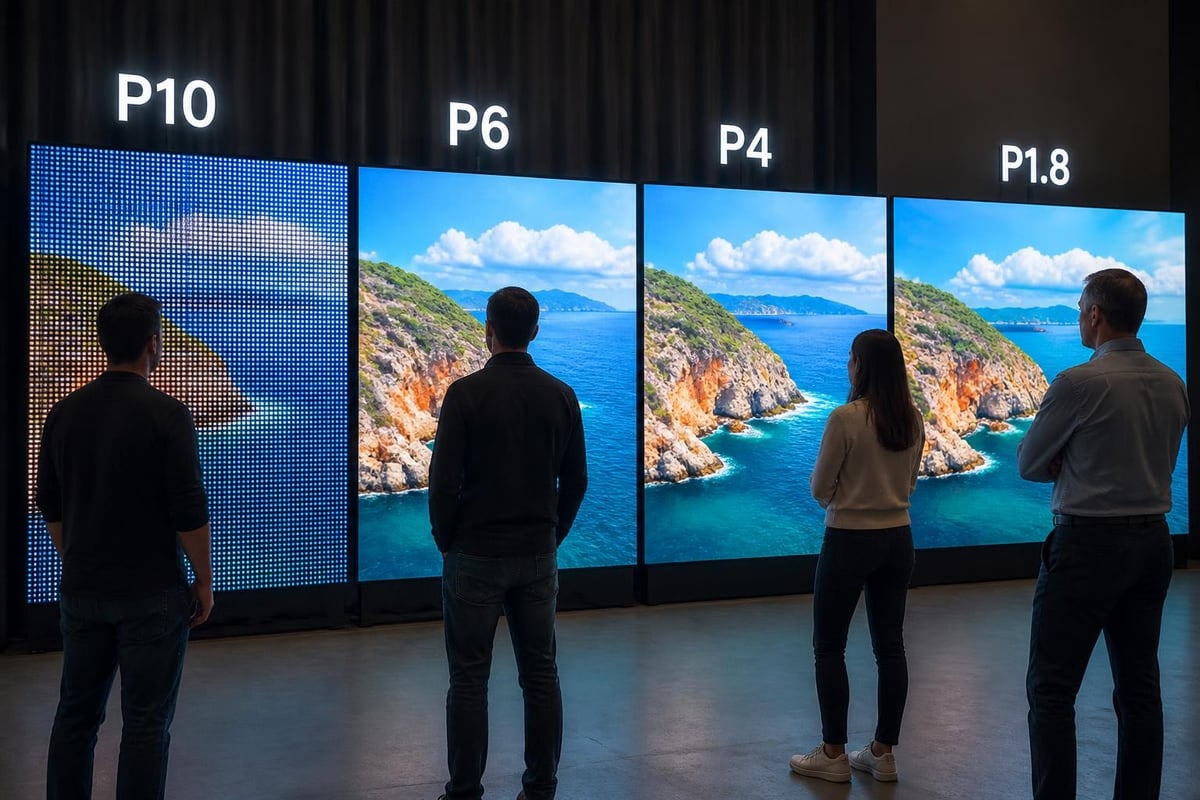
The quality of led signage for business depends heavily on pixel pitch, which measures the distance between individual LED clusters. Smaller pixel pitches produce higher resolution displays, essential for close viewing distances. Businesses must balance viewing distance with budget considerations when selecting appropriate specifications.
Key pixel pitch considerations:
- P10 displays: Ideal for outdoor viewing from 10+ metres, cost-effective for large-scale installations
- P8 to P6: Suitable for medium-distance viewing, balanced performance for most commercial applications
- P4 to P2: High-resolution displays for close viewing, perfect for indoor retail environments
- P1.8 and below: Ultra-high definition for premium indoor applications requiring exceptional clarity
The Digital Signage range spans from P10 to P1.8, providing flexible solutions for both internal and external applications depending on your specific viewing requirements and budget parameters.
Brightness and Environmental Adaptability
Outdoor led signage for business requires significantly higher brightness levels than indoor displays. Measured in nits (candelas per square metre), brightness determines visibility under varying light conditions. According to research on energy consumption and light pollution, properly calibrated LED signage can maintain visibility whilst minimising unnecessary energy use and light pollution through intelligent brightness management.
| Environment | Recommended Brightness | Typical Applications |
|---|---|---|
| Indoor controlled lighting | 500-1,500 nits | Reception areas, retail interiors |
| Indoor ambient light | 1,500-2,500 nits | Shopping centres, exhibition spaces |
| Outdoor shaded | 2,500-5,000 nits | Covered walkways, building facades |
| Outdoor direct sunlight | 5,000-10,000 nits | Roadside displays, parking areas |
Modern LED systems incorporate automatic brightness adjustment sensors that respond to ambient light conditions, ensuring optimal visibility whilst conserving energy during low-light periods.
Strategic Advantages for Business Operations
Implementing led signage for business delivers measurable benefits across multiple operational dimensions. Understanding these advantages helps justify the investment and maximise return potential.
Enhanced Customer Engagement
Dynamic content capabilities allow businesses to deliver targeted messages at optimal times. Restaurants can promote breakfast items during morning hours, switch to lunch specials at midday, and highlight dinner offerings in the evening, all automatically.
Research demonstrates that moving content captures attention 400% more effectively than static signage. This engagement translates directly into foot traffic and sales conversions for retail environments.
- Real-time content updates: Instantly modify pricing, promotions, or product information without printing costs
- Scheduled messaging: Automate content rotation based on time, day, or seasonal factors
- Interactive capabilities: Some systems support touch interaction or mobile device integration
- Multi-zone displays: Present different information simultaneously across various screen sections
Operational Cost Efficiency
Whilst initial investment in led signage for business exceeds traditional alternatives, the total cost of ownership often proves significantly lower. LED technology consumes 60-80% less energy than neon or fluorescent alternatives, as highlighted in AVIXA's comparison of LED versus traditional signage.
Long-term cost benefits include:
- Reduced electricity consumption lowering monthly operational expenses
- Extended lifespan (50,000-100,000 hours) minimising replacement frequency
- Eliminated printing costs for updated messaging
- Lower maintenance requirements due to solid-state construction
- Decreased labour costs for manual sign changes
For businesses exploring the cost considerations of commercial signage, LED solutions often provide superior return on investment when evaluated over their full operational lifespan.

Industry-Specific Applications and Benefits
Different sectors leverage led signage for business in unique ways, each maximising the technology's capabilities for their specific operational requirements.
Retail and Commercial Environments
Retail businesses utilise LED signage to create immersive shopping experiences that drive purchasing decisions. Window displays featuring LED components attract passerby attention, whilst in-store displays guide customers and highlight promotions.
South African shopping centres increasingly incorporate LED directories and wayfinding systems that enhance customer navigation whilst reducing staff enquiries. Understanding signage investment for business reveals how retailers calculate ROI based on increased foot traffic and sales conversions.
Corporate and Professional Services
Corporate environments deploy led signage for business to reinforce brand identity and communicate with visitors. Reception areas feature LED displays showcasing company achievements, news, and welcome messages for specific clients or guests.
Professional service firms use LED signage for:
- Building directory systems with automatic updates when tenants change
- Conference room booking displays integrated with scheduling software
- Emergency notification systems capable of immediate alerts
- Brand storytelling through curated visual content
Construction and Industrial Applications
Construction sites benefit from LED signage that communicates safety information, project timelines, and branding simultaneously. Unlike printed banners that deteriorate in weather conditions, LED displays maintain clarity and functionality.
Warehouse safety signs increasingly incorporate LED technology to ensure critical safety information remains visible under all conditions, particularly in 24-hour operations.
Pharmaceutical and Healthcare Settings
Pharmaceutical facilities require signage that meets stringent compliance standards whilst maintaining professional aesthetics. LED displays provide clean, modern communication that aligns with healthcare sector expectations.
| Sector | Primary Application | Key Benefit |
|---|---|---|
| Retail | Promotional displays, pricing | Increased sales conversion |
| Corporate | Reception, directories | Enhanced brand experience |
| Construction | Site information, safety | Improved safety compliance |
| Pharmaceutical | Wayfinding, compliance | Professional presentation |
Regulatory Compliance and Installation Considerations
Successful implementation of led signage for business requires careful attention to regulatory requirements and technical installation factors that ensure optimal performance and legal compliance.
Understanding Local Regulations
South African municipalities enforce specific regulations regarding signage dimensions, brightness levels, and placement. Signage regulations and permits in South Africa vary by jurisdiction, making professional guidance essential for compliance.
The International Sign Association's overview of sign lighting provides comprehensive guidance on illumination standards, though local regulations take precedence. Key compliance areas include:
- Maximum brightness levels by zone and time period
- Setback requirements from property boundaries
- Height restrictions for different property types
- Content restrictions (flashing rates, animation speed)
- Energy efficiency standards and certifications
Accessibility and Inclusive Design
Modern led signage for business must accommodate diverse audiences, including individuals with visual impairments. Canada's accessibility standard for signage defines lighting and contrast requirements that ensure LED displays remain legible and inclusive.
Accessibility considerations include:
- Minimum colour contrast ratios between text and background
- Appropriate pixel pitch for viewing distances
- Font selection and sizing for readability
- Ambient light adjustment to prevent glare
- Motion sensitivity for animation and transitions
Professional signage installation ensures these technical requirements are met whilst optimising visual impact.

Content Strategy and Management
Investing in led signage for business technology represents only half the equation; effective content strategy determines actual business impact and return on investment.
Developing Effective Visual Content
LED displays demand content specifically designed for their unique characteristics. Unlike printed materials, LED signage benefits from movement, colour transitions, and temporal sequencing that engage viewers differently.
- Message hierarchy: Prioritise primary information in the first 3 seconds of viewer attention
- Colour psychology: Leverage colour psychology in signage design to evoke desired emotional responses
- Animation purposefulness: Use motion to direct attention, not merely for decoration
- Readability optimisation: Ensure text remains legible at intended viewing distances
- Brand consistency: Maintain visual alignment with broader brand identity
Content Management Systems
Modern led signage for business operates through sophisticated content management platforms that enable remote updates, scheduling, and performance analytics. Cloud-based systems allow multi-location businesses to maintain consistent messaging whilst accommodating local variations.
Essential CMS features include:
- Drag-and-drop content creation interfaces
- Template libraries for consistent design
- Scheduling capabilities for time-based content
- User permission management for large organisations
- Performance analytics tracking viewer engagement
- Emergency override for urgent communications
Businesses exploring custom signage solutions should evaluate content management capabilities as thoroughly as hardware specifications, as software usability significantly impacts long-term value realisation.
Maintenance and Longevity Planning
Maximising the lifespan and performance of led signage for business requires proactive maintenance strategies and understanding of component lifecycle patterns.
Preventive Maintenance Protocols
LED displays require minimal maintenance compared to traditional signage, but systematic care extends operational life and prevents premature failures. Signage maintenance tips for long-term performance provide comprehensive guidance for various signage types.
Recommended maintenance schedule:
| Frequency | Activity | Purpose |
|---|---|---|
| Weekly | Visual inspection | Identify pixel failures or content issues |
| Monthly | External cleaning | Maintain brightness and visibility |
| Quarterly | Connection verification | Prevent electrical failures |
| Bi-annually | Professional calibration | Ensure colour accuracy and brightness |
| Annually | Comprehensive system check | Assess component condition and longevity |
Environmental factors significantly impact maintenance requirements. Coastal locations experience accelerated corrosion requiring more frequent inspections, whilst dusty industrial environments necessitate regular cleaning to maintain brightness levels.
Component Replacement and Upgrades
LED technology continues advancing rapidly, creating opportunities for system upgrades that enhance performance without complete replacement. Modular designs allow partial component updates, extending useful life whilst incorporating newer capabilities.
Understanding when repair makes financial sense versus replacement requires professional assessment. Factors include component availability, labour costs versus new system pricing, and performance improvements offered by current technology.
Future Trends and Emerging Technologies
The led signage for business landscape continues evolving, with emerging technologies promising enhanced capabilities and new applications that further increase strategic value for commercial operations.
Integration with Smart City Infrastructure
LED signage increasingly connects with broader smart city ecosystems, sharing data and responding to environmental conditions. Traffic patterns, weather conditions, and local events trigger automatic content adjustments that maintain relevance and engagement.
Emerging integration capabilities:
- Real-time traffic data integration for directional messaging
- Weather-responsive content adaptation
- Social media feed integration for user-generated content
- Mobile device interaction through NFC or QR technologies
- AI-powered content optimisation based on viewer demographics
Sustainability and Environmental Considerations
Environmental consciousness drives innovation in LED technology, with manufacturers developing solutions that minimise ecological impact whilst maintaining performance. Solar-powered LED displays eliminate grid dependence for certain applications, whilst recyclable component designs reduce waste.
For businesses prioritising signage solutions across industries, environmental credentials increasingly influence purchasing decisions as corporate sustainability commitments expand.
Advanced Display Technologies
MicroLED and transparent LED technologies represent the next evolution in display capabilities. MicroLED offers superior brightness and energy efficiency compared to current SMD LED technology, whilst transparent displays create unique aesthetic opportunities for retail environments.
The benefits of LED signage continue expanding as technology advances, making periodic evaluation of new capabilities valuable for businesses seeking competitive advantages.
Selecting the Right LED Signage Partner
Successful led signage for business implementation depends heavily on partnering with experienced manufacturers who understand both technology and business objectives. Evaluation criteria extend beyond pricing to encompass technical expertise, support capabilities, and strategic guidance.
Critical Partner Selection Factors
Professional signage manufacturers bring invaluable expertise to specification development, ensuring solutions align with specific business requirements rather than simply offering standard products. For businesses comparing signage companies in South Africa, thorough due diligence protects against costly mistakes.
- Technical expertise: Deep understanding of LED technology, installation requirements, and regulatory compliance
- Customisation capabilities: Ability to develop bespoke solutions addressing unique business needs
- National footprint: Service coverage ensuring support availability across operational locations
- Industry experience: Proven track record in your specific sector with relevant case studies
- Support infrastructure: Comprehensive warranty terms and responsive maintenance services
Evaluating Proposals and Specifications
LED signage proposals vary significantly in detail and comprehensiveness. Sophisticated buyers examine specifications carefully, asking clarifying questions about components, warranties, and support terms.
Essential specification elements include:
- Detailed component specifications (LED chip manufacturer, power supply brand, controller type)
- Brightness ratings with maintenance curves showing degradation over time
- Energy consumption calculations with operational cost projections
- Warranty terms specifying coverage periods for different components
- Installation methodology and timeline
- Training provisions for content management systems
- Ongoing support and maintenance options
Transparent communication about how signage work is executed from concept through installation demonstrates professionalism and reduces implementation risk.
Measuring Return on Investment
Justifying led signage for business expenditure requires clear metrics that demonstrate tangible business impact beyond subjective aesthetic improvements.
Quantifiable Performance Indicators
Establishing baseline measurements before implementation enables accurate impact assessment. Retail businesses track foot traffic, conversion rates, and average transaction values, whilst corporate environments measure visitor satisfaction and brand perception metrics.
Key performance metrics include:
| Metric Category | Specific Measurements | Assessment Method |
|---|---|---|
| Customer engagement | Dwell time, approach rate | Video analytics, sensors |
| Sales impact | Conversion rate, basket size | Point-of-sale data analysis |
| Operational efficiency | Staff enquiry reduction | Service desk logging |
| Brand awareness | Recall rates, perception scores | Customer surveys |
| Cost savings | Energy reduction, maintenance costs | Utility bill comparison |
Calculating Payback Periods
LED signage investment payback periods typically range from 18 months to 4 years depending on application intensity and energy costs. Businesses using displays extensively for promotional purposes realise faster returns through eliminated printing costs and increased sales.
Comprehensive ROI calculations incorporate both hard savings (energy, maintenance, printing) and soft benefits (brand enhancement, customer satisfaction) that contribute to competitive positioning even when difficult to quantify precisely.
The LED signage versus traditional signs comparison provides detailed analysis of cost factors and performance differences that inform investment decisions.
LED signage represents a powerful investment for businesses seeking enhanced visibility, operational efficiency, and customer engagement in 2026's competitive marketplace. By understanding technology fundamentals, regulatory requirements, content strategy, and partner selection criteria, organisations can implement solutions that deliver measurable returns whilst positioning for future growth. Signs4SA combines technical expertise with comprehensive industry experience to develop bespoke LED signage solutions tailored to your specific business requirements, supported by national service coverage and a commitment to quality that has made us one of South Africa's fastest-growing signage manufacturers.