



Safety Sign Manufacturers: Expert Guide to Production
Safety signage serves as the frontline defence in protecting workers, visitors, and the public from workplace hazards across industries. Behind every effective warning sign, prohibition notice, or emergency exit marker stands a specialised manufacturer combining technical expertise, regulatory knowledge, and advanced production capabilities. Understanding how safety sign manufacturers operate, the standards they must meet, and the technologies they employ is essential for businesses seeking reliable, compliant signage solutions that safeguard people and meet legal obligations.
The Critical Role of Safety Sign Manufacturers
Safety sign manufacturers occupy a unique position in the industrial safety ecosystem. These specialised companies transform regulatory requirements into tangible products that communicate vital hazard information instantly and universally. The responsibility extends far beyond simple printing.
Professional manufacturers must balance multiple demands simultaneously:
- Compliance with national and international safety standards
- Durability specifications for harsh environments
- Visibility requirements across varying lighting conditions
- Material compatibility with specific workplace hazards
The pharmaceutical sector, for example, requires signage that withstands frequent sanitisation without degrading. Construction environments demand construction warning signs robust enough to endure exposure to weather, dust, and physical impact whilst maintaining legibility throughout extended project timelines.
Manufacturing Capabilities That Define Industry Leaders
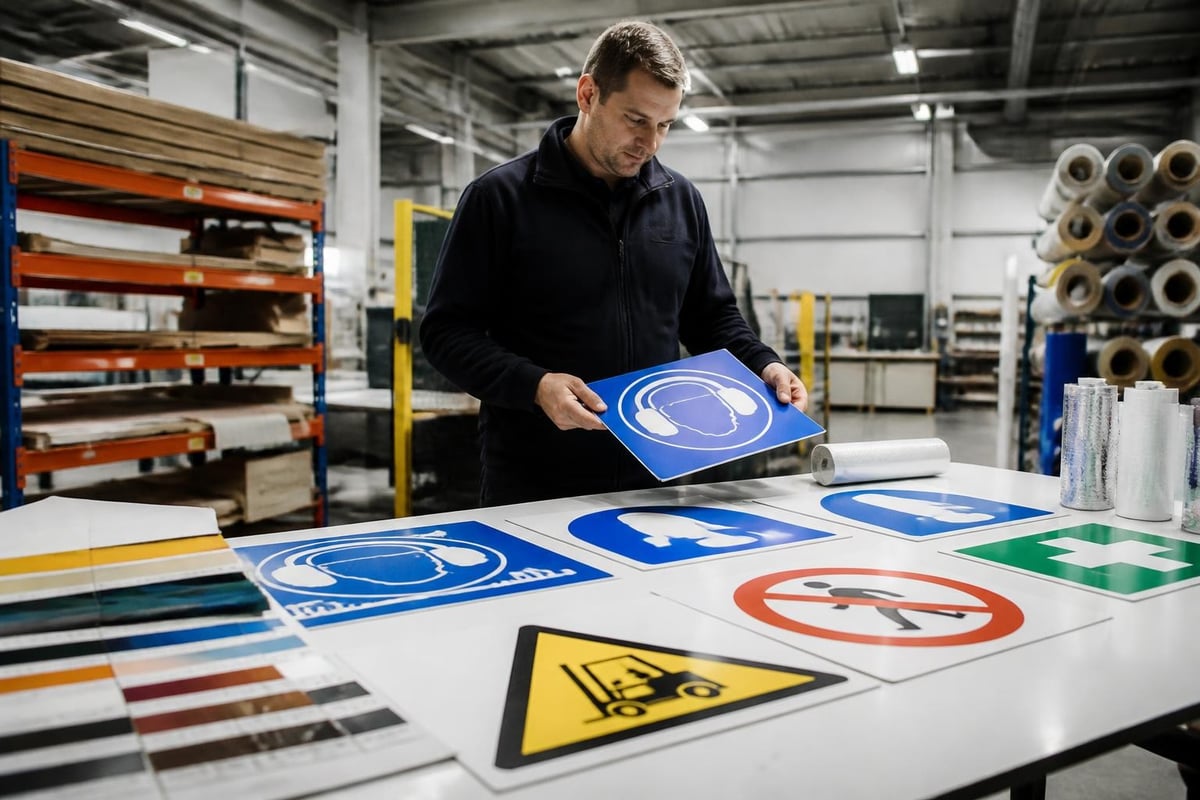
The distinction between basic sign printers and professional safety sign manufacturers lies in comprehensive production capabilities. Leading manufacturers invest in technologies that ensure consistency, compliance, and durability across thousands of units.
Modern production facilities typically incorporate:
- Digital printing systems for photographic-quality graphics and complex colour gradients
- Screen printing equipment for high-volume runs with exceptional UV resistance
- Vinyl cutting and application stations for reflective and specialty materials
- Substrate fabrication tools for aluminium, dibond, and composite materials
- Finishing equipment including laminators, routers, and quality inspection stations
This diversified capability allows manufacturers to match production methods to specific application requirements. Reflective safety signage for roadways demands different manufacturing processes than indoor prohibition signs for retail environments.
Materials and Substrate Selection
The foundation of any durable safety sign begins with appropriate substrate selection. Safety sign manufacturers maintain extensive inventories of materials, each engineered for specific environmental conditions and longevity requirements.
| Material Type | Typical Lifespan | Best Applications | Key Advantages |
|---|---|---|---|
| Aluminium | 10-15 years | Outdoor, industrial | Corrosion-resistant, rigid, recyclable |
| Dibond (ACM) | 8-12 years | Exterior building signage | Lightweight, flat surface, weather-resistant |
| Rigid PVC | 5-8 years | Indoor, light outdoor | Cost-effective, versatile, easily routed |
| Corflute | 1-3 years | Temporary installations | Inexpensive, lightweight, disposable |
| Stainless Steel | 15-20 years | Pharmaceutical, food processing | Hygiene-compatible, chemical-resistant |
Substrate thickness matters significantly in professional manufacturing. Standard safety signage typically ranges from 1.6mm dibond for interior applications to 3mm aluminium for demanding outdoor or industrial settings. The U.S. Department of Justice accessibility standards specify particular tactile and Braille requirements that influence material selection for certain sign types.
Reflective Materials and Visibility Technology
Night-time visibility represents a critical consideration, particularly for traffic control and emergency signage. Retroreflective sheeting technology has advanced substantially, with safety sign manufacturers now offering multiple grades of reflective performance.
Reflective material classifications include:
- Engineer Grade (Type I): Suitable for low-traffic areas and general parking
- High-Intensity Grade (Type III): Standard for most highway applications
- Diamond Grade (Type IV): Maximum visibility for critical warning situations
The FHWA retroreflectivity standards provide comprehensive guidance on performance requirements, helping manufacturers specify appropriate materials for traffic and roadway safety applications. These materials incorporate microscopic glass beads or prismatic technology that returns light directly to its source, maximising visibility for drivers and pedestrians.
Regulatory Compliance and Standards
Safety sign manufacturers operate within a complex regulatory landscape where non-compliance carries serious legal and safety implications. Multiple standards bodies govern different aspects of safety signage production and application.
International and National Standards Framework
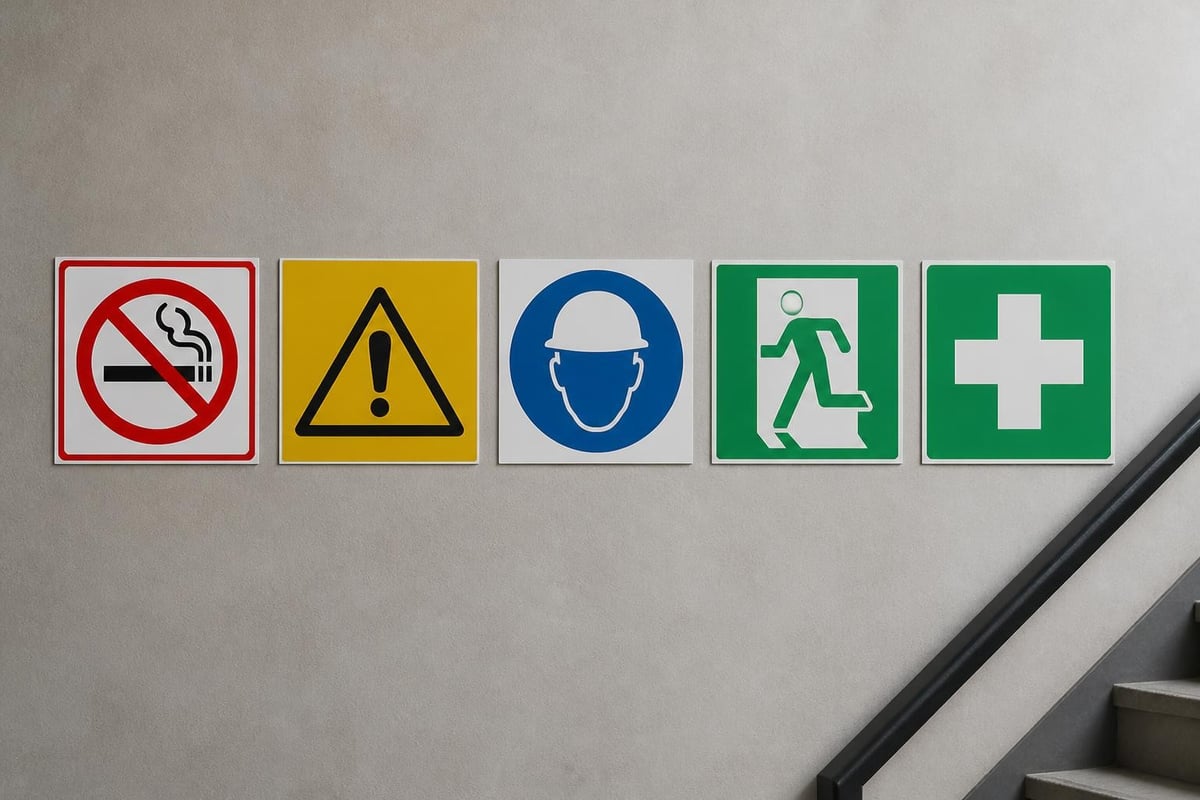
ISO 7010 has emerged as the globally recognised standard for safety signs, establishing consistent symbols, colours, and formats that transcend language barriers. Professional manufacturers maintain current knowledge of this standard alongside regional requirements specific to markets they serve.
In South Africa, the Occupational Health and Safety Act mandates specific signage requirements across various industries. Manufacturers must ensure products meet SANS (South African National Standards) specifications whilst also accommodating clients operating in multiple jurisdictions.
Core compliance areas include:
- Symbol design and proportions
- Colour specifications (Pantone or RAL references)
- Minimum viewing distances
- Mounting height requirements
- Durability and fade resistance
Pharmaceutical facilities require additional compliance with Good Manufacturing Practice (GMP) guidelines, necessitating specialised safety signs manufactured from materials that won't harbour contaminants or degrade under aggressive cleaning protocols.
Production Technologies and Processes
The journey from design concept to finished safety sign involves multiple production stages, each requiring specialised equipment and expertise. Safety sign manufacturers orchestrate these processes to ensure consistency across large production runs whilst maintaining flexibility for custom requirements.
Digital Printing and UV-Cured Inks
Flatbed UV printers have revolutionised safety sign production, enabling manufacturers to print directly onto rigid substrates with exceptional detail and colour accuracy. These systems cure ink instantly using ultraviolet light, producing signage ready for finishing immediately after printing.
This technology offers particular advantages for complex safety signage incorporating photographic hazard illustrations, multiple languages, or site-specific information. The UV-cured inks demonstrate superior fade resistance compared to solvent-based alternatives, maintaining legibility throughout the sign's service life.
Screen Printing for High-Volume Production
Despite digital advances, screen printing remains the preferred method for high-volume production of standardised safety signs. The process delivers unmatched ink density and UV resistance, particularly important for outdoor signage exposed to intense sunlight.
Professional safety sign manufacturers typically maintain extensive screen libraries for common safety symbols, enabling rapid production of compliant signage without setup delays. This approach significantly reduces unit costs for large orders whilst ensuring absolute consistency across thousands of identical signs.
Quality Control and Testing Protocols
Reputable safety sign manufacturers implement rigorous quality assurance processes that verify compliance, durability, and visibility before products leave the facility. These protocols protect both the manufacturer's reputation and the end user's safety.
Physical Testing Procedures
Comprehensive testing regimes evaluate multiple performance characteristics:
- Adhesion testing: Ensures graphics and protective laminates remain bonded under environmental stress
- Weathering simulation: Accelerated UV exposure predicts long-term fade resistance
- Impact resistance: Verifies structural integrity under physical stress
- Retroreflectivity measurement: Confirms reflective materials meet specified performance levels
- Chemical resistance: Tests signage destined for aggressive environments
For illuminated safety signs, manufacturers must conduct electrical safety testing aligned with certification requirements. Resources from UL Solutions for sign manufacturers provide guidance on testing protocols and certification pathways for electric and LED-illuminated signage.
Colour Accuracy and Standardisation
Safety sign effectiveness depends heavily on instant colour recognition. Professional manufacturers employ spectrophotometers to verify colour accuracy against standardised references, ensuring red prohibition signs maintain consistent hue regardless of production batch or substrate type.
This precision becomes particularly critical when manufacturing signage for multi-site organisations requiring perfect visual consistency across locations. Corporate facilities, retail chains, and pharmaceutical operations depend on this standardisation for brand coherence and safety protocol effectiveness.
Customisation Capabilities and Bespoke Solutions
Whilst standardised safety signs satisfy most requirements, many industries demand customised solutions addressing site-specific hazards or operational procedures. Leading safety sign manufacturers maintain design capabilities and production flexibility to deliver bespoke signage without compromising compliance.
| Customisation Type | Applications | Manufacturing Considerations |
|---|---|---|
| Custom symbols | Unique equipment hazards | Must maintain ISO 7010 format principles |
| Multilingual text | International facilities | Requires layout expertise for clarity |
| Site-specific graphics | Exact equipment/location identification | Photographic integration with standard symbols |
| Non-standard sizes | Architectural integration | Material selection for structural integrity |
| Illuminated variants | Low-light environments | Electrical certification requirements |
The construction sector frequently requires customised safety signage incorporating specific contractor information, emergency contact numbers, or project-specific hazard warnings alongside standard safety symbols. Manufacturers experienced in construction applications understand these requirements and can integrate custom elements whilst preserving regulatory compliance.
Sustainability and Environmental Considerations
Modern safety sign manufacturers increasingly address environmental impact throughout the production lifecycle. Material selection, manufacturing processes, and end-of-life disposal all factor into sustainable signage solutions.
Environmental initiatives include:
- Selecting recyclable substrates, particularly aluminium
- Implementing water-based and UV-cured inks with reduced VOC emissions
- Optimising material usage to minimise waste
- Offering recycling programmes for obsolete signage
The EPA's guidance on plastics management provides relevant frameworks for manufacturers addressing sustainability in substrate selection and disposal planning. PVC-free alternatives and biodegradable options are emerging, though durability requirements often necessitate traditional materials for safety-critical applications.
Advanced digital signage technologies offer alternative approaches, with manufacturers now providing Digital Signage solutions that eliminate physical material consumption whilst enabling dynamic content updates. These systems prove particularly valuable in environments where safety messages require regular updates or multilingual rotation.
Selecting the Right Safety Sign Manufacturer
Choosing an appropriate manufacturing partner demands evaluation beyond simple pricing comparisons. The consequences of substandard safety signage extend far beyond financial considerations, potentially exposing organisations to legal liability and, more critically, endangering lives.
Evaluation Criteria for Manufacturing Partners
Professional procurement processes should assess multiple dimensions:
- Regulatory knowledge: Does the manufacturer demonstrate current understanding of applicable standards?
- Production capabilities: Can they manufacture across required materials and technologies?
- Quality systems: Are documented QA procedures and testing protocols in place?
- Design support: Does the manufacturer offer compliance guidance and customisation expertise?
- Lead times and reliability: Can production schedules align with project requirements?
- National coverage: For multi-site organisations, does the manufacturer offer consistent service across regions?
Manufacturers with comprehensive signage solutions capabilities often provide superior value by consolidating multiple signage requirements through a single supplier relationship. This approach ensures visual consistency whilst simplifying procurement and project management.
Industry-Specific Experience
Different sectors present unique challenges that favour manufacturers with relevant specialisation. Pharmaceutical facilities require manufacturers understanding GMP environments and sanitisation-resistant materials. Retail operations prioritise manufacturers experienced in balancing safety compliance with brand aesthetics. Construction projects demand manufacturers capable of rapid turnaround for temporary site signage alongside permanent installations.
Review of manufacturer portfolios and client references provides insight into sector experience. Established manufacturers serving diverse industries typically demonstrate superior problem-solving capabilities when addressing unusual requirements or challenging installation conditions.
Installation and Mounting Considerations
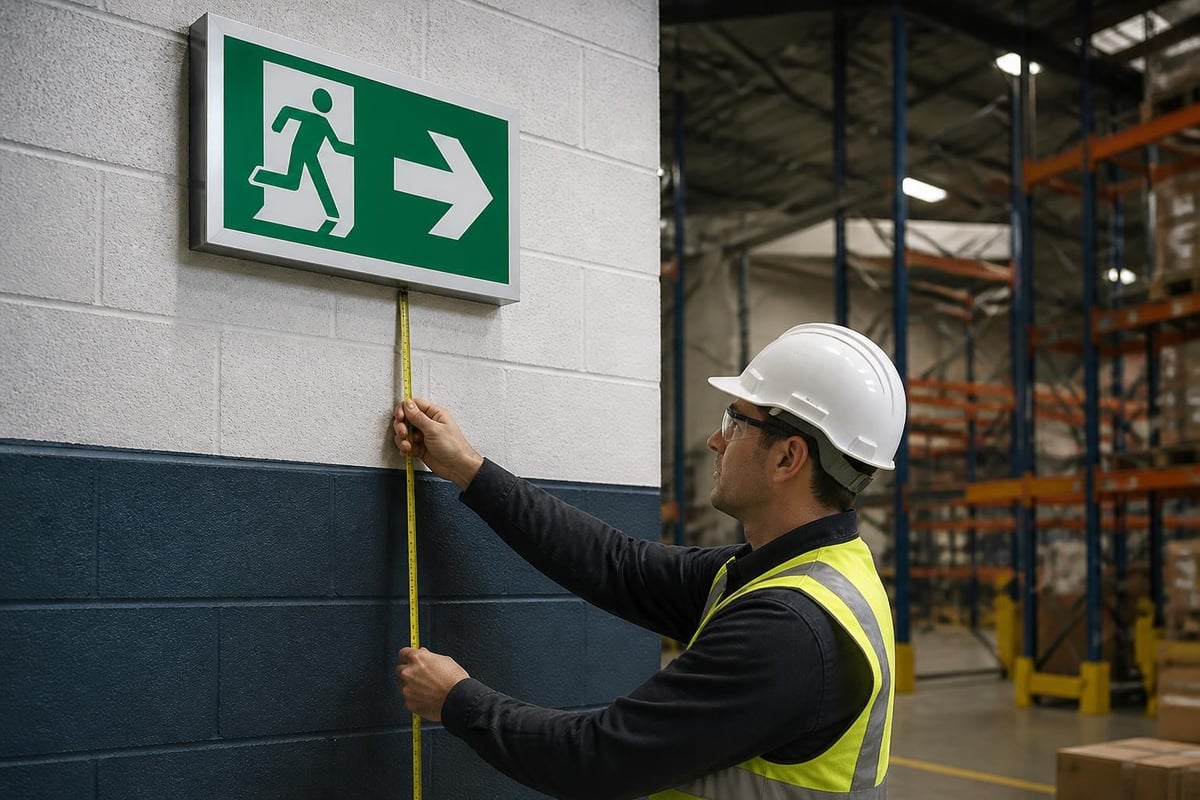
Effective safety signage depends not only on quality manufacturing but also proper installation. Professional safety sign manufacturers provide detailed mounting specifications and, increasingly, installation services ensuring signage performs as intended.
Critical installation factors include:
- Mounting height appropriate to viewing distances
- Adequate illumination for visibility in all operational conditions
- Substrate selection compatible with mounting surface characteristics
- Hardware specifications for wind load and environmental exposure
- Accessibility compliance for tactile and Braille elements
Many manufacturers now offer comprehensive services extending beyond production to include site surveys, installation planning, and professional mounting. This integrated approach ensures manufactured signage achieves intended performance whilst relieving facility managers of technical installation burdens.
Future Trends in Safety Sign Manufacturing
The safety signage industry continues evolving, driven by technological advancement and changing regulatory expectations. Forward-thinking safety sign manufacturers invest in emerging capabilities positioning them to meet future requirements.
Digital Integration and Smart Signage
Internet-connected safety signage enables real-time hazard communication, allowing warnings to activate automatically in response to equipment operation, environmental sensors, or emergency situations. Manufacturers developing these capabilities combine traditional sign manufacturing expertise with electronics integration and software development.
LED technology advancement enables increasingly sophisticated illuminated signage whilst reducing power consumption. Solar-powered options eliminate electrical infrastructure requirements, particularly valuable for remote construction sites or agricultural operations.
Advanced Materials and Nanotechnology
Research into self-cleaning coatings, enhanced retroreflective materials, and degradation-resistant substrates promises longer-lasting signage requiring less frequent replacement. Some manufacturers already incorporate nanotechnology-enhanced coatings that actively repel contaminants, maintaining visibility in dusty or grimy environments.
Photoluminescent materials representing another emerging category provide visibility during power failures without requiring electrical infrastructure. These glow-in-the-dark technologies prove particularly valuable for emergency exit and evacuation route signage.
Partnership Approach to Safety Signage
The relationship between organisations and safety sign manufacturers increasingly resembles ongoing partnerships rather than transactional supplier relationships. Leading manufacturers position themselves as safety signage consultants, offering expertise extending beyond manufacturing to encompass compliance audits, signage master planning, and lifecycle management programmes.
This consultative approach delivers particular value for organisations managing multiple facilities or undergoing expansion. Manufacturers maintaining detailed records of previous orders enable rapid reproduction of established signage schemes for new locations, ensuring perfect consistency whilst accelerating deployment timelines.
Planned replacement programmes offered by proactive manufacturers help organisations maintain signage effectiveness whilst controlling costs through scheduled renewals rather than reactive emergency replacements. These programmes typically include periodic inspections, fade and damage assessments, and phased replacement scheduling aligned with budget cycles.
Selecting capable safety sign manufacturers represents a critical decision impacting workplace safety, regulatory compliance, and long-term operational costs. By prioritising manufacturers demonstrating comprehensive capabilities, regulatory expertise, and quality assurance systems, organisations ensure their safety signage performs its vital protective function throughout extended service life. Whether you require standardised warning signs, customised pharmaceutical compliance signage, or comprehensive safety communication programmes across multiple facilities, Signs4SA combines manufacturing excellence with industry expertise to deliver signage solutions protecting people whilst meeting your specific operational requirements.