


Warehouse Safety Signs: Essential Guide for 2026
Warehouse environments present unique challenges when it comes to workplace safety. With heavy machinery, elevated storage systems, constant vehicle movement, and high pedestrian traffic, these facilities require robust visual communication systems to protect workers and visitors alike. Warehouse safety signs serve as critical tools in hazard prevention, regulatory compliance, and operational efficiency. Understanding the various types, placement strategies, and compliance requirements ensures your facility maintains the highest safety standards whilst minimising liability risks.
Understanding the Core Categories of Warehouse Safety Signs
Warehouse safety signs fall into distinct categories, each serving specific protective functions within your facility. These classifications help ensure consistent communication across different work zones and hazard types.
Mandatory Action Signs
These signs communicate required behaviours or protective equipment that workers must observe in designated areas. Common examples include:
- Personal protective equipment (PPE) requirements
- Access control directives
- Operational procedures
- Security protocols
The effectiveness of mandatory signs relies heavily on clear iconography and universal symbol recognition. Research on workplace safety symbols demonstrates that comprehension rates vary significantly based on cultural context and previous exposure to standardised symbols.
Warning and Hazard Signs
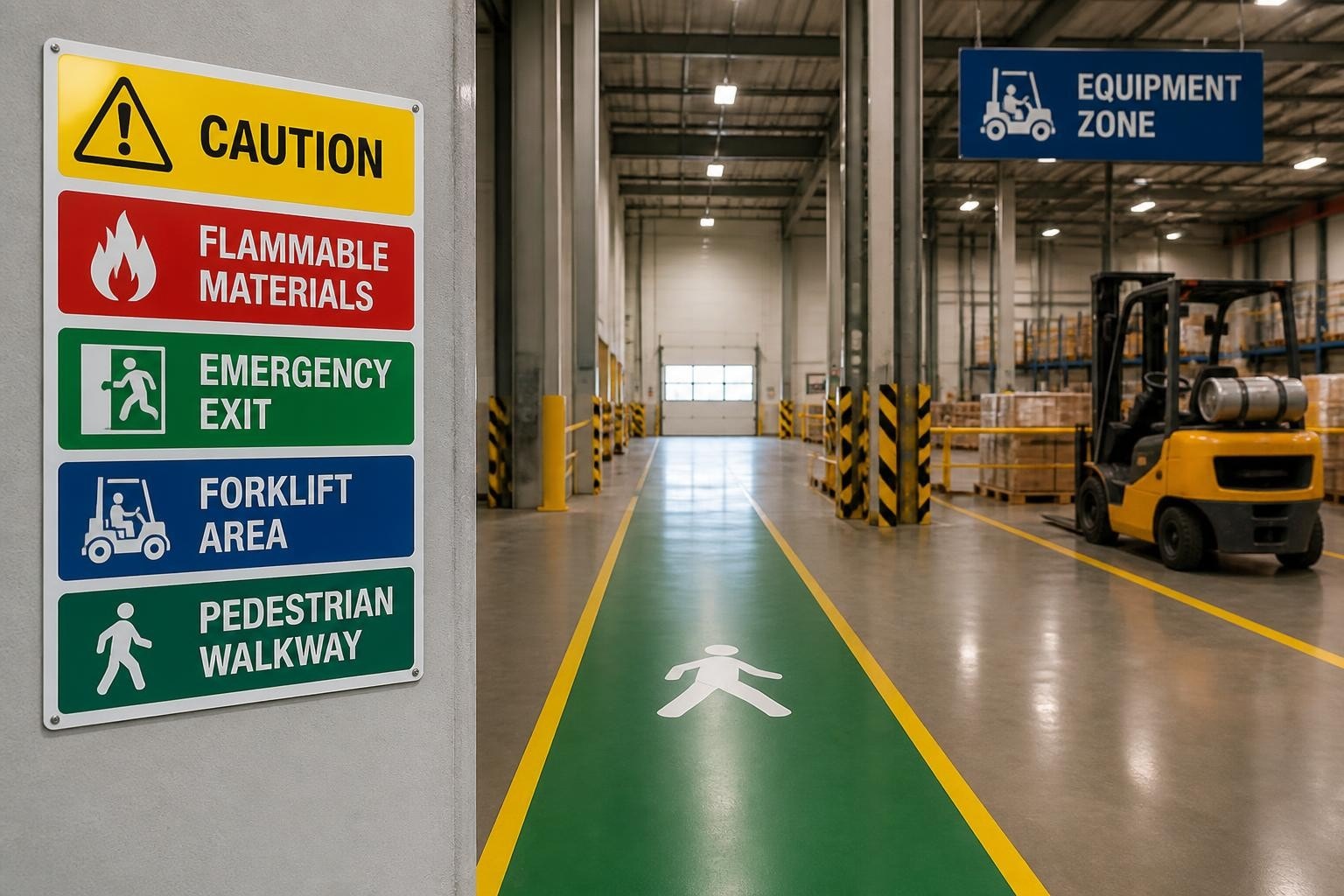
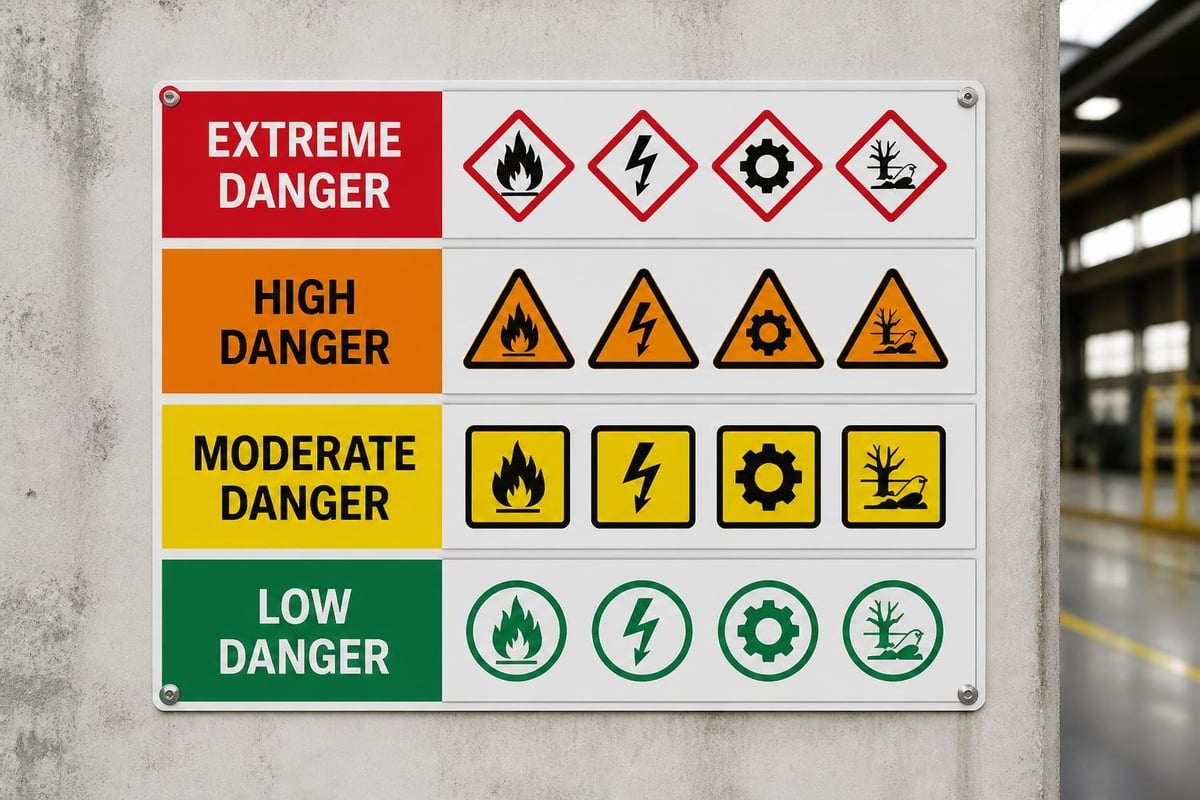
Warning signs alert personnel to potential dangers within specific zones. These warehouse safety signs typically use high-visibility colours and direct language to communicate risks associated with:
- Chemical storage areas
- High-voltage equipment
- Overhead lifting operations
- Slippery surfaces or uneven flooring
Prohibition Signs
Prohibition signage clearly indicates actions or behaviours that are forbidden within designated areas. These signs prevent accidents by restricting access and limiting dangerous activities such as smoking in flammable storage zones or unauthorised forklift operation.
The visual design of prohibition signs typically incorporates red circles with diagonal lines, creating immediate recognition even in peripheral vision. This design principle proves particularly valuable in high-traffic areas where workers may only have seconds to process visual information.
Regulatory Compliance and International Standards
Meeting compliance requirements represents a fundamental responsibility for warehouse operators. OSHA's accident prevention standards establish specific requirements for sign design, colour schemes, and placement within industrial facilities.
| Compliance Element | Requirement | Application |
|---|---|---|
| Colour Coding | Standardised danger, caution, warning | All hazard signs |
| Symbol Design | Universally recognised pictograms | Multi-language environments |
| Visibility Distance | Legible from minimum operational distance | Zone-specific |
| Durability | Weather-resistant, impact-resistant | Long-term deployment |
South African Regulatory Context
Facilities operating in South Africa must align their warehouse safety signs with local occupational health and safety legislation. The safety signage compliance requirements provide detailed guidance on meeting these obligations whilst ensuring worker protection across diverse operational environments.
Regular audits and compliance reviews help identify gaps in your signage programme. These assessments should consider facility modifications, new equipment installations, and evolving regulatory standards to maintain continuous compliance.
Strategic Placement and Visibility Optimisation
Proper positioning of warehouse safety signs dramatically influences their effectiveness. Signs placed at eye level in well-lit areas achieve significantly higher recognition rates than those mounted in obscured or poorly illuminated locations.
Critical Placement Zones
Consider these priority areas when developing your signage deployment strategy:
- Entry and exit points - Establish safety expectations before workers enter hazardous zones
- Equipment operation areas - Reinforce safe practices at point of use
- Storage rack systems - Communicate weight limits and stacking protocols
- Pedestrian walkways - Separate foot traffic from vehicle routes
- Emergency assembly areas - Ensure rapid evacuation capability
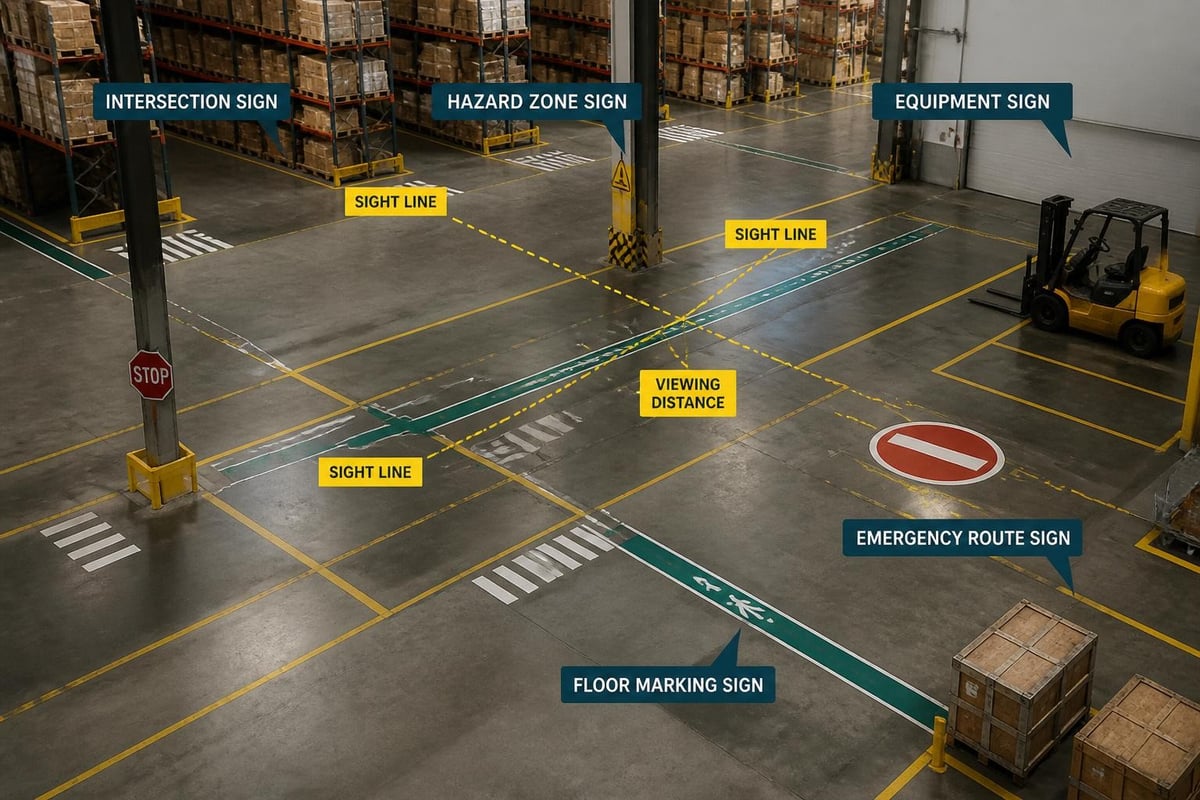
The distance between signs matters considerably. Studies on spatial information transmission reveal that evacuation sign spacing affects how quickly occupants identify safe routes during emergencies. Optimal spacing varies based on warehouse configuration, lighting conditions, and typical movement patterns.
Height and Angle Considerations
Mount signs at appropriate heights for the intended audience. Forklift operators require signage positioned differently than pedestrian workers. Similarly, warehouse safety signs viewed from elevated picking platforms need different placement than ground-level warnings.
For facilities incorporating digital signage solutions, dynamic content can adjust based on time of day, active operations, or specific hazard conditions. This flexibility proves particularly valuable in multi-shift operations or facilities with varying activity levels throughout the day.
Material Selection and Environmental Durability
The physical construction of warehouse safety signs directly impacts their longevity and effectiveness. Material choices must account for specific environmental conditions within your facility.
Common Material Options
Different warehouse environments require different material specifications:
- Aluminium composite - Excellent for indoor applications with moderate durability requirements
- Rigid PVC - Cost-effective for temporary or frequently updated signage
- Polycarbonate - Superior impact resistance for high-traffic zones
- Reflective vinyl - Enhanced visibility in low-light conditions
- Photoluminescent materials - Self-illuminating emergency signage
Environmental factors influence material performance significantly. Facilities with high humidity, temperature extremes, or chemical exposure require specialised materials that maintain visibility and structural integrity under challenging conditions.
Maintenance and Replacement Schedules
Even the most durable warehouse safety signs deteriorate over time. Establish regular inspection protocols to identify:
- Fading or discolouration affecting readability
- Physical damage compromising structural integrity
- Obsolete information requiring updates
- Missing signs needing replacement
Implementing a systematic maintenance programme ensures your signage investment delivers continuous value. The signage maintenance guide offers practical strategies for extending sign lifespan whilst maintaining compliance and effectiveness.
Addressing Specific Warehouse Hazards Through Signage
Different operational areas within warehouses present distinct safety challenges. Tailoring your warehouse safety signs to address specific risks creates more effective hazard communication.
Forklift and Mobile Equipment Zones
Areas with active forklift traffic require comprehensive signage addressing both operators and pedestrians. Equipment suppliers like OTR TIRE THAI emphasise the importance of clear traffic management in facilities using industrial vehicles, noting that visual communication systems complement operator training and vehicle maintenance programmes.
Key signage elements for equipment zones include:
- Speed limit indicators
- Pedestrian crossing warnings
- Load capacity specifications
- Turning radius cautions
- Blind spot awareness reminders
Loading Dock Safety
Loading docks represent high-risk transitional zones where warehouse safety signs play crucial roles in preventing accidents. These areas require signage addressing dock plate usage, trailer stability, and vehicle restraint systems.
Integration with road construction signs principles helps create consistent visual language between external traffic management and internal warehouse navigation. This continuity reduces cognitive load on delivery drivers transitioning between outdoor and indoor environments.
Racking and Storage Systems
Vertical storage systems demand specific safety communications addressing weight limits, loading procedures, and inspection requirements. Companies specialising in warehouse infrastructure, such as Pallet Company Pro, recognise that proper load distribution signage prevents catastrophic rack failures that endanger personnel and inventory.
Emergency Response and Evacuation Signage
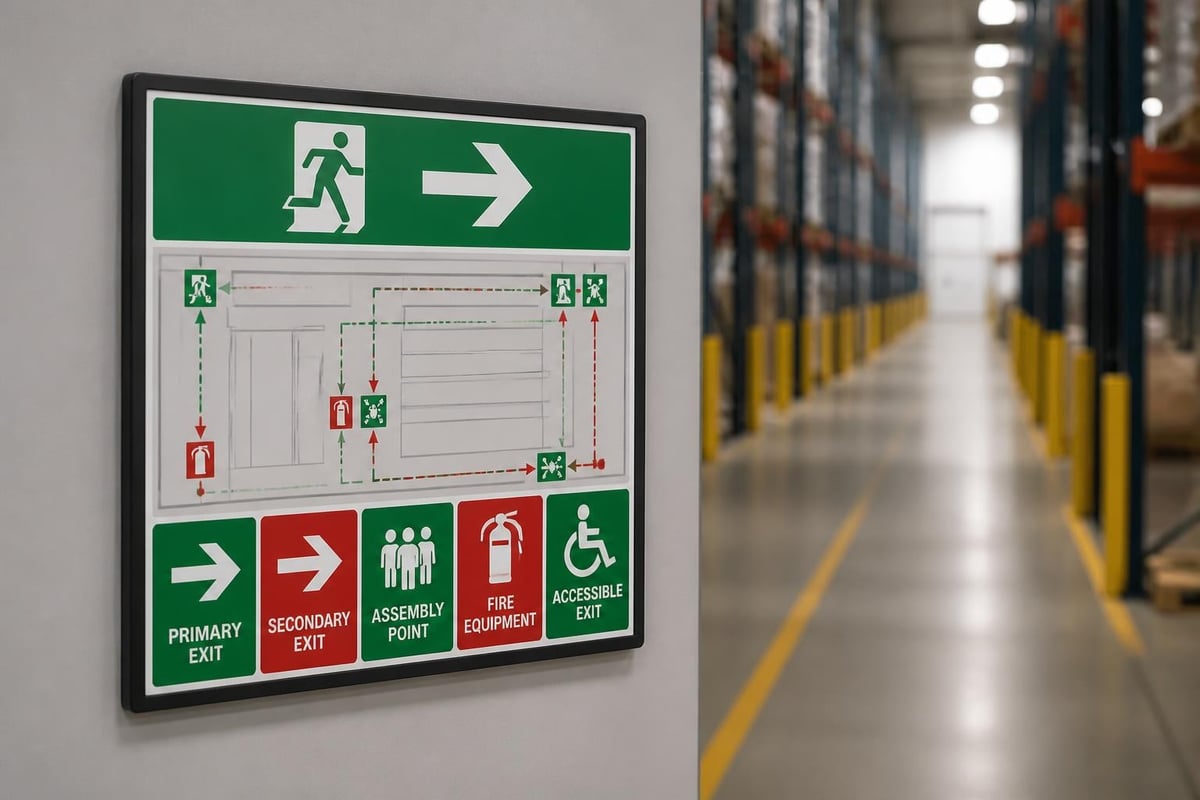
Emergency preparedness depends heavily on clear, immediately recognisable signage guiding personnel to safety during critical incidents. OSHA's warehousing hazards guidance emphasises the role of directional signage in facilitating rapid evacuations and emergency response access.
Exit Route Identification
Exit signs must remain visible under all conditions, including power failures and smoke obscuration. Photoluminescent materials provide passive illumination, whilst battery-backed LED signs ensure continuous visibility during electrical outages.
| Emergency Sign Type | Visibility Requirement | Recommended Technology |
|---|---|---|
| Primary exits | 75 metres minimum | LED with battery backup |
| Secondary routes | 50 metres minimum | Photoluminescent |
| Assembly points | 100 metres minimum | Reflective with external lighting |
| First aid stations | 40 metres minimum | Standard illuminated |
Fire Safety Equipment
Clearly marked fire extinguishers, hose reels, and alarm pull stations enable rapid response during fire emergencies. These warehouse safety signs must comply with both general safety standards and fire-specific regulations governing protective equipment identification.
Consider the unique challenges faced by facilities requiring weather protection, similar to how Best Roofing & Siding addresses external building elements. Warehouses with outdoor storage or partially covered areas need signage solutions that withstand environmental exposure whilst maintaining visibility and compliance.
Multilingual and Pictogram Considerations
Modern warehouses often employ diverse workforces representing multiple language backgrounds. Effective warehouse safety signs transcend language barriers through strategic use of internationally recognised symbols and pictograms.
Symbol Standardisation
Universal safety symbols provide consistent meaning across cultural and linguistic boundaries. However, comprehensive testing ensures symbol comprehension within your specific workforce demographics. Some symbols that seem intuitive may actually generate confusion without proper orientation and training.
Supplement pictograms with text in primary languages spoken within your facility. This redundancy creates multiple pathways for information processing, improving comprehension rates and response times during both routine operations and emergencies.
Cultural Adaptation
Whilst maintaining compliance with standardised designs, consider cultural factors that may influence sign interpretation. Colour associations, directional conventions, and symbolic meanings vary across cultures. Engaging with workforce representatives during signage planning helps identify potential misunderstandings before deployment.
Technology Integration and Smart Signage Solutions
Advancing technology creates new possibilities for warehouse safety signs beyond traditional static displays. Digital and smart signage systems offer dynamic capabilities that adapt to changing conditions and operational requirements.
Dynamic Hazard Communication
Real-time hazard alerts communicated through digital displays provide immediate warnings about emerging risks such as chemical spills, equipment malfunctions, or extreme weather conditions. These systems complement static signage by addressing temporary or variable hazards that traditional signs cannot accommodate.
Integration with facility management systems enables automated responses to detected conditions. For example, temperature sensors might trigger cold storage warning displays, whilst motion detection could activate pedestrian crossing alerts when foot traffic enters equipment zones.
Performance Analytics
Modern signage platforms can track engagement metrics, helping facility managers understand which signs receive attention and which may require repositioning or redesign. This data-driven approach to warehouse safety signs optimises your investment by focusing resources on highest-impact applications.
Designing Custom Solutions for Unique Requirements
Whilst standardised warehouse safety signs address common hazards, many facilities require custom solutions reflecting unique operational characteristics, equipment configurations, or specialised processes.
Industry-Specific Applications
Pharmaceutical warehouses demand different signage than automotive parts distributors. Temperature-controlled facilities require cold storage warnings, whilst hazardous materials warehouses need comprehensive chemical safety communications. Working with experienced industry solutions providers ensures your signage programme addresses sector-specific requirements.
Custom designs should maintain compliance with regulatory standards whilst incorporating company branding and facility-specific information. This balance creates professional, cohesive visual environments that reinforce safety culture alongside operational identity.
Scalability and Future Expansion
Design signage systems with growth in mind. Consistent design languages, modular components, and documented specifications enable seamless expansion as facilities grow or operations evolve. This forward-thinking approach prevents the visual inconsistency that often results from piecemeal signage additions over time.
Implementation Best Practices and Workforce Engagement
Installing warehouse safety signs represents just the beginning of an effective safety communication programme. Successful implementation requires workforce education, ongoing reinforcement, and continuous improvement based on operational experience.
Training and Orientation
New employees require comprehensive orientation covering facility signage meanings, locations, and appropriate responses. Regular refresher training ensures experienced workers maintain awareness and comply with signed directives.
Interactive training approaches that include facility walk-throughs and scenario-based exercises prove more effective than passive instruction. Workers who actively engage with signage during training demonstrate higher retention and compliance rates during actual operations.
Feedback Mechanisms
Establish channels for workers to report damaged, missing, or confusing signage. Front-line personnel often identify issues before management recognises problems. Creating accessible reporting systems and responding promptly to concerns demonstrates organisational commitment to safety whilst improving signage effectiveness.
Continuous Improvement Cycles
Regular reviews of incident reports, near-miss data, and safety audit findings identify opportunities for signage enhancement. Areas with recurring incidents may benefit from additional or modified warehouse safety signs, whilst zones with excellent safety records validate existing approaches.
Cost Considerations and Investment Planning
Developing comprehensive warehouse safety signage requires thoughtful budget allocation balancing immediate needs with long-term value. Understanding cost drivers helps optimise investment whilst maintaining compliance and effectiveness.
Initial Deployment Costs
Budget for complete facility coverage rather than incremental installations. Comprehensive initial deployment creates consistent safety standards whilst often achieving economies of scale through bulk material purchasing and efficient installation scheduling.
Consider these cost factors:
- Material specifications and durability requirements
- Custom design and compliance verification
- Professional installation versus in-house mounting
- Supplementary items such as mounting hardware and protective coverings
- Documentation and record-keeping systems
Long-term Value Analysis
High-quality warehouse safety signs represent investments that deliver returns through reduced incidents, lower insurance premiums, improved regulatory compliance, and enhanced operational efficiency. The cost guide resources provide frameworks for evaluating total ownership costs beyond initial purchase prices.
Durable materials and professional installation may increase upfront costs but substantially reduce replacement frequency and maintenance expenses. This long-term perspective prevents the false economy of purchasing inadequate signage requiring frequent replacement.
Integration with Comprehensive Safety Programmes
Warehouse safety signs function most effectively as components of broader safety management systems rather than standalone solutions. Integration with training programmes, operational procedures, and facility design creates synergistic benefits exceeding individual programme contributions.
Complementary Safety Measures
Signage works alongside physical barriers, personal protective equipment requirements, and procedural controls to create layered protection. This defence-in-depth approach ensures that even if one safety measure fails, others continue protecting workers.
For example, forklift speed limit signs complement physical speed bumps and operator training to control vehicle speeds through multiple reinforcing mechanisms. This redundancy proves particularly valuable in high-stress or distraction-prone environments.
Cultural Reinforcement
Visible, well-maintained warehouse safety signs communicate organisational commitment to worker protection. This visual reinforcement supports safety culture development by constantly reminding personnel that management prioritises their wellbeing.
Conversely, damaged, outdated, or missing signage undermines safety culture by suggesting that leadership treats compliance as superficial box-ticking rather than genuine commitment. Maintaining exemplary signage standards reinforces the message that safety represents a core organisational value.
Implementing effective warehouse safety signs requires strategic planning, quality materials, and ongoing commitment to maintenance and improvement. These visual communication systems protect your workforce, ensure regulatory compliance, and support operational excellence across diverse industrial environments. Signs4SA combines extensive industry expertise with comprehensive manufacturing capabilities to deliver customised signage solutions that address your facility's unique requirements. Contact our team to discuss how professional warehouse safety signage can enhance protection and compliance throughout your operation.