


Business Signs for Outside: Complete Guide 2026
Your business's exterior signage represents the first impression countless potential customers will have of your brand. Whether you operate a retail shop, corporate office, construction site, or pharmaceutical facility, the quality and effectiveness of your business signs for outside directly influence foot traffic, brand recognition, and ultimately revenue. In 2026, exterior signage continues to evolve with new materials, digital technologies, and stricter compliance requirements, making it essential for business owners to understand the full landscape before investing in outdoor signage solutions.
Understanding the Strategic Value of Exterior Signage
Business signs for outside serve multiple critical functions beyond simply displaying your company name. They act as silent salespeople working 24 hours daily, seven days weekly, creating brand awareness even when your premises are closed.
Research demonstrates the tangible impact of quality signage on business performance. According to academic studies on visibility and retail demand, improved storefront visibility-including high-quality exterior signage-directly correlates with increased foot traffic and sales. Businesses investing in professional outdoor signs typically see measurable returns within the first year of installation.
Key benefits of effective exterior signage include:
- Enhanced brand visibility in competitive markets
- Improved wayfinding for customers and delivery services
- Increased perceived professionalism and credibility
- Cost-effective marketing that works continuously
- Compliance with regulatory and safety requirements
The investment guide for signage demonstrates how businesses can calculate expected returns based on location, visibility, and design quality.

Types of Business Signs for Outside Applications
Selecting the right signage type depends on your specific business needs, location constraints, budget, and branding objectives. Different exterior sign categories serve distinct purposes.
Monument and Pylon Signs
Monument signs sit at ground level, typically constructed from brick, stone, or metal, creating a prestigious entrance statement. These work exceptionally well for corporate campuses, medical facilities, and professional offices where a sophisticated image is paramount.
Pylon Signage offers elevated visibility, particularly valuable for businesses located away from main roads or in complex developments. These tall structures ensure your brand remains visible from significant distances, making them ideal for shopping centres, petrol stations, and roadside establishments.
| Sign Type | Best For | Visibility Range | Typical Lifespan |
|---|---|---|---|
| Monument | Corporate, Medical | 30-60 metres | 15-20 years |
| Pylon | Retail, Roadside | 100-300 metres | 10-15 years |
| Channel Letters | Storefronts | 20-50 metres | 7-12 years |
| Cabinet Signs | Multi-tenant | 30-80 metres | 8-15 years |
Illuminated and Digital Options
LED illumination transforms business signs for outside into night-time marketing powerhouses. Channel letters with internal LED lighting create sophisticated, energy-efficient displays that maintain visibility after sunset.
Digital signage represents the cutting edge of exterior communication, allowing businesses to update messages, showcase promotions, and display dynamic content. The benefits of LED signage extend beyond aesthetics to include programmable messaging and lower long-term energy costs compared to traditional illumination methods.
Dimensional and Flat Panel Signs
Three-dimensional letters and logos create visual depth that captures attention more effectively than flat alternatives. These can be fabricated from various materials including acrylic, aluminium, and stainless steel, each offering distinct aesthetic and durability characteristics.
Flat panel signs-whether metal, composite, or acrylic-provide cost-effective solutions for businesses requiring straightforward messaging. When properly designed and manufactured, these deliver excellent longevity and brand consistency.
Material Selection for Longevity and Performance
The materials chosen for your business signs for outside fundamentally determine their lifespan, maintenance requirements, and weather resistance. South Africa's diverse climate zones-from coastal humidity to inland temperature extremes-demand careful material consideration.
Comparing Popular Outdoor Sign Materials
According to a comprehensive sign material guide, different materials offer varying advantages for exterior applications:
Aluminium composite material (ACM) provides excellent weather resistance, lightweight construction, and versatile fabrication options. This material suits most climates and typically lasts 10-15 years with minimal maintenance.
Acrylic and polycarbonate deliver superior clarity for illuminated applications whilst resisting UV degradation. These materials maintain colour vibrancy and work particularly well for channel letters and cabinet sign faces.
Stainless steel and aluminium offer premium durability for dimensional lettering and frames, resisting corrosion in coastal environments whilst maintaining a professional appearance for decades.
High-density urethane (HDU) allows intricate carving and shaping for bespoke designs, particularly monument signs requiring architectural detailing. Properly sealed HDU withstands weather extremes whilst offering design flexibility unavailable in metal alternatives.
Environmental Resistance Considerations
When selecting materials for business signs for outside, assess specific environmental challenges at your location:
- Coastal areas: Require corrosion-resistant materials like powder-coated aluminium or marine-grade stainless steel
- High-wind zones: Demand robust structural engineering and secure mounting systems
- High UV exposure: Necessitate UV-stabilised materials and fade-resistant inks or finishes
- Temperature extremes: Require materials with compatible expansion coefficients to prevent warping or cracking
The materials guide for signage provides detailed comparisons specific to South African conditions.
Design Principles for Maximum Impact
Effective design separates business signs for outside that generate results from those that simply occupy space. Professional signage design balances aesthetics, readability, brand consistency, and psychological impact.
Readability and Visibility Factors
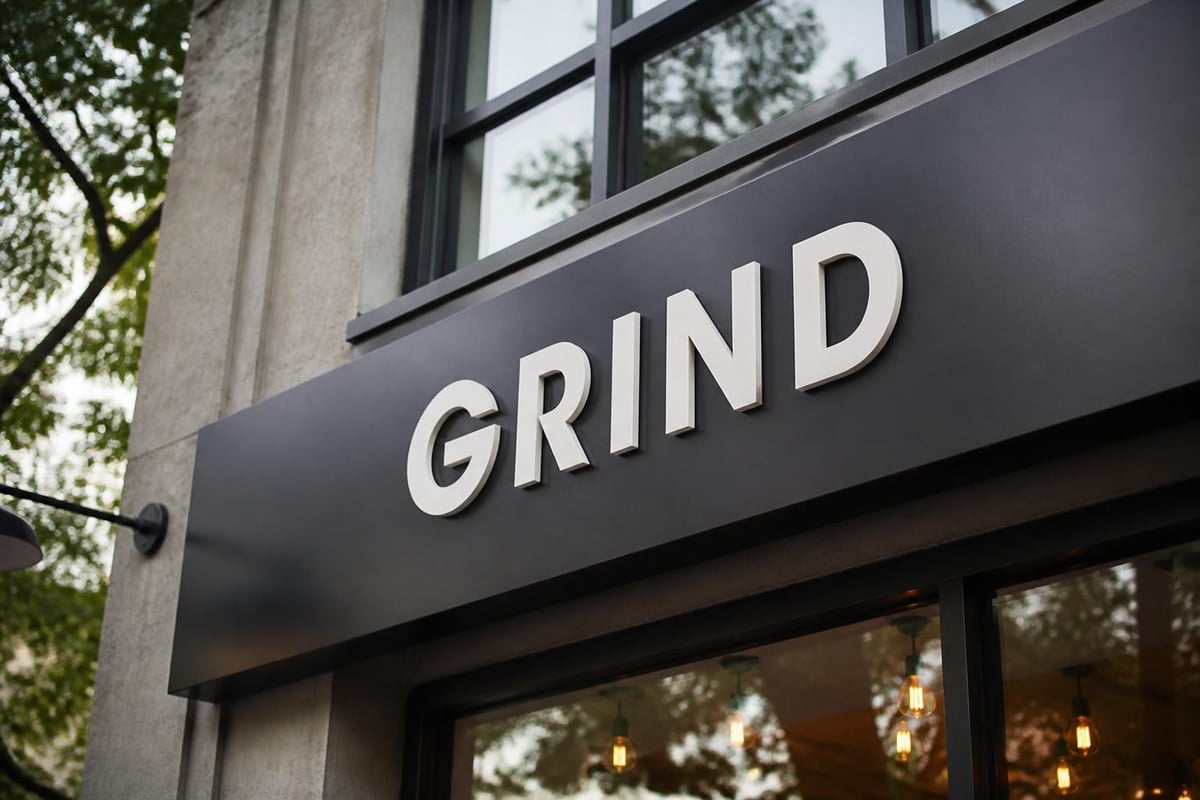
Contrast ratios between text and background fundamentally affect readability distance. Dark text on light backgrounds or illuminated text on dark backgrounds typically provides optimal visibility. Research suggests minimum contrast ratios of 70% for effective outdoor signage.
Letter sizing must account for viewing distance. A general formula suggests 1 inch of letter height per 10 feet of viewing distance, though this varies based on font style, stroke width, and illumination.
Font selection should prioritise legibility over novelty. Sans-serif typefaces generally perform better for exterior signage, particularly at distance or under challenging lighting conditions.
Colour Psychology and Brand Consistency
The psychology of colour in signage design demonstrates how colour choices influence customer perceptions and behaviours:
- Red: Creates urgency, stimulates appetite, attracts immediate attention
- Blue: Conveys trust, professionalism, stability
- Green: Suggests environmental consciousness, health, growth
- Yellow: Generates optimism, visibility, caution awareness
- Black: Projects luxury, sophistication, authority
Maintain brand colour consistency across all signage whilst considering how colours appear under different lighting conditions. What looks vibrant in daylight may appear dramatically different under artificial illumination or at dusk.
Simplified Messaging Strategy
Business signs for outside have mere seconds to communicate. Effective exterior signage follows the "7-second rule"-delivering essential information within seven seconds or less.
Prioritise information hierarchy:
- Primary: Business name or logo
- Secondary: Key differentiator or category
- Tertiary: Contact information (if space permits)
Avoid cluttering exterior signs with excessive text. Detailed information belongs on supplementary signage, websites, or printed materials-not your primary outdoor identification.
Regulatory Compliance and Permit Requirements
Installing business signs for outside without proper permits can result in fines, forced removal, and legal complications. Signage regulations vary significantly by municipality, making local research essential before proceeding.
Understanding Local Signage Ordinances
Most municipalities regulate outdoor signage through zoning codes covering:
- Maximum sign dimensions and area
- Setback requirements from property lines
- Height restrictions
- Illumination specifications
- Permitted sign types by zone
The signage regulations and permits guide outlines South African compliance requirements across different jurisdictions. Many cities publish comprehensive signage ordinances online, similar to how New York City regulates outdoor signage with detailed specifications and approval processes.
Accessibility Standards
Whilst primarily focused on American contexts, the principles outlined in ADA Standards for Accessible Design provide valuable guidance for creating inclusive signage. Key considerations include:
- Appropriate mounting heights for wheelchair users
- Tactile characters for essential wayfinding
- Braille translation for permanent room identification
- Colour contrast for visually impaired visitors
South African businesses should also reference local accessibility requirements, particularly for public-facing facilities.
Off-Property Signage Regulations
Business signs placed beyond your property boundaries face additional scrutiny. Many regions follow frameworks similar to Wisconsin's outdoor advertising control, distinguishing between on-property directional signs and off-property advertising.
Billboard and directional signage along public roads typically require separate permits and may be prohibited in certain zones or corridors designated as scenic routes.
Installation Considerations for Professional Results
Even the most beautifully designed business signs for outside will underperform if improperly installed. Professional installation ensures safety, longevity, and optimal positioning whilst avoiding costly mistakes.
Site Assessment and Positioning
Conduct thorough site analysis before finalising sign placement:
- Measure actual viewing distances from key approach angles
- Identify visual obstructions (trees, buildings, utility lines)
- Assess lighting conditions at different times of day
- Evaluate mounting surface structural capacity
- Verify underground utilities before excavation
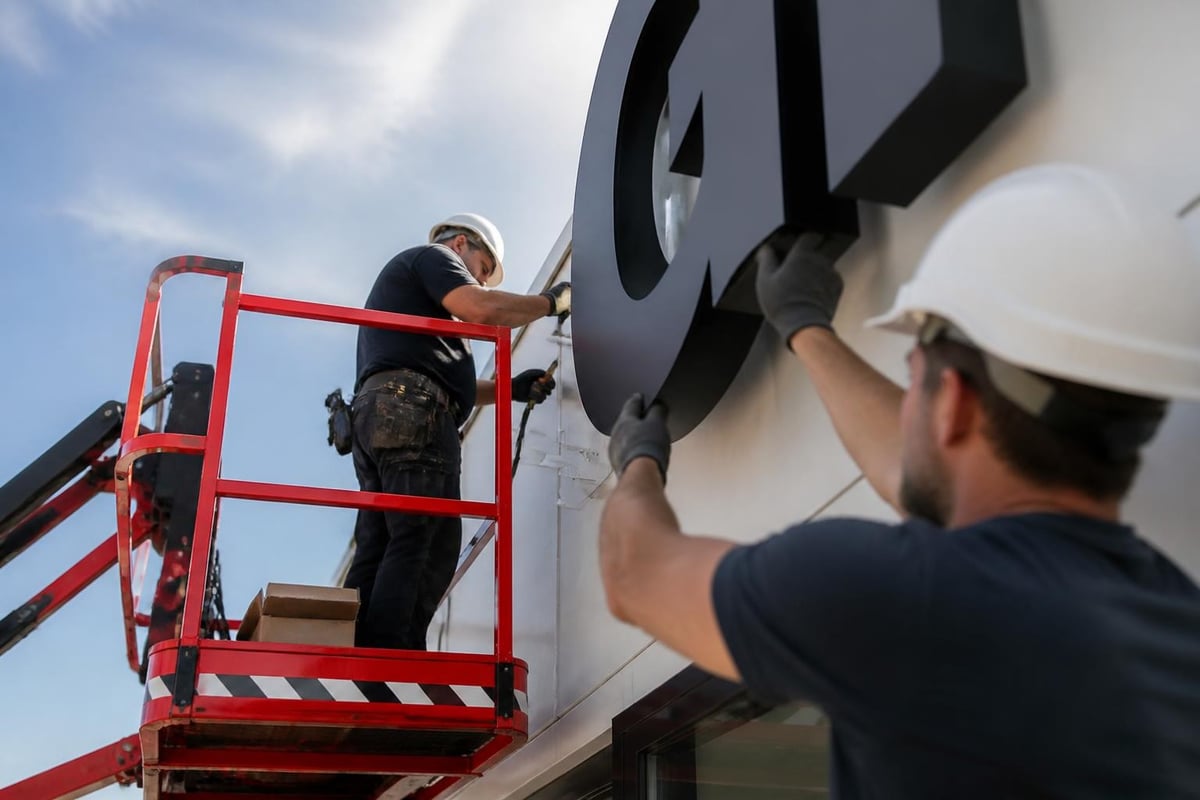
The importance of professional signage installation cannot be overstated. Experienced installers anticipate challenges, ensure structural integrity, and complete projects efficiently whilst maintaining safety standards.
Structural and Electrical Requirements
Large business signs for outside require engineered foundations and mounting systems. Wind load calculations determine necessary structural support, particularly critical for elevated pylon signs or large cabinet displays.
Illuminated signage demands qualified electrical installation complying with local codes. Proper electrical installation includes:
- Weatherproof electrical connections
- Appropriate circuit sizing and protection
- Ground fault protection for outdoor applications
- Timer or photocell controls for automated operation
- Accessible disconnect switches for maintenance
Mounting Methods by Surface Type
Different building materials require specific mounting approaches:
| Surface Material | Mounting Method | Special Considerations |
|---|---|---|
| Brick/Masonry | Through-wall anchors | Avoid mortar joints; waterproof penetrations |
| Concrete/Block | Expansion anchors | Pre-drill accurately; use corrosion-resistant hardware |
| Metal Panels | Self-tapping screws | Reinforce thin panels; prevent galvanic corrosion |
| Wood/Composite | Lag bolts to studs | Locate solid backing; seal all penetrations |
Maintenance Strategies for Extended Lifespan
Proper maintenance preserves the appearance and functionality of business signs for outside whilst protecting your signage investment. Developing a systematic maintenance schedule prevents minor issues from becoming costly repairs.
Routine Cleaning Protocols
Establish quarterly cleaning schedules for most exterior signs, with more frequent cleaning in dusty, coastal, or high-pollution environments. Different materials require specific cleaning approaches:
- Acrylic/polycarbonate: Mild soap solution with soft cloth; avoid ammonia-based cleaners
- Aluminium/metal: pH-neutral detergents; inspect for corrosion after cleaning
- Vinyl graphics: Gentle cleaners without solvents that could damage adhesive
- LED displays : Manufacturer-specified cleaning products only
The long-term signage maintenance guide provides detailed protocols for various sign types and materials.
Inspection and Preventive Maintenance
Conduct bi-annual detailed inspections examining:
- Structural integrity of mounting hardware
- Electrical connections and illumination function
- Weather seal condition around penetrations
- Surface finish for fading, cracking, or peeling
- Fastener tightness and corrosion
Addressing minor issues promptly prevents accelerated deterioration. A loose mounting bracket identified during inspection might require simple tightening, whilst the same issue left unaddressed could lead to complete sign failure during severe weather.
When to Repair Versus Replace
Business signs for outside eventually require replacement, though strategic repairs can extend service life considerably. Consider replacement when:
- Repair costs exceed 50% of replacement cost
- Brand identity has evolved beyond current signage
- Damage compromises structural safety
- Energy costs from outdated illumination systems exceed modern alternatives
- Visible deterioration negatively impacts brand perception
Maximising Return on Investment
Business signs for outside represent significant capital expenditure requiring strategic planning to maximise returns. Understanding cost factors and performance metrics helps optimise signage investments.
Cost Variables and Budget Planning
Exterior signage costs vary dramatically based on size, materials, complexity, illumination, and installation requirements. The cost guide for commercial signage breaks down typical pricing structures.
Budget allocation typically follows this distribution:
- Design and engineering: 10-15%
- Materials and fabrication: 40-50%
- Installation and electrical: 25-35%
- Permits and regulatory compliance: 5-10%
Requesting detailed itemised quotes from multiple signage providers enables meaningful comparison whilst ensuring comprehensive project understanding.
Measuring Signage Performance
Track signage effectiveness through:
- Customer surveys: Ask how new customers discovered your location
- Foot traffic analysis: Compare visitor numbers before and after installation
- Sales data: Monitor revenue changes correlated with signage improvements
- Online search patterns: Note changes in "near me" searches finding your business
- Competitor benchmarking: Assess your exterior visibility against competitors
Professional signage manufacturers like those featured in the signage companies South Africa guide often provide consultation on performance expectations and measurement strategies.
Long-Term Value Considerations
Quality business signs for outside deliver value extending well beyond initial installation. When evaluating options, consider total cost of ownership including:
- Expected lifespan and warranty coverage
- Maintenance requirements and costs
- Energy consumption for illuminated signs
- Repair accessibility and part availability
- Potential for future modifications or updates
Investing in superior materials and professional installation typically costs 20-30% more initially but can deliver 50-100% longer service life, resulting in lower annualised costs.
Industry-Specific Signage Strategies
Different business sectors have unique requirements for business signs for outside, shaped by customer expectations, regulatory frameworks, and operational considerations.
Retail and Hospitality Applications
Retail businesses benefit most from high-visibility, attractive signage that communicates brand personality whilst attracting spontaneous visitors. The guide on outdoor signage attracting customers emphasises the connection between signage quality and customer acquisition.
Retail signage priorities:
- Maximum visibility from vehicular and pedestrian traffic
- Clear communication of business category and offerings
- Evening illumination to extend shopping hours visibility
- Integration with window displays and architectural features
Corporate and Professional Offices
Corporate environments require dignified, professional signage reflecting organisational values. Monument signs, sophisticated dimensional lettering, and understated illumination create appropriate impressions for professional services, financial institutions, and corporate headquarters.
Construction and Industrial Sites
Construction sites need temporary yet durable business signs for outside that withstand harsh conditions whilst maintaining professional appearance. Safety signage also becomes paramount, as detailed in the warehouse safety signs guide.
Pharmaceutical and Healthcare Facilities
Healthcare signage demands clarity, accessibility, and reassurance. Wayfinding becomes particularly critical in medical campuses where stressed visitors need immediate orientation assistance. Compliance with health regulations and accessibility standards takes precedence over purely aesthetic considerations.
The industry solutions guide explores sector-specific approaches in greater depth.
Emerging Technologies and Future Trends
Business signs for outside continue evolving with technological advances and changing consumer expectations. Understanding emerging trends helps businesses future-proof signage investments.
Digital and Interactive Solutions
Digital displays transform static business signs for outside into dynamic communication platforms. Modern LED technology delivers brilliant displays visible even in direct sunlight whilst consuming remarkably little energy compared to traditional illumination.
Advantages of digital exterior signage:
- Real-time message updates without physical modifications
- Scheduled content variations for different times or audiences
- Motion and animation to capture attention
- Multiple message rotation maximising communication efficiency
- Integration with social media and marketing campaigns
Sustainable and Eco-Friendly Options
Environmental consciousness increasingly influences signage decisions. Solar-powered illumination, recycled materials, and energy-efficient LED systems appeal to environmentally aware customers whilst reducing operational costs.
Sustainable signage practices include:
- LED illumination reducing energy consumption by 75-90% versus traditional lighting
- Recyclable aluminium and steel construction
- Low-VOC finishing processes
- Solar panels for off-grid illumination
- Modular designs allowing component replacement rather than complete disposal
Smart Signage Integration
Advanced business signs for outside increasingly incorporate sensors, wireless connectivity, and data analytics. These systems can:
- Adjust brightness automatically based on ambient light conditions
- Monitor structural integrity and alert owners to maintenance needs
- Track viewer engagement through mobile device interaction
- Integrate with building management systems
- Provide emergency messaging capabilities
Design standards like those published in the Los Angeles Community College District guidelines increasingly incorporate provisions for smart signage technologies, recognising their growing importance in institutional and commercial environments.
Strategic Planning for Signage Projects
Successful business signs for outside result from comprehensive planning addressing design, compliance, budget, and long-term maintenance from project inception.
Developing a Signage Master Plan
Create a phased approach for complex signage needs:
- Phase 1: Primary identification (building-mounted or monument sign)
- Phase 2: Directional and wayfinding elements
- Phase 3: Promotional or seasonal signage
- Phase 4: Digital or specialty applications
This staged approach manages budget constraints whilst ensuring critical signage elements receive priority attention.
Selecting the Right Signage Partner
Choosing experienced signage professionals dramatically impacts project success. Evaluate potential partners on:
| Evaluation Criteria | Key Questions |
|---|---|
| Experience | How many similar projects completed? Industry specialisation? |
| Capabilities | In-house design, fabrication, installation? Subcontractor relationships? |
| Portfolio | Quality of previous work? Diversity of solutions? |
| Compliance Knowledge | Understanding of local regulations? Permit handling experience? |
| Warranty and Support | What coverage provided? Maintenance services available? |
| Timeline Reliability | Typical project duration? On-time completion record? |
The expertise demonstrated in quality signage work often distinguishes exceptional signage providers from adequate ones.
Project Timeline Considerations
Realistic scheduling prevents rushed decisions and ensures quality outcomes. Typical timelines for business signs for outside include:
- Consultation and design: 2-4 weeks
- Permit applications and approval: 3-8 weeks (varies by jurisdiction)
- Fabrication: 3-6 weeks (complex or custom designs may require longer)
- Installation: 1-3 days (depending on complexity)
- Final inspection and approval: 1-2 weeks
Total project duration from initial consultation to completed installation typically ranges from 3-5 months, though expedited services may be available for urgent requirements.
Investing in quality business signs for outside delivers measurable returns through enhanced visibility, improved customer acquisition, and strengthened brand presence. Whether you require sophisticated monument signage for a corporate campus, high-visibility pylons for roadside retail, or comprehensive wayfinding for a complex facility, professional expertise ensures optimal results. Signs4SA combines industry-leading design capabilities, premium materials, and nationwide installation expertise to deliver bespoke signage solutions tailored to your specific business requirements-contact their team today to transform your exterior presence.