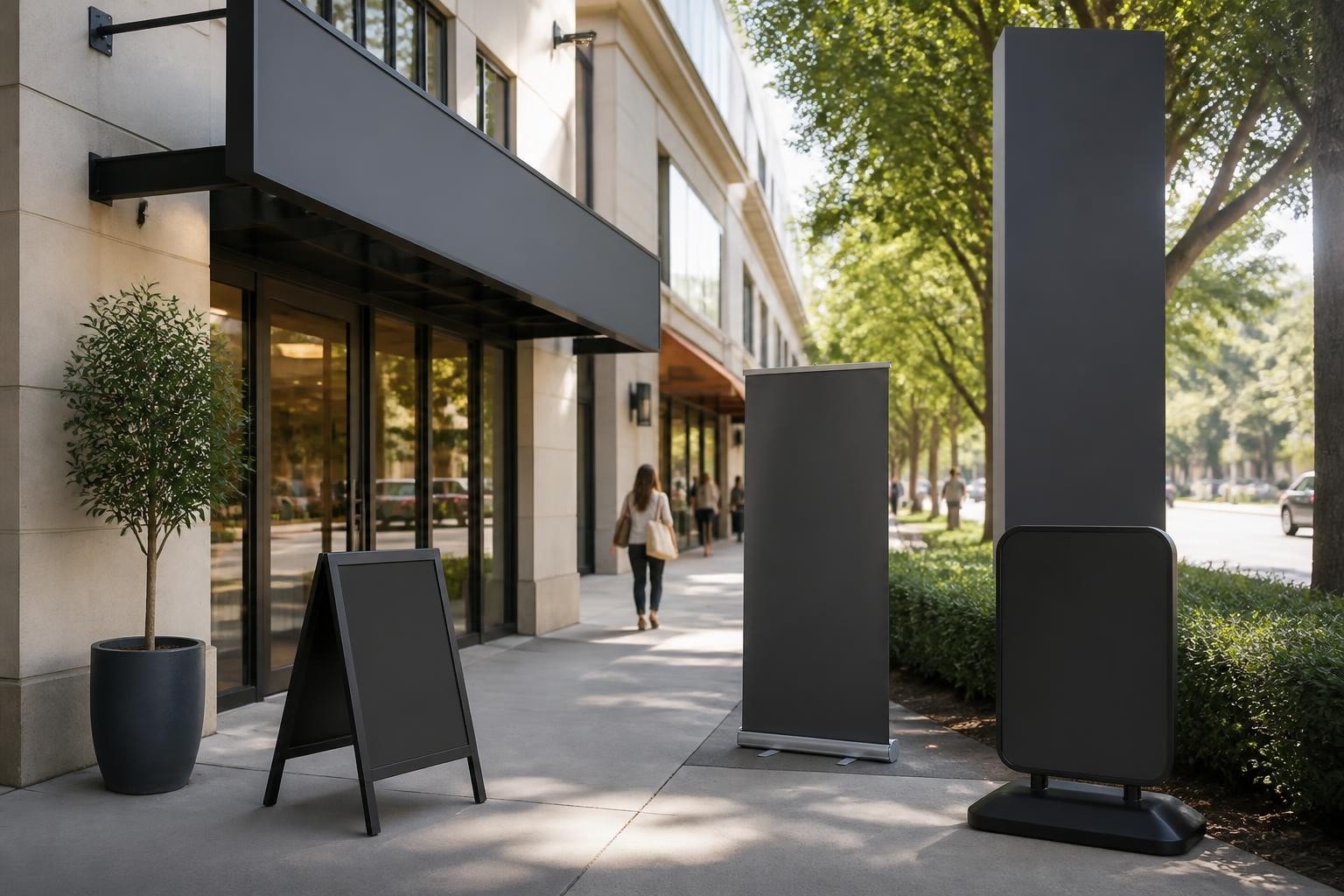



Professional Signage Work: A Complete Guide for 2026
Professional signage work encompasses far more than simply creating attractive displays. It represents a strategic blend of design expertise, manufacturing precision, regulatory compliance, and installation proficiency that transforms business visibility. Whether you're launching a retail establishment, upgrading corporate premises, or managing construction projects across South Africa, understanding the comprehensive nature of signage work ensures your investment delivers measurable results. This guide explores the multifaceted world of professional signage work, examining the critical elements that separate exceptional installations from mediocre attempts.
Understanding the Scope of Professional Signage Work
Signage work involves a systematic process that begins with strategic consultation and extends through years of maintenance. Professional signage manufacturers assess your business objectives, site conditions, target audience demographics, and brand identity before recommending appropriate solutions. This initial phase determines whether your project requires wayfinding systems, promotional displays, safety compliance signage, or architectural branding elements.
The complexity of signage work varies significantly across industries. Corporate environments typically demand sophisticated, understated designs that reinforce professional credibility. Retail spaces require attention-grabbing installations that drive foot traffic and impulse purchases. Construction sites need durable, highly visible safety signage that withstands harsh environmental conditions. Pharmaceutical facilities must balance aesthetic appeal with strict regulatory requirements governing labelling and directional information.
Planning and Site Assessment
Effective signage work starts with thorough site evaluation. Professionals measure sight lines, assess lighting conditions, evaluate structural support requirements, and identify potential obstacles that might compromise visibility. This groundwork prevents costly modifications during installation and ensures compliance with local municipal regulations.
Key site assessment factors include:
- Building facade materials and structural integrity
- Viewing distances from primary approach routes
- Ambient lighting conditions throughout operating hours
- Wind loads and weather exposure patterns
- Existing electrical infrastructure availability
- Municipal zoning restrictions and permit requirements
Environmental factors significantly influence material selection and design approaches. Coastal locations require corrosion-resistant materials, whilst inland regions might prioritise fade-resistant finishes. Understanding these nuances demonstrates the expertise required for quality signage work.

Design Principles That Define Quality Signage Work
Exceptional signage work balances aesthetic appeal with functional performance. Design principles for effective signage emphasise legibility, appropriate scale, and visual hierarchy. These foundational concepts ensure your message reaches viewers quickly and memorably, regardless of viewing conditions or audience familiarity with your brand.
Typography selection represents one of the most critical decisions in signage work. Sans-serif typefaces generally provide superior legibility at distance, whilst decorative fonts may enhance brand personality but sacrifice readability. Professional designers calculate letter height based on viewing distance, typically recommending 25mm of letter height for every 3 metres of viewing distance as a baseline calculation.
Colour Psychology and Contrast
Colour choices in signage work extend beyond brand guidelines. High contrast combinations improve visibility, particularly for older viewers or those with visual impairments. Research demonstrates that specific colour pairings increase recognition speed and retention rates.
| Colour Combination | Visibility Rating | Best Application |
|---|---|---|
| Black on Yellow | Excellent | Safety warnings, construction zones |
| White on Blue | Very Good | Directional wayfinding, corporate |
| Black on White | Very Good | General information, retail |
| Red on White | Good | Emergency exits, prohibitions |
| Green on White | Good | Guidance, permission indicators |
The psychology of colour influences consumer behaviour and brand perception. Blue conveys trust and professionalism, making it ideal for corporate and pharmaceutical applications. Red creates urgency and excitement, proving effective in retail environments. Green suggests growth and environmental consciousness, whilst yellow demands immediate attention in safety contexts.
Material Selection in Modern Signage Work
Contemporary signage work utilises an extensive range of materials, each offering distinct advantages for specific applications. Aluminium remains the industry standard for outdoor installations due to its lightweight properties, corrosion resistance, and excellent paint adhesion. Acrylic provides versatility for illuminated applications, whilst dibond offers superior flatness for precision graphics.
Common materials in professional signage work include:
- Aluminium composite panels – lightweight, weather-resistant, ideal for large-format installations
- Stainless steel – premium aesthetic, exceptional durability, suitable for architectural applications
- High-density polyurethane – dimensionally stable, excellent for intricate 3D elements
- Vinyl graphics – cost-effective, versatile, perfect for temporary or promotional campaigns
- Polycarbonate – impact-resistant, UV-stable, excellent for backlit applications
The emergence of digital signage solutions has revolutionised signage work, offering dynamic content capabilities that static installations cannot match. LED technology enables businesses to update messaging instantly, display multiple campaigns throughout the day, and incorporate video content that captures attention in high-traffic environments. When integrated effectively, digital signage transforms retail environments by delivering targeted messages based on time, weather, or customer demographics.
Sustainability Considerations
Modern signage work increasingly incorporates environmental responsibility. Recyclable materials, energy-efficient LED illumination, and low-VOC finishing processes reduce environmental impact whilst maintaining visual excellence. Solar-powered installations eliminate ongoing electricity costs and demonstrate corporate environmental commitment.

Manufacturing Processes and Quality Control
Professional signage work relies on precision manufacturing that transforms designs into tangible installations. CNC routing, laser cutting, and digital printing technologies enable complex geometries and photographic-quality graphics that were impossible a decade ago. Quality control protocols ensure dimensional accuracy, colour consistency, and structural integrity before products leave the workshop.
The manufacturing phase involves multiple specialised processes. Substrate preparation includes cleaning, priming, and surface treatment to ensure optimal adhesion. Printing utilises UV-curable inks or solvent-based systems depending on substrate and application requirements. Understanding best practices for digital signage content ensures that visual elements translate effectively from screen to physical product.
Fabrication Techniques
| Technique | Applications | Advantages | Limitations |
|---|---|---|---|
| CNC Routing | Dimensional letters, intricate shapes | Precision, repeatability | Material thickness constraints |
| Laser Cutting | Fine details, acrylic work | Clean edges, minimal waste | Limited material compatibility |
| Digital Printing | Full-colour graphics, photos | Unlimited colours, fast turnaround | UV exposure degradation |
| Screen Printing | Large runs, simple graphics | Durability, vibrant colours | Setup costs for small quantities |
| Vinyl Application | Vehicle graphics, window displays | Removable, cost-effective | Professional installation required |
Attention to detail during manufacturing separates professional signage work from amateur attempts. Edge finishing, corner radius consistency, and weld quality on fabricated elements contribute to perceived value and longevity. Inspection protocols verify measurements, colour matching, and structural soundness before proceeding to installation.
Installation Excellence and Safety Protocols
Installation represents the culmination of signage work, where planning and manufacturing meet real-world conditions. Professional installers possess specialised equipment, structural knowledge, and safety training that ensure secure mounting whilst protecting building integrity. Understanding the importance of professional installation prevents common failures that compromise safety and appearance.
Height-access equipment, structural fastening systems, and electrical integration require certified expertise. Installing pylon signage, for instance, involves foundation engineering, steel fabrication, electrical connections, and crane operations-all requiring coordinated specialist trades working under qualified supervision.
Essential installation considerations include:
- Structural load calculations and appropriate fastening systems
- Electrical safety compliance and weatherproof connections
- Municipal inspections and certificate of compliance documentation
- Traffic management during installation in public areas
- Warranty activation and handover documentation
Much like ANR media delivers meticulous attention to technical integration in custom home cinema installations, professional signage work demands precision in every connection point. Poorly executed installations create liability risks, premature failure, and costly remedial work that far exceeds initial savings from budget installation services.
Regulatory Compliance and Permit Navigation
Signage work in South Africa operates within a complex regulatory framework combining national building regulations, municipal bylaws, and industry-specific requirements. Understanding signage regulations and permits prevents project delays, fines, and forced removal of non-compliant installations.
Different municipalities enforce varying requirements regarding sign size, height, illumination, and placement. Metropolitan areas typically impose stricter controls than rural regions. Heritage precincts may prohibit certain materials or illumination types entirely. Professional signage work includes regulatory research, application preparation, and liaison with approval authorities as standard service elements.
Industry-Specific Regulations
Pharmaceutical facilities face unique compliance requirements. Signage work in these environments must satisfy GMP (Good Manufacturing Practice) standards, SAHPRA regulations, and facility-specific protocols. Materials must resist chemical exposure, support regular sanitation procedures, and maintain legibility under strict lighting conditions.
Construction sites require specific safety signage mandated by Occupational Health and Safety regulations. These installations must meet size specifications, colour standards, and reflectivity requirements outlined in SANS 1186 and related standards. Non-compliance creates legal liability and endangers worker safety.

Maintenance Planning and Lifecycle Management
Professional signage work extends beyond installation to encompass ongoing maintenance that preserves appearance and functionality. Developing effective maintenance programmes protects your investment whilst ensuring continuous brand representation. Regular cleaning, lamp replacement, and structural inspections prevent minor issues from escalating into expensive repairs.
Environmental exposure gradually degrades all signage materials. UV radiation fades colours, moisture promotes corrosion, and temperature fluctuations stress mounting systems. Maintenance schedules should account for location-specific factors. Coastal installations require more frequent inspection due to salt exposure, whilst high-pollution areas demand regular cleaning to maintain visibility.
Maintenance Schedule Recommendations
- Monthly inspections – Check illumination functionality, clean accessible surfaces, verify structural security
- Quarterly deep cleaning – Professional cleaning of all surfaces, detailed inspection of mounting hardware
- Annual comprehensive service – Electrical testing, structural assessment, refinishing as required
- Three-year major review – Evaluate technology updates, assess brand alignment, consider refresh opportunities
Budgeting for maintenance during initial signage work planning prevents unexpected expenses and ensures consistent brand presentation. Establishing service agreements with your signage manufacturer provides priority response, predictable costs, and access to original replacement components.
Technology Integration in Contemporary Signage Work
Digital transformation has fundamentally altered signage work capabilities. Content management systems enable remote control of multiple installations, scheduled messaging updates, and performance analytics previously impossible with static signage. Integration with point-of-sale systems, social media feeds, and weather data creates dynamic displays that respond to real-time conditions.
Comparing LED signage with traditional approaches reveals significant operational advantages despite higher initial investment. Energy consumption drops dramatically, content updates eliminate production costs, and attention-grabbing motion increases engagement rates. Return on investment calculations increasingly favour digital solutions for high-traffic locations.
Interactive elements represent the next frontier in signage work. Touchscreen wayfinding systems, QR code integration, and augmented reality overlays extend functionality beyond passive information display. These technologies suit environments where detailed information benefits viewers, such as shopping centres, hospital campuses, and educational institutions.
Technology trends shaping signage work:
- Artificial intelligence for content optimisation based on viewer demographics
- Solar integration reducing operational costs and installation complexity
- Transparent LED displays creating stunning architectural features
- Facial recognition enabling personalised messaging (subject to privacy regulations)
- Cloud-based content management accessible from any device
Professional designers, much like Prznt Perfect transforms complex data into compelling visual narratives for presentations, leverage these technologies to create signage work that communicates effectively whilst pushing creative boundaries. The challenge lies in balancing innovation with usability, ensuring technology enhances rather than complicates the viewer experience.
Cost Factors and Investment Planning
Understanding signage work costs requires examining multiple variables beyond simple square metreage. Design complexity, material selection, manufacturing processes, installation requirements, and regulatory compliance all influence final investment. Sophisticated projects incorporating illumination, complex fabrication, or challenging installation conditions naturally command premium pricing.
Transparent quotations itemise these components, enabling informed decision-making. Beware quotations that bundle everything into a single line item, as these prevent comparison shopping and often conceal scope limitations. Professional signage work includes comprehensive specifications detailing materials, finishes, installation scope, and warranty terms.
| Investment Level | Typical Applications | Characteristics | Expected Lifespan |
|---|---|---|---|
| Economy | Temporary promotions, event signage | Basic materials, simple installation | 1-3 years |
| Standard | Retail fascias, directional signs | Durable materials, professional finish | 5-7 years |
| Premium | Corporate identity, architectural | High-grade materials, complex fabrication | 10-15 years |
| Prestige | Landmark installations, flagship locations | Custom materials, innovative design | 15+ years |
Viewing signage as a strategic investment rather than a cost centre shifts perspective from price minimisation to value maximisation. Quality signage work generates returns through increased visibility, enhanced brand perception, and improved customer navigation. Calculating cost-per-impression over the installation's lifespan often reveals that premium solutions deliver superior value compared to budget alternatives requiring frequent replacement.
Industry-Specific Applications and Solutions
Different sectors require tailored approaches to signage work. Corporate environments prioritise sophisticated, understated designs that reinforce professionalism. Exploring 3D signage options reveals how dimensional elements create premium aesthetics whilst maintaining corporate dignity. Materials like brushed stainless steel, acrylic with metal returns, and precision-cut dibond suit executive office environments.
Retail signage work focuses on attracting attention and driving purchase decisions. Vibrant colours, dynamic lighting, and promotional messaging create urgency and excitement. Window graphics, point-of-purchase displays, and outdoor signage that attracts customers work synergistically to draw foot traffic and communicate value propositions.
Construction and industrial applications demand robustness and compliance. Signage work in these contexts prioritises durability, visibility, and safety communication over aesthetic refinement. Reflective materials, high-contrast colour schemes, and weather-resistant construction ensure effectiveness in challenging conditions.
Pharmaceutical Industry Requirements
Pharmaceutical signage work balances regulatory compliance with brand representation. Clean room environments require materials that withstand regular disinfection without degrading. Colour-coded wayfinding systems facilitate navigation whilst maintaining sterile environment protocols. Product identification signage must satisfy labelling regulations whilst remaining legible under various lighting conditions.
Quality management systems in pharmaceutical facilities often extend to signage work, requiring documented specifications, material certifications, and change control procedures. Professional manufacturers familiar with these requirements streamline approval processes and ensure installations meet industry standards from initial conception.
Leveraging Professional Expertise for Optimal Results
Attempting complex signage work without professional expertise typically results in compromised outcomes, regulatory challenges, and premature failures. Partnering with experienced manufacturers provides access to design capabilities, manufacturing technologies, and installation resources that independent businesses cannot economically maintain internally.
Comprehensive service providers manage projects from consultation through ongoing maintenance, ensuring consistency and accountability. This integrated approach prevents the coordination challenges that arise when design, manufacturing, and installation involve separate suppliers. Discovering what sets quality providers apart helps businesses identify partners capable of delivering exceptional results.
Questions to assess signage work providers:
- What design services do you include in project quotations?
- Can you provide case studies from similar industry applications?
- How do you handle regulatory approvals and permit applications?
- What warranty coverage applies to materials, manufacturing, and installation?
- Do you offer maintenance services or can you recommend qualified providers?
References from comparable projects provide valuable insight into provider capabilities and service quality. Site visits to completed installations reveal craftsmanship standards, attention to detail, and long-term performance characteristics that photographs cannot adequately convey.
Professional signage work represents a strategic investment that shapes brand perception, facilitates navigation, and communicates value propositions across every customer touchpoint. Understanding the comprehensive nature of quality signage work-from initial consultation through design, manufacturing, installation, and ongoing maintenance-enables informed decisions that deliver measurable returns. Whether you're enhancing corporate identity, improving retail visibility, or ensuring construction site safety, Signs4SA combines national manufacturing capability with local expertise to deliver bespoke signage solutions that exceed expectations. Contact their team today to discuss how professional signage work can transform your business visibility and brand impact.