



Sign of Shop: Complete Guide to Retail Signage Success
The sign of shop you choose represents far more than a simple nameplate above your entrance. It serves as the critical first touchpoint between your business and potential customers, functioning simultaneously as a wayfinding tool, brand ambassador, and silent sales representative working around the clock. Whether you operate a boutique pharmacy, corporate headquarters, retail storefront, or construction firm, the exterior and interior signage you deploy directly influences customer perception, foot traffic, and ultimately, your bottom line. Understanding the multifaceted role that shop signage plays in business success enables you to make informed decisions that balance aesthetics, functionality, compliance, and return on investment.
Strategic Functions of Shop Signage
Every effective sign of shop fulfills multiple roles within your business ecosystem. The primary function remains identification-enabling customers to locate your premises amongst competitors and neighbouring establishments. This basic wayfinding element becomes especially critical in shopping centres, business parks, and high-density retail environments where visual competition is intense.
Beyond identification, shop signage communicates brand values and positioning. A sleek, illuminated fascia sign conveys professionalism and modernity, whilst traditional hanging signs might suggest heritage and craftsmanship. Research from the Sign Research Foundation demonstrates that consistent, well-designed signage significantly impacts customer perception of quality and trustworthiness.
Compliance and Accessibility Requirements
Regulatory compliance represents a non-negotiable aspect of shop signage. The U.S. Access Board guidance on signage requirements provides comprehensive standards for tactile characters, Braille, contrast ratios, and mounting heights that ensure accessibility for all customers. Though these are American standards, similar principles apply across international markets.
South African businesses must navigate their own regulatory landscape, including municipal bylaws governing sign size, illumination, and placement. Many local authorities maintain specific sign permitting processes similar to international best practices, requiring approval before installation.
Key compliance considerations include:
- Mounting height and placement for optimal visibility without obstruction
- Contrast ratios between text and background (minimum 70% recommended)
- Illumination standards for extended trading hours
- Structural safety certification for large or projecting signs
- Heritage and conservation restrictions in protected areas

Design Principles for Effective Shop Signs
The most successful sign of shop balances aesthetic appeal with practical legibility. Typography selection forms the foundation of effective signage design. Sans-serif typefaces generally offer superior readability from distance, whilst serif fonts can convey elegance in closer viewing contexts.
Letter height and spacing require careful calculation based on viewing distance. The SEGD guidance on sign legibility provides evidence-based formulas: generally, one inch of letter height provides approximately 10 feet of readability under optimal conditions. This ratio adjusts based on lighting, contrast, and viewing angles.
Colour Psychology and Brand Alignment
Colour selection extends beyond personal preference. Different hues trigger specific psychological responses and carry cultural meanings that vary by region. Red often signifies urgency or appetite stimulation, making it popular for restaurants. Blue conveys trust and professionalism, favoured by corporate and pharmaceutical sectors. Green suggests health and sustainability, whilst black and gold communicate luxury and exclusivity.
Your sign of shop should align with broader brand guidelines whilst considering practical visibility factors:
- High contrast combinations (dark on light or reverse) maximize readability
- Reflective or illuminated elements maintain visibility during evening hours
- Weather-appropriate finishes prevent fading and deterioration
- Complementary colours to surrounding architecture without blending into backgrounds
| Colour Combination | Visibility Rating | Best Applications | Considerations |
|---|---|---|---|
| Black on White | Excellent | Professional services, healthcare | Can appear stark in some contexts |
| White on Blue | Very Good | Corporate, technology | Maintains elegance and trust |
| Yellow on Black | Excellent | Caution signage, high-visibility retail | Can appear industrial |
| Red on White | Good | Restaurants, sales environments | Strong appetite appeal |
| Green on White | Good | Pharmacies, health services | Calming, reassuring effect |
Material Selection and Durability
The longevity of your sign of shop depends heavily on substrate and finishing choices. South Africa's varied climate-from coastal humidity to inland temperature extremes-demands materials engineered for environmental resilience.
Aluminium composite panels offer excellent durability-to-weight ratios and resist corrosion in coastal environments. Acrylic provides weather resistance with superior light transmission for internally illuminated signs. High-density urethane enables intricate three-dimensional lettering that withstands impact and UV exposure. When considering materials and sustainability, aluminium's recyclability makes it an environmentally responsible choice.
Illumination Technologies
Modern shop signage increasingly incorporates LED illumination systems that deliver energy efficiency alongside visual impact. LED technology consumes approximately 75% less energy than traditional fluorescent tubes whilst offering extended operational lifespans exceeding 50,000 hours.
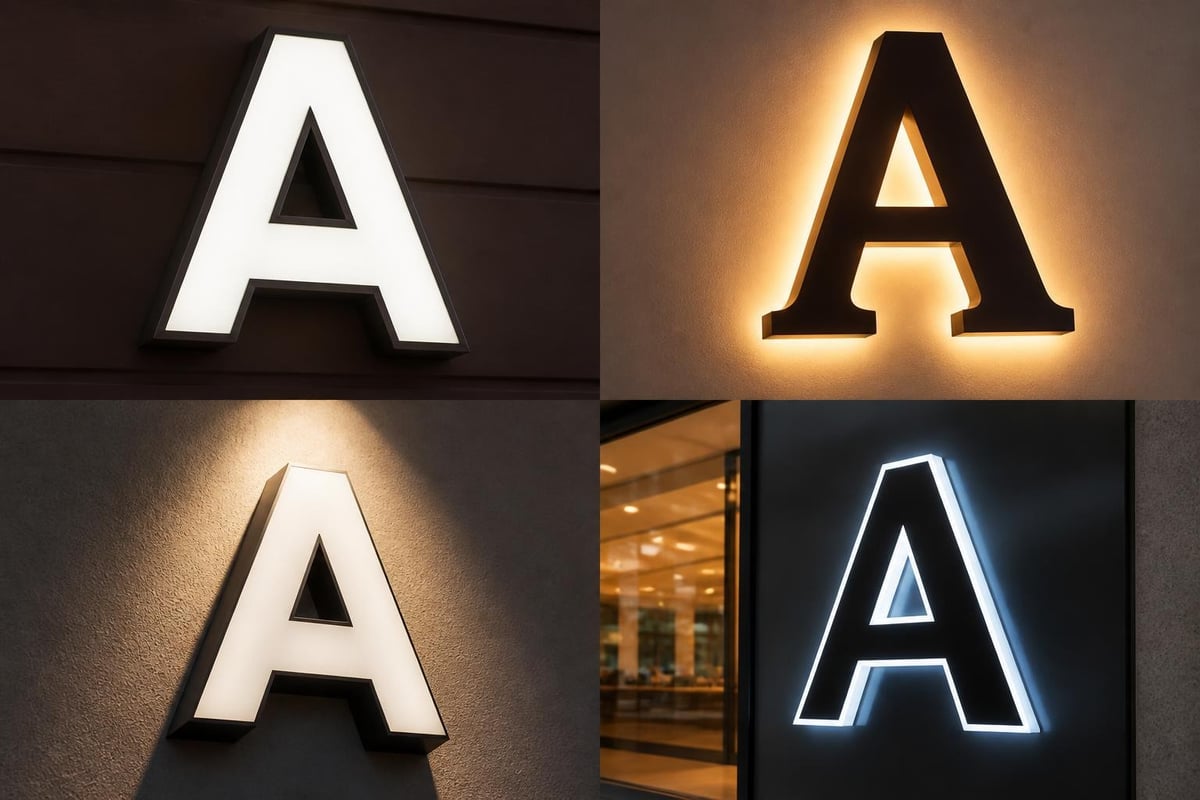
Illumination approaches include:
- Internal illumination through translucent acrylic faces
- Halo or reverse-channel lighting creating sophisticated ambient glows
- Spotlight projection for three-dimensional letters
- Edge-lit acrylic for sleek, contemporary aesthetics
The Federal Highway Administration's research on sign luminance provides valuable insights into nighttime visibility principles applicable to commercial signage, particularly regarding contrast ratios and maintained brightness levels.
Digital Signage Integration
Progressive retailers increasingly incorporate Digital Signage into their shop identification strategy. LED display technology ranging from P10 outdoor-rated panels to ultra-fine P1.8 interior screens enables dynamic content that traditional static signs cannot match.
Digital displays serve multiple functions beyond identification. They showcase promotional content, real-time inventory availability, pricing updates, and even atmospheric content that enhances brand experience. For businesses operating in ecommerce alongside physical retail, platforms like Talk Shop offer communities where merchants share insights about integrating physical and digital customer touchpoints effectively.
The Sign Research Foundation's findings on digital wayfinding demonstrate measurable improvements in customer navigation and engagement when digital elements complement traditional signage systems.
Installation and Structural Considerations
Professional installation determines whether your carefully designed sign of shop performs as intended. Improper mounting compromises both aesthetics and safety, potentially creating liability issues.
Structural assessment precedes installation planning. Building facades require evaluation for load-bearing capacity, particularly for larger signs or those projecting perpendicular to the wall. Mounting methods vary based on substrate material-brick, concrete, cladding, or glass each demand specialized fixing systems.
Site-Specific Challenges
Wind loading calculations become critical for exposed locations or elevated installations. Coastal environments demand corrosion-resistant fixtures and additional weatherproofing. Heritage buildings may require non-invasive mounting solutions that preserve architectural integrity.
Professional signage installation involves coordination with electrical contractors for illuminated signs, ensuring compliance with electrical codes and proper weatherproofing of connections. Many municipalities require licensed electricians for any mains-powered signage installations.
Maintenance and Lifecycle Management
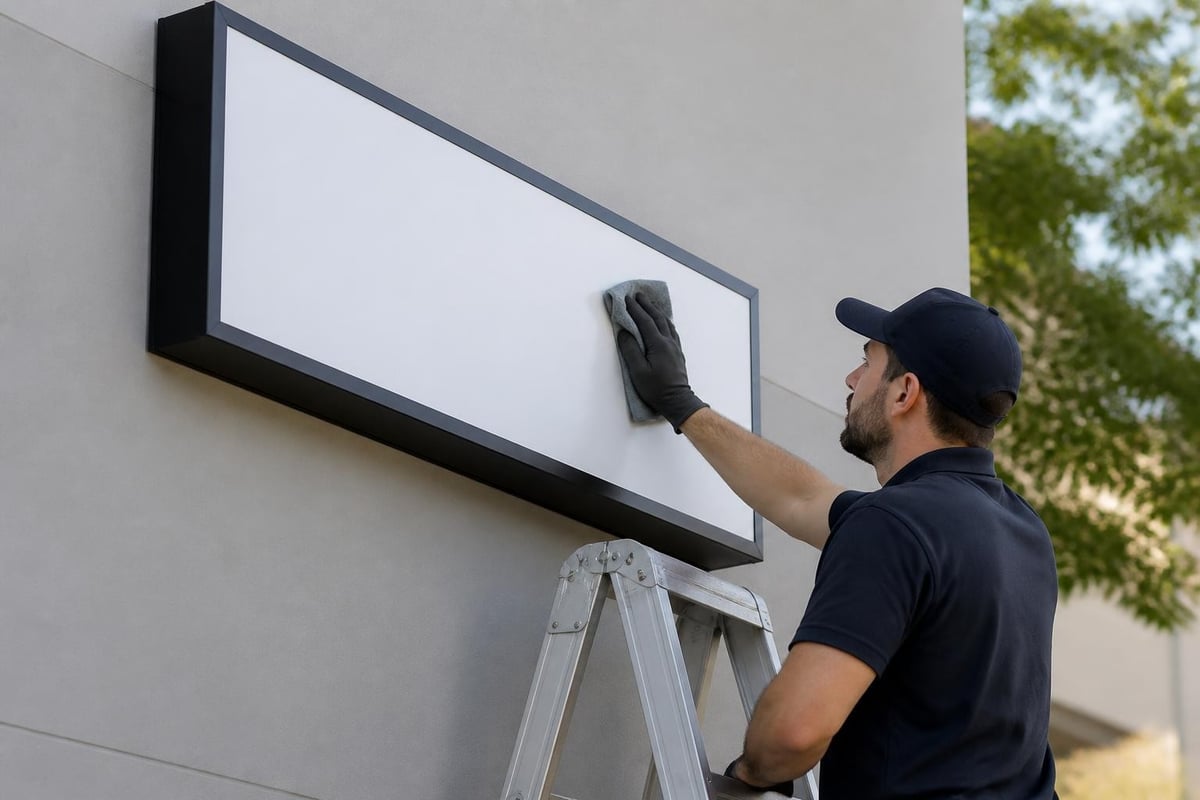
Even the most robust sign of shop requires ongoing maintenance to preserve appearance and functionality. Neglected signage degrades brand perception as effectively as poor initial design. Regular cleaning schedules prevent accumulation of pollutants, bird droppings, and atmospheric grime that diminish visibility and aesthetic appeal.
Comprehensive signage maintenance programmes should address:
- Quarterly visual inspections for damage, fading, or loose components
- Annual deep cleaning using appropriate solutions for specific materials
- LED module testing and replacement of failed components
- Structural integrity checks of mounting hardware
- Repainting or refinishing on scheduled intervals based on exposure
| Maintenance Task | Frequency | Material Considerations | Cost Impact |
|---|---|---|---|
| Surface cleaning | Monthly | Avoid abrasives on acrylic | Low |
| Detailed inspection | Quarterly | Check seals, joints, fixings | Low |
| LED functionality test | Quarterly | Replace modules in groups | Medium |
| Structural assessment | Annually | Professional engineer if elevated | Medium-High |
| Refinishing/repainting | 3-5 years | Material-dependent intervals | High |
Proactive maintenance extends sign lifespan significantly. A well-maintained aluminium sign can serve effectively for 15-20 years, whilst neglected signage may require replacement within 5-7 years.
Return on Investment and Performance Measurement
Quantifying the return from your sign of shop investment involves both direct and indirect metrics. Direct measurements include foot traffic increases following installation or refresh, conversion rates of passersby to customers, and brand recall in local market surveys.
The retail signage industry has extensively documented ROI. Studies indicate that effective exterior signage can increase walk-in traffic by 20-30% in competitive retail environments. For businesses in business parks or less visible locations, signage may represent the primary discovery mechanism for new customers.
Understanding the broader signage investment framework enables better decision-making around quality versus budget constraints. Initial cost savings from substandard materials or installation often result in higher lifecycle costs through premature replacement or ongoing repairs.
Industry-Specific Considerations
Different sectors derive varying value propositions from shop signage. Pharmaceutical retailers require clear healthcare crosses and regulatory-compliant informational elements. Corporate headquarters prioritize brand consistency and professional image. Retail environments demand attention-grabbing designs that drive impulse visits. Construction companies benefit from durable, high-visibility signage that projects capability and permanence.
Regulatory Navigation and Code Compliance
Municipal sign codes represent a complex landscape that varies dramatically between jurisdictions. The International Sign Association's guidance on sign code best practices provides frameworks for understanding common regulatory requirements whilst acknowledging local variations.
Typical code restrictions govern:
- Maximum sign area calculated as percentage of facade or absolute dimensions
- Height limitations measured from ground level or parapet
- Setback requirements from property boundaries
- Illumination restrictions including brightness levels and hours of operation
- Content neutrality principles separating commercial from non-commercial speech
Working with experienced signage professionals who understand local regulatory environments prevents costly redesigns or removal orders. Many municipalities require detailed drawings, structural engineering certifications, and electrical diagrams before issuing permits.
Typography and Readability Optimization
The typeface selection for your sign of shop dramatically impacts readability under real-world conditions. Factors including viewing distance, angle, ambient light, and movement of observers all influence legibility.
Research on sign legibility standards establishes that stroke width should approximate 1:5 to 1:8 ratio relative to letter height. Excessively thin strokes disappear at distance, whilst overly bold letters blur together.
Letter spacing (kerning) requires adjustment based on chosen typeface and viewing conditions. Condensed spacing reduces readability, particularly at oblique viewing angles. Generous spacing improves clarity but reduces the amount of information you can convey within sign area limitations.
Word Count and Message Hierarchy
Effective shop signs communicate efficiently. The average viewing duration for a sign from a passing vehicle approximates 3-5 seconds, allowing comprehension of approximately 5-7 words. Pedestrian viewing allows greater detail, but initial impact still depends on concise messaging.
Primary information (business name) should dominate the visual hierarchy, with secondary elements (tagline, services) subordinate in size and prominence. Tertiary information (contact details, hours) appears smallest, serving customers who have already decided to engage.
Environmental Impact and Sustainability
Modern businesses increasingly consider environmental implications when selecting their sign of shop. Sustainable signage practices span material selection, manufacturing processes, energy consumption, and end-of-life disposal.
LED illumination represents the most significant sustainability advancement in commercial signage. Beyond dramatic energy savings, LEDs eliminate mercury and other hazardous substances found in older fluorescent systems. Solar-powered LED signs achieve complete energy independence in suitable locations.
Material recyclability varies significantly. Aluminium offers near-infinite recyclability without quality degradation. Certain plastics recycle effectively, whilst others contaminate recycling streams. Sustainable fabrication increasingly employs water-based paints and low-VOC adhesives that reduce environmental impact.
For businesses seeking comprehensive insight into material choices, exploring materials guidance provides detailed comparisons of durability, sustainability, and performance characteristics across substrate options.
Integration with Broader Marketing Ecosystems
Your sign of shop functions as one element within an integrated marketing ecosystem. Visual consistency between signage, vehicle branding, digital presence, and interior graphics reinforces brand recognition and professionalism.
Vehicle branding strategies should echo exterior signage design language, creating mobile reinforcement of your static shop presence. When service vehicles or delivery fleets operate in your market area, they multiply brand exposures beyond your fixed location.
Digital marketing channels benefit from physical signage visibility. Customers discovering your business through exterior signs increasingly search online for additional information, operating hours, or product availability. This offline-to-online journey has become fundamental to modern customer acquisition.
Businesses operating both physical and digital storefronts can leverage communities like Talk Shop to understand how merchants successfully integrate online and offline customer touchpoints. The platform's extensive resources on ecommerce operations complement physical retail presence strategies.
Cost Structure and Budget Planning
Understanding the cost components of commercial signage enables realistic budget planning and prevents unpleasant surprises during project execution. Total investment encompasses design fees, materials, fabrication, installation, electrical work, and permitting costs.
Design fees typically represent 10-15% of total project cost for custom signage. Off-the-shelf or template-based designs reduce this percentage but sacrifice uniqueness. Material and fabrication costs vary enormously based on size, complexity, illumination, and finishing specifications.
Installation complexity drives significant cost variation. Ground-level fascia signs mounted to accessible building faces cost substantially less than elevated installations requiring crane hire, road closures, or specialized rigging equipment. Electrical work for illuminated signs adds both material costs and licensed contractor fees.
Budget allocation benchmarks by business sector:
- Retail storefronts: 2-4% of annual revenue for comprehensive exterior and interior signage
- Corporate facilities: £5,000-£25,000 for professional entrance and directory systems
- Pharmaceutical outlets: £3,000-£12,000 including regulatory-compliant interior wayfinding
- Construction companies: £4,000-£15,000 for durable, high-visibility site and office signage
These ranges reflect quality installations with appropriate materials and professional execution. Budget solutions exist but often compromise longevity, forcing premature replacement that negates initial savings.
Seasonal and Promotional Flexibility
While your primary sign of shop remains constant, supplementary signage systems enable seasonal messaging and promotional campaigns. Modular sign systems incorporate changeable message panels that update without replacing entire structures.
Banner brackets and flag systems provide cost-effective seasonal variation. Window graphics leverage valuable real estate for limited-time promotions whilst maintaining visibility of interior spaces. A-frame pavement signs capture attention of passing foot traffic with daily specials or event announcements.
Digital display integration offers maximum flexibility, enabling instant content updates across multiple locations from centralized management systems. For retailers coordinating physical and online promotions, this agility proves increasingly valuable.
The sign of shop you select profoundly influences customer perception, foot traffic, and business success across retail, corporate, pharmaceutical, and construction sectors. From material selection and regulatory compliance to maintenance planning and ROI measurement, effective signage requires strategic thinking beyond mere aesthetics. Whether you're launching a new location, refreshing an existing presence, or expanding across multiple sites, partnering with experienced professionals ensures your signage investment delivers lasting value. Signs4SA combines national manufacturing capabilities with local expertise to deliver bespoke signage solutions tailored to your industry requirements and brand objectives.