

3D Signage: The Complete Business Guide for 2026
Three-dimensional signage has transformed from a niche offering into a mainstream branding solution that businesses across South Africa are embracing for its unparalleled visual impact. Unlike traditional flat signage, 3d signage creates depth, texture, and a tangible presence that captures attention and reinforces brand identity in ways that two-dimensional alternatives simply cannot match. As we navigate through 2026, advances in manufacturing technologies, materials science, and design techniques have made these installations more accessible whilst simultaneously pushing the boundaries of what's possible in dimensional branding.
Understanding the 3D Signage Revolution
The shift towards dimensional branding reflects fundamental changes in how consumers interact with physical spaces. When a potential customer encounters 3d signage, the psychological response differs markedly from flat graphics. The depth creates shadows, highlights, and a tactile quality that engages multiple perceptual systems simultaneously.
Modern 3d signage encompasses several distinct approaches. Channel letters remain the most recognizable format, featuring individually crafted letters with depth ranging from 50mm to 300mm or more. Fabricated dimensional logos transform brand marks into sculptural elements using materials like brushed aluminium, acrylic, or composite substrates. Relief signage creates subtle dimensional effects through raised or recessed elements, whilst fully sculptural installations can reach architectural scales.
Technology Driving Dimensional Design
Manufacturing capabilities have expanded dramatically. Computer Numerical Control (CNC) routing allows precision cutting of complex three-dimensional forms from diverse materials. Laser cutting delivers intricate detail work for layered compositions. The rise of 3D printed signage has introduced unprecedented geometric freedom, enabling organic shapes and intricate lattice structures previously impossible or prohibitively expensive.
Digital fabrication technologies like those offered by Better-Ion have revolutionized prototyping processes. High-precision LCD 3D printers allow designers to test dimensional concepts rapidly, validating proportions and shadow effects before committing to full-scale production. This iterative approach reduces waste and ensures the final installation precisely matches the design vision.

Material Selection for Durability and Impact
Choosing appropriate materials determines both the aesthetic quality and longevity of 3d signage installations. Each substrate offers distinct characteristics that influence maintenance requirements, weather resistance, and visual presentation.
| Material | Durability | Weight | Cost | Best Applications |
|---|---|---|---|---|
| Aluminium | Excellent | Medium | Medium-High | Exterior letters, dimensional logos |
| Acrylic | Good | Light | Medium | Illuminated channel letters, interior features |
| PVC/Foam Board | Fair | Very Light | Low | Interior dimensional graphics, temporary installations |
| Stainless Steel | Excellent | Heavy | High | Premium exterior signage, architectural features |
| Composite Materials | Very Good | Light-Medium | Medium | Complex shapes, exterior applications |
Metal substrates provide exceptional longevity for exterior applications. Aluminium combines weather resistance with workability, accepting various finishes from brushed textures to powder coating. Stainless steel elevates perceived quality, particularly effective for corporate and pharmaceutical sectors where brand prestige matters significantly.
Acrylic formulations have evolved considerably. Modern UV-stabilized acrylics resist yellowing and maintain colour fidelity for years. When illuminated from within or behind, acrylic creates stunning glow effects that enhance visibility during evening hours. This makes them particularly valuable for retail environments where extended trading hours demand consistent brand presence.
Composite materials merge the benefits of multiple substrates. Aluminium composite panels provide structural rigidity whilst maintaining relatively light weight. Foam-core dimensional elements reduce installation loads without sacrificing visual impact.
Weather Considerations for South African Climates
The diverse climate zones across South Africa necessitate careful material specification. Coastal installations face salt air exposure requiring marine-grade finishes. Highveld regions experience intense UV radiation demanding superior colour stability. Temperature fluctuations between seasons create expansion and contraction cycles that fixings must accommodate.
Quality 3d signage installations incorporate weather-appropriate sealants, drainage channels to prevent water accumulation, and fixings that allow controlled thermal movement. These considerations extend operational life and maintain appearance standards that reflect positively on brand perception.
Illumination Techniques That Transform Dimensional Signage
Strategic lighting transforms 3d signage from daytime branding into 24-hour marketing assets. The interplay between dimensional forms and light sources creates effects impossible with flat graphics.
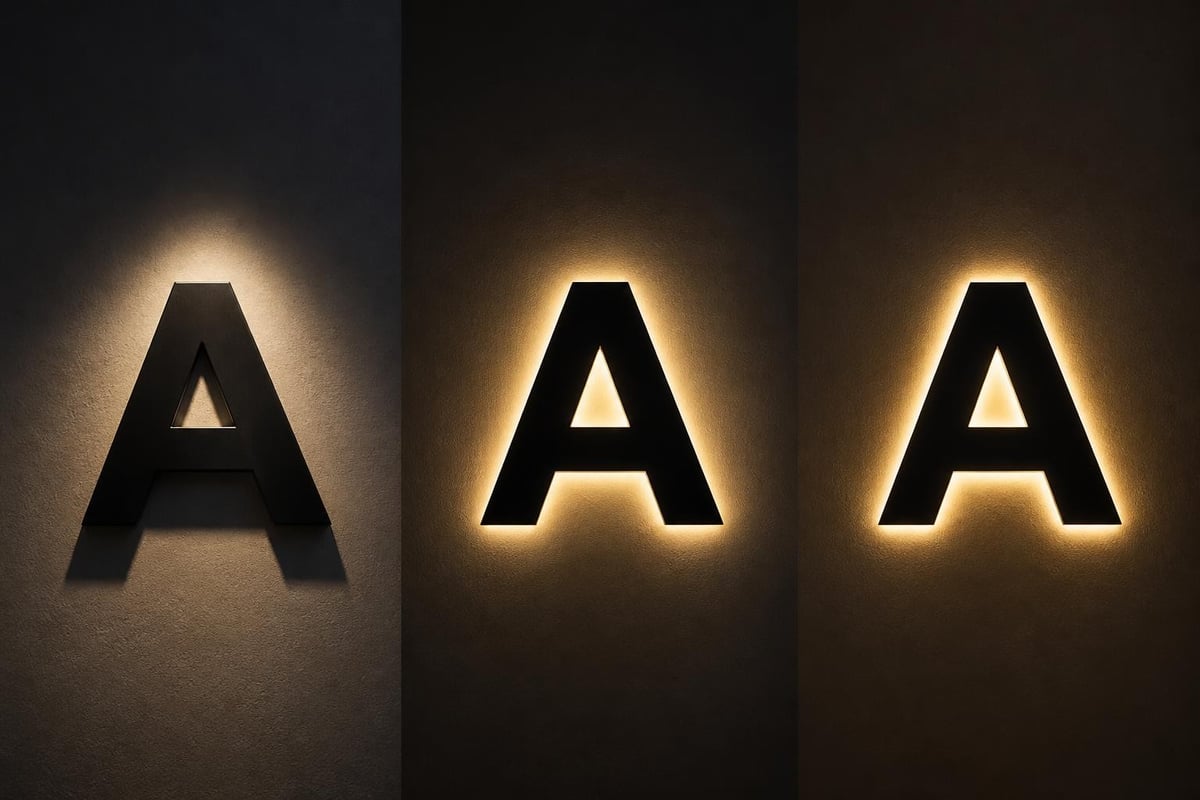
Front-lit configurations use external LED fixtures to cast light across dimensional surfaces. This approach emphasizes texture and depth through shadow play. Adjustable beam angles allow precise control over highlight and shadow ratios, creating dramatic effects after dark.
Back-lit channel letters feature translucent faces with internal LED modules. The glow effect creates exceptional visibility whilst maintaining elegant aesthetics. Modern LED technology offers programmable colour temperatures, allowing warm whites for hospitality venues or cool whites for medical facilities.
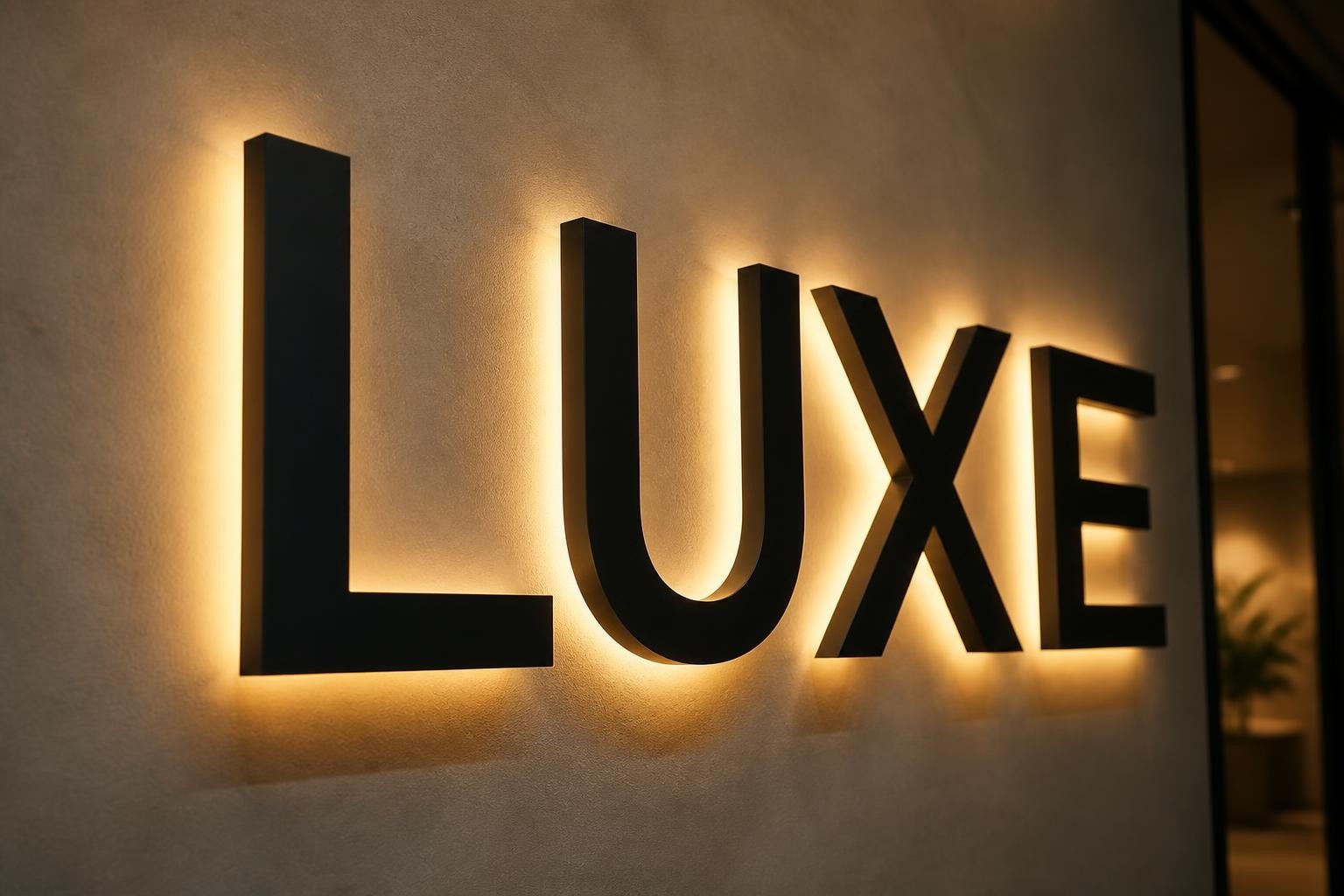
Halo illumination projects light from behind dimensional elements, creating a corona effect against the mounting surface. This sophisticated approach suits premium branding contexts where subtlety and refinement matter more than maximum visibility. 3D letter signs with halo lighting have become increasingly popular for corporate lobbies and executive offices.
The latest innovations include 3D LED channel lettering that integrates programmable LED strips directly into dimensional forms. These installations enable dynamic colour changes, animation effects, and content scheduling that adapts messaging to time of day or promotional campaigns.
Design Principles for Maximum Impact
Effective 3d signage balances visibility requirements with aesthetic considerations. Several fundamental principles guide successful dimensional design:
Typography and Dimensional Proportion
Letter depth significantly affects legibility and visual weight. As a general guideline:
- Minimum depth: 40-50mm for letters under 300mm tall
- Standard depth: 75-100mm for letters 300-600mm tall
- Premium depth: 150-300mm for letters exceeding 600mm tall
Typeface selection requires careful evaluation. Sans-serif fonts typically translate better into three dimensions, as thin serifs become fragile elements prone to damage. Stroke weight consistency ensures structural integrity across all letterforms. The psychology of colour in signage design extends into material choice, where finishes create emotional responses before viewers even process the message.
Viewing Distance and Scale Calculations
Proper sizing ensures readability from intended viewing distances:
- Close proximity (under 5 metres): Letter heights of 50-150mm work effectively
- Medium distance (5-15 metres): Letter heights of 150-400mm maintain legibility
- Long distance (15-50 metres): Letter heights of 400-1000mm become necessary
- Highway visibility (over 50 metres): Letter heights exceeding 1000mm ensure recognition
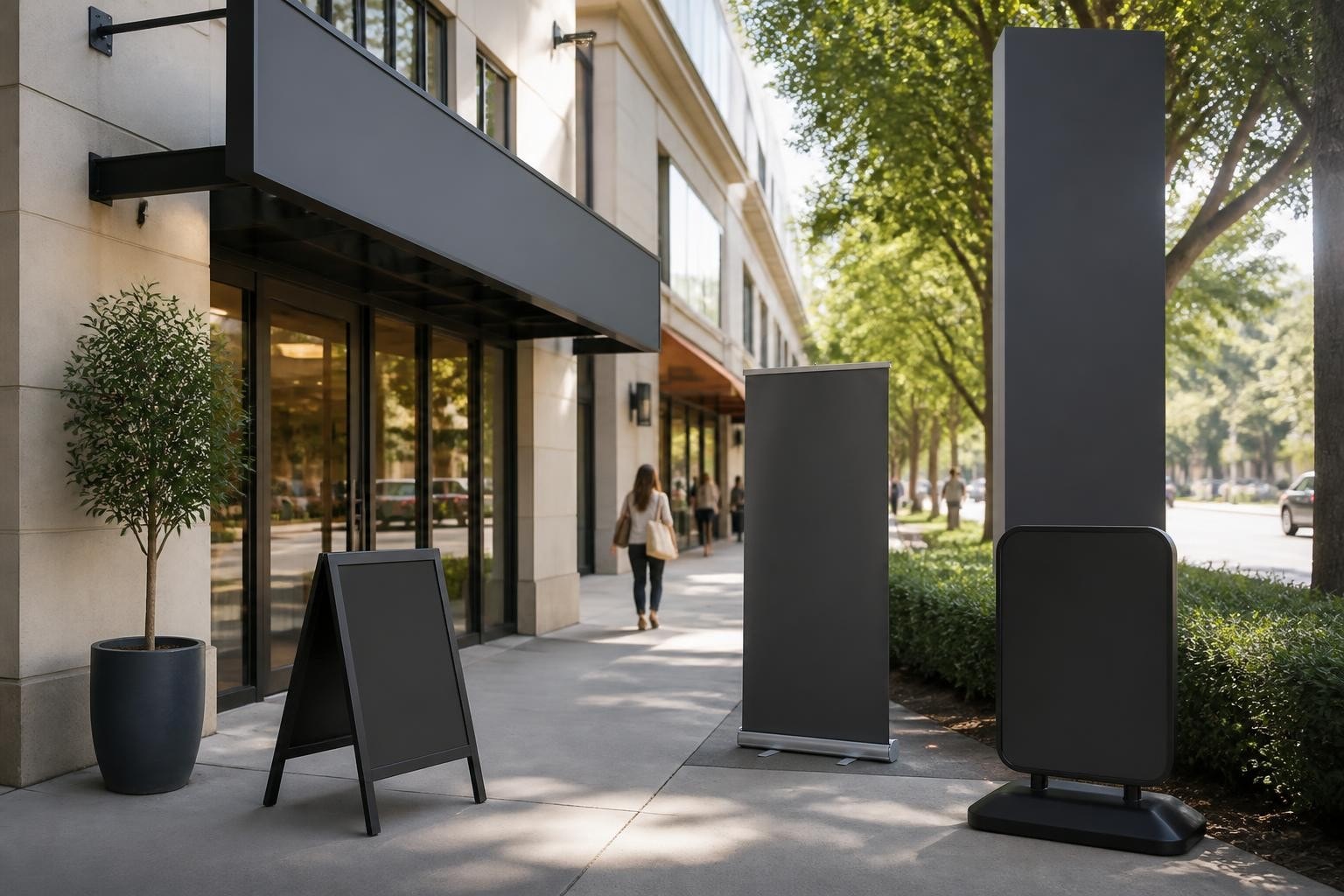
For establishments requiring pylon signage, dimensional elements on monument structures create landmark presence that guides customers from considerable distances whilst maintaining refined aesthetics at closer range.
Emerging Technologies Reshaping 3D Signage
The convergence of multiple technological streams is creating entirely new categories of dimensional signage that blur lines between physical and digital experiences.
Holographic 3D displays represent the cutting edge of dimensional signage. 3D holographic signs in 2026 use projection technology to create floating images that don't require special glasses. These installations captivate attention in retail environments, creating shareable moments that extend brand reach through social media documentation.
Spatial signage systems employ lenticular lens arrays to create glasses-free 3D effects. Samsung's recent introduction of Spatial Signage technology demonstrates commercial viability for locations demanding maximum attention capture. These displays combine the physical presence of traditional 3d signage with the dynamic content capabilities of digital signage platforms.
Augmented reality integration adds interactive layers to physical dimensional installations. QR codes embedded within 3d signage unlock additional content on smartphones, creating bridges between tangible brand touchpoints and digital engagement channels.
AI-Driven Design Optimization
Artificial intelligence tools now assist dimensional design processes. Generative design algorithms explore thousands of structural variations, identifying forms that balance visual impact with material efficiency. Computational fluid dynamics simulate how environmental factors like wind loading affect different geometries, ensuring structural integrity without over-engineering.
Recent innovations showcased at Infocomm 2026 demonstrated AI systems that generate 3d signage concepts from brand guidelines, automatically optimizing dimensional proportions for specific viewing contexts.
Installation Considerations and Structural Requirements
Proper installation determines whether 3d signage delivers years of reliable service or becomes a maintenance liability. The weight and wind loading of dimensional elements exceed flat signage by substantial margins.
Mounting Surface Evaluation
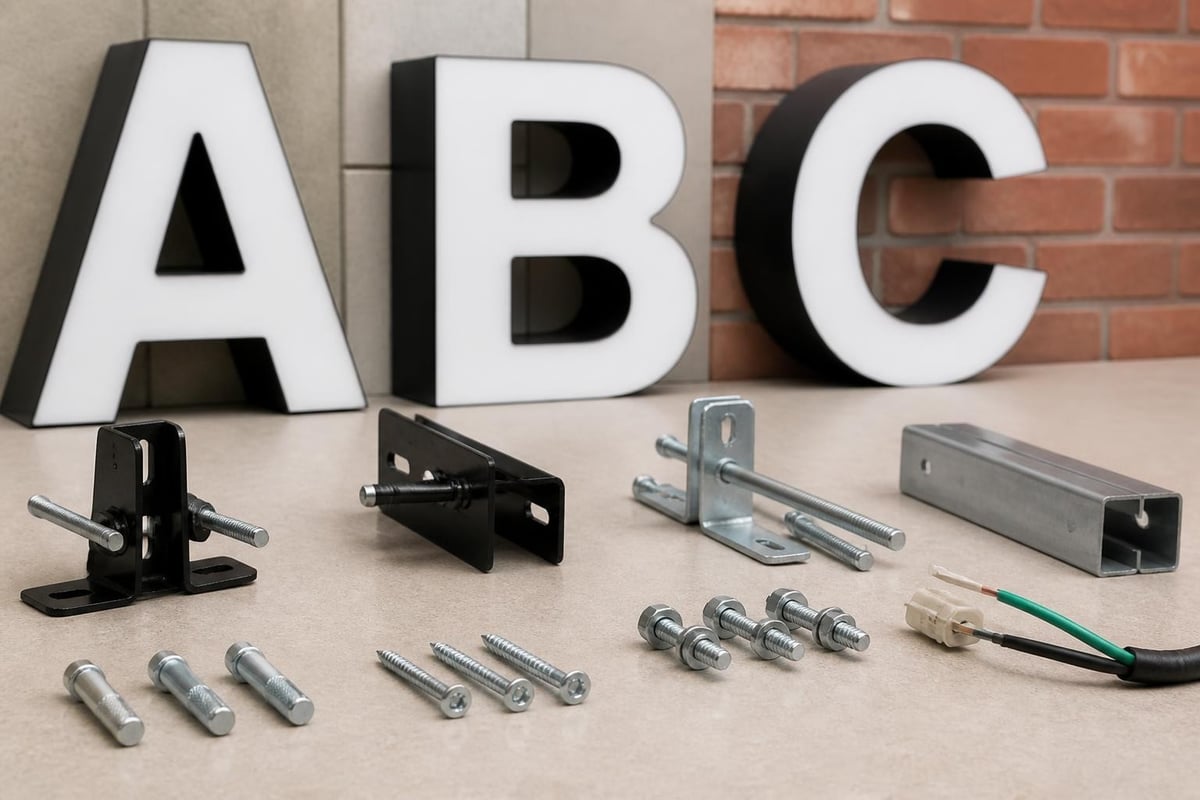
Brick and concrete substrates provide ideal anchoring for heavy dimensional installations. Through-bolts into structural elements ensure load distribution across multiple anchor points. Chemical anchors deliver exceptional pull-out resistance in solid masonry.
Metal cladding systems require specialized fixings that transfer loads to underlying structural members rather than relying on cladding panels themselves. Stand-off spacers create clearance for back-lit configurations whilst maintaining structural connectivity.
Glass curtain walls present particular challenges. Specialized point-fixings or cable suspension systems transfer loads to building structure whilst maintaining the architectural intent of transparent facades. Understanding professional signage installation importance becomes critical in these complex scenarios.
Regulatory Compliance
Municipal regulations govern dimensional signage in most South African jurisdictions. Compliance requirements typically address:
- Maximum projection distance from building facades
- Minimum clearance heights above pedestrian walkways
- Structural engineering certification for installations exceeding certain weights
- Electrical certification for illuminated installations
- Heritage considerations in protected areas
Working with experienced signage professionals who understand signage regulations and permits in South Africa streamlines approval processes and avoids costly redesigns.
Maintenance Strategies for Long-Term Performance
3d signage represents significant capital investment. Proactive maintenance preserves appearance standards and extends operational life.
Scheduled cleaning prevents accumulation of atmospheric pollutants that degrade finishes. Frequency depends on environmental exposure:
- Coastal locations: Monthly cleaning recommended
- Urban industrial areas: Bi-monthly maintenance appropriate
- Suburban settings: Quarterly cleaning typically sufficient
- Interior installations: Annual cleaning maintains appearance
Cleaning protocols vary by material. Powder-coated metals tolerate mild detergent solutions. Acrylic requires non-abrasive cleaners to prevent surface scratching. Stainless steel benefits from specialized formulations that remove fingerprints whilst enhancing lustre.
LED module replacement follows predictable lifecycle patterns. Modern LED systems typically deliver 50,000-100,000 hours of operation before experiencing significant lumen degradation. Planning replacement programs prevents gradual dimming that diminishes visibility. Our comprehensive guide on signage maintenance tips for long-term performance provides detailed protocols for various installation types.
Structural inspections verify fixing integrity annually. Thermal cycling and vibration gradually loosen connections. Torque verification and replacement of degraded weatherproofing components prevent small issues escalating into failures.
Industry-Specific Applications and Case Studies
Different sectors leverage 3d signage for distinct strategic purposes. Understanding these applications helps businesses optimize dimensional branding investments.
Corporate Environments
Reception areas and lobby spaces utilize dimensional logo installations to establish brand presence immediately upon entry. Brushed metal finishes convey professionalism. Precision fabrication demonstrates attention to detail that transfers to service quality perceptions.
Executive offices increasingly feature subtle halo-lit dimensional typography that reinforces corporate values without overwhelming refined interiors. The design trends emerging in 2026 favour minimalist approaches where dimensional elements create impact through restraint rather than excess.
Retail Applications
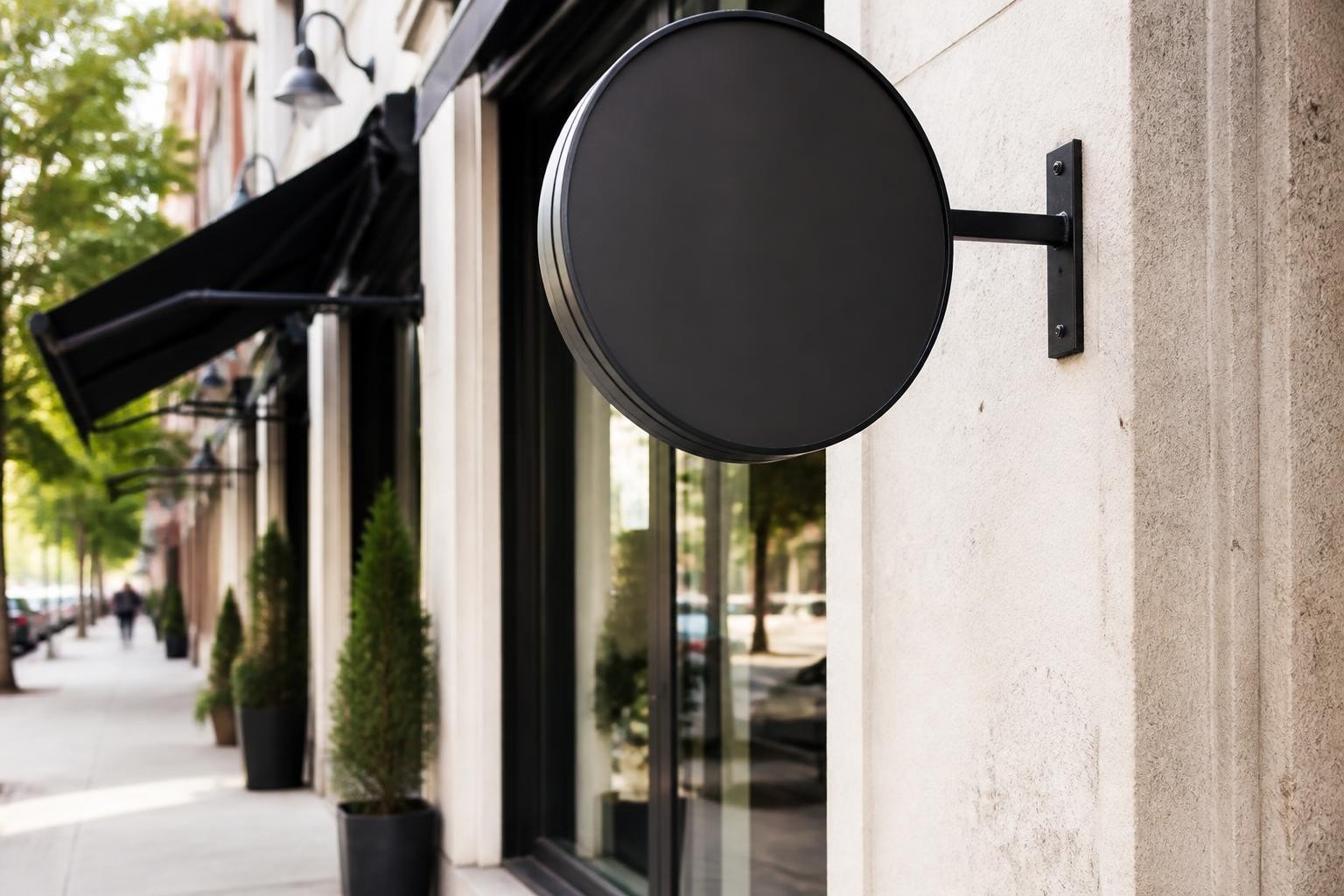
Shop facades benefit from 3d signage that creates visual hierarchy amongst competing storefronts. Dimensional brand names achieve prominence whilst maintaining architectural harmony. Illuminated channel letters extend brand visibility through evening trading hours, crucial for restaurants and entertainment venues.
Interior dimensional graphics guide customer journeys through retail spaces. Wayfinding elements with subtle dimensionality register at subconscious levels, creating intuitive navigation that enhances shopping experiences.
Pharmaceutical and Healthcare
Medical facilities require signage that conveys clinical competence whilst maintaining human warmth. Dimensional installations in reception areas balance these requirements through material selection and lighting design. Soft white illumination combined with smooth surfaces creates reassuring environments.
Wayfinding systems in hospital complexes utilize dimensional elements for improved legibility. Raised lettering assists visually impaired visitors through tactile recognition.
Cost Considerations and Investment Value
Understanding 3d signage pricing helps businesses make informed investment decisions. Multiple factors influence total project costs:
| Cost Component | Percentage of Total | Variables Affecting Price |
|---|---|---|
| Materials | 30-40% | Substrate type, finish quality, illumination components |
| Fabrication | 25-35% | Complexity, dimensional depth, custom tooling requirements |
| Installation | 15-25% | Height, access difficulty, structural modifications |
| Electrical | 5-15% | Illumination type, control systems, certification |
| Design/Engineering | 5-10% | Custom design, structural calculations, rendering |
Simple non-illuminated dimensional lettering might range from R15,000-R35,000 for modest installations. Complex illuminated channel letter systems for retail facades typically cost R75,000-R250,000 depending on scale. Premium architectural installations can exceed R500,000 where custom fabrication and specialized installation requirements apply.
The cost of commercial signage in South Africa varies considerably based on these factors, making detailed specification essential before budgeting.
Return on Investment Metrics
Dimensional signage delivers measurable business value through multiple channels:
- Increased foot traffic: Studies indicate quality 3d signage improves location discovery by 25-40%
- Brand recall improvement: Dimensional elements enhance memory retention by 60% versus flat signage
- Extended operational life: Quality installations function effectively for 10-15 years with proper maintenance
- Property value enhancement: Well-executed signage systems increase commercial property valuations
Integration with Broader Branding Strategies
3d signage functions most effectively as part of coordinated brand expression across multiple touchpoints. Consistency between dimensional installations, printed materials, digital presence, and environmental graphics creates cohesive brand experiences.
The dimensional elements should reflect brand personality established through logo design trends while translating two-dimensional marks into three-dimensional space. Tactile qualities, finish specifications, and illumination characteristics become brand attributes as recognizable as colour palettes and typography.
For businesses with vehicle fleets, coordination between 3d signage installations and vehicle branding solutions ensures consistent brand presentation across all customer touchpoints. This integrated approach amplifies recognition and reinforces positioning.
Environmental integration extends beyond the signage itself. Surrounding architecture, landscaping, and lighting design should complement dimensional installations. In premium applications, collaboration between signage specialists, architects, and lighting designers creates unified compositions where built environment and brand expression merge seamlessly.
Just as ANR Media creates custom bespoke home cinema installations where technology integrates invisibly into living spaces, sophisticated 3d signage becomes architectural rather than applied. The best installations appear inevitable, as though the building was designed specifically to support the dimensional branding.
Future Directions in Dimensional Signage
The trajectory of 3d signage development points toward increasing sophistication in both manufacturing capabilities and experiential design. Several trends merit attention:
Sustainable materials gain prominence as businesses prioritize environmental responsibility. Recycled aluminium, bio-based acrylics, and reclaimed materials deliver dimensional impact whilst reducing carbon footprints. LED efficiency improvements continue reducing operational energy consumption.
Modular systems enable businesses to refresh messaging without replacing entire installations. Dimensional frames accept interchangeable content panels, extending installation life whilst maintaining message relevance.
Smart integration embeds sensors within dimensional signage structures. Occupancy detection, environmental monitoring, and interactive capabilities transform static branding into responsive systems that adapt to context.
The convergence of physical and digital continues accelerating. High-impact 3D LED billboards demonstrate how dimensional physical structures combine with dynamic digital content for unprecedented attention capture. These hybrid approaches will likely become increasingly accessible as component costs decline and design expertise expands.
Three-dimensional signage creates lasting impressions that flat graphics simply cannot match, combining physical presence with strategic lighting to establish powerful brand positioning. Whether you're developing a new corporate identity, refreshing retail environments, or establishing landmark presence through dimensional installations, choosing experienced partners ensures your investment delivers lasting value. Signs4SA brings comprehensive expertise across dimensional fabrication, illumination design, and professional installation to help businesses throughout South Africa create signage solutions that capture attention and reinforce brand excellence. Contact our team to discuss how bespoke 3d signage can elevate your brand presence.