


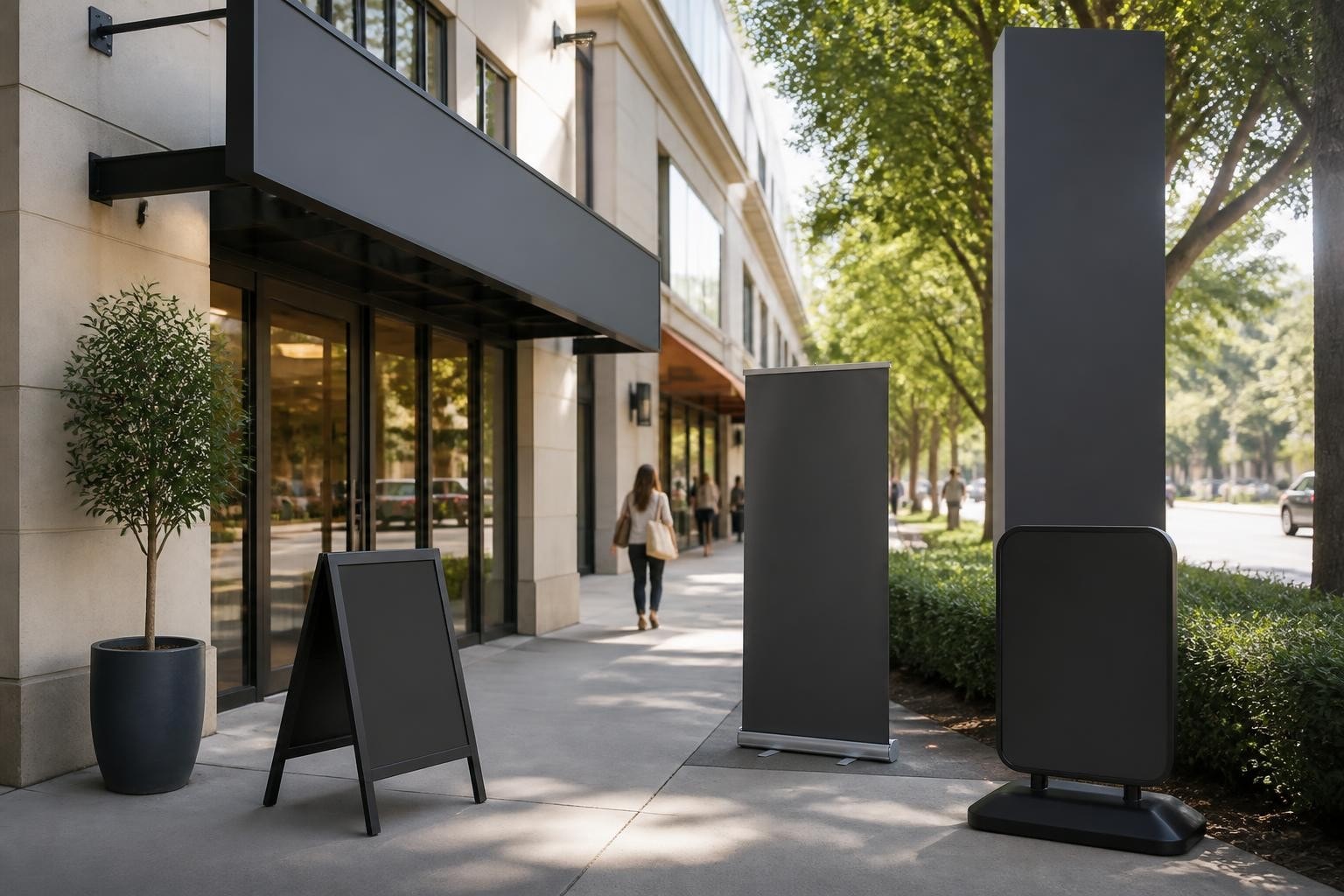
Signs and Stands: Essential Guide for Business Success
Effective visual communication remains fundamental to business success across every industry sector. Whether directing customers through a retail environment, promoting temporary offers, or establishing a commanding street presence, the strategic combination of permanent and portable display solutions creates powerful marketing opportunities. Understanding the distinct roles, applications, and benefits of various signage formats enables businesses to maximise visibility, enhance customer experience, and achieve measurable returns on investment.
Understanding the Relationship Between Signage Infrastructure and Display Frameworks
The distinction between permanent installations and portable display systems represents more than simple categorisation. Each serves specific strategic purposes within a comprehensive visual communications programme.
Fixed signage installations establish long-term brand presence and provide consistent wayfinding solutions. These permanent fixtures communicate authority, professionalism, and stability. Businesses investing in quality permanent installations demonstrate commitment to their location and create landmark recognition that builds over time.
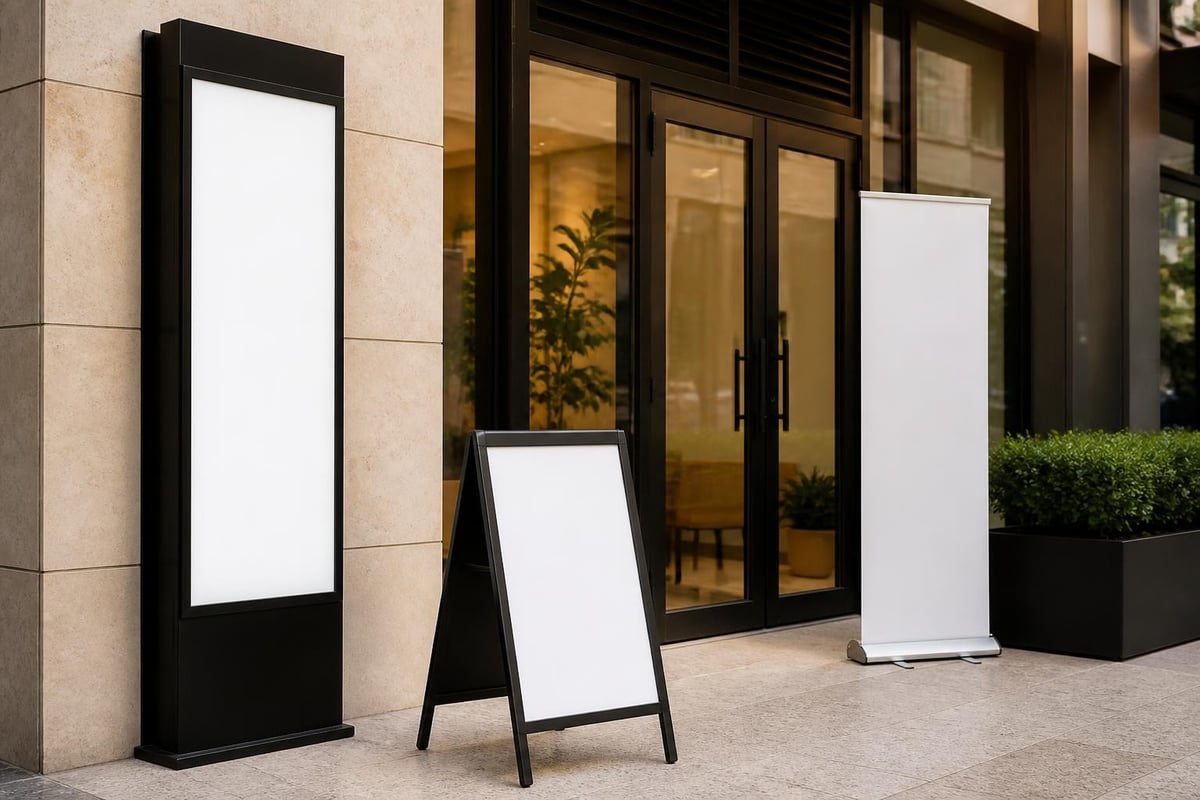
Portable display frameworks offer tactical flexibility that permanent solutions cannot match. These systems enable businesses to:
- Respond rapidly to promotional opportunities
- Adapt messaging for seasonal campaigns
- Test different locations for optimal footfall
- Deploy temporary wayfinding during events
- Supplement permanent installations during peak periods
The most successful visual communication strategies integrate both approaches, creating layered messaging that serves different customer touchpoints throughout the purchasing journey.
Material Considerations for Durability and Performance
Selecting appropriate materials significantly impacts longevity, maintenance requirements, and total cost of ownership. Modern signs and stands utilise engineered materials designed for specific environmental conditions and usage patterns.
| Material Category | Typical Applications | Weather Resistance | Lifespan | Maintenance Level |
|---|---|---|---|---|
| Aluminium composite | Building signage, pylons | Excellent | 10-15 years | Low |
| Steel framework | Structural supports, bases | Excellent (when treated) | 15-20 years | Medium |
| UV-resistant vinyl | Graphics, banners | Good | 3-5 years | Low |
| Acrylic | Illuminated panels, displays | Very good | 7-10 years | Low |
| Powder-coated finishes | All metal components | Excellent | 10+ years | Very low |
Understanding these material properties enables informed decisions that balance initial investment against lifecycle costs. Choosing the right signage materials requires evaluating environmental exposure, expected usage intensity, and brand presentation standards.
Portable Stand Solutions for Maximum Flexibility
Portable display stands deliver exceptional value for businesses requiring adaptable marketing solutions. These systems range from simple pavement boards to sophisticated modular exhibition frameworks.
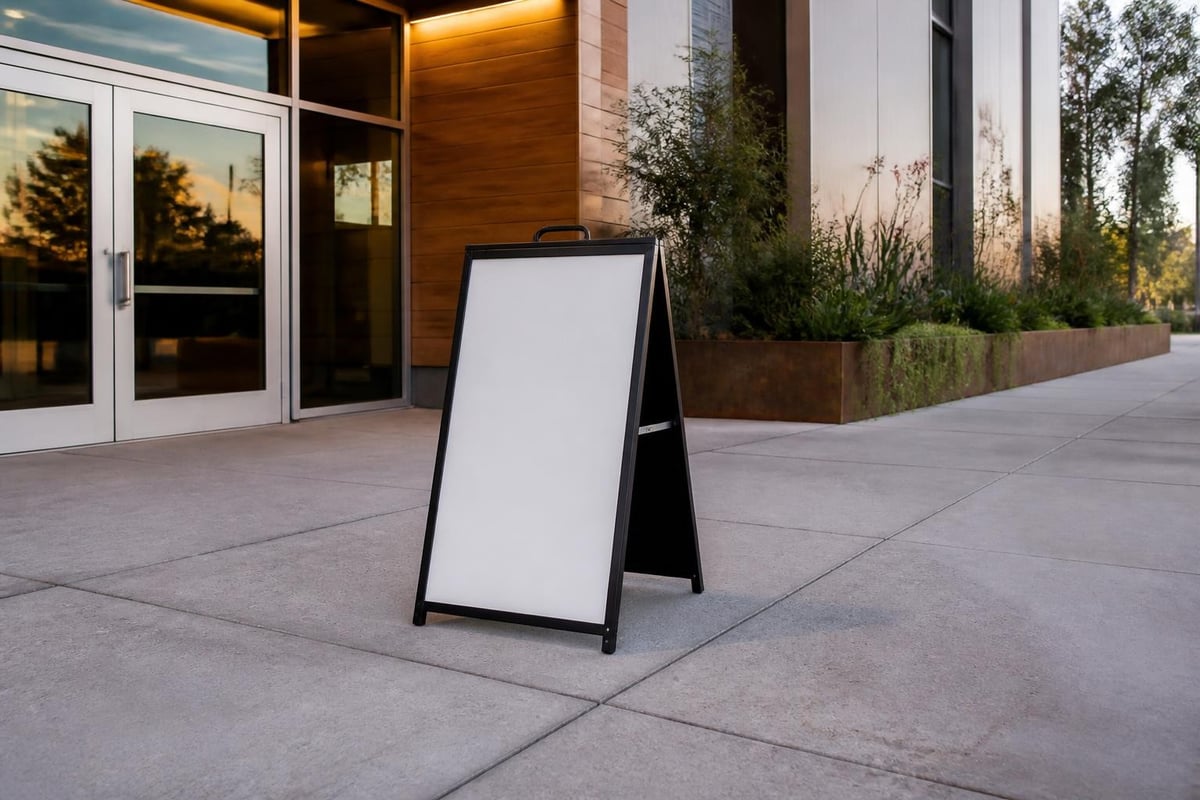
Pavement signs and A-frame boards represent the most accessible entry point for portable displays. These ground-level units capture pedestrian attention at the critical decision-making moment. Quality pavement signs feature:
- Weighted bases preventing wind displacement
- Quick-change graphic panels for daily message updates
- Weather-resistant construction for year-round outdoor use
- Swing-sign mechanisms creating movement that attracts attention
Retractable banner stands provide professional presentation for indoor environments, exhibitions, and temporary promotions. Premium retractable systems incorporate spring-loaded mechanisms ensuring graphics remain taut and wrinkle-free throughout extended deployment periods.
Modular display frameworks enable businesses to create custom configurations matching specific spatial requirements. These versatile systems connect multiple components, building exhibition stands, promotional walls, and product showcases that reconfigure for different venues and purposes.
The strategic deployment of portable stands amplifies permanent signage investments. Businesses using integrated approaches report higher customer engagement rates and improved conversion metrics compared to single-format strategies.
Location Strategy for Portable Displays
Placement decisions dramatically affect portable stand performance. Evidence-based location strategies consider pedestrian flow patterns, sight lines, and psychological factors influencing customer attention.
High-traffic transition zones where customers move between destinations offer prime opportunities. Shopfront thresholds, building entrances, and pathway intersections generate natural attention as people navigate these decision points.
Visual terminus positions at corridor ends, pathway conclusions, or sightline terminations create focal points that draw attention across distances. These locations work particularly well for directional messaging and promotional announcements.
Regulatory compliance governs portable display placement in public spaces. Understanding signage regulations and permits prevents costly violations and ensures uninterrupted marketing campaigns. Municipal authorities typically regulate pavement obstruction, right-of-way usage, and temporary installation durations.
Permanent Signage Solutions for Lasting Impact
While portable solutions offer tactical advantages, permanent installations create enduring brand presence that builds recognition and trust over time. These substantial investments require careful planning but deliver compounding returns.
Building-mounted signage establishes immediate location identification for customers navigating unfamiliar areas. Fascia signs, projecting panels, and rooftop installations create vertical presence that extends visibility range significantly beyond street-level displays.
Pylon signage delivers unmatched visibility for businesses requiring highway recognition or multi-tenant identification. These towering structures accommodate multiple tenants whilst maintaining individual brand identity. Bespoke Pylon Signage designed to specific requirements ensures optimal visibility angles, appropriate scale relationships, and structural integrity meeting engineering standards.
Monument signs provide prestigious ground-level identification suited to corporate campuses, medical facilities, and premium retail destinations. These substantial structures convey permanence, professionalism, and investment in quality that influences customer perceptions.
Illumination Technologies Enhancing Visibility
Modern illumination systems extend signage effectiveness beyond daylight hours whilst reducing energy consumption through efficient LED technology. Illuminated signs and stands transform into beacon installations that dominate evening streetscapes.
Internal LED illumination creates even, attractive lighting that highlights graphics and lettering with professional consistency. Channel letters incorporating individual LED modules deliver dimensional presence whilst maintaining energy efficiency.
External illumination using LED floodlights or spotlights offers flexibility for non-translucent materials and dimensional elements. Well-designed external lighting creates dramatic shadow effects that enhance visual interest and dimensional perception.
Digital displays represent the premium tier of illuminated solutions, enabling dynamic content that updates automatically throughout the day. These advanced systems incorporate LED signage technology delivering brilliant colour reproduction, animation capabilities, and remote content management.
Electrical installations for illuminated signage must comply with national electrical codes and safety standards. Professional installation following NFPA electrical requirements for signs ensures safe operation and prevents costly violations or safety hazards.
Accessibility and Inclusive Design Principles
Creating signage that serves all users regardless of physical abilities represents both ethical obligation and legal requirement. Accessible design principles enhance usability for everyone whilst ensuring compliance with accessibility legislation.
Tactile and Braille elements enable visually impaired individuals to navigate spaces independently. ADA standards for accessible design specify precise requirements for Braille dimensions, character spacing, and tactile letter proportions that ensure consistent legibility.
Colour contrast ratios between text and backgrounds significantly affect readability for individuals with varying vision capabilities. Minimum contrast ratios of 70% between elements ensure legibility under diverse lighting conditions and for users with colour perception variations.
Mounting heights and clearances determine whether signage remains accessible to wheelchair users whilst avoiding obstruction for pedestrians. The comprehensive technical guidance to ADA standards details precise mounting specifications, clearance requirements, and placement strategies ensuring universal accessibility.
| Sign Type | Mounting Height (mm) | Clearance Required | Tactile Required |
|---|---|---|---|
| Directional/Informational | 2030-2290 | 80mm from obstructions | No |
| Room identification | 1220-1520 (centrepoint) | No protrusion >100mm | Yes |
| Exit/Emergency | Per fire code | Maintains egress width | No |
| Accessible facility | 1520 (symbol centre) | Approach clearance required | Yes |
Implementing accessibility standards from the design phase prevents costly retrofitting whilst demonstrating commitment to inclusive customer service.
Environmental Graphics and Wayfinding Systems
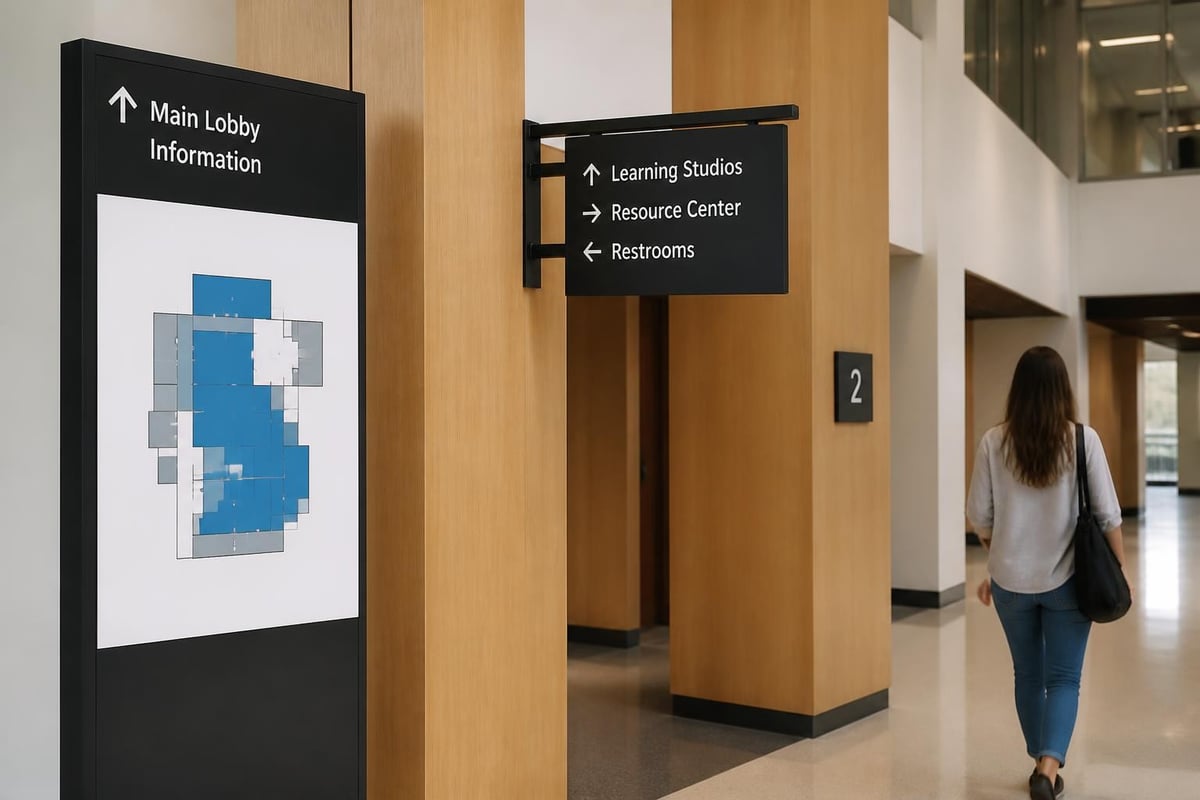
Comprehensive wayfinding systems extend beyond simple directional arrows to create intuitive navigation experiences that reduce customer frustration and enhance satisfaction. Strategic signs and stands form the physical infrastructure supporting these navigation frameworks.
Hierarchical information structures organise wayfinding content from general to specific, matching the natural decision-making process customers follow when navigating unfamiliar environments. Primary directories provide overview orientation, secondary signs narrow location options, and tertiary markers confirm final destinations.
Visual consistency across all wayfinding elements creates subliminal familiarity that speeds recognition and comprehension. Colour coding, typography, iconography, and formatting standards applied systematically throughout a facility build pattern recognition that functions almost unconsciously.
The AIGA design principles for wayfinding systems provide evidence-based guidance for creating effective environmental graphic programmes. These comprehensive frameworks address information hierarchy, decision-point identification, and human factors research informing optimal placement and presentation.
Integration with Digital Navigation Technologies
Modern wayfinding increasingly integrates physical signage with digital navigation tools, creating hybrid systems that leverage strengths of both approaches. Physical signs and stands provide constant presence requiring no battery power or network connectivity, whilst digital tools offer personalisation, real-time updates, and accessibility features.
QR code integration on permanent installations enables customers to access detailed information, multilingual content, or navigation assistance through personal devices. This augmentation extends basic signage capabilities without requiring expensive digital display infrastructure.
Location beacons incorporated into signage frameworks enable indoor positioning systems that provide turn-by-turn navigation through complex facilities. These technologies particularly benefit healthcare campuses, airports, and large retail environments where customer orientation challenges impact satisfaction.
The most effective approaches maintain functional independence between physical and digital elements, ensuring wayfinding remains operational during technology failures whilst leveraging digital enhancements when available.
Maintenance and Lifecycle Management
Protecting signage investments requires proactive maintenance programmes addressing cleaning, inspection, and timely repairs. Well-maintained signs and stands preserve professional appearance whilst preventing minor issues from escalating into costly failures.
Scheduled cleaning protocols vary according to material type, environmental exposure, and finish specifications. Exterior installations in industrial areas require more frequent attention than interior displays in climate-controlled environments. Long-term signage maintenance tips help preserve appearance and functionality throughout the installation lifecycle.
Structural inspections identify wear patterns, fastener degradation, and weather damage before failures occur. Annual professional assessments for permanent installations detect issues invisible during routine cleaning, preventing sudden failures that interrupt business operations or create safety hazards.
Component replacement strategies balance preventive maintenance against run-to-failure approaches. High-visibility elements like graphics and lamps justify scheduled replacement maintaining optimal presentation, whilst structural components typically operate reliably until showing clear degradation signs.
Sustainability and Environmental Responsibility
Growing environmental awareness influences material selection, manufacturing processes, and end-of-life disposal considerations. Sustainable signage strategies reduce environmental impact whilst often delivering long-term cost advantages.
Recycled-content materials reduce virgin resource consumption without compromising performance. The EPA's Comprehensive Procurement Guideline identifies recycled-content standards for signage materials including aluminium substrates, plastic components, and steel frameworks.
Energy-efficient illumination through LED technology dramatically reduces operational costs whilst eliminating frequent lamp replacements associated with traditional lighting systems. LED systems deliver 50,000-100,000 operating hours compared to 10,000-20,000 hours for fluorescent alternatives.
Modular design approaches enable component-level replacement extending overall system life. Rather than discarding entire installations when graphics require updating, modular systems accommodate panel replacement maintaining structural elements across multiple refresh cycles.
Regulatory Compliance and Permitting Requirements
Navigating the regulatory landscape surrounding commercial signage prevents delays, fines, and forced removal of non-compliant installations. Requirements vary significantly between jurisdictions, building types, and installation locations.
Municipal permits govern size limitations, setback requirements, illumination restrictions, and structural specifications for most commercial signage. The New York City sign permit requirements demonstrate typical municipal controls including electrical permits, structural engineering certifications, and installation contractor licensing.
Historic district regulations impose additional restrictions preserving architectural character within designated conservation areas. These controls often limit materials, colours, mounting methods, and illumination types beyond standard commercial signage codes.
Building code compliance addresses structural loading, wind resistance, seismic considerations, and fire safety requirements. Professional engineering certification demonstrates compliance with structural requirements, particularly for large installations or locations experiencing extreme weather conditions.
The Seattle sign and billboard permit guide illustrates comprehensive permitting processes including right-of-way considerations, inspection requirements, and ongoing compliance obligations extending beyond initial installation approval.
Cost Optimisation Strategies Maximising Return on Investment
Strategic purchasing approaches and lifecycle cost analysis enable businesses to maximise signage value whilst controlling expenditure. Understanding signage investment from a total cost perspective reveals opportunities invisible when focusing solely on initial purchase price.
Phased implementation programmes spread capital investment across multiple budget cycles whilst delivering immediate partial benefits. Prioritising high-impact locations and adding secondary installations as resources permit maintains momentum without requiring substantial single-year expenditure.
Standardisation across multiple locations generates economies of scale reducing per-unit costs significantly. Businesses operating multiple sites achieve substantial savings through template designs adapted to specific locations rather than custom designing each installation independently.
The relationship between quality and longevity dramatically affects lifecycle costs. Premium materials and construction adding 30% to initial investment often deliver 200-300% service life extensions, substantially reducing annualised costs whilst eliminating interim replacement expenses and installation disruptions.
Selecting and implementing effective signs and stands requires balancing aesthetic objectives, functional requirements, regulatory compliance, and budget constraints within a comprehensive visual communications strategy. The most successful approaches integrate permanent and portable solutions creating layered messaging that serves customers throughout their journey whilst maintaining brand consistency and professional presentation. Whether you're establishing new locations, refreshing existing installations, or developing comprehensive wayfinding systems, partnering with experienced specialists ensures optimal results. Signs4SA delivers bespoke signage solutions backed by skilled experts and a national footprint, helping businesses across corporate, retail, construction, and pharmaceutical sectors achieve their visual communication objectives through quality craftsmanship and professional service.