



Road Construction Signs: Essential Guide for 2026
Road construction signs serve as the critical communication link between road workers, motorists, and pedestrians in active work zones. These essential safety devices reduce accidents, guide traffic flow, and protect both construction personnel and the travelling public. As infrastructure development continues across South Africa and worldwide, understanding the proper selection, placement, and maintenance of these signs becomes increasingly important for contractors, municipal authorities, and signage professionals alike.
Understanding Road Construction Sign Categories
Road construction signs fall into several distinct categories, each serving specific purposes within work zones. Regulatory signs control traffic behaviour through legally enforceable instructions, whilst warning signs alert drivers to upcoming hazards or changing road conditions. Temporary traffic control signs direct vehicles around construction areas, and guide signs provide navigational information during roadworks.
Regulatory Construction Signage
These signs communicate mandatory instructions that drivers must follow:
- Stop and Yield Signs: Control right-of-way at intersections within construction zones
- Speed Limit Reductions: Enforce reduced speeds through work areas
- Lane Closure Notifications: Indicate which lanes remain open to traffic
- Restricted Access Signs: Prevent unauthorised entry to dangerous zones
Regulatory road construction signs carry legal authority, meaning violations can result in fines or penalties. Their placement must follow precise standards outlined in national traffic control manuals to ensure enforceability and effectiveness.
Warning Sign Systems
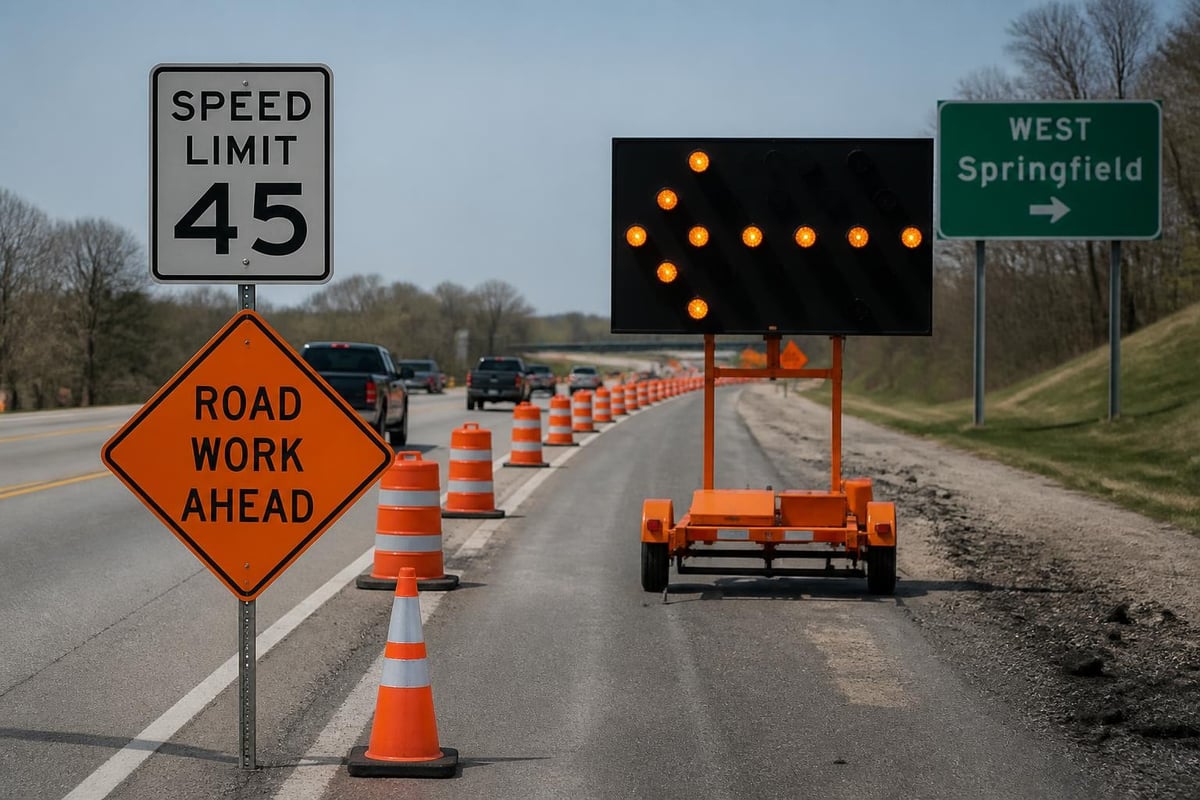
Warning signs prepare motorists for upcoming hazards or changes in road conditions. These typically feature yellow or orange backgrounds with black symbols or text, making them immediately recognisable. Common examples include "Road Work Ahead," "Uneven Surface," "Loose Gravel," and "Workers Present" notifications.
The Manual on Uniform Traffic Control Devices (MUTCD) construction signs standards provide comprehensive guidance on colour schemes, reflectivity requirements, and placement distances that ensure drivers receive adequate warning time to adjust their behaviour safely.
Material Selection and Durability Requirements
Selecting appropriate materials for road construction signs directly impacts their visibility, longevity, and overall effectiveness. Modern construction signage utilises various substrate materials, reflective sheeting grades, and protective coatings designed to withstand harsh environmental conditions.
| Material Type | Typical Lifespan | Best Applications | Weather Resistance |
|---|---|---|---|
| Aluminium Sheet | 7-10 years | Permanent installations | Excellent |
| Corrugated Plastic | 2-4 years | Temporary zones | Good |
| High-Intensity Prismatic Sheeting | 10+ years | High-speed roads | Excellent |
| Engineer Grade Reflective | 5-7 years | Low-speed areas | Moderate |
Reflectivity Standards for Construction Zones
Nighttime visibility remains paramount in construction areas where lighting may be limited or inconsistent. Reflective sheeting grades range from engineer grade (lowest) to diamond grade (highest), with each level offering different retroreflective properties. High-speed roadways typically require higher-grade sheeting to ensure adequate visibility at greater distances.
Research into comprehensive traffic sign condition assessment demonstrates that both daytime visual performance and nighttime retroreflectivity evaluation play crucial roles in maintaining effective signage throughout construction projects. Regular inspections help identify signs requiring replacement before visibility becomes compromised.
Placement Strategies and Spacing Guidelines
Proper placement of road construction signs ensures drivers receive timely information whilst maintaining sufficient reaction time. Spacing depends on several factors including road speed limits, sight distances, traffic volumes, and the complexity of work zone configurations.
The Iowa Department of Transportation's design manual offers practical insights into positioning regulatory, warning, and guide signs during construction and maintenance projects. Their guidelines emphasise advance warning distances that increase proportionally with higher speed limits.
Advance Warning Distance Calculations
Standard spacing formulas account for:
- Posted speed limits and actual traffic speeds
- Road geometry and sight line restrictions
- Weather conditions common to the region
- Driver reaction times and braking distances
- Sign complexity and information density
For example, on a 100 km/h roadway, the first advance warning sign typically appears 500-800 metres before the work zone. Additional signs at progressively closer intervals reinforce the message and prepare drivers for specific actions required.
Construction professionals working with safety signage compliance understand that proper spacing prevents information overload whilst ensuring no critical gaps exist in communication with motorists.
Regulatory Compliance and Legal Requirements
Road construction signs must comply with national and local regulations governing traffic control devices. These standards ensure consistency across jurisdictions, enabling drivers to recognise and respond appropriately to signage regardless of location. Non-compliance can result in legal liability if accidents occur due to inadequate or improperly placed signage.
OSHA's regulations on construction signs emphasise their critical role in worker safety by clearly communicating hazards and controlling traffic in work zones. Contractors bear responsibility for implementing compliant signage systems that protect both workers and the public.
Documentation and Approval Processes
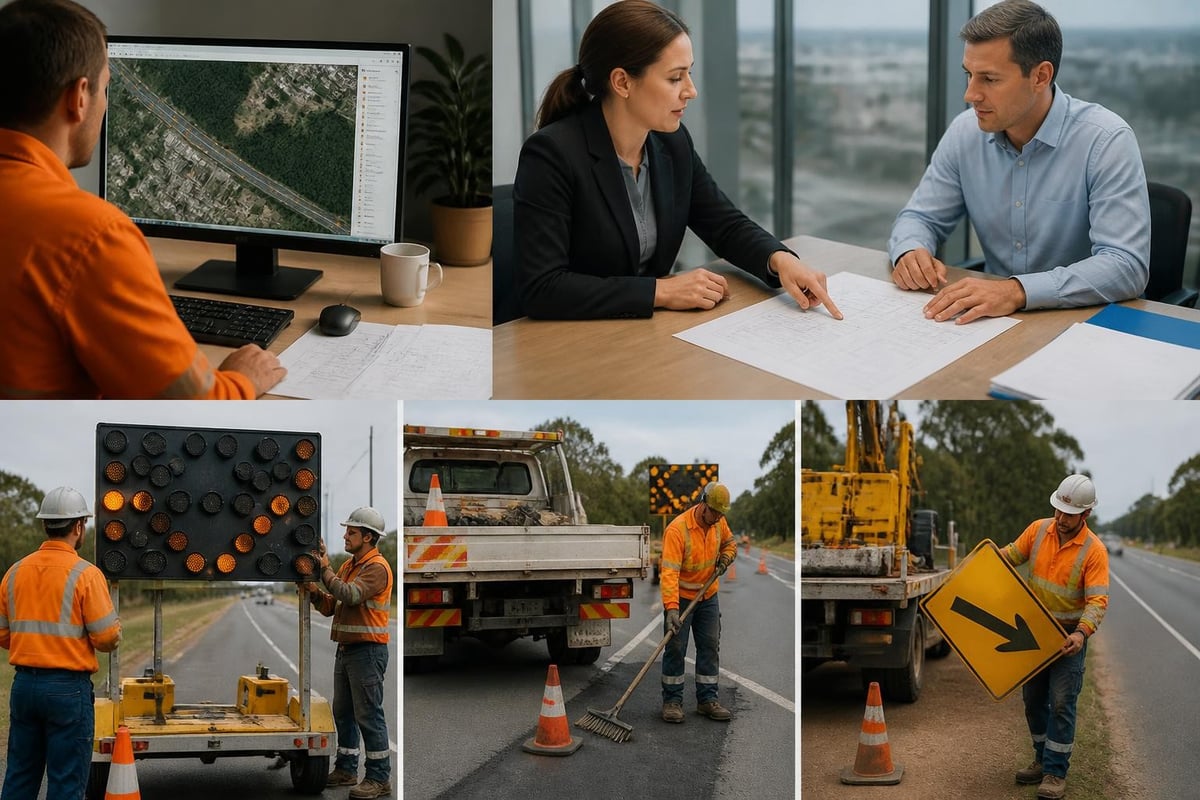
Before installation, construction signage plans typically require approval from relevant authorities:
- Municipal traffic departments review placement plans
- Road agencies verify compliance with national standards
- Health and safety inspectors assess worker protection measures
- Insurance providers may require documentation of safety protocols
Maintaining detailed records of sign inventory, placement dates, and maintenance activities provides evidence of due diligence should incidents occur. This documentation also facilitates coordination between multiple contractors working on complex projects.
Customisation and Specialised Applications
Whilst standard road construction signs address most situations, certain projects require bespoke solutions tailored to unique circumstances. Custom signage accommodates unusual traffic patterns, multiple languages, or site-specific hazards not covered by conventional signs.
The four essential rules for designing custom road signs stress compliance with the Manual on Uniform Traffic Control Devices whilst allowing flexibility for project-specific needs. Designers must balance regulatory requirements with clear communication of critical information.
Creating Effective Custom Messages
Custom road construction signs work best when they:
- Use simple, direct language familiar to target audiences
- Incorporate universally recognised symbols where possible
- Maintain colour schemes consistent with standard sign categories
- Avoid excessive text that drivers cannot read quickly
- Include distance information or directional guidance
For instance, a complex urban regeneration project might require custom signs indicating multiple detour routes for different vehicle classes. These signs must convey substantial information whilst remaining readable at highway speeds. Professionals offering custom signage solutions understand how to balance information density with visual clarity.
Technological Integration in Modern Construction Signage
Digital technology increasingly enhances traditional road construction signs, offering dynamic messaging capabilities that adapt to changing conditions. Variable message signs (VMS) display real-time information about delays, alternate routes, or changing work schedules, providing flexibility impossible with static signage.
Digital Signage solutions range from simple LED displays showing basic messages to sophisticated systems integrating with traffic management platforms. These technologies prove particularly valuable on long-duration projects where conditions evolve throughout the construction period.
Smart Sign Technologies
Advanced road construction signs incorporate sensors and connectivity features:
- Speed detection systems that activate warning lights when approaching vehicles exceed safe speeds
- Connectivity to central control systems allowing remote message updates
- Solar power integration eliminating electrical infrastructure requirements
- Automated monitoring that alerts supervisors to sign damage or malfunction
Research exploring vision-based warning systems for maintenance personnel on short-term roadwork sites demonstrates how technology enhances safety through acoustic and visual alerts about approaching vehicles. These innovations complement traditional signage by adding active safety layers.
Installation Best Practices and Support Systems
Proper installation ensures road construction signs remain stable, visible, and effective throughout project duration. Support systems must withstand wind loads, vehicle strikes, and environmental stresses whilst maintaining correct positioning and alignment.
| Support Type | Typical Height | Stability Rating | Installation Time |
|---|---|---|---|
| Spring-Loaded Base | 1.2-1.5m | Moderate | 5-10 minutes |
| Weighted Portable Stand | 1.0-1.8m | Good | 10-15 minutes |
| Driven Steel Posts | 1.5-2.5m | Excellent | 20-30 minutes |
| Concrete Footings | 2.0-3.0m | Superior | 2-4 hours |
Positioning and Orientation Considerations
Signs must face oncoming traffic at appropriate angles whilst avoiding obstructions that reduce visibility. Installation teams consider:
- Sight triangles ensuring signs remain visible from required distances
- Lateral offset from active traffic lanes meeting safety clearance requirements
- Height above roadway appropriate for sign type and viewing distance
- Orientation angle maximising reflectivity for nighttime viewing
- Redundancy planning with backup signs for critical messages
The Colorado Department of Transportation provides guidelines on signing and pavement markings, including standard highway signs, to ensure consistency and safety in road construction zones. Their comprehensive approach addresses installation standards alongside design specifications.
Maintenance Protocols for Construction Zone Signage
Regular maintenance keeps road construction signs functioning effectively throughout project duration. Environmental exposure, vandalism, and accidental damage can compromise visibility and structural integrity, necessitating systematic inspection and repair programmes.
Maintenance activities include:
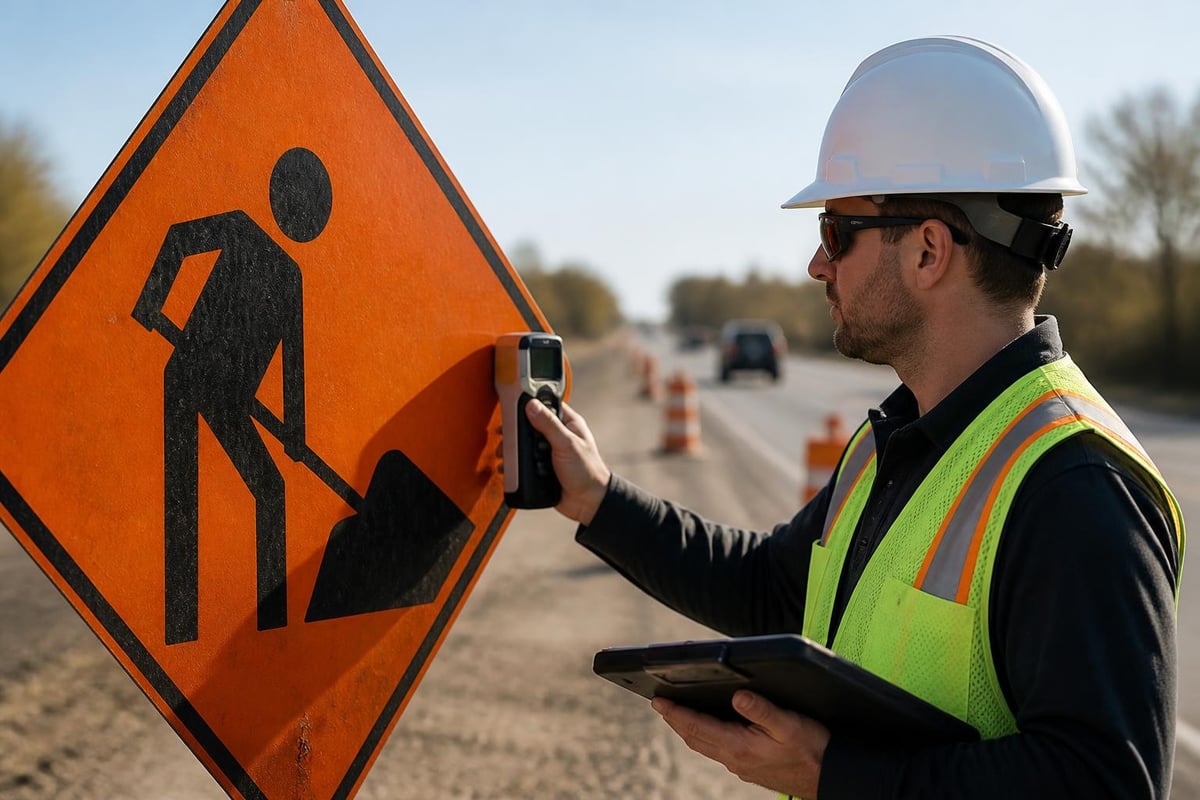
- Daily visual inspections of critical signs
- Weekly comprehensive surveys of all construction signage
- Immediate replacement of damaged or missing signs
- Cleaning of reflective surfaces to maintain nighttime visibility
- Adjustment of signs displaced by wind or traffic impacts
- Documentation of maintenance activities for compliance records
Many construction projects assign specific personnel responsibility for signage maintenance, ensuring consistent attention to this critical safety element. For longer-duration projects, implementing a signage maintenance programme prevents gradual deterioration from compromising effectiveness.
Temporary Traffic Control Plan Integration
Road construction signs function as components within comprehensive temporary traffic control plans (TTCPs) that coordinate all safety measures throughout work zones. These plans integrate signage with pavement markings, channelising devices, barrier systems, and lighting to create cohesive safety environments.
Effective TTCPs sequence information logically, guiding motorists through advance warning, transition, activity, and termination areas. Each zone requires specific signage supporting its function within the overall traffic management strategy.
Coordination with Other Traffic Control Devices
Road construction signs work alongside complementary safety elements:
- Channelising devices (cones, drums, barriers) that physically direct traffic flow
- Pavement markings providing visual guidance aligned with sign messages
- Warning lights that enhance sign visibility, particularly at night
- Flag personnel who provide real-time traffic control at critical points
- Portable traffic signals coordinating alternating traffic flows
For particularly complex projects involving structural work, coordination may extend to related industries. For instance, road widening projects sometimes require temporary structures, and partnering with specialists in timber frame buildings can provide innovative solutions for temporary facilities or protective structures around construction zones.
Worker Safety and Internal Zone Signage
Beyond signs communicating with motorists, construction zones require internal signage protecting workers from site-specific hazards. These signs address dangers ranging from heavy equipment operation to confined spaces, unstable ground conditions, and overhead hazards.
Internal road construction signs typically follow industrial safety sign standards rather than traffic control specifications. They use different colour schemes and symbols designed for pedestrian viewing distances rather than high-speed vehicle approaches.
Personal Protective Equipment Notifications
Mandatory PPE signs ensure workers understand safety requirements before entering specific zones:
- High-visibility clothing requirements in all active work areas
- Hard hat zones near overhead work or equipment operation
- Safety footwear requirements throughout construction sites
- Hearing protection in high-noise environments
- Respiratory protection for areas with dust or fumes
These signs complement site induction processes and safety briefings, providing persistent reminders of critical safety requirements. Understanding broader industry insights helps contractors implement comprehensive safety signage programmes addressing both traffic and worker protection.
Environmental Considerations and Sustainability
Modern road construction signs increasingly incorporate sustainable practices addressing environmental concerns throughout their lifecycle. Material selection, manufacturing processes, installation methods, and end-of-life disposal all present opportunities for reducing environmental impact.
Sustainable signage practices include:
- Using recycled aluminium substrates reducing virgin material consumption
- Selecting water-based inks and coatings minimising volatile organic compounds
- Implementing solar-powered illumination eliminating electrical infrastructure
- Designing modular systems enabling component replacement rather than complete sign disposal
- Establishing recycling programmes for decommissioned signs
Some forward-thinking organisations now conduct lifecycle assessments of signage systems, evaluating total environmental impact from raw material extraction through disposal. This comprehensive approach identifies opportunities for improvement whilst balancing environmental goals with safety and regulatory requirements.
Future Trends in Construction Zone Communication
Emerging technologies promise to enhance how road construction signs communicate with motorists and integrate with broader transportation systems. Connected vehicle technologies enable direct communication between infrastructure and vehicles, potentially supplementing or eventually replacing certain traditional signage functions.
Research examining the suitability of existing road design guidelines for autonomous vehicles highlights potential challenges in road sign recognition and the need for updated standards in construction zones. As autonomous vehicle adoption increases, construction signage may need adaptation ensuring reliable machine vision interpretation alongside human readability.
Intelligent Transportation System Integration
Advanced road construction signs increasingly connect with intelligent transportation systems (ITS) providing real-time traffic information to motorists:
- Integration with navigation applications providing advance notice of construction zones
- Coordination with traffic signal systems optimising flow around work areas
- Connection to incident management systems enabling rapid response to accidents
- Data collection capabilities informing traffic engineering decisions
- Automated compliance monitoring reducing manual inspection requirements
These developments suggest road construction signs will evolve from passive communication devices to active participants in comprehensive traffic management ecosystems, whilst maintaining core safety functions that have made them indispensable for decades.
Training and Competency Requirements
Effective deployment of road construction signs requires trained personnel understanding regulatory requirements, installation techniques, and maintenance protocols. Many jurisdictions now mandate specific training for individuals responsible for traffic control in construction zones.
Training programmes typically cover:
- National and local traffic control standards and regulations
- Sign selection criteria for different road types and traffic conditions
- Proper installation and support system selection
- Maintenance inspection procedures and documentation requirements
- Emergency response protocols for sign-related incidents
Organisations investing in comprehensive training programmes report fewer compliance issues, reduced accident rates, and improved project efficiency. Developing internal expertise ensures consistent quality across multiple projects whilst reducing dependence on external consultants for routine signage decisions.
Road construction signs represent critical safety infrastructure requiring careful selection, proper installation, and diligent maintenance throughout project duration. Understanding regulatory requirements, material options, placement strategies, and emerging technologies enables construction professionals to create safer work zones protecting both workers and the travelling public. Whether you're planning a major highway reconstruction or temporary roadworks, Signs4SA delivers comprehensive signage solutions backed by expert knowledge and national coverage. Contact our team today to discuss your construction signage requirements and discover how our bespoke manufacturing capabilities can support your next project.