


Work Signs: Essential Guide to Workplace Signage in 2026
Work signs form the backbone of effective workplace communication, serving as silent guardians that protect employees, guide visitors, and ensure regulatory compliance across diverse industrial settings. From manufacturing floors to corporate offices, these critical visual elements communicate essential information instantaneously, transcending language barriers and providing constant vigilance where human oversight might falter. In 2026, the evolution of workplace signage continues to advance, incorporating both traditional physical solutions and cutting-edge digital technologies to meet the complex demands of modern business environments.
Understanding the Critical Role of Work Signs
Every workplace, regardless of size or industry, requires a strategic approach to signage that addresses safety requirements, operational efficiency, and legal obligations. The fundamental purpose of work signs extends beyond simple decoration or branding-they serve as primary communication tools that prevent accidents, direct traffic flow, and maintain compliance with occupational health and safety regulations.
Effective workplace signage creates an environment where employees can navigate confidently, understand hazards immediately, and respond appropriately to emergency situations. Safety signage compliance requirements have become increasingly sophisticated, demanding that businesses invest in properly designed and positioned signage systems that meet both local and international standards.
Regulatory Framework and Compliance Standards
Understanding the regulatory landscape governing work signs is essential for businesses operating in 2026. OSHA safety signs and labels requirements establish clear guidelines for colour coding, signal words, and placement specifications that organisations must follow to maintain compliance and protect their workforce.
The standardisation of workplace signage ensures consistency across industries and geographical regions. Key regulatory elements include:
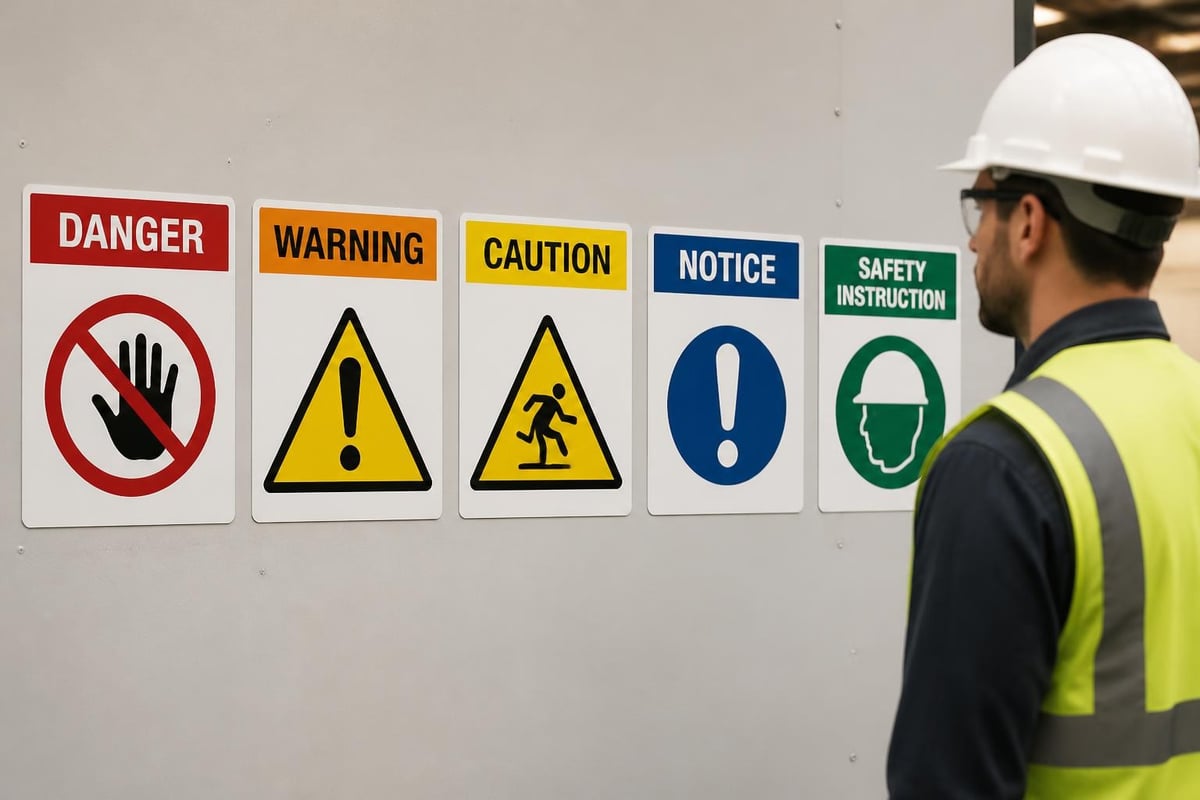
- Danger signs: Red backgrounds with white text indicating immediate hazards
- Warning signs: Orange backgrounds alerting to potential risks
- Caution signs: Yellow backgrounds communicating moderate risk levels
- Notice signs: Blue or green backgrounds providing general information
- Safety instruction signs: Green backgrounds indicating emergency equipment or safe conditions
These standardised approaches help workers instantly recognise the severity and nature of warnings, regardless of their location or previous work experience. ANSI standards for safety signs further refine these requirements, specifying precise design elements, font sizes, and visibility criteria that ensure maximum effectiveness.
Types of Work Signs for Different Applications
The diversity of workplace environments demands equally varied signage solutions. Manufacturing facilities require robust industrial signage capable of withstanding harsh conditions, whilst corporate offices prioritise aesthetic appeal alongside functionality. Understanding which types of work signs serve specific purposes enables businesses to create comprehensive signage strategies.
Safety and Hazard Communication Signs
Safety-focused work signs represent the most critical category, directly preventing injuries and saving lives. These signs identify potential dangers ranging from chemical hazards to moving machinery, electrical risks to confined spaces.
| Sign Type | Purpose | Typical Placement |
|---|---|---|
| Emergency Exit | Direct evacuation routes | Above doorways, along corridors |
| Fire Equipment | Locate firefighting tools | Near extinguishers, hoses, alarms |
| First Aid | Identify medical resources | Medical rooms, aid stations |
| Hazardous Materials | Warn of chemical dangers | Storage areas, laboratories |
| Personal Protective Equipment | Mandate safety gear | Entry points to hazard zones |
Construction sites particularly benefit from comprehensive safety signage programmes. Road construction signs demonstrate how specialised workplace environments require tailored approaches that address unique operational challenges whilst maintaining regulatory compliance.
Wayfinding and Directional Signage
Navigational work signs ensure efficient movement throughout facilities, reducing confusion and improving productivity. Large campuses, multi-storey buildings, and complex manufacturing layouts demand clear directional systems that guide employees, visitors, and emergency responders.
Effective wayfinding incorporates:
- Building directories and floor plans
- Department identifiers and room numbers
- Parking and entrance designations
- Accessibility route markers
- Visitor reception indicators
Operational and Informational Signs
Beyond safety and navigation, work signs communicate operational procedures, company policies, and workflow instructions. These signs maintain consistency in processes, remind workers of protocols, and reinforce organisational culture.
Quality operational signage addresses smoking policies, restricted areas, quality control checkpoints, and productivity metrics. The strategic placement of procedural reminders at relevant workstations reduces errors and maintains operational standards without constant supervision.
Design Principles for Effective Work Signs
Creating work signs that genuinely communicate requires understanding fundamental design principles that maximise visibility, comprehension, and retention. Poor design undermines even the most important messages, whilst well-crafted signage ensures immediate understanding in critical moments.
Visibility and Readability Factors
The impact of colours and symbols in safety signage directly influences worker behaviour and compliance rates. Contrast ratios between background and text must meet minimum specifications, whilst font selection prioritises clarity over aesthetic appeal.
Critical visibility considerations include:
- Adequate sizing based on viewing distance (minimum character height calculations)
- High-contrast colour combinations exceeding 70% differential
- Non-reflective materials preventing glare in bright conditions
- Illumination requirements for low-light environments
- Unobstructed sightlines from relevant approaches
Readability extends beyond mere visibility. Work signs must communicate their message within two to three seconds-the typical duration workers allocate to sign reading during normal operations. This constraint demands concise messaging, universally recognised symbols, and logical information hierarchy.

Material Selection and Durability
The operational environment dictates appropriate materials for work signs. Indoor office signage tolerates lightweight materials and decorative finishes, whilst industrial settings demand weather-resistant, impact-proof solutions capable of withstanding harsh conditions.
Material considerations for different workplace environments:
| Environment | Recommended Materials | Key Properties |
|---|---|---|
| Outdoor/Exposed | Aluminium composite, rigid PVC | UV resistance, weatherproof |
| Industrial | Stainless steel, reinforced acrylic | Impact resistant, chemical proof |
| Office/Retail | Acrylic, foam board, vinyl | Aesthetic appeal, cost-effective |
| Temporary/Construction | Corflute, mesh banners | Lightweight, replaceable |
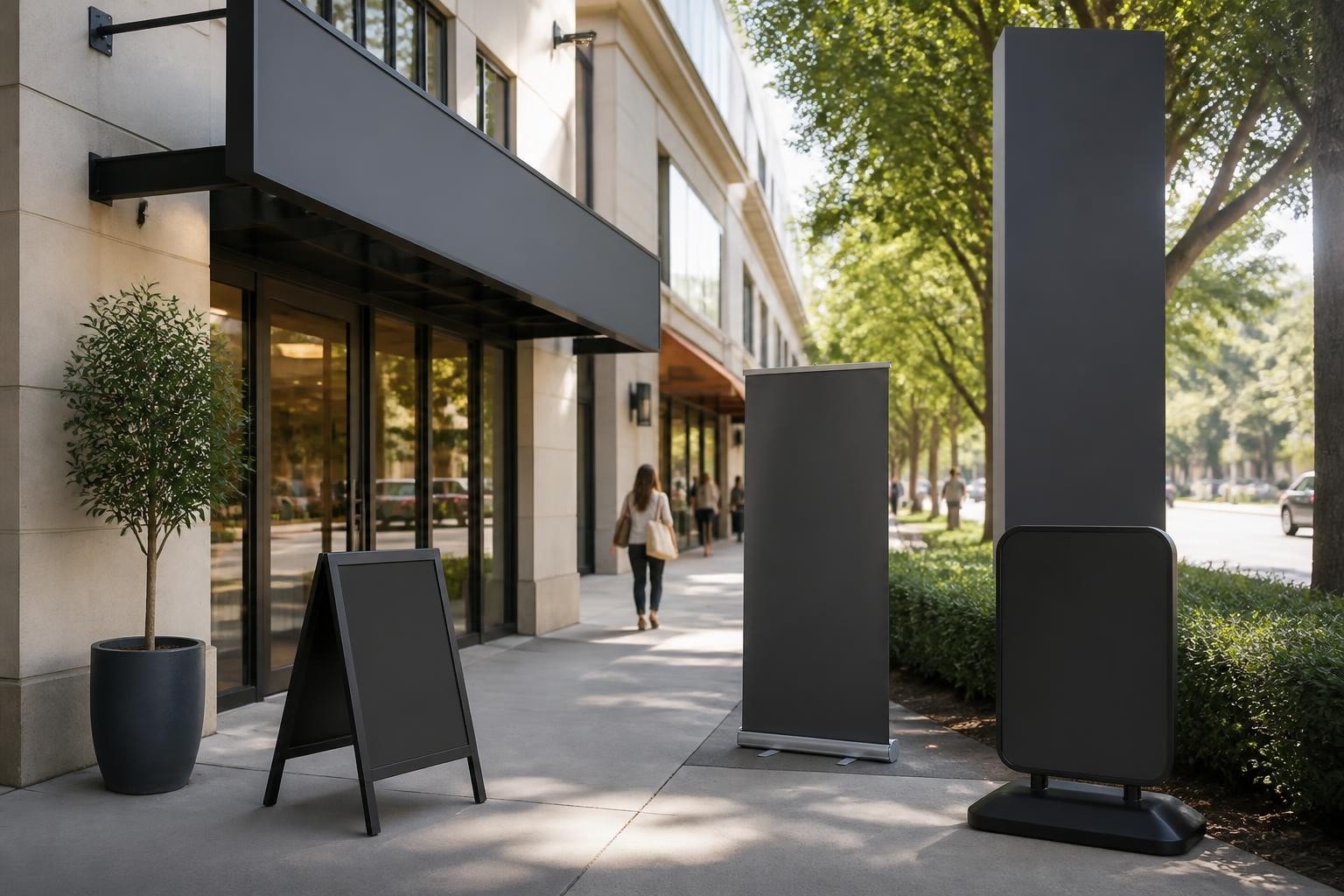
For businesses requiring prominent external identification, Pylon signage offers bespoke solutions manufactured to precise specifications, combining durability with high-visibility design that withstands South African environmental conditions.
Strategic Placement and Maintenance
Even perfectly designed work signs fail if positioned incorrectly or allowed to deteriorate. Strategic placement considers traffic patterns, sightlines, lighting conditions, and regulatory requirements. OSHA's 29 CFR 1910.145 standard provides specific guidance on placement heights, viewing angles, and proximity to hazards.
Optimal Positioning Guidelines
Work signs must intercept workers' natural sightlines before they encounter hazards or require directional information. This anticipatory placement allows adequate time for comprehension and response, particularly for safety-critical messaging.
Positioning best practices:
- Install hazard warnings at least five metres before danger zones
- Mount emergency exit signs every fifteen metres along evacuation routes
- Position entrance signs at eye level (1.5 to 1.8 metres) for standing viewers
- Ensure directional signs appear at every decision point along navigation paths
- Place operational reminders within direct view of relevant workstations
Regular audits identify signs that have become obscured by equipment, inventory, or structural modifications. Annual comprehensive reviews should supplement monthly spot checks, ensuring all work signs remain visible, legible, and relevant to current operations.
Maintenance and Replacement Protocols
Environmental exposure, physical damage, and simple aging degrade even the highest-quality signage. Establishing systematic maintenance protocols preserves sign effectiveness whilst demonstrating ongoing commitment to safety and compliance.
Maintenance schedules should address:
- Cleaning regimens appropriate to environmental conditions
- Regular inspections documenting condition and visibility
- Immediate replacement of damaged or illegible signs
- Updates reflecting procedural changes or regulatory amendments
- Photoluminescent testing for emergency signs
Signage maintenance tips provide valuable guidance for extending sign lifespan whilst maintaining optimal performance throughout their service life.
Integrating Digital Solutions with Traditional Work Signs
The evolution of workplace signage increasingly incorporates digital technologies that offer flexibility, real-time updates, and enhanced engagement. Whilst traditional physical signs remain essential for regulatory compliance and permanent installations, digital solutions complement static signage by delivering dynamic content tailored to changing conditions.
Digital Signage Applications in Workplace Settings
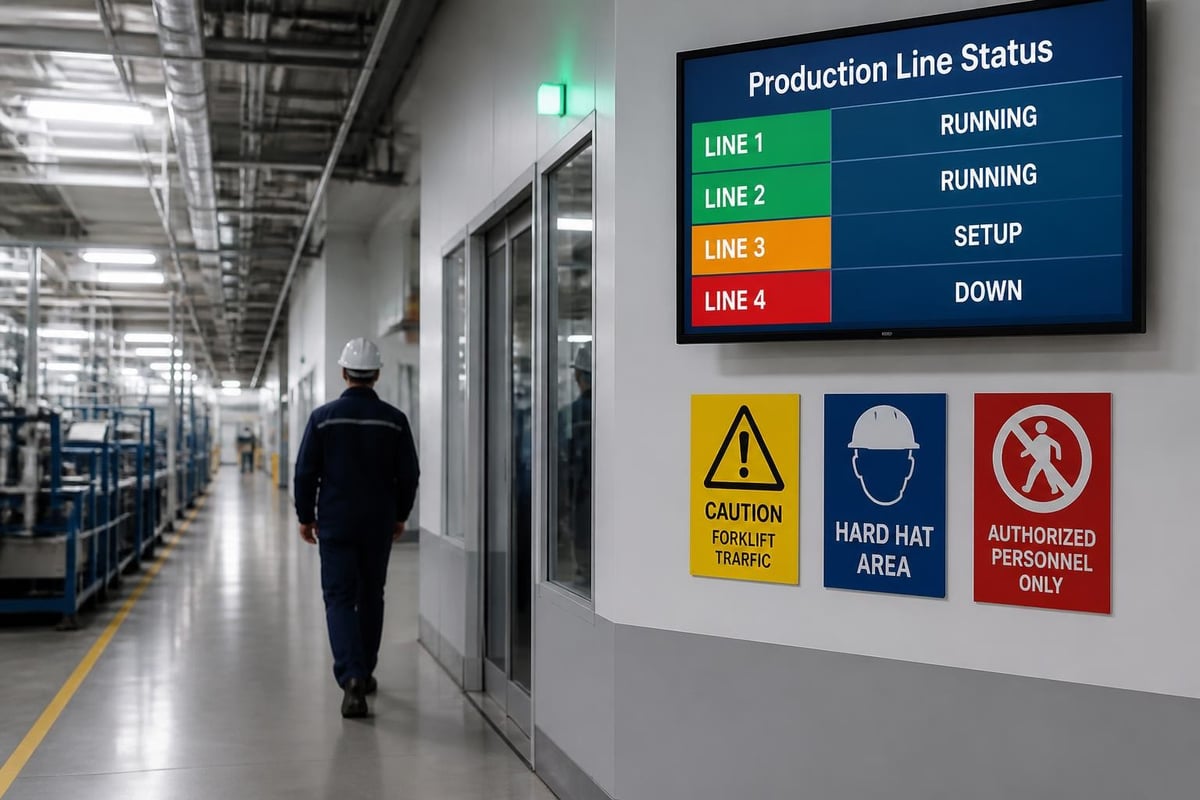
Modern work signs can leverage digital displays for safety notifications, operational metrics, emergency alerts, and wayfinding assistance. These systems excel in environments requiring frequent message updates, multi-language support, or integration with building management systems.
Digital workplace signage delivers:
- Real-time safety alerts responding to detected hazards
- Production metrics motivating workforce performance
- Emergency evacuation instructions adapting to incident locations
- Language switching accommodating diverse workforces
- Scheduled messaging rotating between multiple topics
The integration of industry-specific signage solutions demonstrates how businesses can tailor both traditional and digital work signs to address unique operational requirements whilst maintaining cohesive visual communication systems.
Balancing Digital and Physical Signage
The most effective workplace signage strategies recognise that digital and traditional work signs serve complementary rather than competing purposes. Regulatory compliance, emergency egress, and permanent hazard identification require physical signs that function independently of power supplies or network connectivity.
Digital solutions enhance rather than replace core physical signage by:
- Providing detailed information supplementing basic safety warnings
- Delivering contextual messaging based on time, conditions, or operations
- Facilitating rapid communication during evolving situations
- Supporting training initiatives with video and interactive content
- Collecting analytics on message effectiveness and viewing patterns
Industry-Specific Considerations for Work Signs
Different sectors face unique challenges requiring specialised approaches to workplace signage. Pharmaceutical facilities navigate stringent cleanroom requirements, retail environments balance safety with customer experience, whilst construction sites demand robust temporary solutions capable of repositioning as projects progress.
Manufacturing and Industrial Settings
Manufacturing environments present complex signage challenges combining heavy machinery hazards, chemical risks, noise levels, and production pressures. Work signs must communicate clearly despite visual clutter, maintain visibility in varying light conditions, and withstand industrial atmospheres.
Industry-specific requirements include:
- Machine-specific operational instructions and safety protocols
- Lockout/tagout procedures for maintenance activities
- Quality control checkpoints and inspection reminders
- Material handling and storage guidelines
- Clean zone demarcations and contamination controls
Corporate and Office Environments
Office settings prioritise professional aesthetics alongside functional communication. Work signs in corporate environments support wayfinding, reinforce policies, identify departments, and contribute to brand experience whilst maintaining necessary safety standards.
Custom signage solutions enable businesses to achieve cohesive visual identities that integrate safety requirements with branded environments, ensuring work signs enhance rather than detract from professional spaces.
Retail and Public-Facing Workplaces
Retail environments must balance employee safety requirements with customer experience considerations. Work signs need sufficient prominence to ensure staff compliance whilst avoiding alarming or confusing shoppers who share the space.
Strategic approaches include:
- Staff-only area designations clearly separating operational zones
- Emergency exit signs meeting regulatory visibility whilst complementing décor
- Service counter identification assisting customer navigation
- Safety reminders positioned for employee viewing without customer distraction
- Accessibility information supporting inclusive environments
Measuring Work Sign Effectiveness
Implementing comprehensive workplace signage represents significant investment deserving systematic evaluation. Measuring effectiveness ensures resources focus on solutions that genuinely enhance safety, compliance, and operational efficiency rather than merely satisfying checkbox requirements.
Performance Metrics and Evaluation Methods
Quantifiable metrics provide objective assessment of work sign performance. Incident rates, near-miss reports, compliance audit results, and employee feedback surveys offer valuable data for evaluating signage effectiveness and identifying improvement opportunities.
Key performance indicators include:
- Reduction in accidents attributable to hazard awareness
- Compliance rates during safety audits and inspections
- Employee comprehension scores on safety signage recognition tests
- Response times during emergency evacuation drills
- Visitor feedback on wayfinding clarity and accessibility
Regular stakeholder engagement captures qualitative insights complementing quantitative data. Employee focus groups reveal practical challenges with existing signage, whilst management reviews ensure alignment with evolving operational priorities and regulatory requirements.
Continuous Improvement Strategies
Workplace signage should evolve alongside operational changes, technological advances, and emerging best practices. Annual comprehensive reviews assess entire signage systems, whilst incident-triggered evaluations examine whether inadequate signage contributed to specific events.
Improvement initiatives might address:
- Updating designs incorporating latest visibility research
- Expanding multi-language support for diverse workforces
- Integrating smart technologies for dynamic messaging
- Replacing aging signs before deterioration impacts effectiveness
- Standardising approaches across multiple facilities or departments
The commitment to continuous refinement demonstrates organisational dedication to safety and excellence, reinforcing cultural values whilst maintaining regulatory compliance and operational efficiency.
Future Trends Shaping Workplace Signage
The landscape of work signs continues evolving through technological innovation, regulatory development, and changing workplace dynamics. Understanding emerging trends enables proactive adaptation rather than reactive compliance, positioning organisations at the forefront of effective workplace communication.
Technological Innovations
Augmented reality applications overlay digital information onto physical environments, potentially revolutionising how work signs deliver contextual guidance. Smart sensors detect environmental conditions, triggering dynamic signage responses that adapt warnings to real-time hazards rather than static worst-case scenarios.
Photoluminescent materials advance beyond basic emergency signs, offering enhanced visibility without electrical consumption. Sustainable materials reduce environmental impact whilst maintaining durability and performance standards essential for demanding workplace applications.
Regulatory Evolution
Governments worldwide continue refining workplace safety requirements, incorporating lessons from incident investigations and advances in human factors research. Updates to safety sign specifications reflect growing understanding of how design elements influence comprehension and compliance across diverse populations.
Organisations investing in adaptable signage systems position themselves to accommodate regulatory changes efficiently, avoiding costly wholesale replacements when standards evolve. Modular approaches and digital flexibility support compliance whilst managing long-term costs.
Workplace Transformation
Remote work, flexible scheduling, and collaborative spaces reshape physical workplace design, creating new signage requirements. Hot-desking environments need dynamic room identification replacing permanent department signs. Hybrid workforces require enhanced visitor wayfinding supporting employees unfamiliar with facilities they occupy occasionally.
The increasing diversity of workforces demands multilingual, culturally sensitive work signs that communicate effectively across varied backgrounds. Symbol-based communication reduces language dependencies whilst respecting international standardisation enabling workforce mobility.
Effective work signs represent far more than regulatory compliance-they embody organisational commitment to employee wellbeing, operational excellence, and professional standards. By implementing comprehensive signage strategies that balance safety requirements, operational needs, and emerging technologies, businesses create environments where workers thrive and productivity flourishes. Signs4SA delivers bespoke signage solutions tailored to your industry requirements, combining expert design, quality manufacturing, and nationwide support to transform workplace communication and protect what matters most-your people.