



Road Work Construction Signs: Complete Guide for 2026
Road work construction signs serve as the critical communication interface between construction activities and road users, ensuring safety whilst maintaining traffic flow through work zones. These temporary traffic control devices must meet stringent regulatory standards, deliver clear messaging under varied environmental conditions, and adapt to diverse construction scenarios ranging from minor maintenance to major infrastructure projects. Understanding the specifications, materials, deployment strategies, and compliance requirements for road work construction signs has become increasingly complex as standards evolve and construction projects demand more sophisticated traffic management solutions.
Understanding Road Work Construction Sign Categories
Road work construction signs fall into three primary categories, each serving distinct purposes within the temporary traffic control framework. Warning signs alert motorists to upcoming hazards or changed conditions, regulatory signs communicate mandatory actions or restrictions, and guide signs provide directional information through work zones.
Warning Signs for Construction Zones
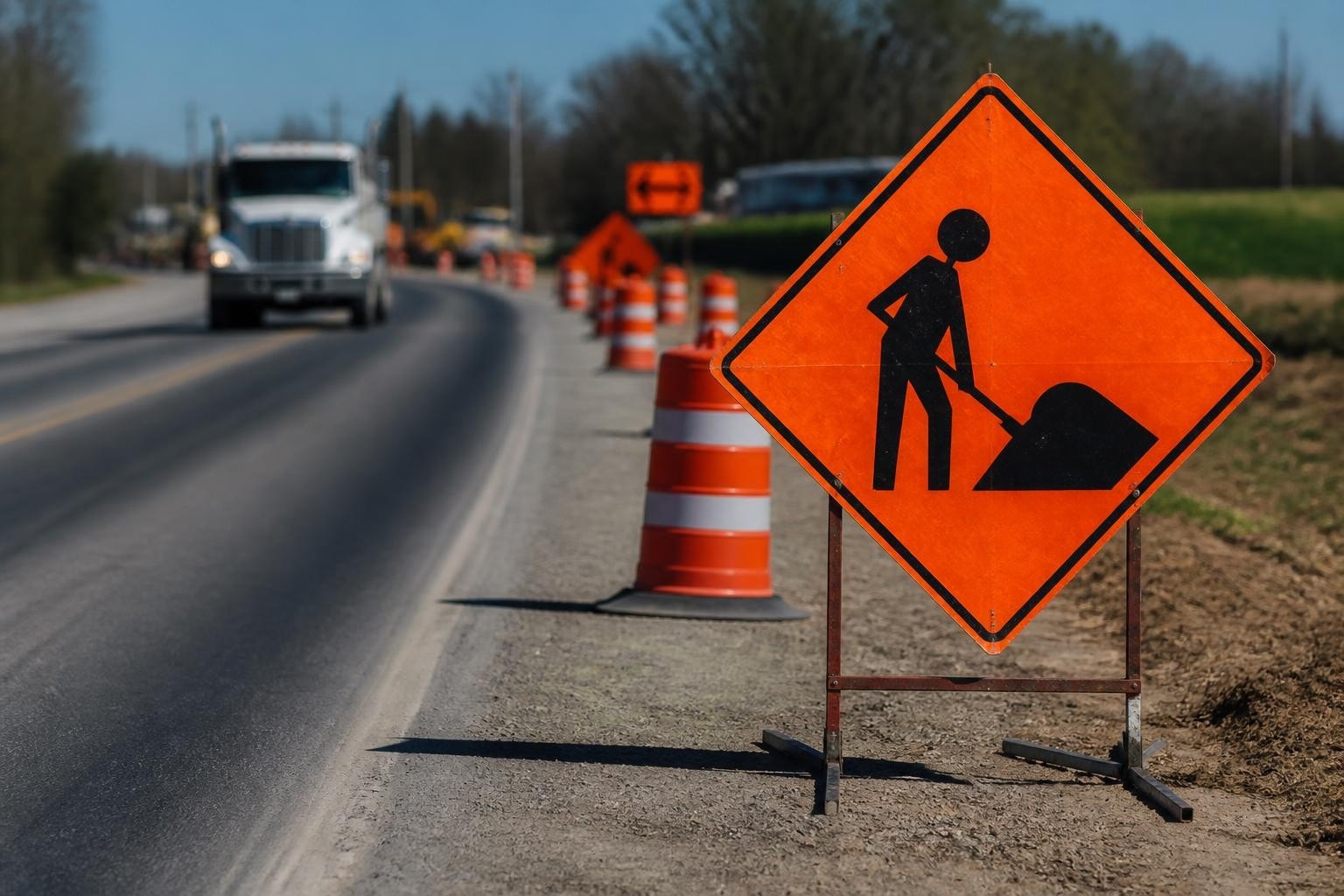
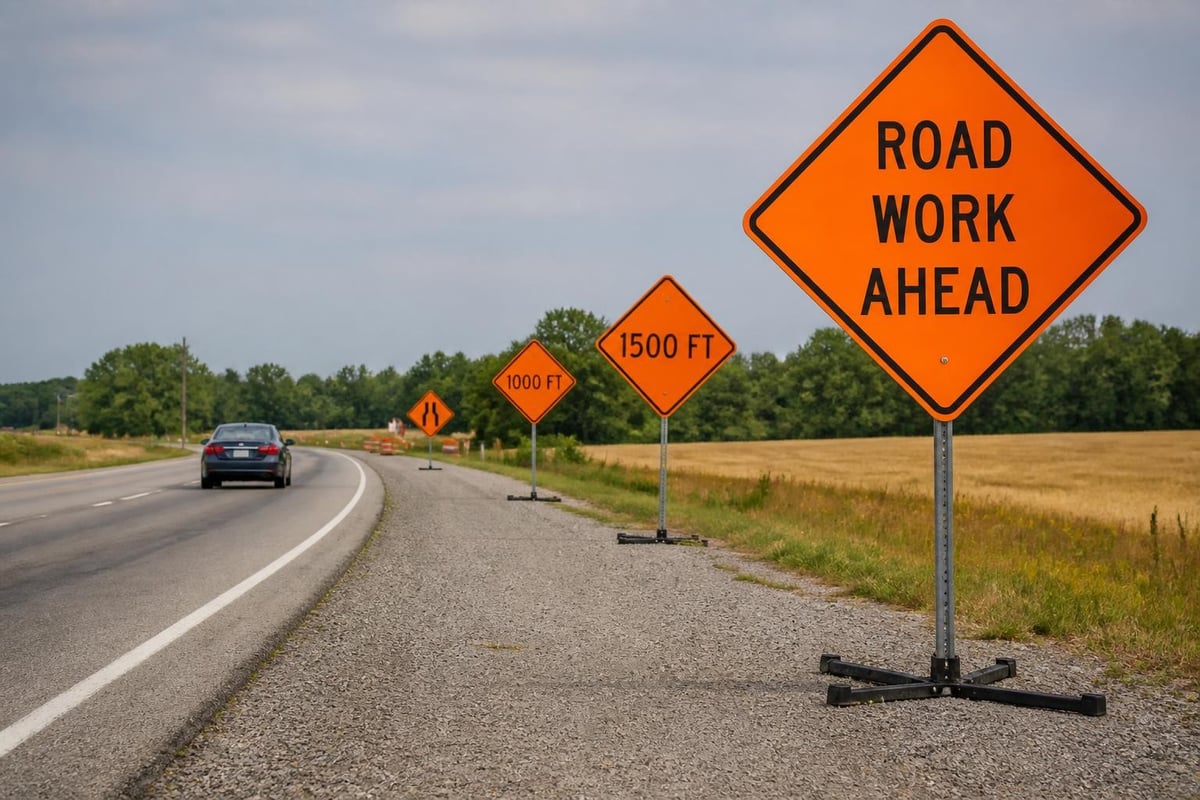
Warning signs represent the first line of communication with approaching motorists. These devices typically feature orange backgrounds with black lettering or symbols, creating high contrast visibility that differentiates construction warnings from standard yellow caution signs. Common examples include "Road Work Ahead," "Lane Closed Ahead," and "Workers Present" signs that prepare drivers for changing conditions.
The Manual on Uniform Traffic Control Devices establishes specific dimensional requirements and placement distances for warning signs based on approach speeds. A sign warning of road work on a motorway where traffic approaches at 110 km/h requires placement significantly further from the work zone than the same sign on an urban street with 50 km/h speeds.
Key warning sign characteristics include:
- Retroreflective sheeting for 24-hour visibility
- Standardised symbology for universal recognition
- Sequential placement to provide adequate reaction time
- Weather-resistant construction for extended deployment periods
Regulatory and Control Devices
Regulatory road work construction signs establish legal requirements that motorists must follow within work zones. Speed limit reductions, lane restrictions, and directional mandates fall under this category. These signs carry legal weight, with violations subject to enforcement and often enhanced penalties in active work zones.
The most critical aspect of regulatory signage involves ensuring compliance with local traffic authorities and OSHA highway work zone standards that protect both motorists and construction workers. Improperly deployed regulatory signs can create liability concerns and compromise safety protocols.
| Sign Type | Function | Legal Status | Typical Placement |
|---|---|---|---|
| Speed Limit | Sets maximum safe speed | Enforceable | Zone entrance |
| Lane Use | Directs traffic flow | Mandatory | Before divergence |
| Road Closed | Prohibits entry | Absolute | Closure point |
| Detour | Provides alternative route | Advisory | Decision points |
Guide and Information Signs
Guide signs direct motorists through construction zones and provide information about route continuity, distances, and services. Whilst not carrying the same regulatory authority as control devices, these signs prove essential for maintaining traffic flow and reducing confusion that can lead to unsafe manoeuvres.
Effective guide signage accounts for multiple decision points within complex work zones. When major routes undergo reconstruction, a comprehensive signage work strategy ensures motorists receive consistent, clear directional information that prevents last-minute lane changes or dangerous U-turns.
Materials and Manufacturing Standards
The performance of road work construction signs depends heavily on substrate materials, retroreflective sheeting, and structural mounting systems that withstand environmental stresses whilst maintaining visibility and legibility throughout their deployment period.
Substrate Materials and Durability
Modern construction signs utilise various substrate materials, each offering distinct advantages for specific applications. Aluminium sheet remains the industry standard for long-term installations, providing excellent strength-to-weight ratios and corrosion resistance. The Texas DOT specifications for sign substrates detail performance requirements for wind loads and weathering that manufacturers must address.
For shorter-duration projects or portable applications, composite materials and rigid plastics offer cost-effective alternatives. These materials reduce weight for easier handling whilst providing adequate durability for deployments lasting several weeks to months.
Substrate selection criteria:
- Expected deployment duration
- Wind exposure and structural loads
- Handling frequency and portability requirements
- Budget constraints and project specifications
- Environmental conditions (coastal, industrial, rural)
Retroreflective Sheeting Technologies
Retroreflective sheeting transforms road work construction signs from daytime-only devices into 24-hour communication tools. The technology works by returning light to its source, making signs visible in vehicle headlights even at considerable distances.
Three primary sheeting types serve construction applications. Engineer Grade (Type I) provides basic retroreflectivity suitable for low-speed environments. High Intensity (Type III) delivers enhanced performance for moderate to high-speed roadways. Diamond Grade (Type XI) represents the premium category, offering maximum retroreflectivity for critical applications and extended service life.
The Washington State DOT specifications mandate minimum retroreflectivity values that construction signs must maintain throughout their service life, with periodic inspections ensuring continued compliance.

Placement Strategies and Traffic Control Plans
Strategic placement of road work construction signs requires coordination between traffic engineering principles, construction phasing, and site-specific conditions that influence motorist behaviour and safety outcomes.
Advance Warning Sequences
The advance warning sequence prepares motorists for work zone conditions through progressively detailed information. This sequence typically begins with general "Road Work Ahead" warnings placed at distances calculated based on approach speeds, followed by specific condition warnings, and culminating in immediate action signs at the work zone transition.
Professional traffic management plans, as outlined in FHWA's Transportation Management Plans for Work Zones, specify exact spacing and sequencing requirements. A typical motorway work zone might deploy the first warning sign 1,000 metres before the activity area, with subsequent signs at 500 metres, 250 metres, and immediately before the taper.
Transition and Activity Areas
The transition area where traffic shifts from normal operations into work zone configurations demands careful sign placement to guide drivers safely through lane changes or speed reductions. Road work construction signs in this zone must account for driver decision-making time and vehicle manoeuvring distances.
Activity area signing focuses on immediate hazards and worker protection. "Workers Present" signs, equipment warnings, and specific hazard indicators (such as "Uneven Pavement" or "Loose Gravel") provide real-time information about conditions motorists will encounter.
| Zone Section | Primary Sign Types | Spacing Considerations | Special Requirements |
|---|---|---|---|
| Advance Warning | General warnings, speed advisories | Based on approach speed | High retroreflectivity |
| Transition | Lane closure, merge instructions | Decision sight distance | Sequential messaging |
| Activity | Specific hazards, worker protection | Immediate visibility | Frequent updates |
| Termination | End road work, resume normal speed | Clear communication | Removal protocol |
Portable and Fixed Mounting Systems
Mounting systems for road work construction signs must balance stability against portability and ease of deployment. Sign stands come in various configurations, from simple A-frame supports for temporary installations to weighted bases and ballasted systems for extended deployments in high-wind environments.
Advanced mounting solutions incorporate spring-back mechanisms that allow signs to flex when struck by vehicles, reducing damage whilst maintaining position. Some systems integrate LED enhancement for critical warnings, though these require power management considerations.
Compliance and Regulatory Framework
Road work construction signs must comply with multiple regulatory layers, from national traffic control standards to local authority requirements and industry-specific safety protocols that govern their design, deployment, and maintenance.
National and Regional Standards
The regulatory foundation for construction signage stems from national traffic control manuals that establish baseline requirements for all jurisdictions. These standards specify everything from colour specifications and letter heights to placement distances and retroreflectivity minimums.
The Standard Highway Signs publication provides detailed design layouts and vector graphics that manufacturers use to ensure consistency across different sign producers. This standardisation allows motorists to recognise and respond to construction warnings regardless of location or manufacturer.
Regional variations exist within the national framework, with some jurisdictions adopting enhanced requirements based on local traffic patterns or environmental conditions. For businesses operating across multiple regions, understanding these variations proves essential for compliance and effective traffic management.
Compliance documentation requirements:
- Sign fabrication certifications
- Retroreflectivity test results
- Placement approval from traffic authorities
- Maintenance and inspection logs
- Removal and storage protocols
Quality Control and Inspection
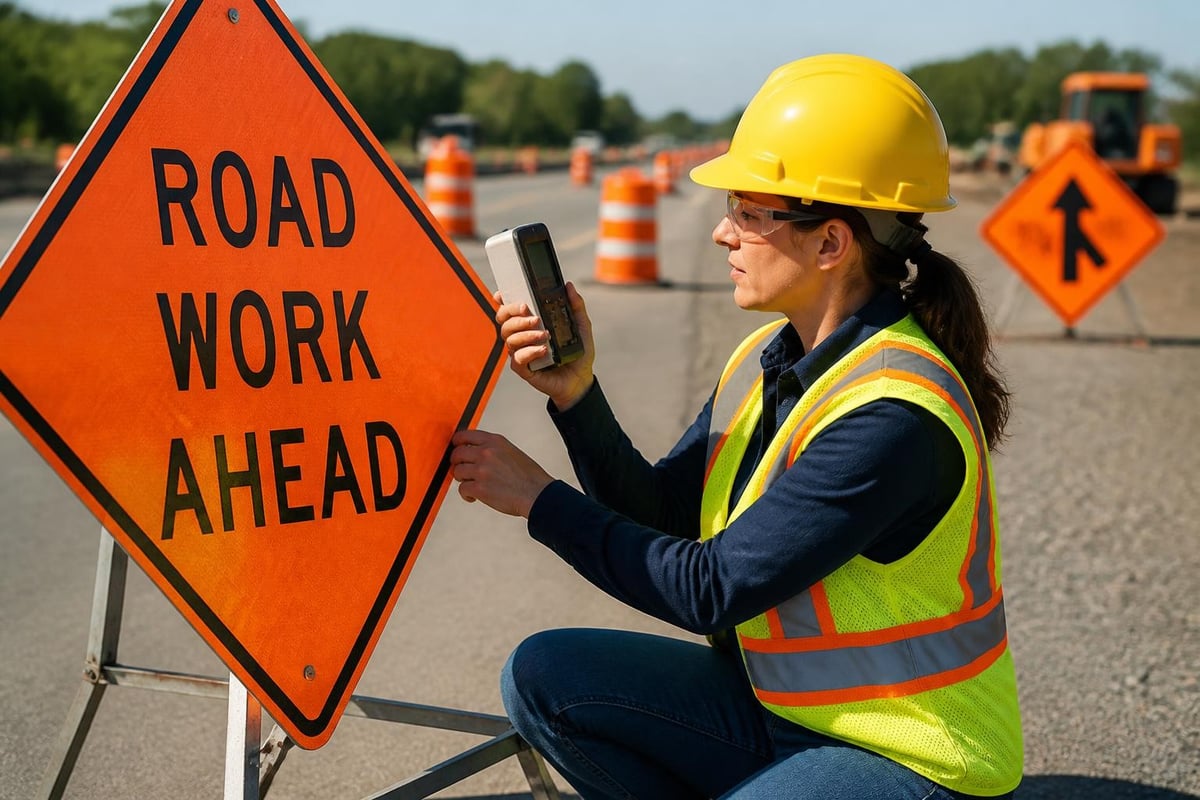
Manufacturing quality control ensures road work construction signs meet specification requirements before deployment. Caltrans' inspection and quality control procedures detail the testing protocols that verify substrate thickness, sheeting adhesion, and colour accuracy.
Field inspections during deployment confirm proper placement, adequate retroreflectivity, and structural stability. Signs damaged by weather, vandalism, or vehicle impacts require immediate replacement to maintain work zone safety standards. Inspection intervals vary based on deployment duration and exposure conditions, with high-traffic motorway projects demanding more frequent assessments than low-volume rural installations.
Emerging Technologies and Innovation
The construction signage sector continues evolving with technologies that enhance visibility, provide real-time information, and integrate with broader intelligent transportation systems that improve work zone safety and traffic flow.
LED Enhancement and Active Warning Systems
LED-enhanced road work construction signs incorporate programmable displays that provide dynamic messaging capabilities impossible with static signs alone. These systems allow traffic managers to adjust messages based on real-time conditions, displaying current speeds, queue warnings, or lane availability that responds to changing work zone configurations.
For organisations seeking modern visibility solutions, Digital Signage offerings now extend beyond traditional corporate applications into traffic management contexts, with displays ranging from full-colour matrix boards to simple amber arrow panels that guide merging traffic.
Battery technology improvements have extended deployment periods for active signs, with solar charging systems enabling weeks of autonomous operation in remote locations. Wireless connectivity allows central monitoring and control, creating coordinated sign networks that respond to traffic patterns and construction progress.
Smart Work Zone Integration
Integration with connected vehicle technologies represents the next evolution in construction zone communication. Vehicle-to-infrastructure (V2I) systems can transmit work zone information directly to equipped vehicles, supplementing visual signs with in-vehicle alerts that reach drivers earlier and more reliably than roadside devices alone.
These systems also collect traffic data that helps optimise sign placement and messaging strategies. Real-time speed and volume information reveals where motorists begin responding to warnings, allowing traffic managers to refine advance warning distances and improve overall work zone performance.
Specialised Applications and Unique Requirements
Different construction contexts demand specialised road work construction signs that address unique challenges beyond standard roadway maintenance, from utility work in urban environments to major infrastructure reconstruction projects spanning multiple years.
Urban Construction Challenges
Urban work zones face constraints uncommon in rural or motorway settings. Limited right-of-way restricts sign placement options, whilst high pedestrian volumes require additional warning devices protecting both workers and foot traffic. Parking restrictions, loading zones, and public transport operations add layers of complexity to sign deployment strategies.
Smaller sign formats often prove necessary in constrained urban environments, though this compromises visibility distances. Compensating measures might include additional signs, enhanced retroreflectivity, or active LED devices that attract attention in visually cluttered streetscapes. Understanding safety signage compliance principles helps ensure urban work zones meet protection standards despite space limitations.
Long-term Project Considerations
Multi-year construction projects require road work construction signs capable of withstanding extended environmental exposure whilst maintaining regulatory compliance. Material selection shifts towards premium substrates and sheeting types that retain retroreflectivity and structural integrity through seasons of weather exposure.
These projects often benefit from semi-permanent sign installations using concrete bases or driven posts rather than portable mounting systems. The added stability justifies the installation effort when signs remain in place for months or years, reducing maintenance requirements and improving consistency of traffic control.
Long-term deployment factors:
- Enhanced substrate materials resistant to UV degradation
- Premium retroreflective sheeting with extended warranties
- Vandal-resistant mounting hardware and anti-theft features
- Scheduled retroreflectivity testing and replacement protocols
- Coordination with seasonal weather patterns affecting visibility
Utility and Emergency Work
Utility work and emergency repairs present unique challenges requiring rapid sign deployment with minimal setup time. Pre-packaged sign kits containing standardised warning and regulatory devices allow crews to establish compliant work zones quickly, whilst portable arrow boards and flashing beacons enhance visibility for unexpected roadway operations.
The Minnesota DOT sign manual provides examples of short-duration work zone configurations that balance safety requirements against operational efficiency, recognising that extensive sign deployment becomes impractical for work lasting only hours rather than days.
Procurement and Project Planning
Successful construction projects integrate road work construction signs into comprehensive traffic management planning from project conception through completion, ensuring adequate budgets, appropriate specifications, and coordinated deployment aligned with construction phasing.
Specification Development
Detailed specifications prevent misunderstandings between contractors, sign suppliers, and regulatory authorities. Effective specifications reference applicable standards whilst addressing project-specific requirements such as:
- Minimum retroreflectivity values and sheeting types
- Substrate materials and thickness requirements
- Mounting system specifications and stability criteria
- Quantity calculations based on work zone configurations
- Delivery schedules aligned with construction phases
Generic specifications often prove inadequate for complex projects, whilst overly restrictive requirements may limit competitive bidding or specify unnecessary premium features. Balancing these considerations requires understanding both regulatory minimums and practical performance needs for specific project conditions.
Cost Considerations and Budgeting
Road work construction signs represent a significant project expense, particularly for extended work zones requiring extensive warning sequences and multiple shift configurations. Budget planning must account for purchase or rental costs, installation labour, ongoing maintenance, and eventual removal and storage.
Typical cost components include:
| Item | Cost Factors | Budget Considerations |
|---|---|---|
| Sign fabrication | Substrate, sheeting type, quantities | Volume discounts available |
| Mounting systems | Purchase vs rental, reusability | Long-term projects favour purchase |
| Installation | Labour, traffic control, equipment | Varies by location and access |
| Maintenance | Inspection frequency, replacement | Higher on extended projects |
| Storage | Warehouse space, inventory management | Rental eliminates this cost |
Supplier Selection and Quality Assurance
Choosing qualified sign suppliers ensures compliance, quality, and timely delivery that keeps construction projects on schedule. Evaluation criteria should extend beyond price to consider manufacturing capabilities, certification documentation, delivery reliability, and post-delivery support for damaged or non-conforming products.
Established suppliers maintain relationships with regulatory authorities and understand local compliance requirements that may not be apparent in specification documents. This expertise proves particularly valuable for businesses managing construction projects across multiple jurisdictions with varying sign standards and approval processes.
Maintenance and Lifecycle Management
Road work construction signs require ongoing maintenance throughout their deployment to ensure continued compliance, visibility, and effectiveness as traffic control devices protecting both workers and motorists.
Inspection Protocols and Damage Assessment
Regular inspection identifies signs requiring cleaning, adjustment, or replacement before degraded conditions compromise safety. Inspection frequency depends on deployment duration, traffic volumes, and environmental exposure, with weekly assessments recommended for long-term motorway projects and daily checks for high-risk urban work zones.
Common issues requiring intervention include retroreflectivity degradation from weather exposure, physical damage from vehicle strikes or vandalism, mounting system failures allowing signs to shift position, and accumulation of dirt or debris reducing legibility. Establishing clear thresholds for replacement rather than repair prevents marginal signs remaining in service beyond their effective lifespan.
Cleaning and Restoration
Properly maintained road work construction signs extend service life and maintain compliance with retroreflectivity standards. Regular cleaning removes accumulated road film, dust, and environmental contamination that reduces sheeting performance, particularly in industrial or agricultural areas where airborne particles settle on sign faces.
Cleaning protocols must avoid damaging retroreflective sheeting through abrasive materials or harsh chemicals. Mild detergents and soft cloths preserve sheeting integrity whilst restoring visibility, with more aggressive cleaning reserved for signs approaching replacement rather than those expected to remain in service for extended periods.
End-of-Life and Replacement Planning
Road work construction signs reach end-of-life when retroreflectivity falls below regulatory minimums, structural damage compromises stability, or changing project phases require different messaging. Systematic replacement planning prevents last-minute scrambles for substitute signs that might delay construction activities or create temporary compliance gaps.
Some organisations maintain strategic inventories of common sign types allowing immediate replacement without procurement delays. Others establish relationships with suppliers offering rapid-delivery services for urgent needs. Both approaches recognise that sign replacement often occurs unpredictably based on weather events, traffic incidents, or vandalism rather than scheduled intervals.
Effective deployment of road work construction signs demands comprehensive understanding of regulatory requirements, material specifications, placement strategies, and lifecycle management protocols that ensure both compliance and optimal safety performance throughout construction projects. Whether managing short-duration utility work or multi-year infrastructure programmes, partnering with experienced signage professionals streamlines procurement, ensures quality, and maintains the traffic control standards that protect workers and motorists alike. Signs4SA combines manufacturing expertise, regulatory knowledge, and national reach to deliver construction signage solutions that meet the exacting demands of South Africa's diverse construction environments, supporting projects from initial planning through successful completion.