

LED Display Screen: Complete Guide for Business Signage
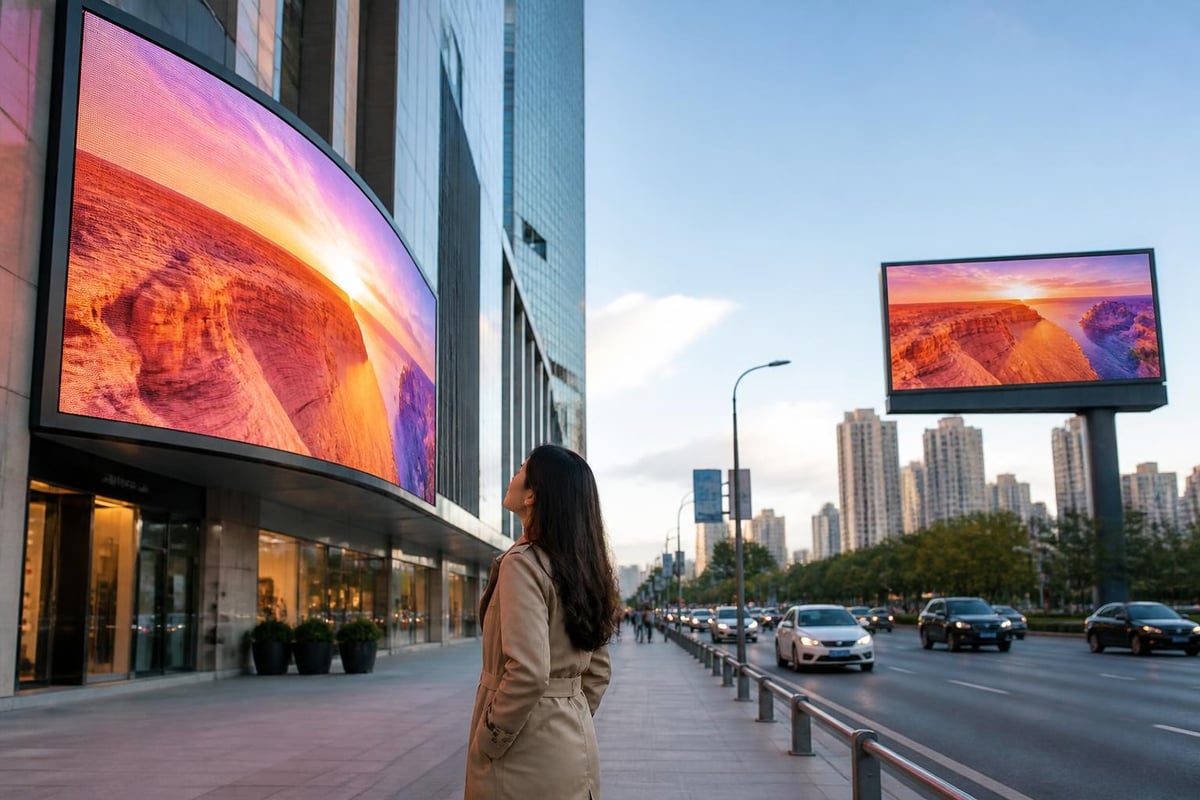
The evolution of outdoor and indoor signage has undergone a remarkable transformation over the past decade, with the led display screen emerging as the cornerstone of modern business communication. From retail storefronts in Johannesburg to corporate headquarters in Cape Town, digital displays have revolutionised how organisations engage with their audiences, delivering dynamic content that traditional static signage simply cannot match. This technology combines sophisticated LED modules, advanced control systems, and versatile software to create vibrant, attention-grabbing installations that operate reliably in diverse South African climates and business environments.
Understanding LED Display Technology Fundamentals
Modern LED display screens function through a sophisticated array of light-emitting diodes organised into modular panels, each containing thousands of individual pixels. These pixels combine red, green, and blue LEDs to produce the full spectrum of colours visible to the human eye, enabling rich, detailed imagery and video content.
The core technology relies on pulse-width modulation to control brightness levels, whilst driver circuits manage power distribution across the array. Unlike older display technologies, LEDs offer superior energy efficiency and longevity, with commercial-grade modules rated for 100,000 hours of operation or more under normal conditions.
Pixel Pitch and Viewing Distance Relationships
One of the most critical specifications for any led display screen project is pixel pitch, measured in millimetres between the centres of adjacent pixels. Understanding viewing distance calculations helps businesses select appropriate pitch values for their specific applications.
| Pixel Pitch | Optimal Viewing Distance | Typical Application |
|---|---|---|
| P1.5 - P2.5 | 1.5m - 5m | Indoor control rooms, broadcast |
| P3 - P4 | 3m - 8m | Indoor retail, corporate lobbies |
| P5 - P8 | 5m - 15m | Outdoor façades, building-mounted |
| P10 - P16 | 10m - 30m+ | Highway billboards, stadium displays |
The relationship between pitch and distance follows a practical rule: minimum viewing distance (in metres) roughly equals pixel pitch (in millimetres). Businesses investing in Digital Signage solutions should carefully consider their audience's typical viewing position to maximise visual impact whilst controlling costs.
Technical Selection Criteria for Commercial Applications
Selecting the appropriate led display screen for your business requires balancing multiple technical parameters against budget constraints and application requirements. The decision process extends well beyond simple size and resolution considerations.
Brightness and Environmental Considerations
Brightness, measured in nits (candelas per square metre), determines display visibility under varying ambient light conditions. Indoor environments typically require 800-1,500 nits, whilst outdoor installations demand 5,000-10,000 nits to overcome direct sunlight.
South African businesses must account for intense UV exposure and temperature variations. Quality displays incorporate weatherproof enclosures rated to IP65 or higher for outdoor use, protecting sensitive electronics from dust and moisture whilst maintaining thermal stability through integrated cooling systems.
- Automatic brightness adjustment reduces power consumption and prevents glare during evening hours
- Anti-reflective coatings improve visibility under harsh sunlight conditions
- Wide operating temperature ranges (typically -20°C to +50°C) ensure reliability across seasons
- Surge protection safeguards against power fluctuations common in some regions
Resolution Planning and Content Strategy
Display resolution must align with content strategy and viewing context. Comprehensive guides on LED video wall selection emphasise matching resolution to content type rather than simply maximising pixel count.
A 4m × 3m display with P5 pitch yields 800 × 600 pixels (480,000 total), adequate for branding messages and simple graphics but limiting for detailed product imagery or fine text. Content creators must design specifically for the display's native resolution, avoiding scaling artefacts and ensuring legibility at intended viewing distances.
Refresh Rates and Visual Quality
Professional-grade led display screen installations require refresh rates of 1,920Hz or higher to eliminate flicker in photographs and video recordings. Lower refresh rates (below 1,000Hz) create visible scan lines when captured on camera, problematic for retail environments where customers frequently photograph displays.
Colour depth (bit depth) affects gradient smoothness and colour accuracy. Whilst 8-bit panels (256 levels per colour) suffice for basic applications, 14-bit or 16-bit processing delivers superior image quality for premium installations. Industry standards for display measurement provide technical frameworks for evaluating colour performance and calibration requirements.
Installation Methodologies and Infrastructure Requirements
Proper installation determines long-term reliability and performance of any led display screen project. The process involves structural engineering, electrical infrastructure, and careful attention to maintenance accessibility.
Structural Mounting and Load Considerations
Display weight varies significantly based on size and technology, with typical outdoor modules weighing 15-25kg per square metre including frames and mounting hardware. Building façades require structural assessment to verify load-bearing capacity, particularly for suspended or cantilever installations.
Wall-mounted displays need backing structures capable of supporting 1.5-2× the static load to account for wind loading and dynamic forces. Ground-supported structures require concrete foundations engineered for local soil conditions and wind loads, with proper drainage to prevent water accumulation around electrical components.
Best practices for LED video wall installation emphasise serviceability planning during the design phase. Front-serviceable modules allow maintenance from the viewing side, critical for façade installations where rear access is impossible, whilst rear-service designs typically offer easier module replacement at lower cost.
Electrical Infrastructure and Power Management
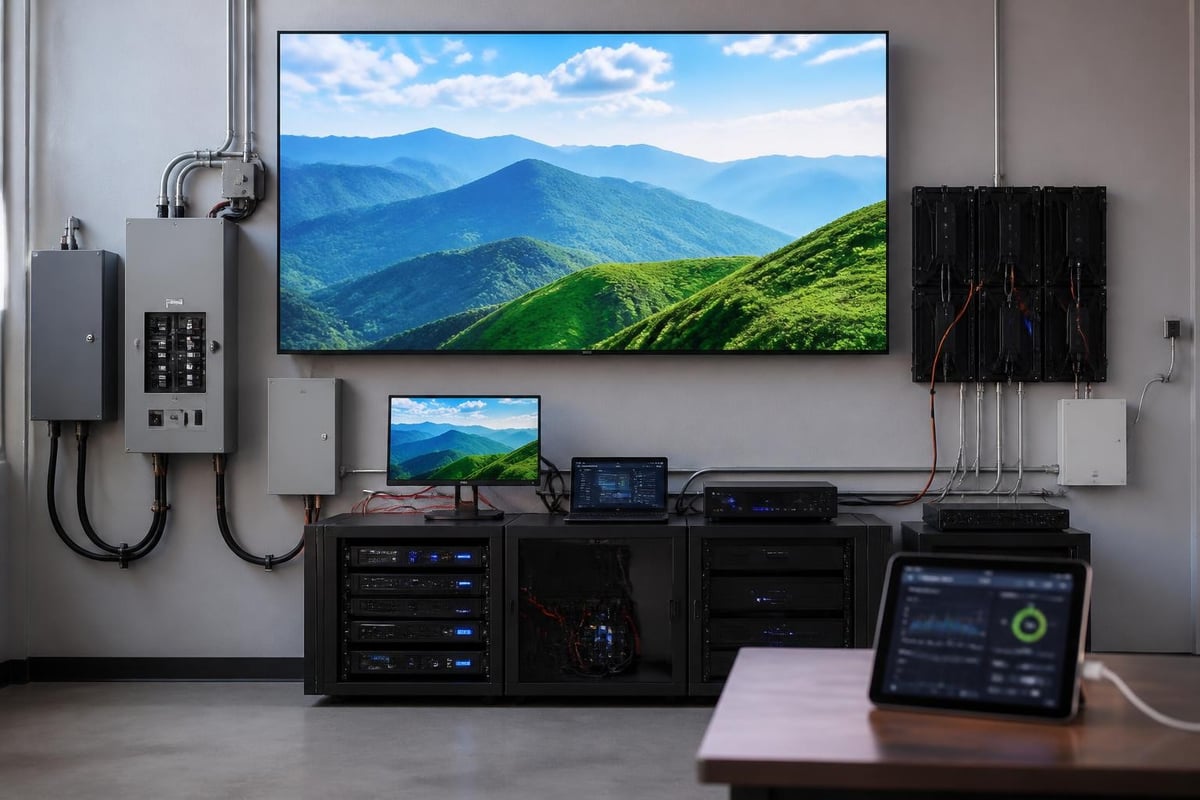
A 10-square-metre outdoor led display screen typically consumes 3-8kW at maximum brightness, though average consumption runs 30-50% lower with dynamic brightness control. Installations require dedicated circuits with appropriate surge protection and earth leakage protection.
Power distribution across large displays demands careful planning to prevent voltage drop and ensure uniform brightness. Professional installations incorporate:
- Redundant power supplies preventing total display failure
- Load balancing across multiple circuits for efficiency
- Remote monitoring systems tracking power consumption and component health
- Emergency shutdown protocols for electrical fault conditions
- Backup power options for critical applications
Three-phase power distribution suits larger installations, whilst smaller displays operate efficiently on single-phase supplies. Consulting with experienced signage professionals ensures compliance with local electrical codes and optimises long-term operating costs.
Content Management and Control Systems
The led display screen hardware represents only half of an effective digital signage solution. Content management systems (CMS) determine what appears on screen, when it appears, and how it adapts to different conditions.
Software Platform Selection
Modern CMS platforms range from simple scheduling tools to sophisticated systems integrating real-time data feeds, audience analytics, and artificial intelligence-driven content optimisation. Cloud-based systems enable remote management across multiple locations, essential for retail chains and corporate networks.
Key features include:
- Scheduling engines automating content rotation based on time, day, or external triggers
- Template libraries simplifying content creation for non-designers
- Proof-of-play reporting documenting content display for compliance and verification
- Multi-user access with role-based permissions for distributed management
- Emergency override capabilities for urgent messaging
Integration capabilities matter significantly. Quality systems connect with point-of-sale data, weather services, social media feeds, and enterprise databases, enabling dynamic content that responds to real-time conditions. A retail led display screen might automatically adjust product promotions based on current inventory levels, whilst a corporate installation displays live performance metrics from business systems.
Content Design Principles for LED Displays
Effective content creation for LED displays differs fundamentally from print or conventional digital design. Viewing distance, ambient lighting, and brief engagement windows demand simplified, high-contrast designs with minimal text.
| Design Element | Best Practice | Rationale |
|---|---|---|
| Font size | Minimum 10% of display height | Ensures legibility at viewing distance |
| Contrast ratio | 70% or greater between text and background | Overcomes ambient light interference |
| Animation duration | 5-10 seconds per message | Matches typical viewing engagement |
| Colour palette | Limited to 3-4 primary colours | Improves readability and brand recognition |
| Image resolution | Match or exceed native pixel count | Prevents scaling artefacts |
Organisations benefit from establishing design standards specific to their display infrastructure, creating templates that ensure consistent quality across all content whilst simplifying production workflows.
Maintenance Programmes and Lifecycle Management
Proactive maintenance extends the operational life of a led display screen whilst preventing costly emergency repairs and minimising downtime. Commercial installations require structured maintenance programmes addressing both preventive and corrective needs.
Preventive Maintenance Schedules
Regular cleaning prevents dust accumulation that reduces brightness and creates thermal stress on components. Outdoor displays require quarterly cleaning of weatherproof seals and drainage systems, whilst indoor units benefit from monthly surface cleaning and annual deep maintenance.
Professional maintenance programmes include:
- Visual inspections identifying pixel failures, colour shifts, and mechanical issues
- Electrical testing verifying power supply performance and connection integrity
- Thermal monitoring detecting cooling system degradation before component failure
- Software updates implementing security patches and feature improvements
- Calibration services maintaining colour accuracy and brightness uniformity
Pixel-level failures occur naturally over extended operation. Quality displays incorporate automatic pixel compensation, redistributing load to adjacent pixels when individual LEDs fail. Professional maintenance teams track failure rates, scheduling module replacement before degradation becomes visible to audiences.
Warranty Considerations and Support
Commercial led display screen installations typically carry 3-5 year warranties covering manufacturing defects and component failures. Extended warranties and comprehensive service agreements provide budget certainty whilst ensuring rapid response to technical issues.
Evaluating support offerings requires examining response time commitments, spare parts availability, and technical expertise. Local support infrastructure matters significantly for South African businesses, where international shipping delays can extend downtime substantially. Working with established signage providers offering nationwide service networks minimises operational risk.
Regulatory Compliance and Safety Standards
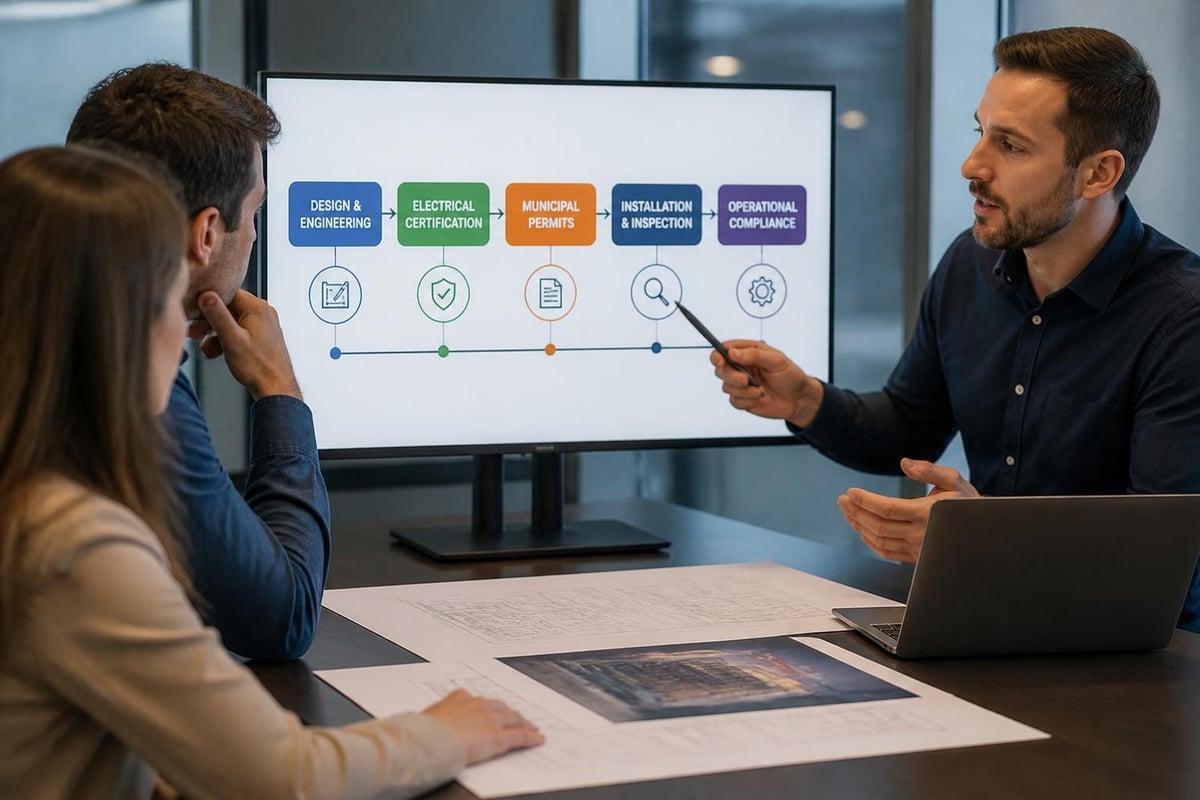
Operating a led display screen for commercial purposes involves navigating electrical safety codes, building regulations, and advertising standards. Compliance protects both the business and the public whilst avoiding penalties and forced removal.
Electrical Safety and Certification
LED displays must comply with electrical safety standards governing commercial electronic equipment. UL certification requirements for electric signs establish testing protocols for fire safety, electrical insulation, and weatherproofing.
South African installations follow SANS (South African National Standards) regulations, with qualified electrical contractors certifying all installations. Key compliance areas include:
- Earth leakage protection preventing electrical shock hazards
- IP ratings appropriate to installation environment
- Fire-rated enclosures for certain building types
- Emergency disconnect systems accessible to first responders
- Electromagnetic compatibility preventing interference with other equipment
Understanding signage regulations and permits proves essential before project initiation, as non-compliant installations face removal orders and substantial fines.
Municipal Approvals and Zoning
Most municipalities require permits for illuminated signage exceeding certain dimensions or brightness levels. The approval process examines visual impact, traffic safety implications, and consistency with local character.
Applications typically require:
- Detailed site plans showing display location and sight lines
- Photometric studies demonstrating light spill control
- Structural engineering certifications for mounting systems
- Content policy statements addressing acceptable material
- Operational parameters defining brightness levels and operating hours
Approval timelines vary from four weeks to several months depending on jurisdiction and project complexity. Engaging experienced professionals familiar with council approval processes accelerates approvals whilst avoiding costly redesigns.
Return on Investment Analysis
Justifying the capital investment in a led display screen requires quantifying both tangible financial returns and less measurable brand-building benefits. Comprehensive ROI analysis examines multiple value streams over the display's operational lifetime.
Financial Modelling Approaches
Direct revenue measurement applies to displays generating advertising income or driving measurable sales increases. Retail installations track sales data before and after deployment, isolating the display's contribution through controlled analysis periods.
Typical metrics include:
- Foot traffic increases measured through counting systems or mobile data
- Sales conversion rates comparing browsers to buyers
- Average transaction values examining upsell effectiveness
- Brand recall scores from customer surveys
- Social media engagement tracking user-generated content featuring the display
A properly positioned outdoor led display screen can increase foot traffic by 15-30% according to industry studies, whilst in-store displays lift promoted product sales by 20-40% compared to static signage. These improvements must be weighed against total cost of ownership including purchase price, installation, electricity, maintenance, and content production.
Operational Cost Considerations
Modern LED technology has dramatically reduced operating costs compared to earlier display technologies. Energy efficiency improvements mean a typical 10-square-metre display consumes £2,000-£4,000 annually in electricity at South African commercial rates, with automatic brightness control reducing consumption by 30-40%.
Maintenance costs typically run 5-10% of initial investment annually, covering cleaning, repairs, and content management. Understanding the complete investment picture prevents budget surprises and enables accurate financial projections.
Long-term value accrues through flexibility. Unlike static signage requiring physical replacement for message updates, digital displays change content instantly at zero marginal cost. A single led display screen replaces dozens of traditional signs over its operational life, delivering cost savings that compound annually.
Energy Efficiency and Sustainability Considerations
Environmental responsibility and operational cost reduction converge in energy management for LED displays. Modern installations incorporate intelligent systems reducing power consumption whilst maintaining visual impact.
Advanced Power Management Technologies
Ambient light sensors automatically adjust display brightness to match environmental conditions, maintaining visibility whilst eliminating wasted energy during low-light periods. Quality systems reduce power consumption by 50-70% during evening and night-time operation compared to fixed maximum brightness.
Scheduling systems power down displays during closed business hours or low-traffic periods. Unlike older technologies requiring extended warm-up periods, LEDs achieve full brightness instantly, enabling precise on/off scheduling without performance penalties. Energy efficiency guidance from government sources provides frameworks for evaluating and optimising display power consumption.
Content design influences energy consumption significantly. White backgrounds consume substantially more power than dark designs, as all three colour LEDs operate at maximum to produce white light. Energy-conscious content strategies employ dark backgrounds with bright foreground elements, reducing power draw by 20-40% whilst maintaining visual impact.
Lifecycle Environmental Impacts
Responsible led display screen ownership extends beyond operational efficiency to encompass manufacturing impacts and end-of-life disposal. Quality manufacturers implement recycling programmes for electronic components, whilst modular construction enables selective replacement rather than complete disposal.
LED technology contains no mercury or other highly toxic materials found in older display technologies, simplifying disposal and reducing environmental harm. Nonetheless, proper electronic waste handling ensures valuable materials recovery and prevents environmental contamination. Businesses should partner with suppliers offering take-back programmes and verified recycling pathways.
Industry-Specific Application Strategies
Different business sectors leverage led display screen technology in unique ways, optimising content and placement for specific audience behaviours and communication objectives.
Retail Environments
Shopping centres and standalone retail locations use displays to create immersive brand experiences, promote current offers, and guide customer journeys. Window-facing displays attract passersby, whilst in-store installations direct traffic to specific departments and highlight promotional products.
Effective retail strategies include:
- Synchronised multi-display networks creating coordinated visual experiences
- Integration with inventory systems highlighting available products
- Queue management content reducing perceived wait times
- Interactive elements engaging customers through touchscreens or mobile connectivity
- Dynamic pricing displays updating in real-time with promotional changes
Corporate Communications
Office buildings and corporate campuses deploy displays for internal communications, visitor welcome systems, and external brand presence. Lobby installations create powerful first impressions, whilst corridor displays keep employees informed of company news, performance metrics, and event schedules.
Corporate applications prioritise reliability and professional appearance over attention-grabbing effects. Content typically includes corporate messaging, directory information, meeting room schedules, and emergency notifications. Integration with corporate communications systems enables automated content updates from existing information sources.
Construction and Development Sites
Construction signage serves multiple purposes from safety communication to project marketing. LED displays on building hoardings showcase architectural renderings, communicate completion timelines, and promote available units, transforming construction barriers into marketing assets.
Temporary power infrastructure and rugged weatherproof construction suit the demanding construction environment. Content focuses on project visualisation, developer branding, and contact information for prospective buyers or tenants, with updates reflecting construction progress and sales milestones.
Emerging Technologies and Future Developments
The led display screen industry continues rapid evolution, with emerging technologies promising improved performance, reduced costs, and new application possibilities for South African businesses.
MicroLED and Advanced Pixel Technologies
Research into next-generation display technologies focuses on microLED developments offering dramatically improved pixel density and energy efficiency. Individual LEDs smaller than 100 micrometres enable ultra-fine pixel pitches previously impossible, creating displays suitable for close viewing distances with cinema-quality imagery.
These technologies remain premium-priced but are gradually approaching commercial viability for high-end applications. Early adopters benefit from superior image quality and competitive differentiation, whilst mainstream adoption awaits further cost reductions over coming years.
Artificial Intelligence and Content Optimisation
AI-driven content systems analyse audience demographics, weather conditions, and real-time events to automatically select optimal content for current circumstances. Camera-based audience measurement systems track viewer attention, providing feedback on content effectiveness and enabling continuous optimisation.
Privacy considerations and regulatory frameworks continue evolving around audience measurement technologies. Responsible implementations anonymise data and comply with protection of personal information requirements whilst delivering valuable insights into display performance.
Integration with Broader Digital Ecosystems
Modern led display screen installations increasingly function as nodes within comprehensive digital communication networks. Integration with mobile applications enables personalised content delivery, whilst connection to social media platforms creates interactive experiences blending physical and digital engagement.
Near-field communication and QR codes bridge the gap between passive viewing and active engagement, allowing interested viewers to capture content for later review or immediate action through their personal devices. This convergence of technologies transforms simple displays into sophisticated customer engagement platforms.
Procurement Strategies and Vendor Selection
Acquiring a led display screen represents a significant capital investment requiring careful vendor evaluation and structured procurement processes. Successful projects result from thorough planning and realistic expectation setting.
Request for Proposal Development
Comprehensive RFPs clearly communicate requirements whilst allowing vendors to propose optimal solutions within budget constraints. Effective specifications balance technical precision with flexibility, avoiding over-specification that limits competitive bidding whilst ensuring minimum quality standards.
Critical RFP elements include:
- Detailed site information with dimensions, viewing distances, and ambient conditions
- Content strategy overview informing resolution and refresh rate requirements
- Budget parameters enabling vendors to propose appropriate technology levels
- Timeline expectations for design, approval, manufacturing, and installation
- Support requirements defining maintenance, warranty, and training needs
Evaluating proposals requires looking beyond initial purchase price to total cost of ownership. The lowest-cost option often proves most expensive over time when factoring higher energy consumption, frequent repairs, and shorter operational life.
Quality Indicators and Vendor Assessment
Distinguishing quality vendors from opportunistic operators requires examining track record, technical capabilities, and support infrastructure. Site visits to existing installations reveal real-world performance and provide customer references for candid feedback.
Quality indicators include:
| Factor | Premium Vendors | Budget Vendors |
|---|---|---|
| Warranty | 5+ years comprehensive | 1-3 years limited |
| Local support | Nationwide service network | Limited or outsourced |
| Component sourcing | Tier-1 manufacturers | Varied or unspecified |
| Installation expertise | Certified specialist teams | General contractors |
| Project portfolio | Documented case studies | Limited references |
Exploring insights from industry solution providers helps businesses understand realistic expectations and avoid common procurement pitfalls that lead to disappointing outcomes.
The strategic deployment of a led display screen transforms how businesses communicate with their audiences, delivering dynamic, attention-commanding messages that adapt to changing conditions and evolving strategies. From technical selection through installation, compliance, and ongoing management, successful projects require careful planning and expert execution. Whether you're exploring digital signage for retail engagement, corporate communications, or outdoor advertising, partnering with experienced professionals ensures your investment delivers maximum impact and reliable long-term performance. Signs4SA brings comprehensive expertise across all aspects of LED display implementation, from initial consultation and design through manufacturing, installation, and ongoing support, backed by a national service network and proven track record across corporate, retail, construction, and pharmaceutical sectors.