

Fabricated Signage: Complete Manufacturing Guide 2026
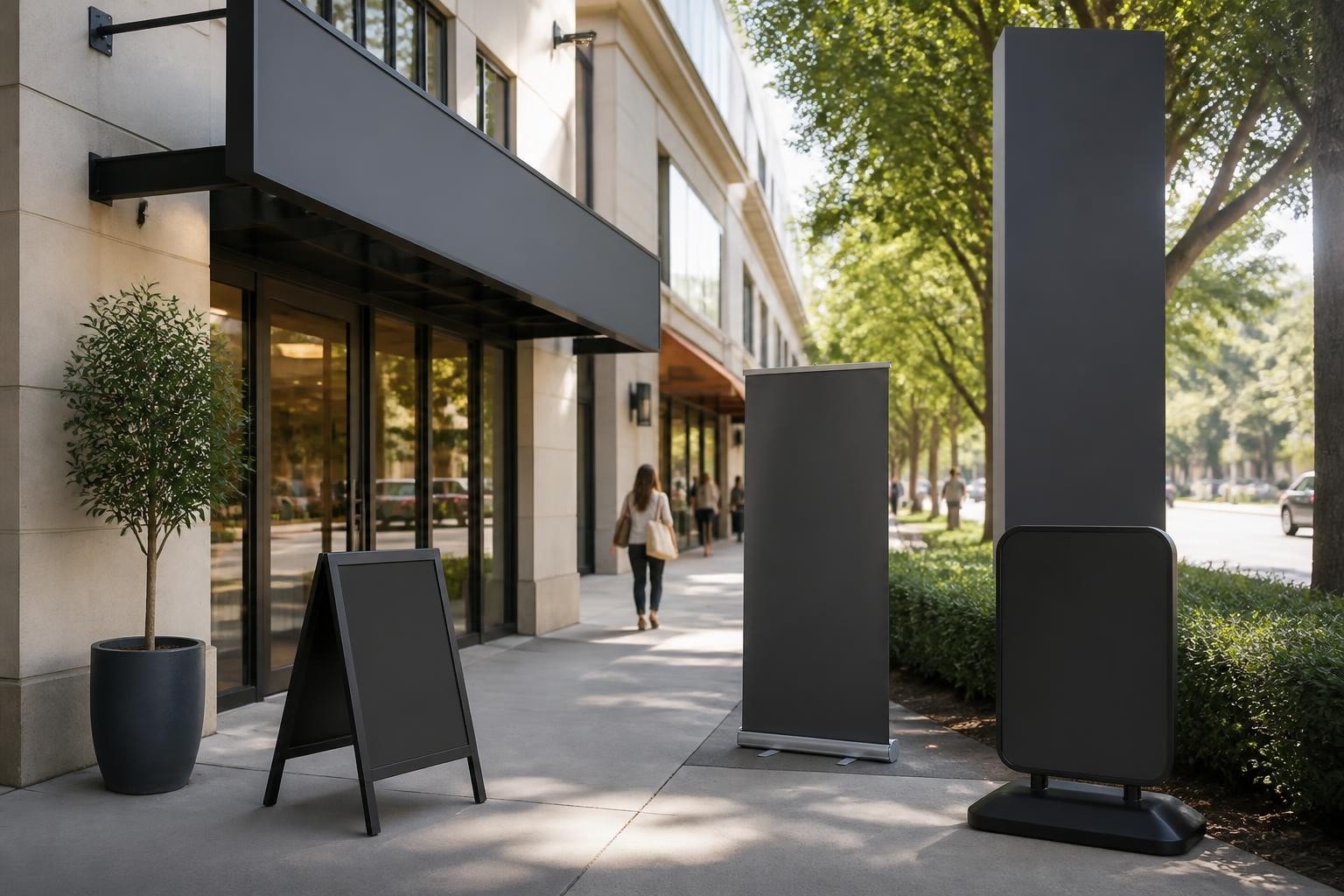
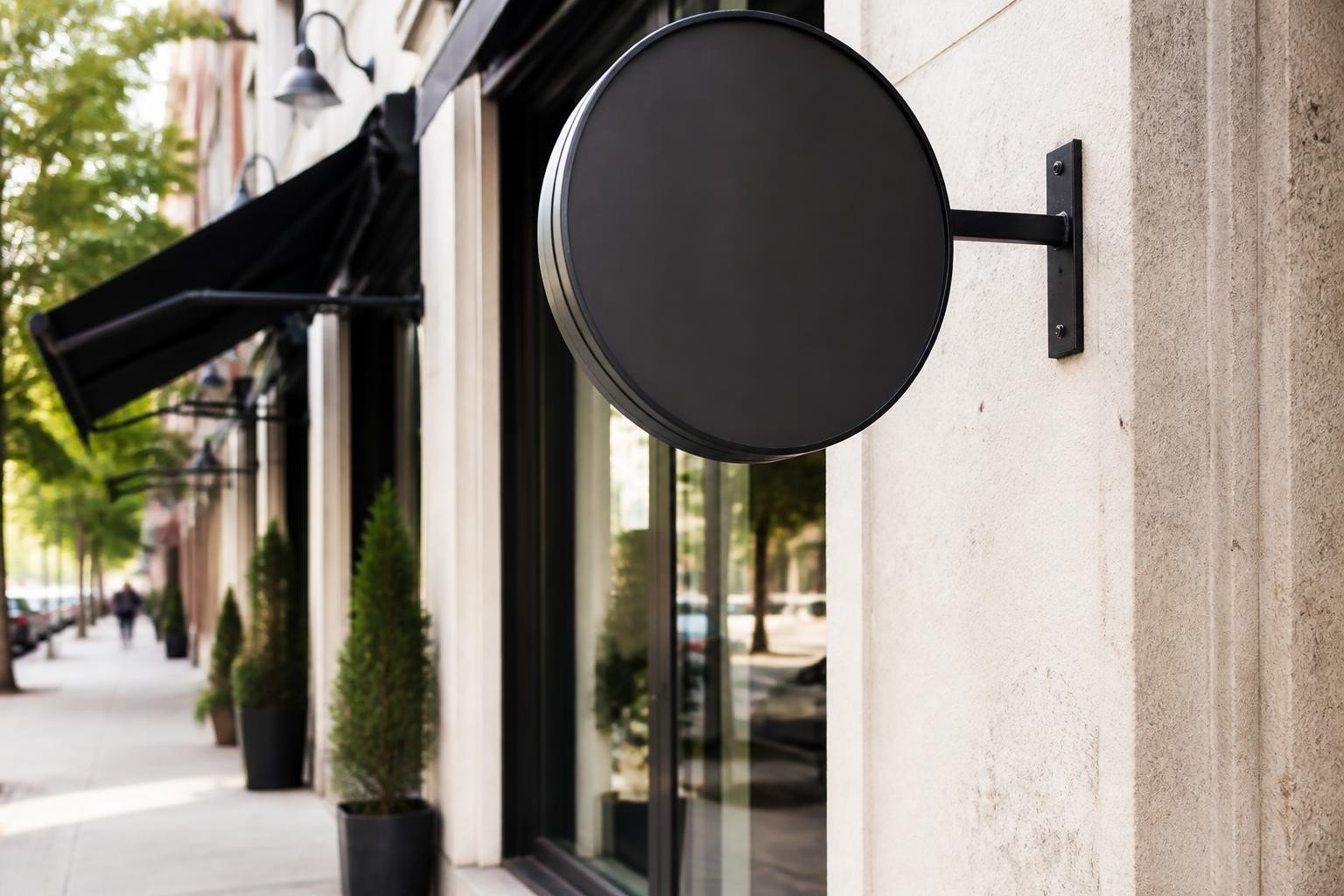
The term fabricated signage encompasses a sophisticated manufacturing process that transforms raw materials into permanent, high-impact visual solutions for businesses across every sector. Unlike printed or vinyl graphics, fabricated signage involves cutting, shaping, welding, and assembling materials such as metal, acrylic, and composite panels to create three-dimensional structures that command attention and withstand harsh environmental conditions. For organisations seeking to establish a commanding presence, understanding the fabrication process, material choices, and quality benchmarks ensures investment in signage that delivers measurable returns for years to come.
Understanding Fabricated Signage Manufacturing
Fabricated signage represents the intersection of craftsmanship, engineering, and design. This category includes everything from channel letters and monument signs to architectural features and wayfinding systems that require precision cutting, welding, and assembly.
Core Fabrication Processes
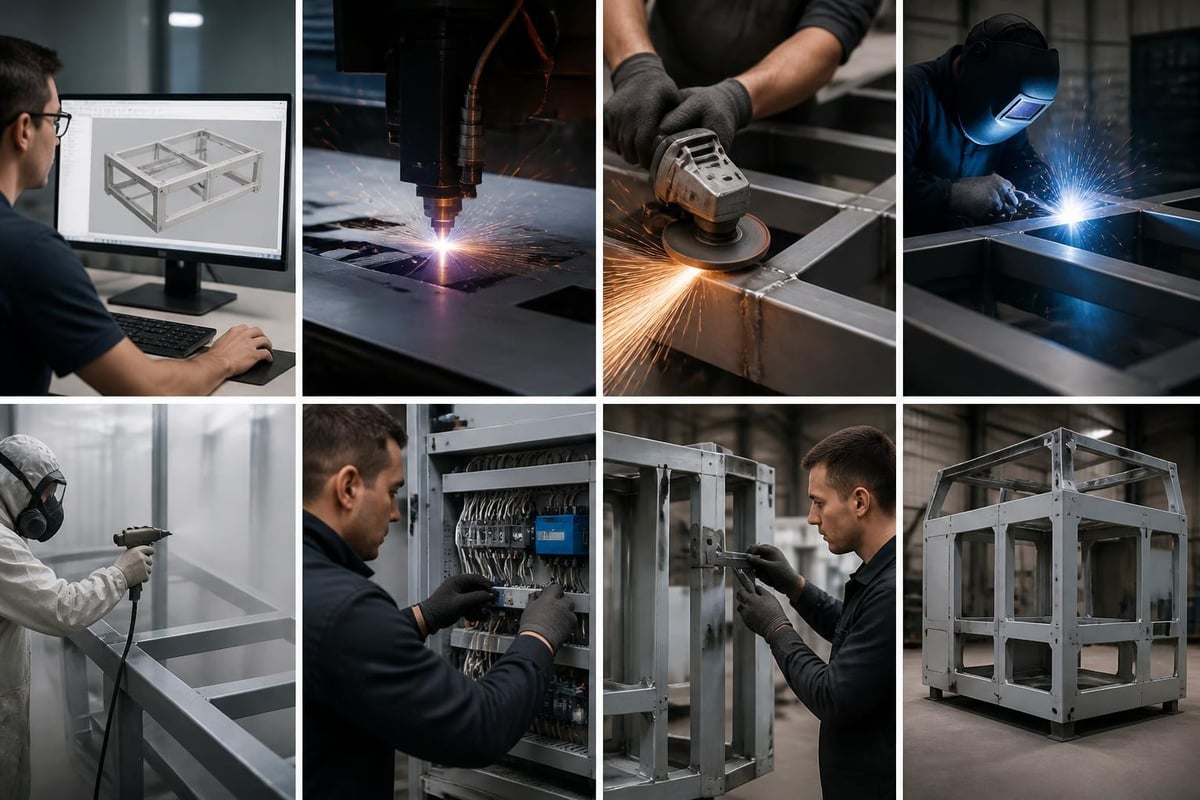
The manufacturing journey begins with detailed design specifications and material selection. Skilled technicians use computer-aided design (CAD) software to create precise templates that guide cutting and shaping operations. Modern fabrication shops employ CNC routers, laser cutters, and waterjet systems to achieve tolerances measured in millimetres.
Key fabrication techniques include:
- Laser cutting for intricate detail work and clean edges
- Router cutting for dimensional letters and shapes
- Welding and structural assembly for monument and pylon installations
- Powder coating and finishing for weather resistance
- Electrical integration for illuminated applications
The International Sign Association provides comprehensive resources on manufacturing standards and best practices that professional fabricators reference throughout production cycles. These guidelines ensure consistency, safety, and longevity across diverse sign types.
Material Selection and Performance
Material choice fundamentally determines the lifespan, appearance, and maintenance requirements of fabricated signage. Each substrate offers distinct advantages depending on installation environment, budget constraints, and aesthetic goals.
| Material | Durability | Cost | Best Applications | Typical Lifespan |
|---|---|---|---|---|
| Aluminium | Excellent | Medium | Outdoor signs, channel letters, panels | 15-20 years |
| Stainless Steel | Superior | High | Architectural features, premium installations | 25+ years |
| Acrylic | Good | Low-Medium | Face panels, decorative elements, interior | 7-12 years |
| Aluminium Composite (ACM) | Very Good | Medium | Large panels, monument bases, facades | 12-18 years |
| HDU (High-Density Urethane) | Excellent | Medium-High | Dimensional letters, carved elements | 15-20 years |
The practical guide to choosing sign substrates from Vanderbilt University outlines how environmental factors, including UV exposure, humidity, and temperature fluctuation, influence material performance over time.
Aluminium remains the workhorse of commercial fabricated signage due to its optimal strength-to-weight ratio, corrosion resistance, and versatility. Stainless steel finds application where premium aesthetics and extreme durability justify higher investment. For businesses exploring custom signage solutions, understanding these material properties enables informed decisions that align with brand positioning and budget parameters.
Design Considerations for Fabricated Signs
Successful fabricated signage balances visual impact with structural integrity and regulatory compliance. Design decisions made during the planning phase directly affect manufacturing efficiency, installation complexity, and long-term performance.
Dimensional and Structural Planning
Three-dimensional depth creates visual prominence and enables creative illumination strategies. Channel letters typically range from 100mm to 400mm in depth, with larger dimensional characters requiring internal reinforcement to prevent warping and ensure structural stability.
Critical design factors include:
- Letter height and stroke width - visibility from intended viewing distances
- Mounting method - flush, standoff, or raceway systems
- Internal structure - bracing and support frameworks
- Access requirements - maintenance access for illuminated components
- Wind load calculations - structural engineering for large installations
The Sign Research Foundation maintains extensive research on legibility, viewing angles, and visibility thresholds that inform evidence-based design decisions. This research demonstrates that well-designed fabricated signage can increase business visibility by up to 85% compared to flat graphics alone.
For installations exceeding two metres in height or spanning significant lateral dimensions, structural engineering certification becomes essential. This requirement is particularly relevant for pylon signage installations where wind loading and foundation design must meet municipal engineering standards.
Accessibility and Compliance Standards
Fabricated signage in public spaces must address accessibility requirements, particularly for wayfinding and directional applications. The 2010 ADA Standards for Accessible Design establishes technical specifications for character height, stroke width, contrast ratios, tactile elements, and Braille integration.
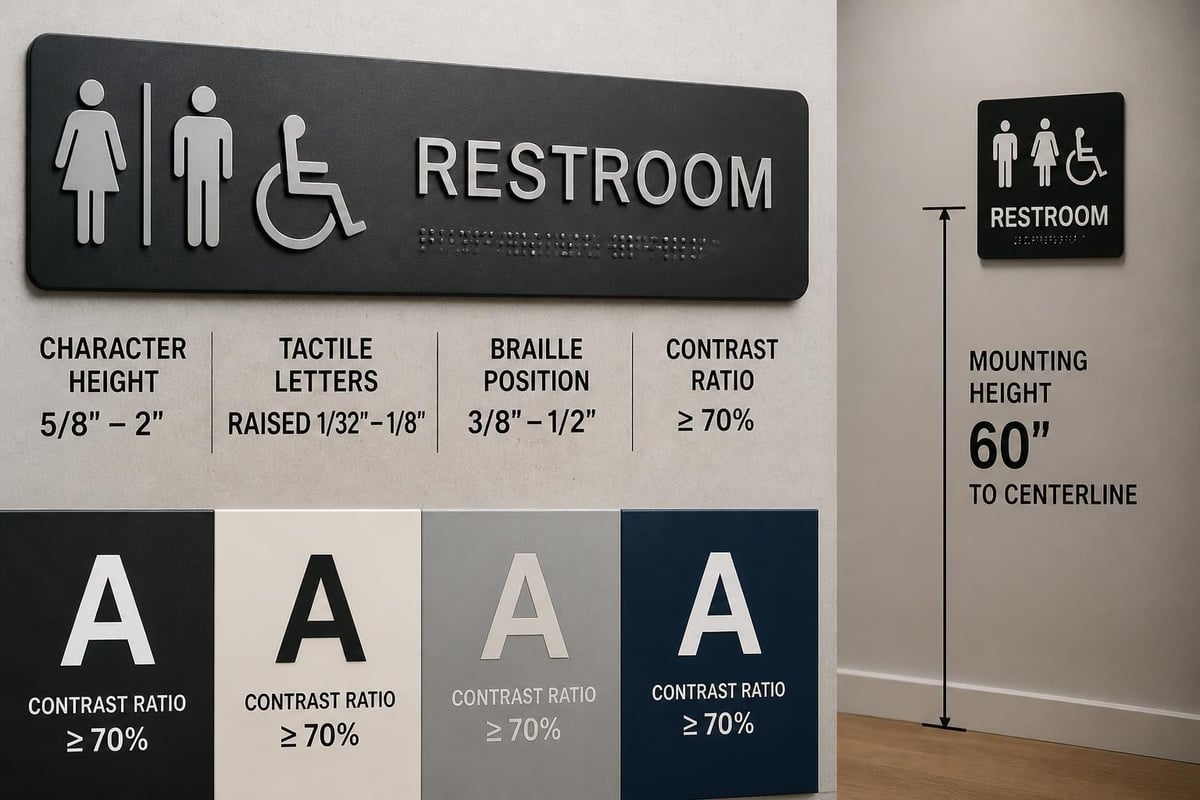
Key compliance considerations include mounting height between 1200mm and 1500mm for primary information, non-glare finishes to ensure readability under varied lighting conditions, and tactile characters with raised relief between 0.8mm and 1.5mm. Safety signage within industrial and pharmaceutical environments must additionally conform to standards outlined by the National Fire Protection Association, particularly regarding emergency egress and fire safety communication.
Illumination Technologies in Fabricated Signage
Illuminated fabricated signage extends visibility beyond daylight hours and creates dramatic visual effects that enhance brand recognition. The integration of lighting systems during fabrication requires careful planning for electrical routing, heat dissipation, and maintenance access.
LED Revolution in Sign Fabrication
LED technology has fundamentally transformed illuminated fabricated signage by delivering superior energy efficiency, extended lifespan, and enhanced colour control compared to legacy fluorescent and neon systems. Modern LED modules consume 75-80% less energy whilst providing 50,000 to 100,000 hours of operational life.
Illumination methods for fabricated signs:
- Front-lit channel letters - LED modules inside each letter illuminate translucent acrylic faces
- Reverse-lit (halo) letters - LEDs project light behind letters onto mounting surfaces
- Edge-lit panels - LEDs positioned along acrylic edges create uniform face illumination
- Digital integration - programmable RGB systems enable colour-changing effects
The benefits of LED signage extend beyond energy savings to include reduced maintenance costs, improved colour rendering, and enhanced flexibility for businesses that periodically update branding or messaging. For organisations considering digital signage integration, hybrid approaches that combine fabricated structural elements with digital display panels offer compelling versatility.
Electrical design must account for transformer specifications, power distribution, and weatherproof connections. Professional fabricators incorporate electrical chases and access panels during structural assembly, ensuring straightforward maintenance without compromising aesthetic appeal or weather sealing.
Industry-Specific Applications
Fabricated signage serves diverse sectors, each with unique functional requirements, aesthetic expectations, and regulatory constraints. Understanding these variations enables businesses to specify solutions optimised for their operational contexts.
Corporate and Retail Environments
Corporate headquarters and retail locations rely on fabricated signage to establish brand presence and guide customer journeys. Reception area installations frequently feature brushed stainless steel letters with standoff mounting, creating sophisticated dimensional effects enhanced by strategic accent lighting.
Retail fabricated signage balances brand visibility with architectural integration. Shopping centres employ monument signs fabricated from aluminium composite panels with integrated tenant directories, whilst individual retailers use channel letters sized according to viewing distances and local signage ordinances. The psychology of colour in signage design becomes particularly relevant when specifying powder coat finishes and illumination colour temperatures.
Industrial and Pharmaceutical Sectors
Industrial facilities require fabricated signage that prioritises durability and regulatory compliance over purely aesthetic considerations. Warehouse safety signs fabricated from aluminium with retroreflective surfaces ensure visibility in varying light conditions whilst withstanding the rigours of high-traffic environments.
Pharmaceutical manufacturing environments present unique challenges due to stringent hygiene protocols and validation requirements. Fabricated signage in these spaces typically employs stainless steel construction with welded seams to eliminate contamination harbourage points and facilitate regular sanitisation procedures.
Construction and Infrastructure Projects
Construction sites and infrastructure developments utilise robust fabricated signage for project identification, safety communication, and wayfinding. The Transportation Research Information technical overview documents fabrication standards for traffic control signs, including substrate specifications, legend application methods, and retroreflective sheeting classifications.
Temporary construction signage differs from permanent installations in material selection and structural design. Whilst permanent fabricated signage prioritises longevity through premium materials and robust construction, construction project signs balance adequate durability with cost efficiency for installations with defined service lives.
Quality Assurance and Fabrication Standards
Professional fabricated signage manufacturers implement rigorous quality control protocols throughout production cycles to ensure dimensional accuracy, finish quality, and structural integrity. These standards protect both manufacturer reputation and client investment.
Manufacturing Quality Benchmarks
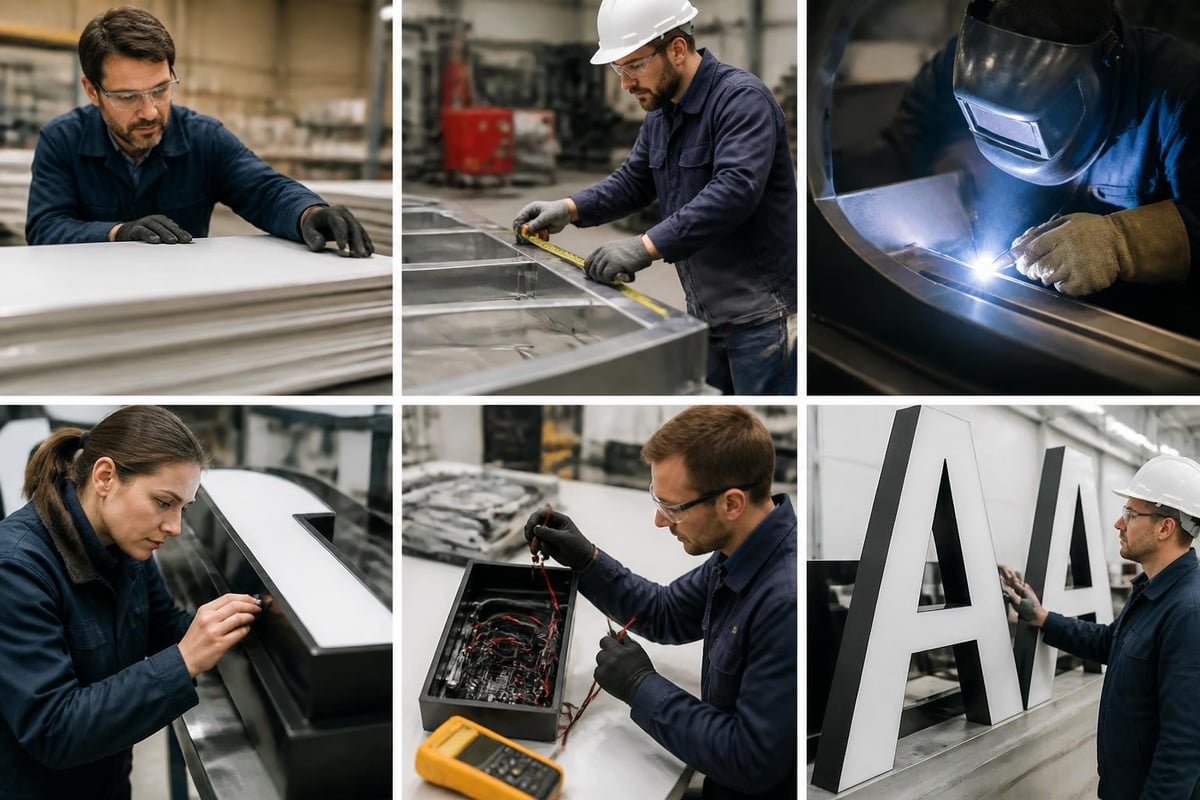
Precision fabrication requires controlled environments, calibrated equipment, and skilled technicians. Leading manufacturers maintain climate-controlled facilities to prevent material expansion and contraction during cutting and assembly operations. CNC equipment undergoes regular calibration to maintain tolerances within ±0.5mm for letter cutting and ±1mm for structural components.
Quality checkpoints include:
- Material inspection - verification of substrate specifications and finish quality
- Dimensional accuracy - verification of cut dimensions against CAD templates
- Weld quality - visual and structural inspection of all joints
- Finish inspection - assessment of powder coat coverage and surface preparation
- Electrical testing - verification of LED operation and waterproof integrity
- Final assembly - structural stability and mounting hardware verification
The International Sign Association manufacturing resources provide templates and checklists that standardise quality processes across fabrication operations. These frameworks ensure consistency regardless of project scale or complexity.
Installation and Long-Term Performance
Even perfectly fabricated signage underperforms if installation fails to meet structural and weatherproofing standards. The importance of professional signage installation cannot be overstated, particularly for large-format fabricated installations where structural mounting, electrical connections, and weather sealing determine long-term performance.
Installation protocols address foundation design for monument signs, structural anchoring for wall-mounted elements, and electrical termination following local codes. For illuminated fabricated signage, weatherproof electrical connections prevent moisture ingress that causes premature LED failure and corrosion of internal components.
Maintenance and Lifecycle Management
Fabricated signage represents a significant capital investment that requires proactive maintenance to preserve appearance and functionality throughout its service life. Structured maintenance programmes extend lifespan whilst ensuring consistent brand presentation.
Preventive Maintenance Protocols
Regular inspection identifies emerging issues before they escalate into costly repairs or replacements. The signage maintenance tips for long-term performance outline monthly, quarterly, and annual service activities that preserve fabricated signage investments.
| Maintenance Task | Frequency | Purpose |
|---|---|---|
| Visual inspection | Monthly | Identify damage, soiling, or illumination failures |
| Surface cleaning | Quarterly | Remove environmental contaminants |
| LED functionality check | Quarterly | Verify complete illumination operation |
| Structural fastener inspection | Annually | Ensure mounting security |
| Electrical connection assessment | Annually | Prevent weather-related failures |
| Finish restoration | Every 3-5 years | Address fading or oxidation |
Coastal installations face accelerated corrosion from salt-laden air, requiring more frequent inspection and protective treatments. Industrial environments with airborne particulates benefit from quarterly cleaning to prevent buildup that diminishes illumination effectiveness and appearance.
Refurbishment and Updating
Well-designed fabricated signage accommodates future modifications without requiring complete replacement. Modular construction enables face panel replacement to update branding whilst retaining structural components and electrical infrastructure. This approach significantly reduces costs when organisations refresh visual identities or update tenant information on multi-tenant installations.
For historically significant or architecturally integrated fabricated signage, conservation principles guide restoration efforts. The American Institute for Conservation provides guidance on preservation techniques that respect original fabrication methods whilst incorporating modern materials where appropriate for structural integrity and longevity.
Cost Factors and Investment Planning
Understanding the cost structure of fabricated signage enables realistic budgeting and informed value comparisons. Whilst fabricated signs command higher initial investment than printed alternatives, their extended lifespan and minimal maintenance requirements often deliver superior long-term value.
Price Determinants
Multiple variables influence fabricated signage costs, making generalised pricing unreliable. Detailed quotations require specification of materials, dimensions, illumination requirements, finish options, and installation complexity.
Primary cost drivers include:
- Material selection - stainless steel versus aluminium versus HDU
- Dimensional complexity - simple letter shapes versus intricate logos
- Illumination integration - non-illuminated versus LED systems
- Finish requirements - standard powder coat versus custom colour matching
- Installation complexity - accessible walls versus high-rise mounting
- Engineering requirements - structural calculations and certifications
The cost of commercial signage guide provides frameworks for estimating investment across various sign types and specifications. For organisations evaluating options, the understanding signage investment business guide explores total cost of ownership calculations that account for maintenance, energy consumption, and replacement cycles.
Return on Investment Considerations
Fabricated signage functions as both branding asset and marketing tool. Research indicates that high-quality exterior signage influences purchase decisions for 68% of consumers, with dimensional fabricated signs demonstrating superior recall compared to flat graphics.
For retail locations, fabricated signage visibility directly correlates with foot traffic generation. A well-positioned monument sign or channel letter installation can increase walk-in customers by 15-25% compared to locations with substandard or absent signage. The how outdoor signage attracts customers guide examines placement strategies and design principles that maximise this impact.
Regulatory Compliance and Permitting
Fabricated signage installations must navigate municipal regulations, zoning ordinances, and building codes that vary by jurisdiction. Understanding these requirements during the design phase prevents costly modifications and delays.
Municipal and Planning Approvals
Most municipalities require permits for fabricated signage, particularly freestanding structures and illuminated installations. The signage regulations and permits in South Africa outlines common requirements including dimensional restrictions, setback distances, illumination limitations, and heritage area constraints.
Pylon installations face particularly stringent scrutiny due to height, illumination, and traffic safety considerations. The pylons for council approval guide details submission requirements and approval timelines for these prominent structures.
Typical permitting requirements include:
- Detailed fabrication drawings with dimensions and materials
- Structural engineering certification for large installations
- Electrical compliance certificates for illuminated signs
- Heritage impact assessments in protected areas
- Traffic impact studies for roadside installations
Working with experienced fabricators who understand local regulatory landscapes streamlines approval processes and ensures compliant installations that avoid enforcement actions or required modifications.
Intellectual Property and Copyright Considerations
Custom fabricated signage often incorporates proprietary branding elements, logos, and design features protected by intellectual property law. Whilst fabricators execute designs specified by clients, the scholarly analysis of copyright issues in public installations highlights potential complications when signage incorporates artistic elements or unauthorised reproductions.
Businesses commissioning fabricated signage should ensure proper licensing for any fonts, images, or design elements incorporated into final installations. Professional fabricators request written confirmation of intellectual property ownership or licensing prior to commencing production, protecting both parties from potential infringement claims.
Emerging Trends in Fabricated Signage
The fabricated signage sector continues evolving through material innovations, manufacturing technologies, and integration with digital systems. Staying informed about these developments enables businesses to specify future-ready solutions that maintain relevance throughout their service lives.
Material and Sustainability Innovations
Environmental consciousness increasingly influences material selection and fabrication processes. Recycled aluminium content in sign fabrication reduces environmental impact whilst maintaining structural performance. Powder coating technologies have evolved to eliminate volatile organic compounds, improving both environmental profiles and finish durability.
LED illumination's energy efficiency aligns with corporate sustainability goals whilst delivering operational cost savings. Solar-powered systems enable off-grid fabricated signage installations where electrical infrastructure is unavailable or cost-prohibitive. These autonomous systems incorporate battery storage and intelligent controls that optimise illumination based on ambient light conditions.
Digital Integration
Hybrid fabricated signage combines traditional dimensional construction with digital display panels, creating installations that deliver permanent brand presence alongside dynamic messaging capabilities. This approach particularly benefits retail environments where promotional content changes frequently whilst core branding remains constant.
The signage design trends highlight increasing demand for interactive fabricated signage incorporating QR codes, NFC tags, and augmented reality triggers that bridge physical installations with digital content experiences. As consumer expectations evolve, fabricated signage increasingly functions as a touchpoint within integrated marketing ecosystems rather than standalone communication tools.
Manufacturing Technology Advancement
Automation and advanced manufacturing technologies continue reducing production timeframes whilst improving precision. Five-axis CNC routers enable complex three-dimensional fabrication previously achievable only through manual craftsmanship. Robotic welding systems deliver consistent quality across repetitive tasks whilst freeing skilled technicians for complex assembly operations.
Digital workflow integration from design through fabrication minimises errors and accelerates production cycles. Cloud-based project management platforms enable real-time collaboration between designers, fabricators, and clients, ensuring alignment throughout complex projects involving multiple sign types and installation locations.
Fabricated signage represents a sophisticated blend of materials engineering, precision manufacturing, and strategic design that delivers enduring brand presence across diverse business applications. Understanding the fabrication process, material performance characteristics, and quality benchmarks enables informed investment decisions that align with operational requirements and brand positioning. Signs4SA combines advanced fabrication capabilities with comprehensive project expertise to deliver bespoke signage solutions backed by skilled professionals and a commitment to excellence. Whether you require corporate identification, retail visibility, or industrial wayfinding systems, our team provides end-to-end support from initial concept through installation and ongoing maintenance.