


Signage for Companies: A Professional Guide
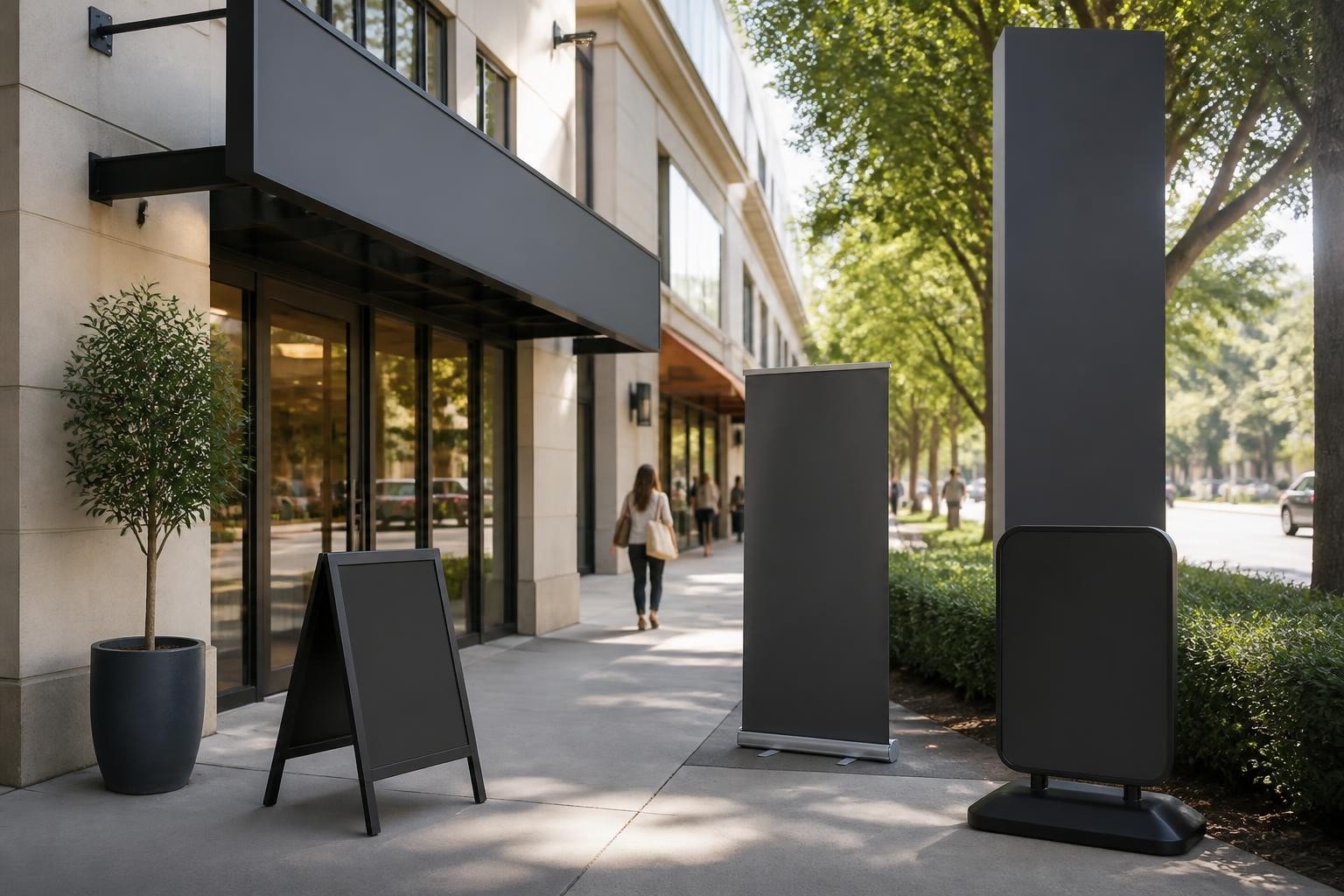
Professional signage serves as the visual foundation of a company's physical presence, communicating brand identity whilst guiding visitors, employees, and clients through corporate spaces. The strategic implementation of signage for companies extends far beyond simple wayfinding-it shapes first impressions, reinforces brand values, and ensures regulatory compliance across diverse environments. From multinational corporations to boutique retail establishments, every organisation requires a cohesive signage strategy that balances aesthetic appeal with functional clarity.
The Strategic Value of Corporate Signage
Signage for companies represents a tangible investment in brand visibility and operational efficiency. Research demonstrates that well-designed signage systems contribute significantly to customer acquisition, with the Sign Research Foundation documenting measurable increases in foot traffic and brand recall amongst businesses that prioritise signage quality.
The economic impact extends beyond immediate visibility. Professional signage reduces confusion, minimises staff time spent providing directions, and creates positive associations with your brand from the moment visitors encounter your premises. Manufacturing facilities, pharmaceutical plants, retail centres, and construction sites all benefit from strategic signage deployment.
Building Brand Consistency Through Visual Identity
Corporate signage establishes visual continuity across multiple touchpoints. Your signage programme should reflect core brand elements:
- Colour schemes that match brand guidelines precisely
- Typography consistent with marketing materials and digital presence
- Logo placement following brand standards documentation
- Material selection that reinforces brand positioning (premium, sustainable, innovative)
- Finish quality that demonstrates attention to detail
When executed professionally, these elements combine to create instant brand recognition. Employees feel pride in their workplace environment, whilst clients and partners perceive professionalism before any conversation begins.
Essential Signage Categories for Business Environments
Different operational areas demand specific signage solutions. Understanding these categories enables strategic planning and budget allocation.
Exterior and Building Identification
Your building's exterior creates the first physical impression of your organisation. Monument signs, fascia signage, and entrance markers establish presence within commercial districts. For businesses requiring high-visibility solutions along major routes, Pylon Signage offers bespoke options designed and manufactured to specification, providing 24-hour brand visibility that withstands South African weather conditions.
| Signage Type | Primary Function | Visibility Range | Typical Lifespan |
|---|---|---|---|
| Monument Signs | Ground-level brand presence | 50-100 metres | 15-20 years |
| Pylon Signs | Highway/roadside visibility | 200-500 metres | 10-15 years |
| Building Fascia | Architectural integration | 100-200 metres | 10-15 years |
| Entrance Markers | Directional guidance | 20-50 metres | 10-12 years |
Interior Wayfinding Systems
Professional wayfinding reduces visitor anxiety whilst improving operational flow. The Society for Experiential Graphic Design provides extensive resources on human-centred design principles that make navigation intuitive rather than confusing.
Effective interior programmes include:
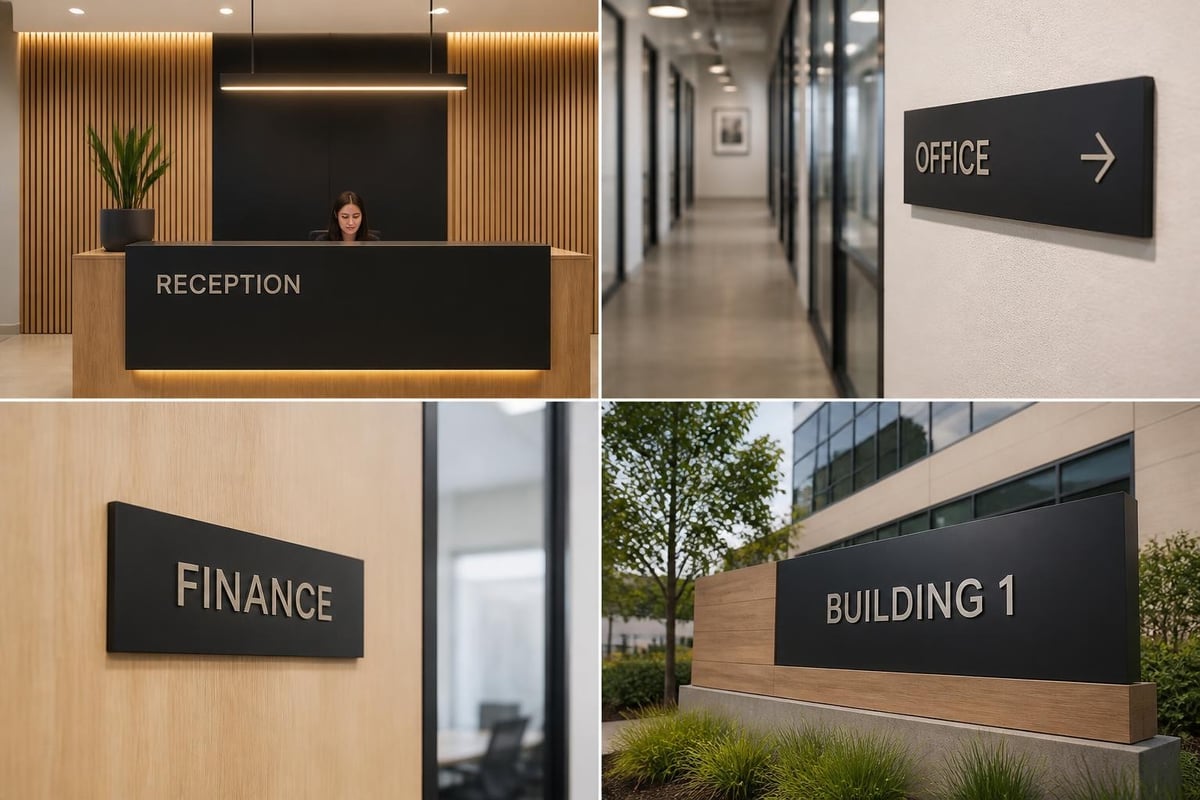
- Reception directories showing department locations and floor plans
- Corridor signage guiding visitors between zones
- Room identification for offices, meeting spaces, and facilities
- Floor markers for multi-storey buildings
- Emergency exit signage meeting safety regulations
Consider how visitors unfamiliar with your premises will navigate. Testing your wayfinding system with first-time users reveals gaps that regular occupants overlook.
Compliance and Safety Signage
Regulatory requirements vary across industries, but all companies must address basic safety obligations. Manufacturing and pharmaceutical facilities face particularly stringent standards. The U.S. Access Board provides comprehensive guidance on accessibility requirements, including tactile characters, Braille, and contrast ratios that ensure inclusivity.
Safety signage categories include:
- Fire safety equipment locations and escape routes
- Hazard warnings for restricted areas
- Personal protective equipment requirements
- Emergency assembly points
- First aid stations and AED locations
Non-compliance creates liability exposure and potentially endangers staff. Regular audits ensure your safety signage remains current as regulations evolve and facilities expand. Understanding safety signage compliance requirements helps organisations maintain legal obligations whilst protecting personnel.
Material Selection and Durability Considerations
Signage for companies requires materials that withstand environmental conditions whilst maintaining visual appeal. South Africa's climate presents specific challenges, from coastal humidity to inland temperature extremes.
Exterior Material Options
Durability becomes paramount for outdoor applications. Consider these proven solutions:
Aluminium composite panels offer lightweight strength with excellent weather resistance. Powder-coated finishes prevent corrosion whilst providing vibrant colour retention across years of UV exposure.
Stainless steel communicates premium positioning and handles industrial environments effectively. Though initial investment exceeds alternatives, lifespan typically doubles that of standard materials.
High-density urethane enables dimensional lettering and logos that create depth and shadow play. These elements add visual interest whilst remaining lightweight for façade mounting.
Acrylic and polycarbonate serve well for illuminated applications, diffusing LED lighting evenly whilst resisting yellowing that plagued older plastic materials.
For guidance on matching materials to specific applications, explore resources on choosing the right signage materials that consider both aesthetic goals and functional requirements.
Interior Material Considerations
Interior environments permit broader material choices, enabling creative expression alongside practical function:
| Material | Best Applications | Key Advantages | Maintenance Level |
|---|---|---|---|
| Brushed aluminium | Directories, office markers | Professional appearance, durability | Low |
| Acrylic with vinyl | Wayfinding, temporary signage | Cost-effective, easily updated | Medium |
| Wood veneer | Executive areas, heritage spaces | Warmth, premium positioning | Medium-High |
| Digital displays | Dynamic content areas | Flexibility, real-time updates | Medium |
The rise of 3D lettering signage has transformed reception areas and feature walls, creating memorable brand moments that photographs cannot capture adequately. Dimensional elements add tactile interest that flat signage cannot achieve.

Design Principles for Maximum Impact
Effective signage balances readability with brand expression. Poor design undermines even premium materials and expert fabrication.
Typography and Legibility Standards
Readability determines whether your signage fulfils its purpose. Font selection influences both immediate comprehension and long-term brand perception.
Sans-serif typefaces generally outperform serif alternatives in signage applications. Helvetica, Futura, and DIN families offer clean lines that remain legible at distance and under varied lighting conditions.
Character height calculations follow established formulas based on viewing distance. As a general principle, one inch of letter height provides legibility for each 10 feet of viewing distance. Signage viewed from 50 feet requires minimum 5-inch characters.
Contrast ratios between text and background dramatically affect readability. Light characters on dark backgrounds or dark on light both work effectively, but mid-tone combinations fail across lighting conditions.
Explore the psychology of colour in signage design to understand how hue selection influences emotional response and information retention.
Consistency Across Touchpoints
Professional signage programmes maintain visual coherence across diverse applications. This requires comprehensive brand guidelines that specify:
- Approved colour palettes with material-specific specifications
- Typography hierarchies for different information levels
- Logo usage rules including minimum sizes and clear space
- Graphic elements and patterns that reinforce identity
- Photography and imagery guidelines when applicable
Creating a signage standards manual ensures consistency whether you deploy new signage next month or five years hence. This documentation proves invaluable when working with manufacturers, architects, and facilities teams.
Technology Integration and Digital Solutions
Modern signage for companies increasingly incorporates digital elements that provide flexibility impossible with static installations.
Digital Display Applications
Digital Signage ranges from P10 outdoor-rated displays to ultra-fine P1.8 screens for close-viewing applications. These systems excel in environments requiring frequent content updates:
- Corporate lobbies showcasing company news, achievements, and visitor information
- Retail environments promoting current offers and product highlights
- Manufacturing facilities displaying production metrics and safety messages
- Conference centres providing event schedules and directional information
Digital signage offers measurable advantages over static alternatives. Content updates occur centrally without physical intervention, enabling real-time responsiveness to business needs. For organisations exploring this technology, understanding LED signage versus traditional signs clarifies decision criteria around investment and ongoing costs.
Hybrid Signage Strategies
Optimal programmes blend static and digital elements strategically. Permanent architectural signage establishes brand presence and core wayfinding, whilst digital displays handle variable content.
This approach controls costs whilst maximising flexibility. Static elements withstand decades of service, whilst digital screens focus on zones where content changes justify the technology investment.
Planning and Implementation Process
Successful signage programmes follow structured planning that considers current needs alongside future growth.
Needs Assessment and Site Analysis
Begin with comprehensive facility audits that document:
- Existing signage locations and conditions
- Traffic flow patterns for vehicles and pedestrians
- Decision points where directional guidance proves critical
- Brand touchpoints requiring visual reinforcement
- Regulatory requirements specific to your industry
Involving facilities management, human resources, and marketing teams ensures diverse perspectives shape the programme. Employees who navigate spaces daily identify pain points that leadership might overlook.
Design Development and Approval Workflows
Professional design translates strategic goals into visual solutions. This phase produces:
- Conceptual designs exploring aesthetic directions
- Detailed specifications for fabrication and installation
- Mockups and visualisations showing signage in context
- Material samples demonstrating finish quality
- Installation drawings coordinating with architectural elements
Approval workflows should balance stakeholder input with project momentum. Establishing clear decision-making authority prevents endless revision cycles that delay implementation.
Installation and Quality Assurance
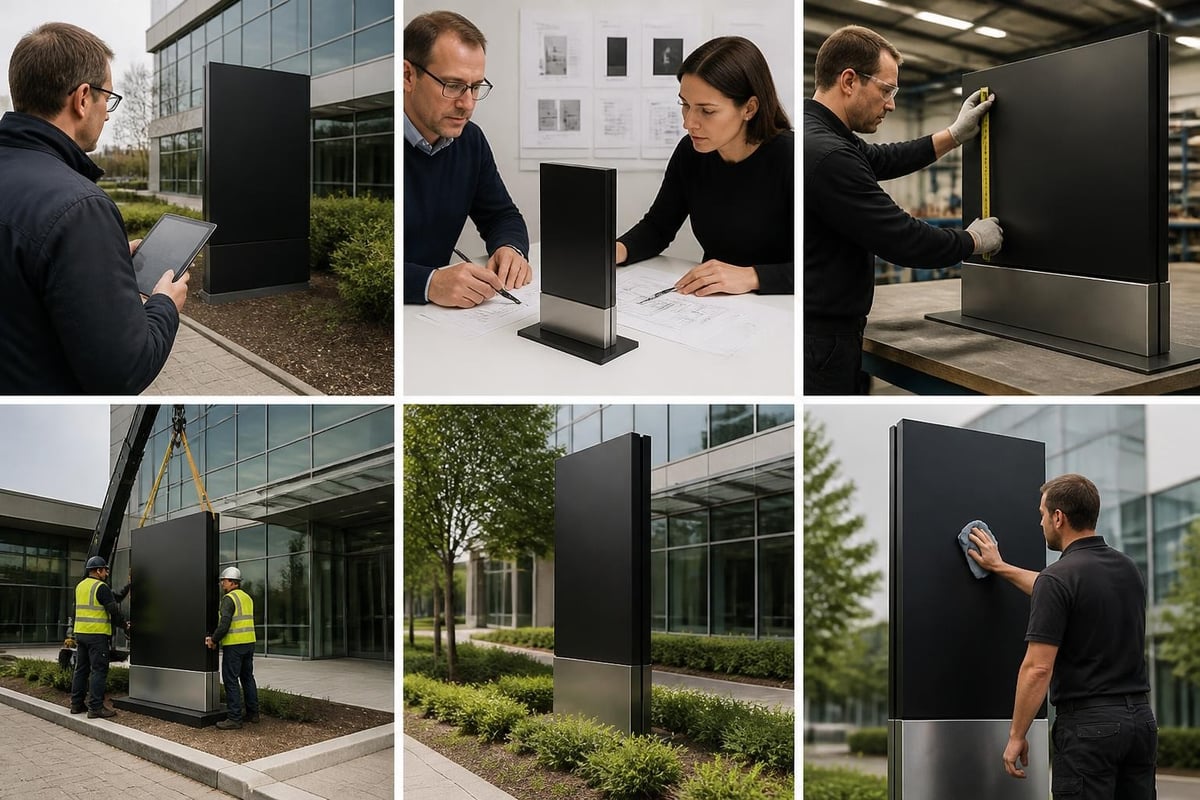
Professional installation ensures designs translate accurately to physical reality. Poor installation undermines even exceptional design and fabrication.
Critical installation considerations include:
- Mounting methods appropriate for substrate materials
- Levelling and alignment across multiple sign locations
- Electrical connections for illuminated elements
- Weatherproofing for exterior applications
- Final cleaning and protective measures
Understanding the importance of professional signage installation prevents costly corrections and ensures longevity. Installation teams should document their work, providing maintenance teams with information about mounting systems and access requirements.
Return on Investment and Performance Metrics
Signage for companies represents capital investment requiring justification through measurable returns.
Quantifiable Benefits
Well-executed signage programmes deliver returns across multiple dimensions:
Reduced operational costs emerge from decreased staff time spent providing directions. Reception personnel focus on higher-value interactions when wayfinding systems function effectively.
Improved safety outcomes result from clear hazard communication and emergency guidance. Incident reduction lowers insurance premiums whilst protecting your most valuable asset-your people.
Enhanced brand perception influences client decisions and employee satisfaction. Professional environments attract premium talent and justify premium pricing for your products or services.
Increased foot traffic occurs when exterior signage effectively communicates your presence and proposition to passing traffic. This benefit particularly impacts retail and service businesses dependent on walk-in customers.
Measuring Signage Effectiveness
Establish baseline metrics before implementing new signage, then track changes:
- Visitor satisfaction scores regarding facility navigation
- Time required for first-time visitors to locate destinations
- Safety incident rates in areas with new hazard communication
- Brand awareness among local community members
- Customer acquisition costs for walk-in traffic
Regular assessment identifies opportunities for refinement and demonstrates value to stakeholders evaluating future investment.
Maintenance and Lifecycle Management
Signage degrades over time without proactive maintenance. Strategic programmes preserve appearance and extend service life.
Scheduled Maintenance Activities
Develop maintenance schedules based on signage types and environmental exposure:
Monthly inspections identify damage, vandalism, or illumination failures requiring prompt attention. Early intervention prevents minor issues escalating into costly replacements.
Quarterly cleaning removes accumulated dirt, pollutants, and biological growth that degrades appearance. Cleaning methods must suit specific materials-abrasive techniques that work for metal damage acrylic.
Annual comprehensive audits assess structural integrity, colour fading, and alignment. These reviews inform capital planning for eventual replacement.
Implementing signage maintenance best practices protects your investment whilst ensuring continuous professional presentation. For businesses operating across multiple sites, centralised maintenance tracking ensures consistent standards nationwide.
Replacement Planning and Budget Cycles
Even premium signage eventually requires replacement. Environmental factors, technological advances, and brand evolution all drive refresh cycles.
Typical replacement timeframes vary by application:
- Exterior monument and pylon signs: 12-15 years
- Illuminated building fascia: 10-12 years
- Interior directories and wayfinding: 8-10 years
- Digital displays: 5-7 years
- Temporary promotional signage: 1-3 years
Staging replacements across fiscal years manages capital expenditure whilst maintaining consistent facility appearance. Reserve funds prevent urgent needs derailing other priorities.
Industry-Specific Considerations
Different sectors face unique signage requirements shaped by operational demands and regulatory frameworks.
Corporate Office Environments
Professional services firms prioritise sophisticated aesthetics that communicate competence and trustworthiness. Subdued colour palettes, premium materials, and refined typography establish appropriate tone.
Reception areas warrant particular investment, as these spaces create first impressions for clients and prospects. Dimensional logos, architectural lighting, and carefully curated brand messaging demonstrate attention to detail that clients expect in your service delivery.
Retail Spaces
Retail signage balances brand expression with promotional flexibility. Window graphics, point-of-sale displays, and seasonal decorations layer atop permanent architectural elements.
Understanding how outdoor signage attracts customers helps retailers maximise their visibility investment. Effective retail signage guides shopping journeys whilst reinforcing impulse purchases through strategic product highlighting.
Manufacturing and Industrial Facilities
Industrial environments demand robust signage that withstands harsh conditions whilst maintaining regulatory compliance. Chemical resistance, impact protection, and visibility through dust or steam influence material selection.
Safety signage dominates these environments, with hazard communication, equipment operation instructions, and emergency procedures requiring constant visibility. Bilingual or multilingual signage often proves necessary given diverse workforce compositions.
Pharmaceutical and Healthcare Settings
Pharmaceutical facilities navigate complex regulatory environments where signage supports both operational efficiency and compliance documentation. Cleanroom protocols, contamination control zones, and quality assurance areas all require specific identification.
Wayfinding assumes particular importance in healthcare settings, where patient stress and unfamiliarity combine. The ACRP Research Report 177 provides valuable insights into wayfinding design for populations including elderly users and those with disabilities-principles equally applicable to healthcare environments.
Future Trends Shaping Corporate Signage
Signage for companies continues evolving alongside technological advancement and changing workplace dynamics.
Sustainability and Environmental Responsibility
Organisations increasingly prioritise sustainable signage solutions that minimise environmental impact. This encompasses material selection, fabrication processes, energy consumption, and end-of-life disposal.
LED illumination has replaced fluorescent and incandescent technologies, reducing energy consumption by 60-80% whilst extending service intervals. Solar-powered options eliminate electrical infrastructure for remote installations.
Recyclable materials and modular designs enable component replacement rather than wholesale disposal. Aluminium, steel, and certain plastics enter recycling streams effectively, diverting waste from landfills.
Smart Signage and IoT Integration
Internet-connected signage enables sophisticated functionality beyond simple content display. Sensors detect viewer presence, adapting content to audience demographics or environmental conditions.
Integration with building management systems creates dynamic wayfinding that responds to real-time events-directing visitors to alternative routes during maintenance activities or emergency situations.
Data analytics reveal which messages resonate, how long viewers engage, and what actions follow exposure. This intelligence informs content strategies and demonstrates ROI through concrete metrics.
Personalisation and Targeted Messaging
Advanced systems deliver personalised content based on viewer characteristics detected through various technologies. Corporate lobbies might display industry-specific case studies when sensors identify visitor profiles.
This capability extends beyond digital displays. QR codes and NFC tags embedded in static signage bridge physical and digital experiences, enabling visitors to access detailed information via mobile devices.
Strategic signage programmes elevate corporate environments from merely functional to genuinely memorable, whilst ensuring regulatory compliance and operational efficiency across diverse applications. Whether you're establishing brand presence through exterior monuments, creating intuitive wayfinding systems, or integrating cutting-edge digital displays, partnering with experienced professionals ensures your investment delivers lasting value. Signs4SA brings national expertise and industry-specific knowledge to every project, crafting bespoke signage solutions that reflect your brand's unique identity whilst meeting the practical demands of South African business environments.