



Digital Billboard Advertising: Your Complete Guide
The advertising landscape has undergone a remarkable transformation over the past decade, with digital technology reshaping how businesses communicate with their audiences. At the forefront of this revolution stands the digital billboard, a powerful medium that combines the high-visibility impact of traditional outdoor advertising with the flexibility and precision of digital marketing. These sophisticated displays have become essential tools for brands seeking to capture attention in busy urban environments, offering capabilities that were simply impossible with conventional static signage.
Understanding Digital Billboard Technology
A digital billboard represents far more than simply swapping printed vinyl for a screen. According to the IAB's definition and core features, these displays constitute a distinct category of digital out-of-home (DOOH) advertising, characterized by programmable content, remote management capabilities, and the ability to deliver multiple messages to targeted audiences throughout the day.
Core Components and Technical Architecture
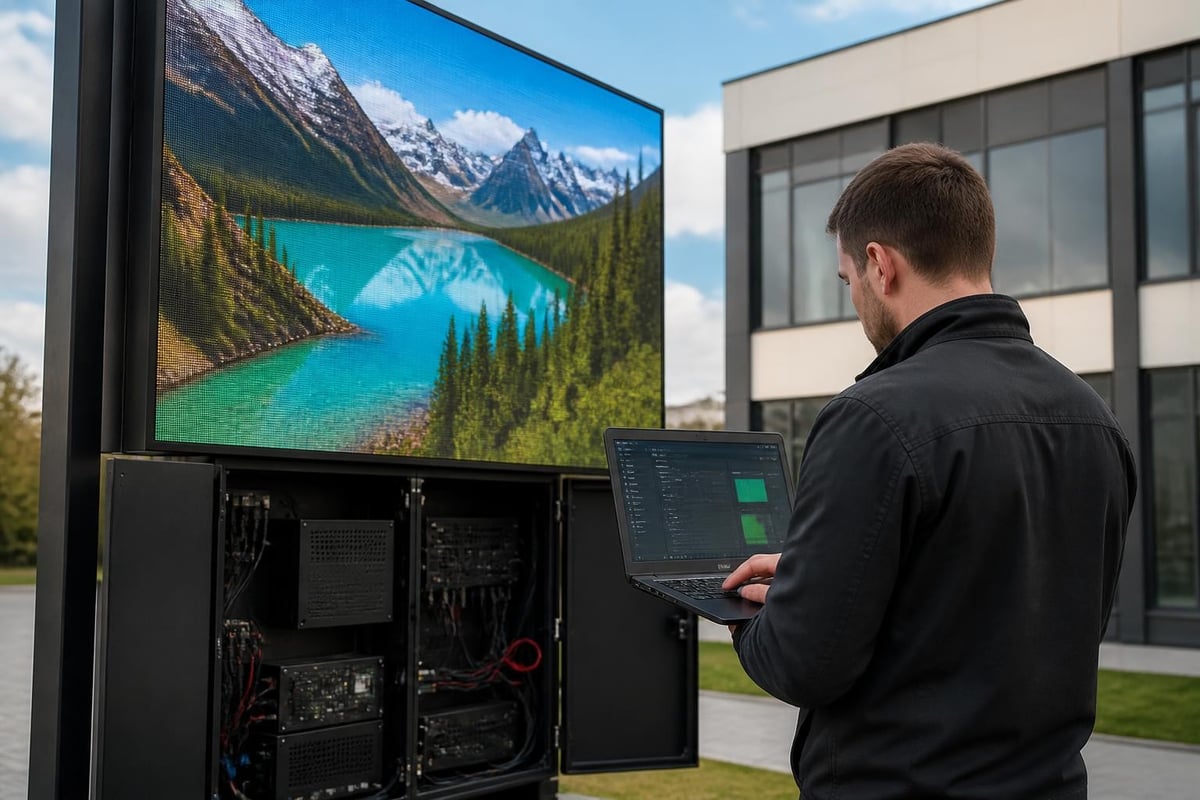
Modern digital billboard systems comprise several integrated technologies working in harmony:
- LED display panels with pixel pitches ranging from P10 (outdoor) to P1.8 (premium indoor)
- Media players and content management systems enabling remote scheduling and updates
- Power infrastructure including redundant systems for continuous operation
- Network connectivity for cloud-based control and monitoring
- Environmental sensors that adjust brightness based on ambient light conditions
- Weather protection with IP65-rated enclosures for outdoor installations
The pixel pitch determines viewing distance and image clarity. A P10 digital billboard remains legible from 10 metres away, making it ideal for roadside installations where viewers pass at speed. Premium indoor applications may utilize P1.8 displays for close-range viewing in retail environments or corporate lobbies.
Display Specifications and Performance Standards
| Specification | Outdoor Standard | Indoor Premium | Application |
|---|---|---|---|
| Pixel Pitch | P6 – P10 | P1.8 – P4 | Viewing distance optimization |
| Brightness | 5,000 – 8,000 nits | 800 – 1,500 nits | Sunlight readability |
| Refresh Rate | ≥1,920 Hz | ≥3,840 Hz | Video smoothness |
| Viewing Angle | 160° horizontal | 170° horizontal | Audience coverage |
| IP Rating | IP65 – IP68 | IP40 | Weather protection |
These specifications directly impact campaign effectiveness. Higher refresh rates eliminate flickering in video content, whilst superior brightness ensures message visibility even in direct sunlight. Businesses investing in Digital Signage must balance technical performance with budget constraints and specific installation requirements.
Strategic Advantages for Business Growth
Digital billboard advertising offers measurable benefits that traditional static displays cannot match. The ability to change messaging in real-time creates opportunities for responsive marketing that aligns with weather conditions, traffic patterns, time of day, and current events.
Dynamic Content Capabilities
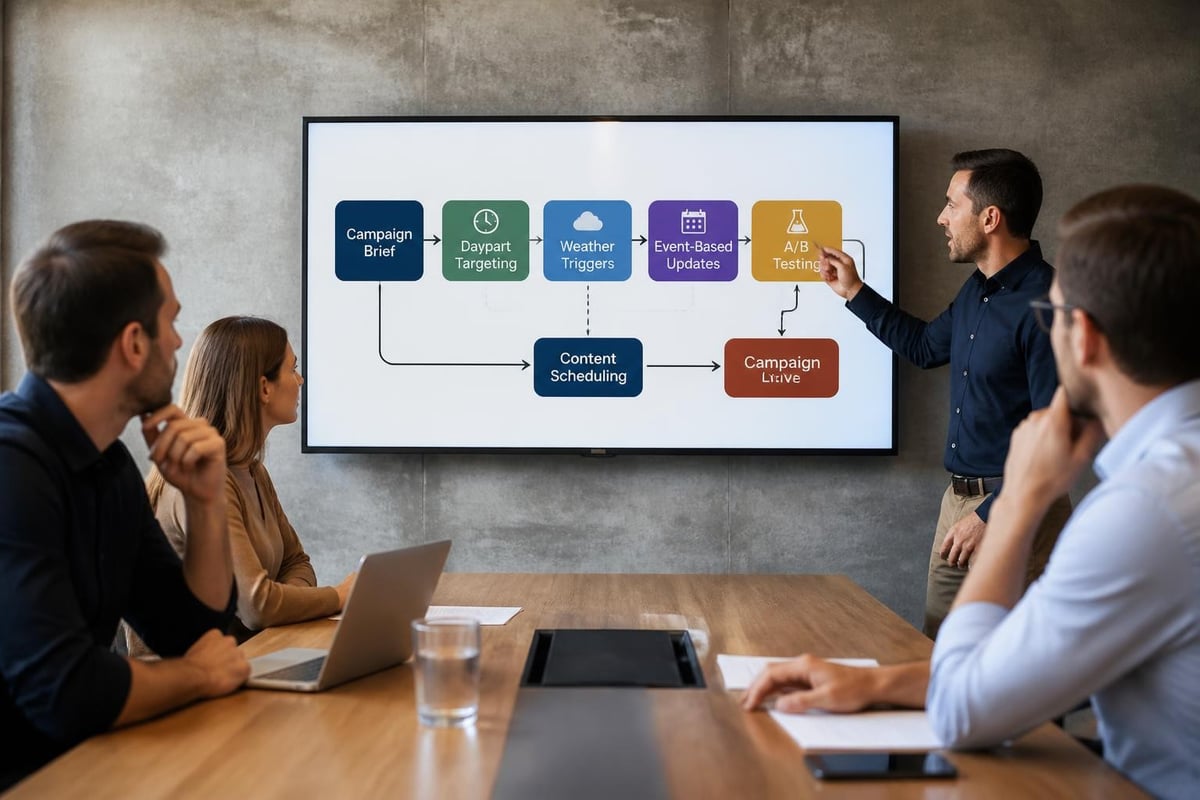
Time-based messaging allows businesses to display breakfast promotions during morning commutes, lunch specials at midday, and evening entertainment options as workers head home. This temporal targeting maximizes relevance without requiring multiple static installations.
Weather-responsive advertising adjusts automatically. Retailers can promote umbrellas when rain is detected, sunscreen during UV alerts, or hot beverages when temperatures drop. Such contextual relevance significantly improves conversion rates compared to generic messaging.
Event-driven campaigns capitalize on real-time opportunities. Sports retailers can celebrate local team victories within minutes, whilst entertainment venues promote last-minute ticket availability for that evening's performance.
Financial services, retail chains, and hospitality brands have reported engagement increases of 40-60% when transitioning from static to digital billboard campaigns, according to industry analysis from WARC.
Measurement and Attribution Advances
Traditional outdoor advertising struggled with attribution. Digital billboard technology has fundamentally changed this challenge through several measurement innovations:
- Geofencing and location data track mobile devices near displays
- Camera-based analytics count impressions without identifying individuals
- Integration with programmatic platforms enables cross-channel attribution
- QR codes and mobile engagement provide direct response metrics
- Correlation analysis links exposure to store visits and online conversions
Nielsen's out-of-home measurement now provides comprehensive audience data across demographics, enabling advertisers to understand exactly who sees their messages and how exposure influences behaviour. This level of accountability brings digital billboard advertising in line with online channels for measurable return on investment.
Market Dynamics and Growth Trajectory
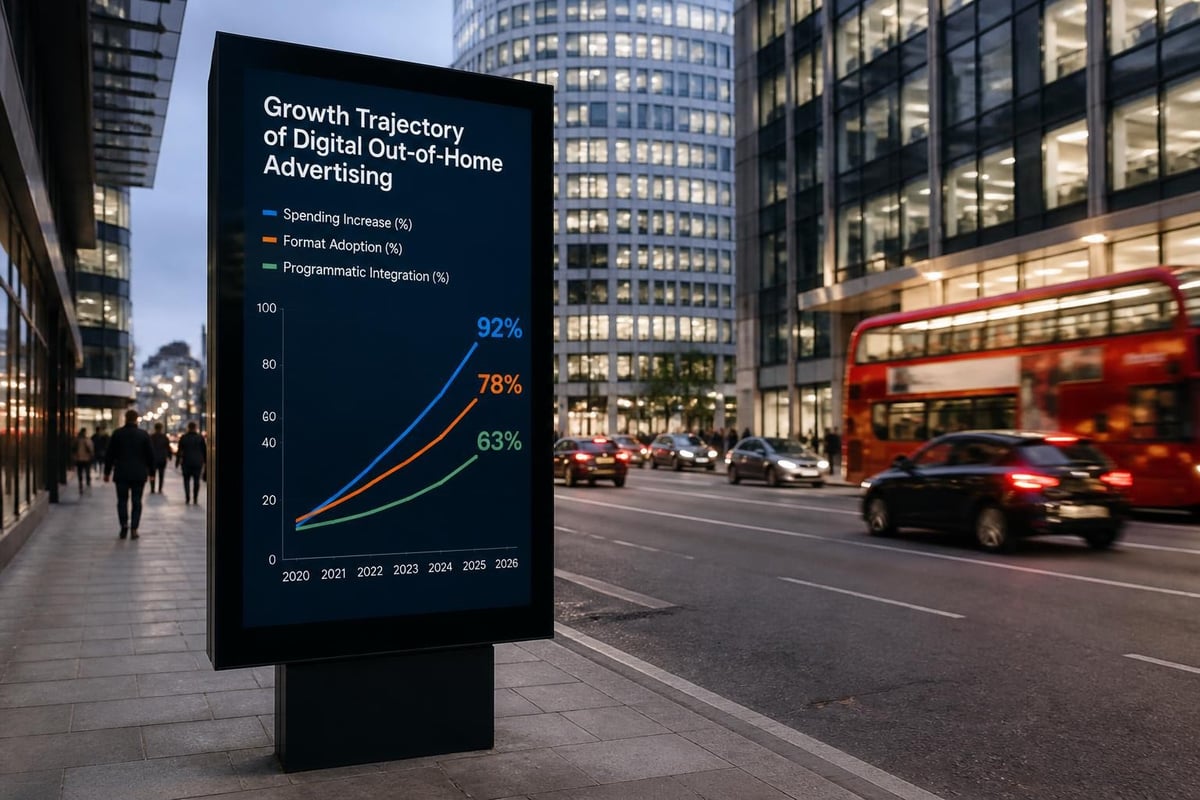
The digital billboard sector continues its remarkable expansion across global markets. Statistics from Statista demonstrate that DOOH spending has grown consistently year-over-year, with digital formats capturing an increasing share of total outdoor advertising budgets.
Industry Revenue and Investment Trends
Recent data reveals the scale of this transformation. The Out of Home Advertising Association reported that out-of-home advertising revenue reached record levels, with digital formats driving the majority of growth. Investment in digital billboard infrastructure continues accelerating as media owners replace aging static inventory with programmable displays.
Key market drivers include:
- Urbanization concentrating audiences in high-traffic locations
- Declining effectiveness of traditional media channels
- Advertiser demand for accountability and measurement
- Technology cost reductions making installations more accessible
- Programmatic buying platforms simplifying campaign execution
The programmatic revolution particularly impacts the digital billboard landscape. IAB Tech Lab's integration of DOOH into OpenRTB enables automated buying and selling of display inventory, reducing friction and expanding the advertiser base beyond traditional outdoor buyers to include digital marketers familiar with programmatic workflows.
Regional Adoption and Infrastructure Development
South Africa's outdoor advertising sector mirrors global trends, with metropolitan areas experiencing rapid digital billboard deployment. Johannesburg, Cape Town, and Durban host growing networks of digital displays along major arterial routes, shopping districts, and transport hubs.
For businesses exploring LED signage options, understanding regional infrastructure capabilities proves essential. Network coverage, power reliability, and local regulations all influence installation feasibility and operational costs.
Content Strategy and Creative Best Practices
Effective digital billboard creative differs fundamentally from static designs or online advertising. The medium's unique constraints and opportunities demand specialized approaches to message development and visual design.
Design Principles for Maximum Impact
Simplicity remains paramount. Viewers typically have 3-8 seconds to absorb a message whilst driving or walking past. Successful campaigns embrace this constraint rather than fighting it:
- Single, clear message per frame
- Minimal text (seven words or fewer when possible)
- High contrast ensuring readability at distance
- Bold typography with thick strokes and generous spacing
- Vivid imagery that communicates instantly without explanation
Motion and animation must serve communication goals rather than distract from them. Subtle movement draws attention effectively, whilst excessive animation can reduce readability and appear unprofessional.
Content Rotation and Programming Strategy
| Rotation Strategy | Optimal Use Case | Typical Duration | Daily Spots |
|---|---|---|---|
| Fixed rotation | Brand awareness campaigns | 10-15 seconds | 480-720 |
| Daypart scheduling | Audience-targeted offers | 15-20 seconds | 240-360 |
| Triggered content | Weather/event response | 10-12 seconds | Variable |
| Sequential storytelling | Complex narratives | 3x 8 seconds | 240 (sequence) |
Smart programming coordinates with audience behaviour patterns. Morning commuters see different messages than evening leisure traffic. Weekday business audiences receive distinct content from weekend shoppers.
A/B testing capabilities allow real-time creative optimization. Advertisers can run multiple versions simultaneously across different locations, measuring response rates and refining messaging based on performance data rather than assumptions.
Installation Considerations and Site Selection
Choosing the right location for a digital billboard installation determines campaign success before creative work even begins. Site selection combines art and science, requiring analysis of traffic patterns, sightlines, competitive displays, and regulatory requirements.
Traffic Analysis and Audience Evaluation
Vehicular traffic counts provide baseline impression potential, but quality matters as much as quantity. A location with 50,000 daily vehicle passages where drivers can comfortably view the display for 8 seconds delivers superior value to a 100,000-count site where high speeds and obstructions limit exposure to 2 seconds.
Pedestrian flows particularly benefit digital billboard formats, as walking audiences typically provide longer dwell times and greater receptivity to calls-to-action. Urban intersections, transport stations, and retail precincts combine high foot traffic with audiences in commercial mindsets.
Understanding outdoor signage selection criteria helps businesses evaluate whether digital billboard advertising aligns with their broader marketing objectives and target demographics.
Regulatory Compliance and Permitting
Municipal regulations governing digital billboard installations vary significantly by jurisdiction. Common requirements include:
- Distance restrictions from residential zones, schools, and existing advertising structures
- Brightness limitations preventing light pollution and driver distraction
- Content controls prohibiting certain product categories or message types
- Transition timing rules mandating minimum display duration before content changes
- Structural engineering certifications for wind load and seismic resilience
The permitting process typically spans 3-12 months, requiring patience and expert navigation. Working with experienced signage professionals who understand signage regulations in South Africa streamlines approvals and prevents costly mistakes.
Operational Management and Maintenance
Successful digital billboard operation extends well beyond initial installation. Ongoing management, content updates, and preventative maintenance protect the investment and ensure consistent performance.
Content Management Systems and Remote Control
Modern cloud-based platforms enable centralized control of digital billboard networks from anywhere with internet connectivity. Key features include:
- Drag-and-drop scheduling for non-technical users
- Multi-location deployment pushing content to selected displays instantly
- Proof-of-play reporting documenting exactly when and how often content aired
- Remote diagnostics identifying technical issues before they impact campaigns
- Emergency overrides for urgent messaging needs
These systems democratize digital billboard advertising, allowing small businesses to manage campaigns without specialized technical knowledge or dedicated staff.
Preventative Maintenance Protocols
| Maintenance Activity | Frequency | Purpose | Downtime |
|---|---|---|---|
| Remote diagnostics | Daily | Performance monitoring | None |
| Visual inspection | Monthly | Physical condition check | None |
| Panel cleaning | Quarterly | Optimal brightness/clarity | 2-4 hours |
| Component testing | Semi-annually | Preventative replacement | 4-8 hours |
| Comprehensive service | Annually | Full system optimization | 8-12 hours |
Proactive maintenance extends equipment lifespan significantly. LED panels typically deliver 100,000 hours of operation before brightness degradation becomes noticeable, but environmental factors like coastal salt exposure or industrial pollution can accelerate wear without proper care.
For businesses managing multiple installations, understanding long-term signage maintenance practices ensures assets continue delivering value throughout their operational life.
Investment Analysis and Financial Modelling
Digital billboard projects require substantial initial capital but offer compelling economics for businesses with appropriate use cases. Thorough financial analysis should precede any commitment to ensure alignment with business objectives and realistic return expectations.
Capital Expenditure Breakdown
Installation costs vary widely based on size, specifications, and site characteristics:
- Small format (2m x 3m, P8 outdoor): R450,000 – R650,000
- Standard roadside (6m x 3m, P10 outdoor): R1,200,000 – R1,800,000
- Premium large format (12m x 6m, P6 outdoor): R3,500,000 – R5,500,000
- Indoor retail (3m x 2m, P2.5 indoor): R350,000 – R550,000
These figures include display hardware, structural supports, electrical infrastructure, installation labour, and basic content management systems. Additional costs may include civil works, permit fees, and network connectivity.
Operating Expenses and Revenue Potential
Monthly operational costs typically include:
- Electricity consumption (R8,000 – R35,000 depending on size)
- Internet connectivity (R800 – R2,500)
- Content management platform subscription (R1,200 – R4,500)
- Insurance (R2,500 – R8,000)
- Maintenance reserve (R3,000 – R12,000)
Revenue models vary based on usage:
For owned media supporting direct business operations, value derives from customer acquisition, brand awareness, and promotional flexibility. Calculating return requires estimating incremental revenue attributable to the display and comparing it to total cost of ownership.
For commercial rental, advertising sales generate direct revenue. A well-located digital billboard might accommodate 8-12 advertisers sharing airtime, with monthly rates ranging from R15,000 to R85,000 per advertiser depending on market size and audience quality.
Businesses considering signage investment decisions should model multiple scenarios, sensitivity-testing assumptions about utilization rates, advertiser demand, and operational costs.
Future Developments and Emerging Technologies
The digital billboard industry continues evolving rapidly, with several technological advances poised to reshape capabilities and applications over the coming years.
Artificial Intelligence and Audience Recognition
Computer vision systems increasingly enable anonymous audience analysis, detecting aggregate demographic patterns without identifying individuals. Digital billboards equipped with these sensors adjust content in real-time based on observed audience composition, showing relevant messaging to detected age groups, genders, or even emotional states.
Predictive analytics combine historical performance data with real-time contextual inputs (weather, traffic, events, time, location) to automatically select optimal creative from content libraries, maximizing relevance without manual intervention.
Interactive and Experiential Capabilities
Touch-enabled displays in pedestrian environments transform passive viewing into active engagement. Shoppers browse product catalogues, configure customized offerings, or access exclusive promotions directly through the billboard interface.
Mobile integration via NFC, Bluetooth beacons, or QR codes bridges the physical and digital realms. Viewers who engage with digital billboard content receive follow-up messages, discount codes, or additional information on their smartphones, creating measurable conversion pathways.
Augmented reality extensions overlay digital content onto physical environments through viewers' mobile devices, using the billboard as an anchor point for immersive brand experiences that generate social sharing and word-of-mouth amplification.
Sustainability and Environmental Considerations
Energy efficiency improvements continue reducing operational costs and environmental impact. Next-generation LED technology delivers equivalent brightness at 40% lower power consumption compared to displays manufactured just five years ago.
Solar integration makes off-grid installations increasingly viable, particularly in regional areas where grid connection proves expensive or impractical. Hybrid systems combine solar generation with battery storage and grid backup for reliable operation.
Circular economy practices focus on component reusability and responsible end-of-life disposal. Modular designs enable targeted upgrades rather than complete replacement, whilst manufacturer take-back programmes ensure proper recycling of electronic components.
Integration with Broader Marketing Ecosystems
Maximum digital billboard effectiveness emerges from coordinated integration with complementary marketing channels rather than isolated deployment. Smart marketers orchestrate cohesive campaigns across outdoor, online, mobile, and traditional media.
Omnichannel Campaign Coordination
Creative synchronization ensures consistent messaging and visual identity across touchpoints. Audiences seeing aligned messages on digital billboards, social media, and search advertising experience reinforced brand impressions that amplify recall and consideration.
Sequential messaging strategies guide audiences through awareness, consideration, and conversion stages across multiple encounters. A morning commuter might see a teaser message on a digital billboard, receive retargeted social ads at work, and encounter a conversion-focused message on their evening journey home.
Cross-channel attribution modelling identifies how digital billboard exposure influences online and offline behaviours. Advanced analytics platforms track whether individuals exposed to outdoor campaigns subsequently visit websites, engage on social media, or make purchases, quantifying the medium's contribution to business outcomes.
For businesses exploring comprehensive signage solutions across industries, understanding how outdoor elements integrate with digital marketing strategies ensures cohesive brand experiences that drive measurable results.
Data-Driven Optimization and Performance Management
The IAB's DOOH measurement guide establishes comprehensive frameworks for evaluating digital billboard performance across multiple dimensions. Modern campaigns leverage these standards to move beyond simple impression counts toward meaningful business metrics.
Key performance indicators might include:
- Reach and frequency within target demographics
- Brand awareness lift measured through survey panels
- Website traffic attributed to exposure
- Store visitation among exposed audiences
- Cost per thousand impressions (CPM) compared to alternative media
- Return on advertising spend (ROAS) across the full customer journey
Sophisticated marketers establish clear measurement frameworks before campaigns launch, ensuring data collection systems capture required inputs for post-campaign analysis and continuous improvement.
Digital billboard technology represents a powerful convergence of outdoor advertising's unmissable presence with digital marketing's precision and flexibility, offering businesses unprecedented opportunities to reach audiences with timely, relevant messages that drive measurable results. As the industry continues its rapid evolution through programmatic integration, advanced measurement capabilities, and emerging interactive technologies, organizations that embrace these capabilities gain significant competitive advantages in capturing consumer attention and driving business growth. Whether you're exploring Digital Signage solutions for a single high-impact location or planning a comprehensive network across multiple sites, partnering with experienced professionals ensures your investment delivers maximum value through expert design, quality manufacturing, and ongoing support. Signs4SA brings deep expertise in digital display technology combined with comprehensive signage capabilities across corporate, retail, construction, and pharmaceutical sectors, helping businesses throughout South Africa harness the full potential of modern outdoor advertising to achieve their marketing objectives.