


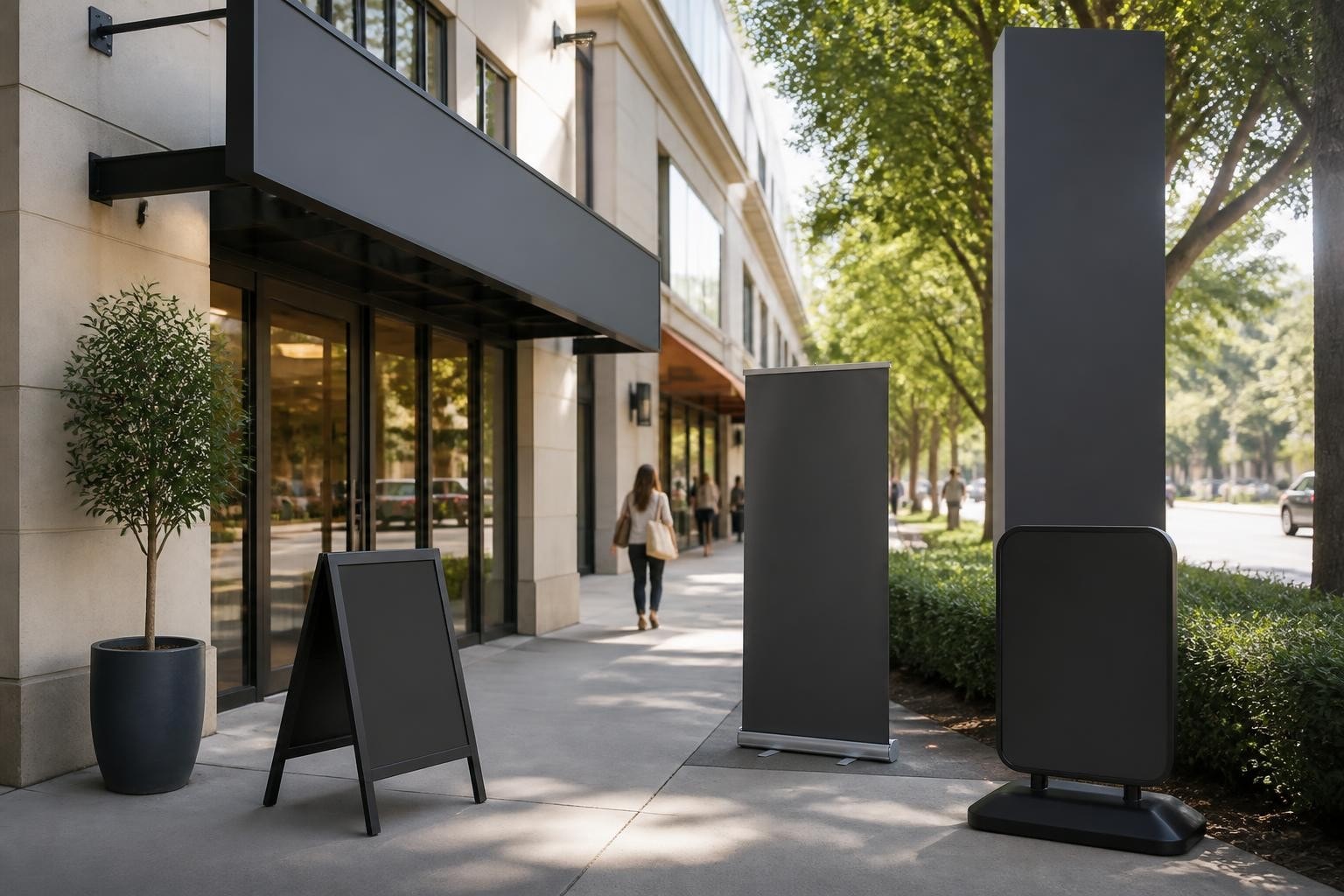

Custom Sign Solutions: Your Complete Planning Guide
A custom sign represents far more than mere identification for your business premises. It serves as a powerful marketing asset, a wayfinding tool, and often the first touchpoint between your organisation and potential customers. Unlike off-the-shelf options, bespoke signage allows you to communicate your brand's unique personality whilst addressing specific functional requirements that generic solutions simply cannot match. Whether you're establishing a new retail location, renovating corporate offices, or enhancing visibility for a pharmaceutical facility, understanding the nuances of custom signage design and implementation will help you maximize both aesthetic impact and return on investment.
Understanding the Strategic Value of Custom Signage
Every business faces unique challenges when it comes to visibility, brand representation, and customer navigation. A custom sign addresses these challenges with precision that mass-produced alternatives cannot replicate.
The strategic advantage begins with brand alignment. Your signage can incorporate exact corporate colours, proprietary typefaces, and dimensional elements that reinforce your visual identity across every customer touchpoint. This consistency builds recognition and trust, particularly in competitive retail environments where differentiation matters.
Location-specific considerations make customization essential:
- Architectural integration with existing building features
- Compliance with local municipal regulations and heritage requirements
- Environmental factors including wind load, UV exposure, and temperature fluctuations
- Visibility angles from primary traffic routes and pedestrian approaches
- Lighting conditions throughout operating hours
Beyond aesthetics, functional requirements drive customization decisions. A pharmaceutical facility requires compliance signage with specific colour codes and symbols. Corporate environments need wayfinding systems that reflect organizational structure. Retail spaces demand attention-grabbing elements that convert passing traffic into customers.

Materials Selection for Durability and Impact
The substrate and finishing materials you select will determine your signage lifespan, maintenance requirements, and visual performance over time. Understanding material properties helps align your choices with both budget constraints and performance expectations.
| Material | Typical Lifespan | Best Applications | Maintenance Level |
|---|---|---|---|
| Aluminium composite | 10-15 years | Exterior facades, channel letters | Low |
| Acrylic | 7-10 years | Illuminated panels, interior displays | Medium |
| Vinyl on substrate | 5-7 years | Temporary promotions, budget solutions | High |
| Stainless steel | 15-20+ years | Premium corporate, marine environments | Low |
| Digital LED | 8-12 years | Dynamic messaging, high-traffic areas | Medium-High |
Aluminium composite panels offer exceptional weather resistance and can be finished in virtually any colour through powder coating or vinyl application. The lightweight nature reduces structural support requirements whilst maintaining rigidity across large format installations. For businesses seeking custom signage solutions that balance cost with longevity, aluminium represents an excellent middle ground.
Acrylic serves dual purposes in custom applications. Clear acrylic creates sleek illuminated displays when backed with LED modules, whilst coloured or printed acrylic provides vibrant daytime impact with excellent UV stability. The material machines precisely for intricate shapes and 3D lettering applications.
Environmental considerations increasingly influence material selection. Research from the Vinyl Institute demonstrates growing recycling infrastructure for PVC and vinyl substrates, addressing sustainability concerns whilst maintaining the material's cost-effectiveness and versatility.
For digital applications requiring flexibility and dynamic content, Digital Signage ranging from P10 to P1.8 pixel pitch offers solutions for both exterior and interior environments, allowing real-time message updates and multimedia integration.
Weather Resistance and Coastal Considerations
South African businesses face diverse climate challenges, from coastal salt spray in Durban and Cape Town to intense UV radiation in Gauteng's highveld. Your custom sign must withstand these specific environmental stresses.
Coastal installations require marine-grade stainless steel fixings and specialized powder coating with enhanced corrosion resistance. Even minor material compromises lead to premature degradation in salt-laden air. Aluminium composite panels with Kynar 500 finishes demonstrate superior longevity in these harsh conditions.
Inland locations prioritize UV stability. Certain vinyl films and paints degrade rapidly under intense African sun, losing vibrancy within months. Specifying UV-resistant laminates and powder coatings with proven outdoor performance ratings protects your investment.
Design Principles for Maximum Legibility
Effective custom signage balances aesthetic appeal with functional readability. Research from the Transportation Research Board on luminance and contrast demonstrates that colour combinations significantly affect recognition distance and comprehension speed.
High-contrast pairings deliver optimal legibility:
- Black text on white background (optimal for close-range reading)
- White text on dark blue (excellent for distance visibility)
- Yellow on black (superior for hazard/safety applications)
- White on green (effective for wayfinding applications)
Typography selection requires careful consideration beyond mere aesthetic preference. Sans-serif typefaces generally outperform serif options for distance legibility, with specific attention to character spacing, stroke weight, and x-height ratios. Studies comparing highway typeface performance reveal measurable differences in recognition distance between font families.
For accessibility compliance, the ADA Standards for Accessible Design specify precise requirements including raised character height, Braille placement, and finish contrast ratios. Whilst these American standards don't directly govern South African installations, they represent international best practice for inclusive design.
Sizing Calculations for Viewing Distance
A frequently overlooked aspect of custom sign design involves mathematical relationships between letter height and effective reading distance. Professional signage designers apply the "inch per ten feet" rule as a baseline: for every 10 feet of viewing distance, letter height should increase by approximately one inch.
This calculation requires adjustment based on several variables. Moving vehicles demand larger sizing than pedestrian applications. Complex messages with multiple information layers need proportionally larger characters to maintain comprehension. Environmental factors including backlighting, ambient light competition, and visual clutter necessitate supersizing beyond baseline calculations.
Digital displays introduce additional considerations. The U.S. Access Board research on variable message signing provides evidence-based guidance on character timing, transition effects, and luminance levels that optimize readability whilst maintaining accessibility for diverse viewer capabilities.
Regulatory Compliance and Approval Processes
Municipal regulations significantly impact custom sign feasibility, placement, and design specifications. Each local authority maintains distinct bylaws governing signage dimensions, setbacks, illumination, and aesthetic requirements.
Pre-design regulatory research should address:
- Maximum allowable sign area relative to building facade
- Height restrictions and setback requirements from property boundaries
- Illumination constraints including hours of operation and brightness levels
- Heritage area restrictions in historically significant districts
- Environmental impact assessments for large format installations
The Manual on Uniform Traffic Control Devices provides comprehensive standards for traffic-related signage, including any custom sign visible from public roadways. Whilst primarily focused on American contexts, these principles inform international best practice for road-facing commercial signage regarding reflectivity, colour coding, and placement safety.
For businesses planning pylon signage installations, council approval processes typically require detailed engineering drawings, wind load calculations, and often environmental impact statements. Professional signage manufacturers navigate these requirements efficiently through established relationships with local authorities and thorough documentation protocols.

Heritage and Conservation Area Restrictions
Properties within designated heritage zones face additional scrutiny regarding signage modifications. Conservation officers evaluate how proposed custom sign installations impact the historical character of protected buildings and streetscapes.
Successful heritage area applications typically incorporate traditional materials, restrained illumination, and dimensional proportions sympathetic to architectural context. Modern businesses can achieve contemporary branding whilst respecting heritage constraints through careful material selection and design refinement.
Professional guidance from organizations like the Society for Experiential Graphic Design offers valuable perspective on integrating wayfinding and identification signage within historically sensitive environments whilst maintaining functional effectiveness.
Installation Methodology and Structural Considerations
Even the most beautifully designed custom sign fails without proper installation addressing structural integrity, weather sealing, and maintenance accessibility. Professional signage installation requires specialized skills beyond general construction trades.
Wall-mounted installations demand thorough substrate assessment. Brick, concrete, curtain wall systems, and cladding materials each require specific fixing methods. Inadequate anchoring leads to catastrophic failure, particularly with large format or illuminated signs experiencing wind loading.
| Substrate Type | Recommended Fixing | Load Capacity | Waterproofing |
|---|---|---|---|
| Solid brick | Chemical anchors, expanding bolts | High | Silicone backing |
| Concrete block | Through-bolts with backing plates | Medium-High | Membrane flashing |
| Metal cladding | Structural frame attachment | Medium | Gasket sealing |
| Glass curtain wall | Specialist spider fittings | Low-Medium | Factory sealed |
Electrical integration for illuminated custom sign installations requires certified electricians familiar with outdoor-rated components and weatherproof connections. LED modules, transformers, and control systems must meet IP ratings appropriate to installation environment, with accessible junction boxes facilitating future maintenance.
Freestanding structures including monument signs and pylons necessitate engineered foundations calculated for soil bearing capacity, wind moment forces, and seismic considerations where applicable. Concrete foundations typically cure for minimum 28 days before superstructure installation commences.
Accessibility and Maintenance Planning
Long-term performance depends on maintenance accessibility designed into the initial installation. Illuminated signs require periodic lamp replacement or LED module servicing. Digital displays need regular cleaning and software updates.
Maintenance access considerations include:
- Sufficient clearance for cherry picker or scaffolding positioning
- Quick-release panels for component access without full dismantling
- Weatherproof service access points with proper sealing
- Documented electrical isolation procedures for safe servicing
- Spare parts inventory for critical components
The National Park Service guidelines on interpretive signage offer excellent practical guidance regarding outdoor sign mounting, material durability, and maintenance planning that transfers well to commercial applications requiring long-term reliability.
Cost Analysis and Return on Investment
Custom sign pricing varies dramatically based on size, materials, complexity, and installation requirements. Understanding cost drivers helps align expectations with budget realities whilst identifying opportunities for value engineering.
Primary cost components include:
- Design and engineering fees (typically 10-15% of project value)
- Materials and fabrication (40-50% of project value)
- Electrical components and integration (15-25% for illuminated signs)
- Installation labour and equipment (15-20% of project value)
- Permitting and compliance documentation (5-10% of project value)
For businesses seeking outdoor signage that attracts customers, the investment must be evaluated against measurable returns including increased foot traffic, enhanced brand recognition, and improved conversion rates.
Research demonstrates that professional signage increases business visibility by up to 75% in competitive retail environments. The payback period for quality custom sign installations typically ranges from 18 to 36 months through increased customer acquisition and retention.
Value engineering opportunities exist without compromising quality. Standardizing dimensions to material sheet sizes reduces waste. Simplifying structural complexity lowers fabrication hours. Selecting proven materials over exotic alternatives maintains performance whilst controlling costs.
Lifecycle Cost Considerations
Initial purchase price represents only one component of total ownership cost. Maintenance requirements, energy consumption for illuminated signs, and eventual replacement intervals significantly impact long-term value.
Premium materials with higher upfront costs often deliver superior lifecycle value through reduced maintenance and extended replacement intervals. A stainless steel custom sign costing 40% more initially may last twice as long as painted mild steel, representing net savings over time.
Energy efficiency particularly affects digital and illuminated signage operating costs. LED technology consumes 75% less electricity than traditional fluorescent or neon illumination whilst delivering superior brightness and reliability. This operational saving compounds annually across the sign's lifespan.

Industry-Specific Customization Requirements
Different sectors demand distinct signage approaches reflecting their unique operational requirements, regulatory frameworks, and customer expectations. Understanding industry-specific needs ensures your custom sign delivers appropriate functionality.
Corporate Environments
Professional office buildings require sophisticated wayfinding systems that reinforce organizational hierarchy whilst facilitating visitor navigation. Directory boards, department identification, and conference room signage maintain consistent design language reflecting corporate brand guidelines.
Executive spaces often incorporate premium materials including brushed stainless steel, glass, and dimensional acrylic that project appropriate gravitas. Understated elegance typically supersedes attention-grabbing elements appropriate for retail contexts.
Retail Applications
Shopping centres, standalone stores, and hospitality venues prioritize visibility and emotional engagement. Bold colours, dynamic lighting, and three-dimensional elements capture attention in visually competitive environments.
Retail custom sign strategies increasingly incorporate digital components allowing message flexibility for promotions, seasonal campaigns, and real-time offers. For businesses exploring modern solutions, understanding the benefits of LED signage versus traditional options helps inform technology selection.
Just as premium custom signage enhances retail environments, specialists like ANR Media demonstrate how bespoke custom installations transform residential spaces through tailored home cinema solutions, proving that customization delivers superior results across diverse applications.
Pharmaceutical and Healthcare
Regulatory compliance drives pharmaceutical signage requirements including hazard warnings, restricted access notifications, and safety protocols. Colour coding systems, pictograms, and multilingual text ensure comprehension across diverse workforce populations.
Cleanroom environments demand specialized materials resistant to chemical cleaning agents whilst maintaining legibility. Flush-mounted designs eliminate contamination harbourage points that projecting signs would create.
Construction and Industrial
Temporary and permanent signage for construction sites must withstand harsh conditions including dust, vibration, and accidental impact. Durability supersedes aesthetic refinement in these applications.
Safety signage follows strict standards regarding colour, sizing, and symbol usage. Reflective materials ensure visibility during night operations, whilst weather-resistant substrates maintain legibility throughout project duration.
Lighting Integration Techniques
Illumination strategy transforms custom sign performance, extending visibility into evening hours and creating dramatic visual impact that daylight-only signage cannot achieve.
Primary illumination approaches include:
- Front-lit: External fixtures illuminate sign face (cost-effective, straightforward maintenance)
- Back-lit: Internal illumination through translucent face (sophisticated halo effect, higher fabrication complexity)
- Edge-lit: LED strips illuminate acrylic edges (sleek modern aesthetic, excellent energy efficiency)
- Individual letters: Independently illuminated channel letters (premium appearance, maximum design flexibility)
LED technology dominates contemporary custom sign illumination through superior energy efficiency, colour consistency, and longevity. Quality modules deliver 50,000+ operational hours with minimal lumen depreciation compared to traditional lamp technologies requiring replacement every 10,000-15,000 hours.
Digital displays represent the ultimate flexibility, allowing complete message changes, video content, and scheduled programming. The NEMA TS-4 standards for dynamic message signs provide technical specifications regarding display properties and performance requirements that inform professional procurement decisions.
Lighting control systems add sophistication through astronomical timers that adjust operating schedules with seasonal daylight variations, dimming capabilities that reduce brightness during late hours, and integration with building management systems for centralized control.
Maintenance Strategies for Longevity
Proactive signage maintenance preserves appearance, ensures safety, and maximizes return on investment through extended operational life and consistent brand presentation.
Recommended maintenance schedule includes:
- Monthly: Visual inspection for physical damage, loose fixings, or lighting failures
- Quarterly: Surface cleaning, vegetation trimming, drainage check
- Bi-annually: Electrical connection inspection, structural fixing torque verification
- Annually: Professional deep clean, relamping (traditional technologies), comprehensive condition assessment
Environmental factors dictate maintenance intensity. Coastal locations require monthly rinsing to remove salt accumulation that accelerates corrosion. Industrial areas need frequent cleaning to prevent contamination build-up degrading finishes. High-traffic pedestrian zones experience accelerated wear demanding more frequent inspection.
Documentation systems tracking maintenance activities, component replacements, and observed degradation patterns enable data-driven lifecycle planning. Photographic records establish baseline conditions and document progressive changes informing replacement timing.
Professional maintenance agreements with your signage provider ensure specialist expertise whilst typically offering cost advantages over ad-hoc service calls. Bundled pricing, priority response, and preventive intervention reduce total ownership cost whilst maintaining optimal appearance.
Emerging Technologies and Future Trends
The signage industry continues evolving through technological advancement and changing customer expectations. Forward-thinking businesses consider emerging capabilities when specifying custom sign solutions to ensure relevance throughout the installation's operational life.
Developing technologies include:
- Interactive displays: Touch-enabled screens, gesture recognition, and augmented reality integration
- Sustainable materials: Bio-based substrates, recycled content, and carbon-neutral production processes
- IoT connectivity: Remote monitoring, predictive maintenance alerts, and usage analytics
- Advanced fabrication: 3D printing for complex geometries, precision CNC routing, and automated finishing
Data integration represents particular opportunity for sophisticated custom sign applications. Digital displays pulling real-time information from business systems can show current promotions, queue management information, or dynamic pricing whilst maintaining consistent brand presentation.
Sustainability considerations increasingly influence material selection and design decisions. Businesses committed to environmental responsibility seek suppliers demonstrating transparent lifecycle assessment, responsible sourcing, and end-of-life recycling programs.
The convergence of physical and digital brand experiences creates opportunities for custom signage that bridges these realms. QR codes linking to digital content, NFC tags enabling smartphone interaction, and synchronized social media integration extend signage impact beyond passive viewing.
A well-executed custom sign represents strategic investment in your business visibility, brand communication, and customer experience. By carefully considering materials, design principles, regulatory requirements, and long-term maintenance, you ensure optimal performance and return on investment. When you're ready to transform your signage vision into reality, Signs4SA delivers comprehensive solutions backed by expert guidance, national manufacturing capabilities, and proven expertise across corporate, retail, construction, and pharmaceutical sectors throughout South Africa.