


Construction Caution Signs: Essential Safety Guide
Construction sites represent some of the most hazardous work environments, where the strategic deployment of construction caution signs plays a critical role in protecting workers, visitors, and the general public. These warning indicators serve as the first line of defence against workplace injuries, communicating potential hazards before they result in accidents. With regulatory frameworks demanding stringent compliance and the construction industry facing increasing scrutiny over safety standards, understanding the proper implementation of caution signage has become essential for project managers, safety officers, and contractors across South Africa and beyond.
Understanding the Regulatory Framework for Construction Caution Signs
The deployment of construction caution signs operates within a complex regulatory environment designed to standardise hazard communication across all worksites. OSHA regulations establish specific requirements for accident prevention signs and tags, creating a framework that many countries, including South Africa, have adapted for their local contexts.
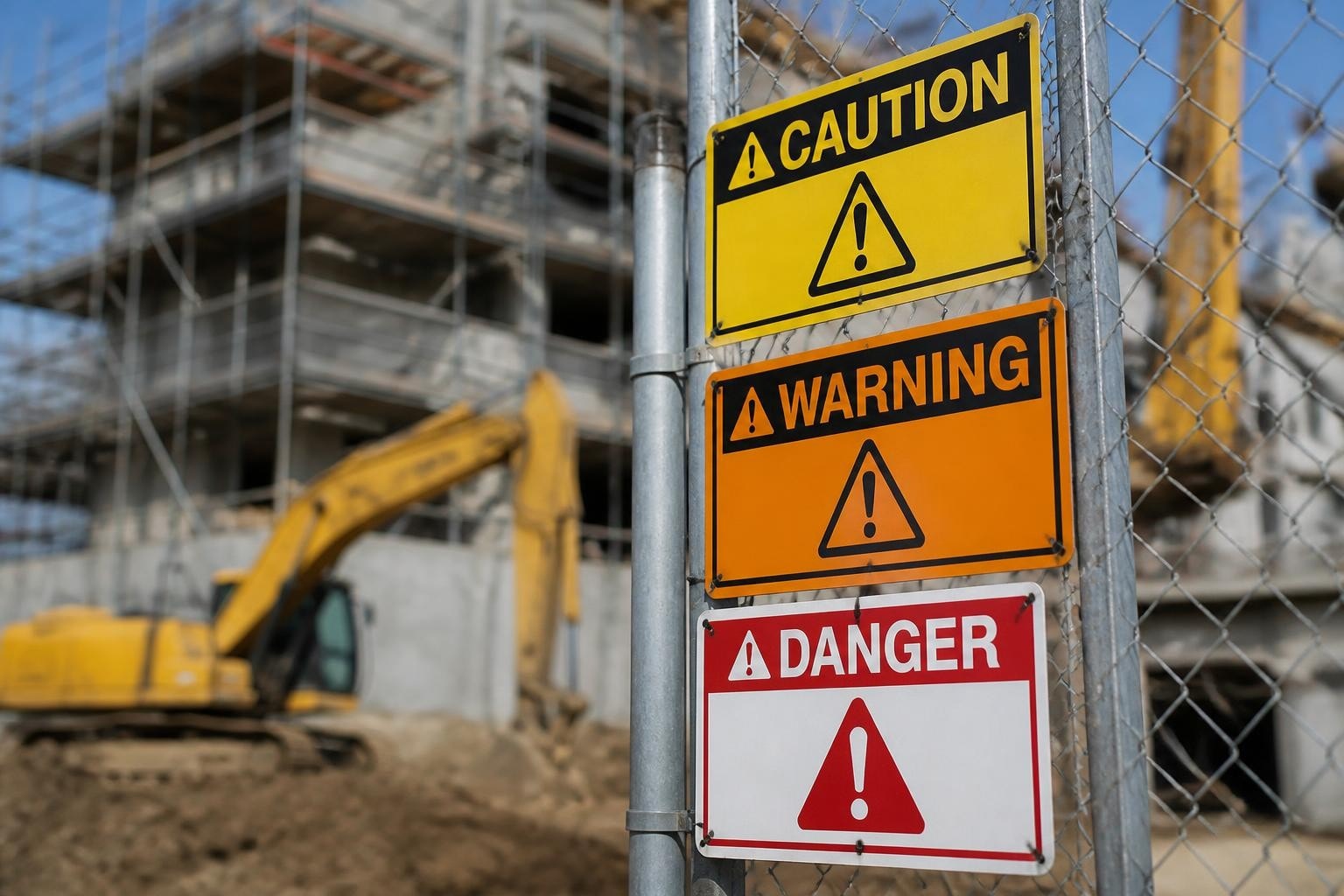
These regulations define caution signs as warnings against potential hazards or unsafe practices that could result in minor or moderate injuries. The distinction between caution, warning, and danger classifications carries significant implications for site safety planning.
Classification Hierarchy in Construction Signage
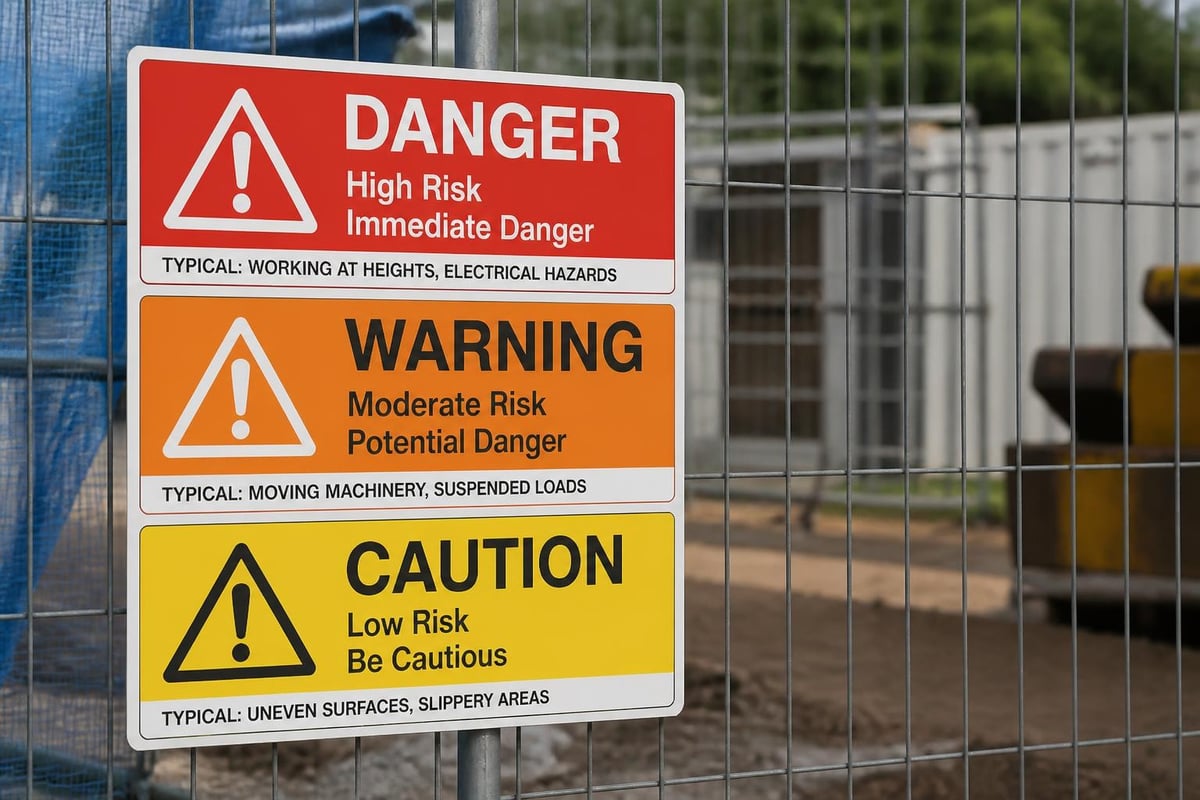
Understanding the three-tier system helps construction professionals deploy the appropriate signage level:
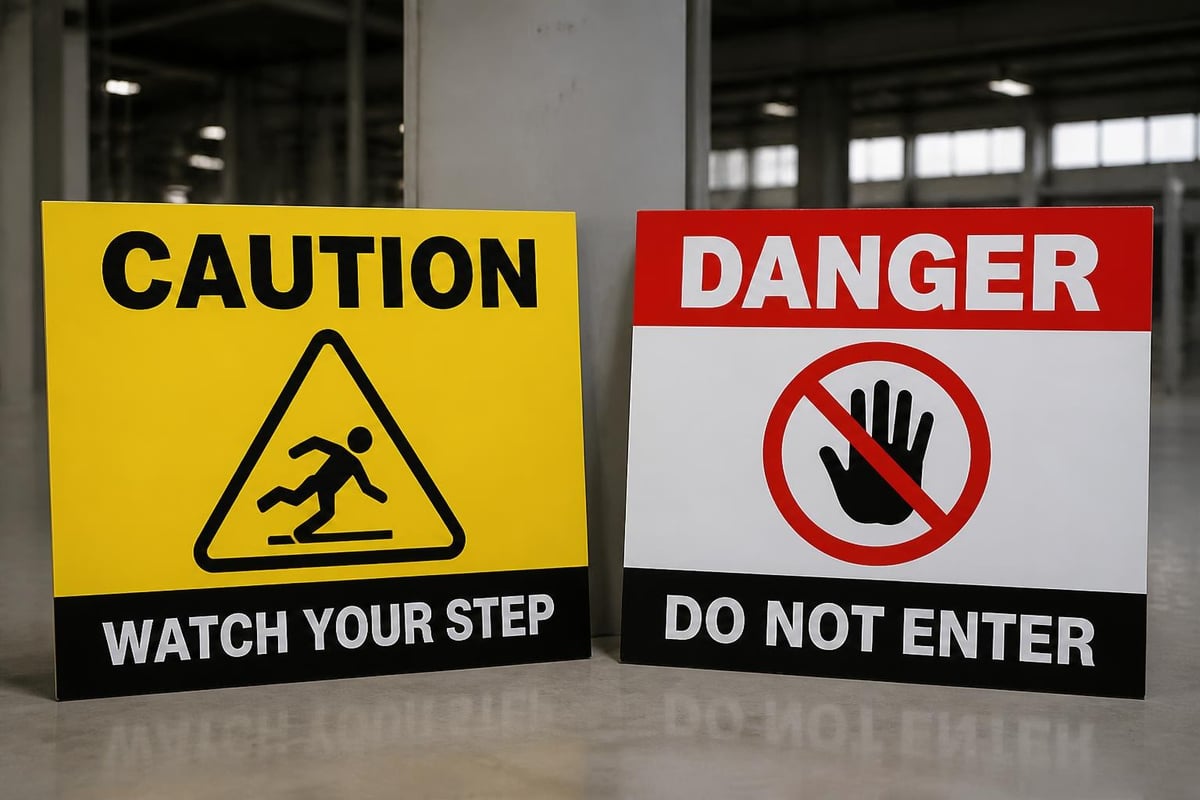
- Danger signs: Reserved for immediate hazards likely to cause death or serious injury
- Warning signs: Indicate hazards that could cause death or serious injury
- Caution signs: Address situations that may result in minor or moderate injury
This classification system ensures workers can rapidly assess risk levels based on visual cues alone. The colour coding and design specifications follow internationally recognised standards, with caution signs typically featuring yellow backgrounds and black lettering.
Essential Types of Construction Caution Signs
Construction caution signs encompass a broad range of specific warnings tailored to the diverse hazards present on building sites. Each category addresses particular risks that workers encounter during their daily operations.
Physical Hazard Warnings
Construction caution signs frequently address physical dangers that arise from the nature of building work:
- Uneven surfaces and trip hazards
- Low overhead clearances
- Slippery conditions when wet
- Loose gravel or unstable ground
- Moving equipment in operation
These warnings prove particularly valuable in areas where hazards may not be immediately obvious to workers focused on their tasks. Properly positioned caution signage creates awareness that prevents accidents before they occur.
Equipment and Machinery Notices
Machinery-related construction caution signs serve dual purposes, warning both operators and bystanders. These signs indicate when equipment is in use, highlight operational zones, and communicate specific safety requirements for particular machinery.
The placement of these signs must account for sightlines, ensuring visibility from multiple approach angles. Many contractors combine static caution signs with temporary barriers to create comprehensive safety zones around active equipment.
| Sign Type | Primary Function | Typical Placement | Visibility Range |
|---|---|---|---|
| Overhead Work | Warns of falling object risk | Beneath elevated work zones | 15-20 metres |
| Excavation | Alerts to ground instability | Perimeter of dig sites | 10-15 metres |
| Confined Space | Indicates entry restrictions | Access points | 5-10 metres |
| Heavy Equipment | Warns of moving machinery | Operational radius boundaries | 20-30 metres |
Environmental and Condition-Based Signage
Weather and environmental factors introduce hazards that require flexible signage solutions. Construction caution signs addressing environmental conditions include warnings for extreme temperatures, high wind areas, noise levels, and temporary conditions created by weather events.
Smart site managers maintain reserve signage stocks to deploy rapidly when conditions change. This proactive approach ensures workers receive timely warnings about evolving hazards.
Strategic Placement and Visibility Considerations
The effectiveness of construction caution signs depends entirely on their visibility and positioning. Even the most professionally manufactured sign fails its purpose if workers cannot see it in time to respond appropriately.
Determining Optimal Sign Locations
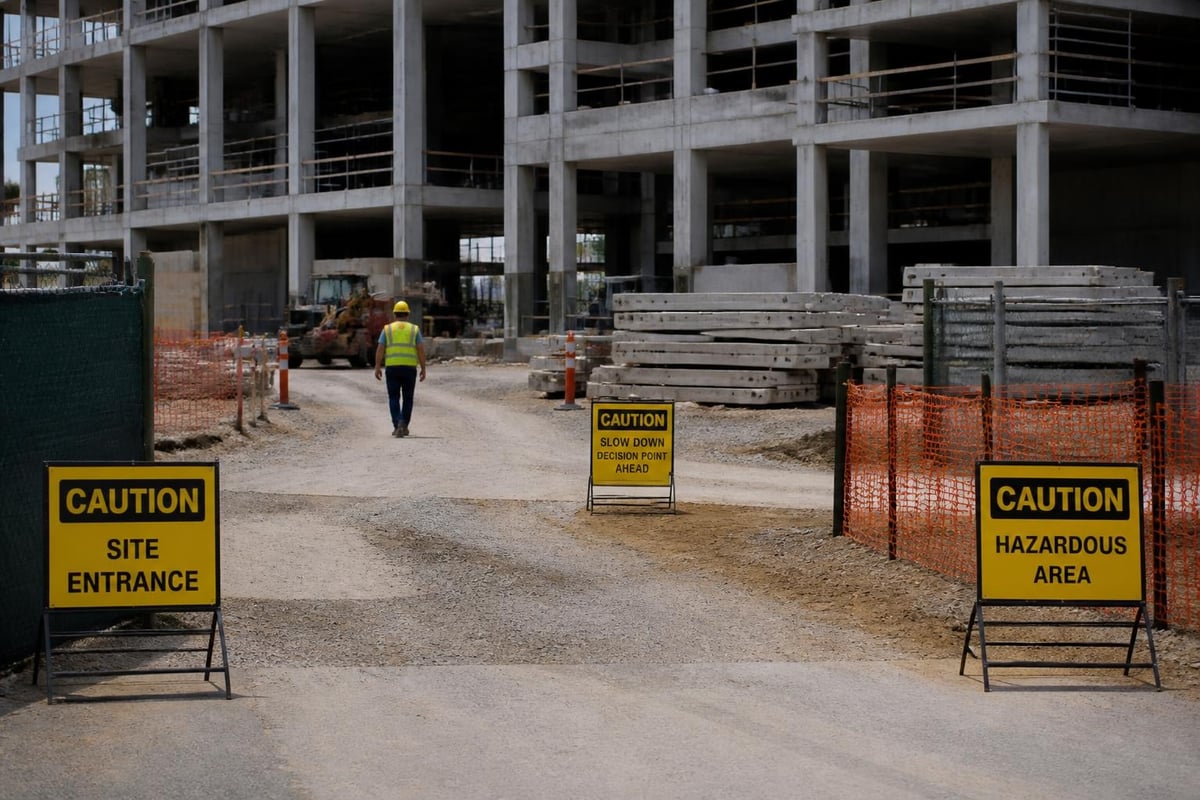
Placement decisions require careful analysis of traffic patterns, work zones, and sightlines. Signs must appear where workers can observe and process the information before entering hazard areas.
Key placement principles include:
- Position signs at decision points where workers choose their path
- Ensure adequate lighting for 24-hour operations
- Avoid visual clutter that diminishes sign impact
- Account for obstructions that might block visibility
- Consider viewing angles from various approach directions
The comprehensive signage solutions provided by professional manufacturers help construction managers develop strategic placement plans that maximise safety impact across their sites.
Height and Mounting Standards
Construction caution signs require mounting at heights that ensure visibility without creating additional hazards. Industry standards generally recommend positioning signs between 1.5 and 2.5 metres above ground level, though specific situations may warrant adjustments.
Mounting methods must withstand site conditions, including wind, vibration from machinery, and potential impacts. Temporary signs require stable bases that prevent tipping, whilst permanent installations demand robust fixings appropriate to the mounting surface.
Material Selection and Durability Requirements
Construction environments subject signage to harsh conditions that quickly degrade inferior materials. Selecting appropriate substrates and finishes ensures construction caution signs remain legible and effective throughout their required service life.
Weather-Resistant Materials
South African construction sites face diverse climate challenges, from coastal humidity to inland temperature extremes. Material selection must address these environmental stresses:
- Aluminium composite panels: Lightweight, corrosion-resistant, suitable for semi-permanent installations
- Corrugated plastic: Cost-effective for temporary applications, resistant to moisture
- Rigid PVC: Durable, weather-resistant, maintains colour integrity
- Reflective sheeting: Essential for low-light visibility, available in various grades
Professional manufacturers understand the performance characteristics of each material, recommending solutions based on specific site conditions and expected sign lifespan.
Reflective and High-Visibility Options
Construction caution signs often require enhanced visibility features to function effectively during low-light conditions or poor weather. Reflective materials use micro-prismatic or glass bead technology to return light to its source, dramatically improving nighttime visibility.
High-visibility options include:
- Engineer-grade reflective sheeting for short-term applications
- High-intensity sheeting for medium-term installations
- Diamond-grade materials for premium long-term performance
- Fluorescent backgrounds for daytime conspicuity
The investment in superior reflective materials pays dividends through reduced accident rates and extended sign service life.
Compliance and Legal Obligations
Construction firms operate under stringent legal frameworks that mandate specific signage requirements. Non-compliance carries serious consequences, from financial penalties to criminal liability in cases where inadequate signage contributes to injuries.
Regulatory Inspection Standards
Safety inspectors assess construction caution signs against established criteria during site visits. Their evaluations examine sign presence, condition, appropriateness, and compliance with relevant standards.
Inspection focus areas include:
- Completeness: All required signs present and positioned correctly
- Legibility: Text and symbols clearly visible without damage or fading
- Relevance: Signs accurately reflect current site hazards
- Maintenance: Regular cleaning and replacement schedules implemented
- Documentation: Records demonstrating systematic signage management
Many construction managers maintain detailed safety signage compliance logs to demonstrate their commitment to regulatory adherence during inspections.
Penalty Structures for Non-Compliance
The construction site signage requirements and potential penalties create significant financial and operational risks for non-compliant contractors. Enforcement actions may include immediate work stoppages, substantial fines, and increased scrutiny on future projects.
Beyond direct penalties, inadequate construction caution signs expose companies to civil liability when accidents occur. Courts consistently find that proper signage represents a fundamental duty of care, and its absence significantly strengthens plaintiff claims in injury litigation.
Design Principles for Maximum Effectiveness
Effective construction caution signs combine regulatory compliance with human factors engineering to ensure workers notice, understand, and respond to warnings appropriately.
Typography and Symbol Selection
Text on construction caution signs must be instantly readable from the maximum anticipated viewing distance. Font selection prioritises legibility over aesthetics, with sans-serif typefaces like Helvetica and Arial offering superior readability under site conditions.
Symbol integration enhances comprehension, particularly in multilingual work environments. International symbol standards provide universal understanding regardless of workers' language proficiency.
| Design Element | Specification | Purpose |
|---|---|---|
| Letter Height | 25mm minimum per 3m viewing distance | Ensures readability at required range |
| Stroke Width | 15-20% of letter height | Optimises legibility without clutter |
| Colour Contrast | 70% minimum difference | Provides clear figure-ground separation |
| Symbol Size | Minimum 100mm diameter | Guarantees recognition at distance |
Message Clarity and Conciseness
Construction caution signs must communicate hazards succinctly. Workers processing information whilst moving through active sites lack time for lengthy explanations. Effective signs deliver complete warnings in five words or fewer, supplemented by appropriate symbols.
The message hierarchy places the most critical information prominently, using size, weight, and position to guide visual attention. Secondary details appear in smaller text, providing context without overwhelming the primary warning.
Integration with Comprehensive Site Safety Systems
Construction caution signs function most effectively as components within broader safety management frameworks rather than standalone interventions. Integrated approaches combine physical signage with training, procedures, and technological solutions.
Linking Signage to Safety Inductions
Worker orientation programmes should specifically reference site signage systems, explaining the classification hierarchy and expected responses to different sign types. This training creates mental frameworks that enable rapid hazard recognition when workers encounter signs during their duties.
Progressive construction managers conduct signage-focused safety walks, using actual site signs as teaching tools. This contextual learning proves more effective than classroom instruction alone.
Digital Enhancement Strategies
Modern construction sites increasingly supplement traditional construction caution signs with digital technologies. The integration of Digital Signage solutions allows dynamic hazard communication that updates in real-time as site conditions change.
Digital systems offer particular advantages for:
- Displaying time-sensitive warnings during specific operations
- Providing detailed safety information through QR code links
- Tracking worker proximity to hazard zones
- Recording sign display for compliance documentation
These technologies complement rather than replace physical caution signs, creating layered safety communication systems.
Maintenance and Lifecycle Management
Construction caution signs deteriorate through exposure to weather, physical damage, and normal wear. Systematic maintenance programmes preserve sign effectiveness whilst demonstrating regulatory commitment.
Inspection Protocols
Regular sign inspections identify issues before they compromise safety. Comprehensive inspection programmes examine:
- Physical integrity (cracks, breaks, detachment)
- Surface condition (fading, scratching, contamination)
- Mounting security (looseness, corrosion, stability)
- Positional accuracy (displacement, obstruction, orientation)
- Continued relevance (hazard status, regulatory updates)
Weekly visual inspections complement monthly detailed assessments, with findings documented in maintenance logs. This systematic approach ensures consistent sign quality across extended project timelines.
Replacement Criteria and Scheduling
Clear replacement criteria prevent the continued use of degraded construction caution signs that fail to communicate effectively. Signs warrant immediate replacement when damage affects more than 25% of the viewing area, when text becomes illegible from the required distance, or when mounting failures create instability.
Proactive replacement scheduling based on material lifespan prevents emergency situations. Quality signs in moderate conditions typically require replacement every 3-5 years, though harsh environments may necessitate more frequent cycles.
Temporary vs Permanent Signage Solutions
Construction sites present unique challenges through their evolving nature, requiring flexible signage approaches that adapt to changing conditions and phases.
Temporary Sign Deployment Strategies
Many construction hazards exist only during specific operations or project phases. Temporary construction caution signs address these transient risks without creating permanent visual clutter or confusion.
Effective temporary signage systems include:
- Portable sign stands with weighted bases for unstable surfaces
- Magnetic mounting systems for steel structures
- Adhesive-backed signs for short-term applications
- Fold-flat designs for efficient storage and transport
The key advantage of temporary signs lies in their flexibility, allowing rapid deployment when hazards emerge and prompt removal when conditions normalise. This dynamic approach maintains signage relevance, preventing the warning fatigue that occurs when outdated signs remain displayed.
Permanent Installation Considerations
Long-term hazards require permanent construction caution signs that withstand years of exposure. These installations demand superior materials, robust mounting systems, and strategic positioning that remains relevant throughout the project lifecycle.
Permanent signs suit locations where hazards persist regardless of construction phase, such as overhead power lines, structural load limits, and site boundary warnings. Investment in premium materials for these applications proves cost-effective over extended periods.
Industry-Specific Applications and Customisation
Different construction sectors present unique hazards requiring specialised construction caution signs tailored to specific operational contexts.
Commercial Construction Requirements
Commercial building sites combine traditional construction hazards with public interface challenges. Construction caution signs must address both worker safety and public protection, often requiring bilingual or multilingual text to serve diverse populations.
High-traffic areas near commercial sites benefit from enhanced visibility features, including illumination and larger formats. These locations demand signs that communicate effectively to untrained civilians who lack construction site awareness.
Industrial and Infrastructure Projects
Heavy industrial construction introduces specialised hazards from chemical exposure, high-voltage systems, and extreme operational conditions. Construction caution signs for these environments require technical specificity that clearly identifies hazard types and required precautions.
Infrastructure projects, particularly road construction signs, must balance worker protection with public traffic management. This dual function necessitates careful coordination between site safety signage and traffic control systems.
Residential Development Signage
Residential construction occurs in populated areas where children and curious residents may approach work zones. Construction caution signs must create clear boundaries whilst communicating risks in language accessible to non-professional audiences.
Smaller residential sites often operate with limited safety resources, making efficient signage deployment particularly important. Strategic placement of multipurpose signs that address common hazards optimises protection within budget constraints.
Training and Worker Engagement
The most sophisticated construction caution signs fail when workers ignore or misinterpret them. Effective safety cultures emphasise signage awareness through ongoing training and engagement initiatives.
Building Signage Literacy
Workers arrive on sites with varying levels of safety training and signage familiarity. Comprehensive orientation programmes establish baseline knowledge about sign meanings, colour codes, and expected responses.
Interactive training methods prove more effective than passive instruction:
- Site walks identifying actual signs and their meanings
- Scenario-based discussions of appropriate responses
- Multilingual resources accommodating diverse workforces
- Visual aids reinforcing symbol recognition
Regular refresher sessions maintain awareness as workers become accustomed to site conditions and potentially develop complacency.
Reporting and Feedback Mechanisms
Workers often first notice when construction caution signs become damaged, obscured, or irrelevant. Establishing simple reporting mechanisms empowers the workforce to participate actively in safety management.
Effective feedback systems include:
- Anonymous reporting channels removing fear of repercussions
- Rapid response protocols demonstrating management commitment
- Recognition programmes rewarding safety vigilance
- Regular communication of actions taken based on worker input
This collaborative approach transforms signage from management-imposed requirements into shared safety tools valued by the entire workforce.
Emerging Technologies and Future Developments
Construction caution signs continue evolving through technological advancement and improved understanding of human factors in hazard communication.
Smart Signage Integration
Internet-of-things (IoT) technologies enable construction caution signs that respond dynamically to changing conditions. Sensors detect environmental factors, worker proximity, and operational status, triggering appropriate warnings automatically.
These intelligent systems offer particular value for hazards with variable intensity, such as noise levels, air quality, and equipment operation zones. Real-time adaptation ensures warnings remain accurate and relevant, preventing the credibility erosion that occurs with static signs displaying outdated information.
Augmented Reality Applications
Emerging augmented reality (AR) systems overlay digital safety information onto workers' physical environment through smart glasses or mobile devices. These technologies supplement physical construction caution signs with contextual details, procedural guidance, and real-time hazard tracking.
AR applications prove especially valuable for complex sites where multiple hazards overlap or where detailed safety procedures accompany warnings. Workers access comprehensive information whilst maintaining awareness of their surroundings, combining digital and physical safety communication.
Sustainability Considerations
Environmental consciousness increasingly influences construction caution signs selection and lifecycle management. Sustainable approaches include:
- Recyclable substrate materials reducing landfill waste
- Solar-powered illumination eliminating electrical infrastructure
- Modular designs enabling component replacement rather than complete disposal
- Refurbishment programmes extending sign service life
These initiatives align construction safety with broader sustainability objectives whilst often reducing long-term signage costs.
Cost-Benefit Analysis of Quality Signage Investment
Construction firms must balance safety obligations against budget constraints when specifying construction caution signs. Understanding the true cost implications of signage decisions enables informed investment choices.
Direct Cost Considerations
Initial signage procurement represents only one component of total ownership costs. Comprehensive analysis includes:
| Cost Category | Budget Impact | Optimisation Strategy |
|---|---|---|
| Initial Purchase | 30-40% of total cost | Volume procurement, standard sizes |
| Installation | 15-20% of total cost | Efficient mounting systems, trained personnel |
| Maintenance | 20-25% of total cost | Durable materials, inspection protocols |
| Replacement | 20-30% of total cost | Quality materials, proper storage |
Premium materials and construction caution signs may carry higher initial costs but deliver superior lifecycle value through extended service life and reduced maintenance requirements.
Indirect Value Generation
Quality signage generates substantial indirect benefits that justify investment beyond mere regulatory compliance. These advantages include:
- Reduced accident rates: Effective warnings prevent injuries and associated costs
- Enhanced productivity: Clear hazard communication enables confident, efficient work
- Regulatory confidence: Superior signage reduces inspection failures and work stoppages
- Reputation management: Visible safety commitment attracts clients and quality workers
Progressive contractors view construction caution signs as strategic investments rather than unavoidable expenses, recognising their contribution to operational excellence.
Vendor Selection and Quality Assurance
Choosing appropriate suppliers for construction caution signs significantly influences their effectiveness and value. Professional signage manufacturers bring expertise that extends beyond simple production.
Evaluating Manufacturer Capabilities
Quality signage providers demonstrate comprehensive understanding of construction safety requirements, material performance characteristics, and regulatory frameworks. Assessment criteria should include:
- Industry experience and construction sector specialisation
- Material quality and sourcing transparency
- Customisation capabilities for specific requirements
- Compliance knowledge and certification support
- Production capacity and delivery reliability
Established manufacturers like Signs4SA offer the technical expertise and production capabilities that ensure construction caution signs meet demanding site requirements whilst supporting compliance objectives.
Quality Control Standards
Reputable manufacturers implement rigorous quality control processes throughout production. These systems verify dimensional accuracy, colour consistency, material specifications, and finishing quality before signs leave the facility.
Documentation accompanying quality signage includes material certifications, reflective performance data, and compliance declarations. This information supports regulatory submissions and provides assurance of sign performance characteristics.
Construction caution signs represent fundamental elements of workplace safety, protecting personnel through clear hazard communication whilst supporting regulatory compliance. Strategic selection, placement, and maintenance of these critical safety tools requires professional expertise and quality materials that withstand demanding site conditions. Whether you're managing a small residential development or a major infrastructure project, Signs4SA delivers comprehensive signage solutions backed by technical knowledge and manufacturing excellence that keeps South African construction sites safer.