



Digital Signage Products: Your Complete Buying Guide
The landscape of business communication has transformed dramatically over the past decade, with digital signage products emerging as powerful tools for engagement, information delivery, and brand building. From sleek indoor displays in corporate lobbies to vibrant outdoor LED screens commanding attention on busy streets, these technologies have become essential investments for organisations seeking to connect with their audiences effectively. Understanding the ecosystem of digital signage products, their applications, and how to select the right solutions for your specific needs requires careful consideration of technical specifications, industry requirements, and long-term strategic objectives.
Understanding the Digital Signage Products Ecosystem
Digital signage products encompass far more than simple display screens. The complete ecosystem comprises hardware components, software platforms, content management systems, mounting solutions, networking infrastructure, and support services that work together to deliver dynamic visual communication.
Core Hardware Components
At the heart of any digital signage solution sits the display technology itself. Commercial-grade LED displays, LCD panels, projection systems, and increasingly, OLED screens form the visible interface between your message and your audience. These displays differ significantly from consumer televisions in several critical ways.
Commercial displays offer:
- Extended operational lifespans (50,000-100,000 hours versus 20,000-30,000 for consumer models)
- Higher brightness levels (500-2,500 nits for indoor, 5,000+ nits for outdoor applications)
- Enhanced thermal management for continuous operation
- Landscape and portrait orientation flexibility
- Integration with content management platforms
The media player represents another crucial hardware element. These devices range from compact Android-based players to powerful Windows or Linux systems capable of rendering complex content, managing schedules, and communicating with central management platforms. According to industry research on the digital signage market, the global sector continues to expand rapidly, driven by technological advances in display quality and content management sophistication.
Software and Content Management Systems
The software layer transforms static screens into dynamic communication platforms. Content management systems (CMS) enable organisations to schedule content, manage multiple displays across different locations, and update messages in real-time. Modern platforms support various content types including video, images, live data feeds, social media streams, and interactive applications.
| Feature Category | Basic Systems | Enterprise Systems |
|---|---|---|
| Display Management | Single location | Multi-site, global |
| User Permissions | Single admin | Role-based access control |
| Content Scheduling | Simple playlists | Conditional logic, triggers |
| Data Integration | Limited | APIs, databases, live feeds |
| Reporting | Basic playback logs | Analytics, proof-of-play |
| Cost Range | £500-£2,000 annually | £5,000-£50,000+ annually |
Web-based signage architecture has gained considerable traction, with the W3C establishing standards for web-based signage systems that leverage HTML5 and modern web technologies to deliver content across diverse display environments without proprietary players.
Selecting Digital Signage Products for Different Applications
The optimal configuration of digital signage products varies dramatically based on deployment environment, audience characteristics, and communication objectives. Understanding these nuances ensures appropriate investment and maximises return.
Indoor Corporate Environments
Corporate settings typically prioritise professional aesthetics, seamless integration with existing IT infrastructure, and reliable performance. Displays range from 32-inch screens in meeting rooms to expansive video walls in reception areas.
Indoor corporate digital signage products commonly include:
- Lobby and reception displays (55-75 inches): Welcoming visitors, showcasing company achievements, and providing wayfinding
- Meeting room solutions (32-65 inches with interactive touch): Room scheduling, presentation displays, and collaboration tools
- Internal communication screens (43-55 inches): Employee messaging, KPI dashboards, and corporate announcements
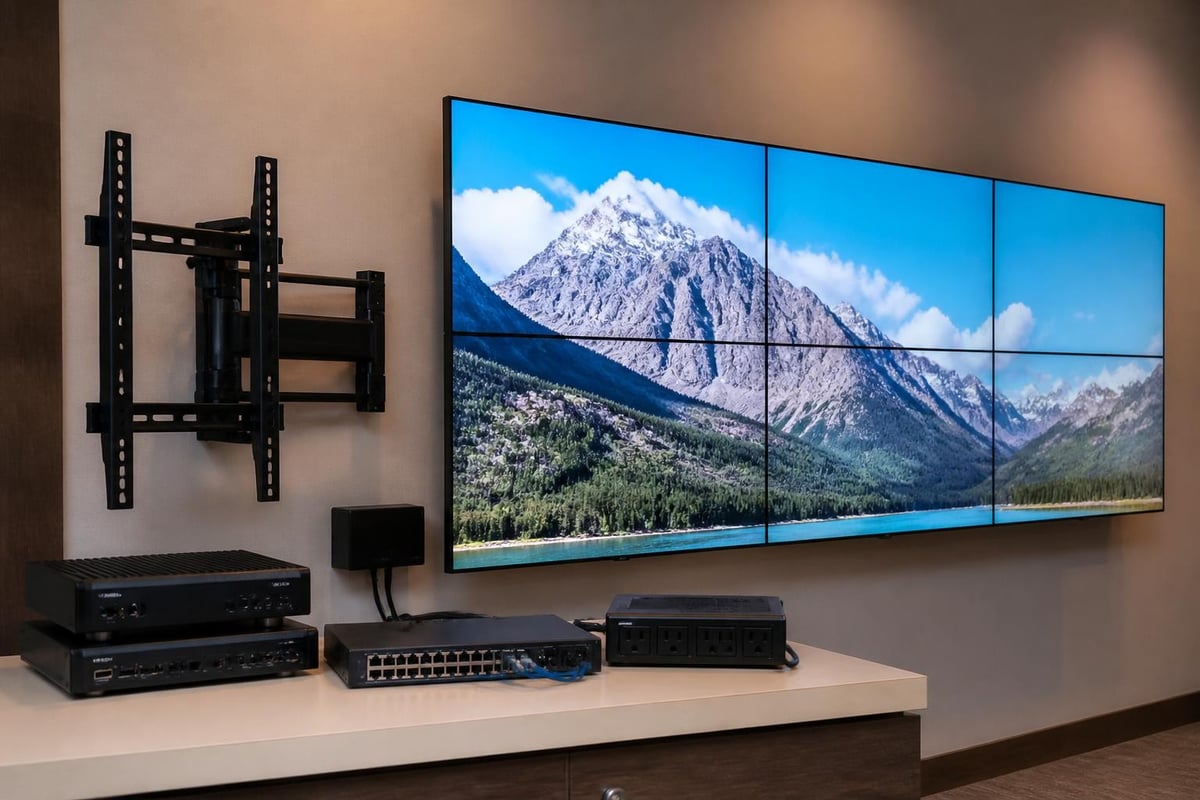
- Video walls (modular configurations): Creating visual impact in large spaces and command centres
For organisations managing sensitive information, cybersecurity considerations become paramount. The NIST guidelines on IoT device security provide valuable frameworks for securing networked digital signage infrastructure against emerging threats.
Retail and Hospitality Solutions
Retail environments demand displays that capture attention, influence purchasing decisions, and withstand extended operating hours. Brightness, viewing angles, and content dynamism take priority over some corporate considerations.
Specialised digital signage offerings for retail spaces include window displays with ultra-high brightness (2,500+ nits), shelf-edge screens for product promotion, and interactive kiosks for self-service. The ability to update promotional content instantly across multiple locations represents a significant advantage over traditional printed materials.
Retail-specific considerations:
- Peak brightness for window and outdoor applications
- Narrow bezel designs for seamless video walls
- Touch interactivity for product exploration
- Integration with inventory and pricing systems
- Durable construction for high-traffic environments

Outdoor and High-Visibility Installations
Outdoor digital signage products face harsh environmental conditions requiring ruggedised construction, weatherproofing, thermal management, and exceptional brightness. These installations serve transportation hubs, stadiums, outdoor retail centres, and roadside advertising.
The IAB's definition of Digital Out-of-Home (DOOH) establishes industry standards for outdoor digital advertising platforms, distinguishing them from other digital channels through their public placement and broad audience reach. Understanding these distinctions helps organisations plan effective outdoor campaigns.
Temperature extremes pose significant challenges. Displays must operate reliably from -30°C to +50°C in many climates. Cooling systems, heaters, and ventilation become essential components. Ingress Protection (IP) ratings of IP65 or higher ensure resistance to dust and water penetration.
Technical Specifications That Matter
Navigating the technical landscape of digital signage products requires understanding which specifications genuinely impact performance and which represent marketing differentiators with limited practical value. Several key metrics deserve careful attention during the selection process.
Display Resolution and Pixel Pitch
Resolution determines image clarity at specific viewing distances. For indoor applications viewed from 2-5 metres, Full HD (1920x1080) suffices for most content. Larger installations or closer viewing distances benefit from 4K (3840x2160) resolution, whilst outdoor displays use pixel pitch (spacing between LED clusters) as the primary specification.
| Viewing Distance | Recommended Pixel Pitch | Typical Application |
|---|---|---|
| 1-3 metres | P1.8-P2.5 | Indoor fine-pitch displays |
| 3-8 metres | P2.5-P4 | Indoor large displays |
| 8-15 metres | P4-P6 | Semi-outdoor, sheltered |
| 15-50 metres | P6-P10 | Outdoor roadside |
| 50+ metres | P10-P16 | Large outdoor billboards |
Brightness and Contrast
Measured in nits (candelas per square metre), brightness determines visibility in ambient light. Indoor environments typically require 350-500 nits, whilst outdoor applications demand 5,000-10,000 nits for daylight visibility. High contrast ratios (3,000:1 or greater) ensure rich blacks and vibrant colours.
Energy consumption correlates directly with brightness levels, making energy-efficient displays increasingly important. The ENERGY STAR guidance for signage displays helps organisations select products that balance performance with operational costs and environmental responsibility. Further procurement guidance from the Department of Energy offers practical frameworks for evaluating energy efficiency in commercial display purchases.
Connectivity and Integration
Modern digital signage products must integrate seamlessly with existing IT infrastructure. Essential connectivity options include:
- Network connectivity: Ethernet (preferred for reliability), Wi-Fi for flexibility
- Input options: HDMI, DisplayPort, DVI for source flexibility
- Control protocols: RS-232, IP control for automation and monitoring
- Content delivery: Cloud-based, local network, or USB for offline operation
Integration capabilities extend beyond simple connectivity. Application programming interfaces (APIs) enable digital signage to pull data from business systems, displaying real-time information such as queue times, inventory levels, or performance metrics. This transforms static displays into dynamic information hubs responding to current conditions.
Content Strategy for Digital Signage Products
The most sophisticated digital signage products deliver minimal value without compelling content strategy. Successful deployments balance technical capability with thoughtful messaging, visual design, and audience understanding.
Content Types and Best Practices
Effective digital signage content varies by context but shares common principles. Messages should communicate clearly within 3-5 seconds for high-traffic areas, whilst dwell-time environments permit longer, more detailed content. Visual hierarchy guides viewer attention to key information first.
High-performing content characteristics:
- Clear focal point: Single primary message per screen
- Appropriate typography: Minimum font sizes relative to viewing distance
- High contrast: Ensuring readability in varied lighting
- Motion and animation: Drawing attention without distraction
- Regular updates: Maintaining freshness and relevance
Different industries require tailored approaches. Healthcare environments emphasise wayfinding, health education, and patient comfort. Educational institutions focus on campus information, emergency messaging, and student engagement. Manufacturing facilities prioritise safety messaging, production metrics, and operational updates. You can explore industry-specific signage solutions to understand these varied requirements.
Dynamic and Data-Driven Content
The true power of digital signage products emerges when displays show contextually relevant information responding to real-world conditions. Weather displays adjust messaging based on current conditions. Queue management systems update wait times dynamically. Retail displays modify promotions based on inventory levels or time of day.
Integration with social media feeds, news services, and business intelligence platforms transforms displays into living communication channels. However, such integration requires careful planning around data security, content approval workflows, and fallback options when data sources become unavailable.

Installation and Maintenance Considerations
Proper installation and ongoing maintenance determine whether digital signage products deliver anticipated returns or become expensive liabilities. Professional installation addresses structural requirements, electrical considerations, and optimal positioning for audience visibility.
Professional Installation Requirements
Commercial display installation differs significantly from mounting a television at home. Weight considerations become critical with large displays and video walls. Structural assessments ensure mounting surfaces can support loads safely. Electrical requirements may necessitate dedicated circuits, particularly for high-brightness outdoor displays consuming significant power.
Mounting options range from wall mounts and ceiling suspensions to floor stands and specialised enclosures. Outdoor installations require weatherproof enclosures, ventilation planning, and accessibility for maintenance. The importance of professional signage installation cannot be overstated, as improper installation creates safety hazards and voids manufacturer warranties.
Ongoing Maintenance and Support
Digital signage products require regular maintenance to ensure reliable operation. Screens accumulate dust affecting heat dissipation and image quality. Software updates address security vulnerabilities and add functionality. Content management requires ongoing attention to maintain relevance and effectiveness.
Maintenance schedule recommendations:
- Weekly: Visual inspection for display operation and content accuracy
- Monthly: Clean display surfaces, check mounting security
- Quarterly: Review software versions, test backup systems, analyse performance data
- Annually: Professional service inspection, deep cleaning, hardware assessment
Understanding long-term maintenance requirements helps organisations budget appropriately and avoid unexpected downtime. Service agreements with providers ensure rapid response to technical issues, minimising the business impact of equipment failures.
Emerging Trends in Digital Signage Technology
The digital signage industry continues evolving rapidly, with several emerging trends reshaping what organisations can achieve with these communication platforms. Staying informed about developments helps future-proof investments and capitalise on new capabilities.
Artificial Intelligence and Audience Analytics
AI-powered digital signage products analyse viewer demographics, attention levels, and engagement patterns without identifying individuals. Camera-based sensors detect age ranges, gender, and emotional responses, enabling content optimisation and campaign measurement. These capabilities raise important privacy considerations requiring transparent policies and compliance with data protection regulations.
The IAB's measurement guide for Digital Out-of-Home establishes frameworks for audience measurement and campaign attribution in DOOH environments, helping advertisers understand reach and effectiveness comparable to other digital channels.
Emergency Alert Integration
Digital signage increasingly serves dual purposes, functioning as both marketing platforms and emergency communication systems. Integration with alert networks enables rapid dissemination of critical information during emergencies. The CISA guidance on alert and warning networks provides frameworks for incorporating digital signage into comprehensive emergency communication strategies, ensuring reliability when it matters most.
Transparent and Flexible Display Technologies
Transparent OLED displays create striking installations where content appears to float in space whilst allowing visibility through the screen. Flexible and curved displays enable previously impossible form factors. Whilst currently expensive, these technologies offer unique opportunities for distinctive installations that command attention and differentiate brands.
Cost Considerations and Return on Investment
Digital signage products represent significant capital investments requiring careful financial analysis. Total cost of ownership extends beyond initial hardware purchases to encompass software licences, content creation, installation, maintenance, and eventual replacement.
Initial Investment Breakdown
A complete digital signage solution for a single location typically includes multiple cost components. Hardware costs vary dramatically based on display size, technology, and environmental requirements, ranging from £1,000 for basic indoor displays to £50,000+ for large outdoor LED installations.
| Cost Category | Small Installation (1-3 displays) | Medium Installation (4-10 displays) | Large Installation (10+ displays) |
|---|---|---|---|
| Hardware | £3,000-£10,000 | £15,000-£50,000 | £50,000-£500,000+ |
| Software (annual) | £500-£2,000 | £2,000-£8,000 | £8,000-£50,000+ |
| Installation | £1,000-£3,000 | £5,000-£15,000 | £15,000-£100,000+ |
| Content Creation | £2,000-£5,000 | £5,000-£20,000 | £20,000-£100,000+ |
| Annual Maintenance | £500-£1,500 | £2,000-£6,000 | £6,000-£30,000+ |
Calculating Return on Investment
Quantifying ROI for digital signage products requires identifying specific business objectives and measurement methodologies. Retail deployments might measure increased sales in areas with digital displays. Corporate installations could track reduced printing costs for internal communications or improved employee engagement scores.
Advertising-focused deployments generate revenue directly through third-party advertising sales. A prime outdoor display might generate £5,000-£20,000 monthly in advertising revenue, providing clear ROI calculations. Internal communication applications require softer metrics such as message recall, behaviour change, or operational efficiency improvements.
Understanding the full cost picture for commercial signage helps organisations budget accurately and set realistic expectations for returns. Comparing different signage investment options ensures appropriate allocation of marketing and communication budgets.
Regulatory and Compliance Factors
Deploying digital signage products requires navigating various regulatory frameworks governing electrical safety, structural requirements, advertising standards, and environmental impact. Compliance protects organisations from liability whilst ensuring public safety.
Building and Electrical Codes
Commercial electrical installations must comply with local building codes and electrical safety standards. Large displays draw significant power requiring properly rated circuits, appropriate protection devices, and professional installation by licensed electricians. Structural mounting must account for display weight, wind loading for outdoor installations, and seismic requirements in applicable regions.
Advertising and Content Regulations
Digital signage content must comply with advertising standards, truth-in-advertising laws, and industry-specific regulations. Healthcare facilities face strict requirements around health claims and patient privacy. Financial services must ensure compliance with disclosure requirements. Alcohol and tobacco advertising face significant restrictions in many jurisdictions.
Municipal regulations often govern outdoor digital displays, particularly regarding brightness levels, animation speed, and proximity to roadways. Some jurisdictions prohibit moving images visible from roads due to driver distraction concerns. Obtaining necessary signage permits and approvals represents a critical step before installation commences.
Accessibility Considerations
Public-facing digital signage should consider accessibility for individuals with disabilities. Appropriate mounting heights enable wheelchair users to interact with touch displays. Audio announcements support visually impaired individuals. High-contrast content and appropriate font sizes ensure readability for those with vision impairments.
Vendor Selection and Partnership
Choosing the right partners for digital signage products deployment significantly impacts long-term success. Evaluating vendors requires looking beyond initial pricing to consider technical expertise, service capabilities, and strategic alignment.
Key Evaluation Criteria
Technical competence represents the foundation of vendor selection. Can they design systems meeting your specific requirements? Do they understand integration challenges with existing infrastructure? Have they successfully deployed similar projects?
Critical vendor capabilities:
- Demonstrated experience in relevant applications and industries
- Technical support availability and response times
- Warranty terms and equipment replacement policies
- Content creation services or partnerships
- Training programmes for internal staff
- Financial stability and longevity in the market
References from existing clients provide invaluable insights into vendor performance beyond marketing materials. Site visits to completed installations reveal quality standards and attention to detail.
Long-Term Partnership Approach
Digital signage represents an ongoing relationship rather than a one-time transaction. Technology evolves, business needs change, and systems require updates and expansion. Vendors who view client relationships as long-term partnerships rather than sales opportunities deliver superior value over time.
Maintenance agreements, software update policies, and scalability options deserve careful consideration. Can the initial system expand as needs grow? Will the vendor support legacy equipment or force premature replacement? How do they handle technology obsolescence?
Exploring options from leading signage companies helps organisations understand the competitive landscape and identify providers offering the right combination of expertise, service, and value.
Digital signage products have evolved into sophisticated communication platforms offering unprecedented flexibility, impact, and measurability for organisations across all sectors. By carefully considering application requirements, technical specifications, content strategy, and vendor partnerships, businesses can deploy solutions that deliver measurable returns whilst enhancing brand presence and audience engagement. Signs4SA combines technical expertise, manufacturing capability, and comprehensive support services to deliver digital signage solutions tailored to your specific industry requirements, backed by a national footprint and commitment to quality that has established them as one of South Africa's fastest-growing signage providers.