

Hotel Digital Signage: Transform Guest Experiences
The hospitality industry has undergone a remarkable transformation in recent years, with technology playing an increasingly central role in shaping guest experiences. Digital signage has emerged as one of the most versatile tools available to hoteliers, offering dynamic communication capabilities that static signs simply cannot match. From the moment guests enter a property until they depart, strategically placed screens deliver timely information, promotional content, and wayfinding assistance that elevates the entire stay. As competition intensifies across the hospitality sector, forward-thinking properties are discovering that hotel digital signage represents far more than an aesthetic upgrade-it's a strategic investment in operational efficiency and guest satisfaction.
The Strategic Value of Digital Displays in Hospitality
Modern hotel digital signage serves multiple functions simultaneously, making it one of the most cost-effective communication investments a property can make. Unlike printed materials that require constant replacement and manual updating, digital screens deliver real-time content that can be adjusted instantly from a central management system.
Operational efficiency represents perhaps the most immediate benefit. Front desk staff spend significantly less time answering routine questions about hotel amenities, event schedules, and local attractions when this information displays prominently throughout the property. According to research on interactive digital signage, properties that implement comprehensive screen networks report reduced front desk workload by as much as 30 percent.
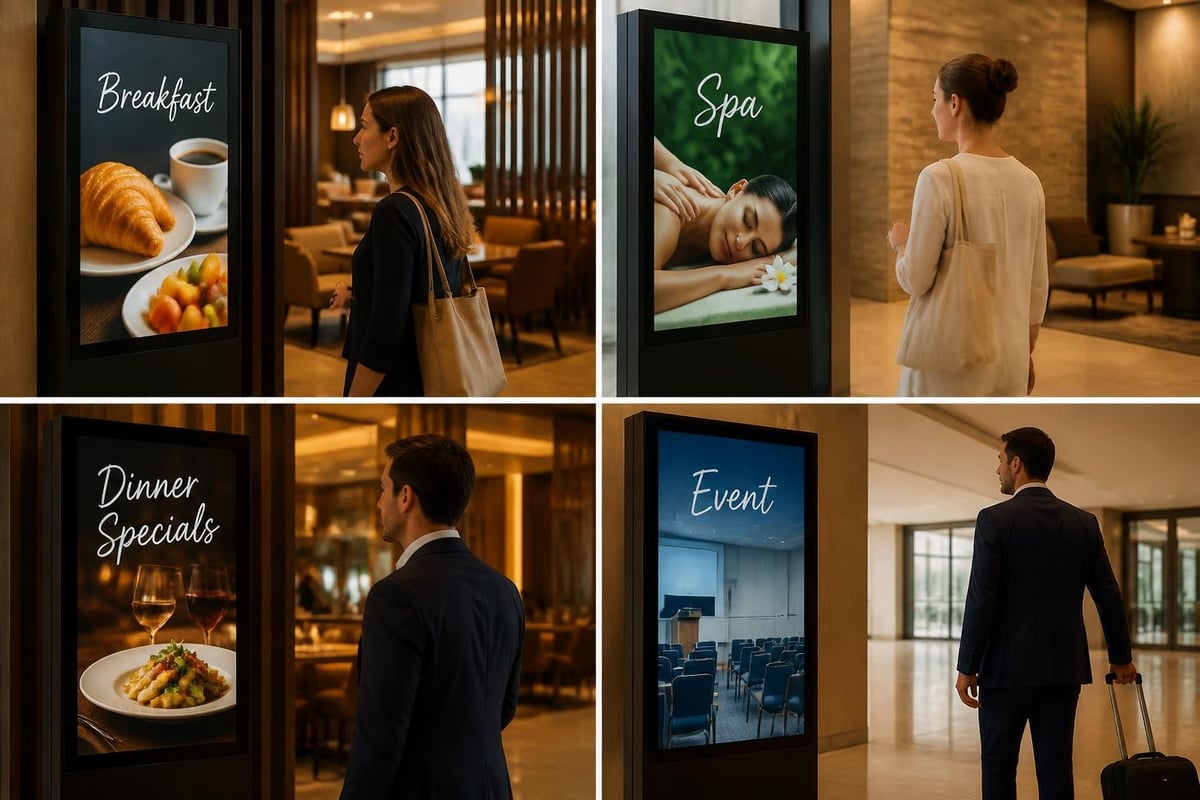
Revenue generation opportunities expand considerably with dynamic content capabilities. Digital displays can promote:
- On-site dining specials and seasonal menu items
- Spa treatments and wellness packages
- Room upgrade opportunities
- Partnership offers with local attractions
- Event space availability for meetings and conferences
The flexibility to adjust messaging based on time of day, season, or specific guest demographics creates upselling opportunities that static signage cannot deliver. Similar to how retail store digital signage transforms shopping experiences, hotel applications enhance guest engagement through targeted, contextual messaging.
Zone-Based Implementation Strategies
Successful hotel digital signage deployment requires thoughtful consideration of location and content relevance. Different areas within a property serve distinct purposes and require tailored messaging approaches.
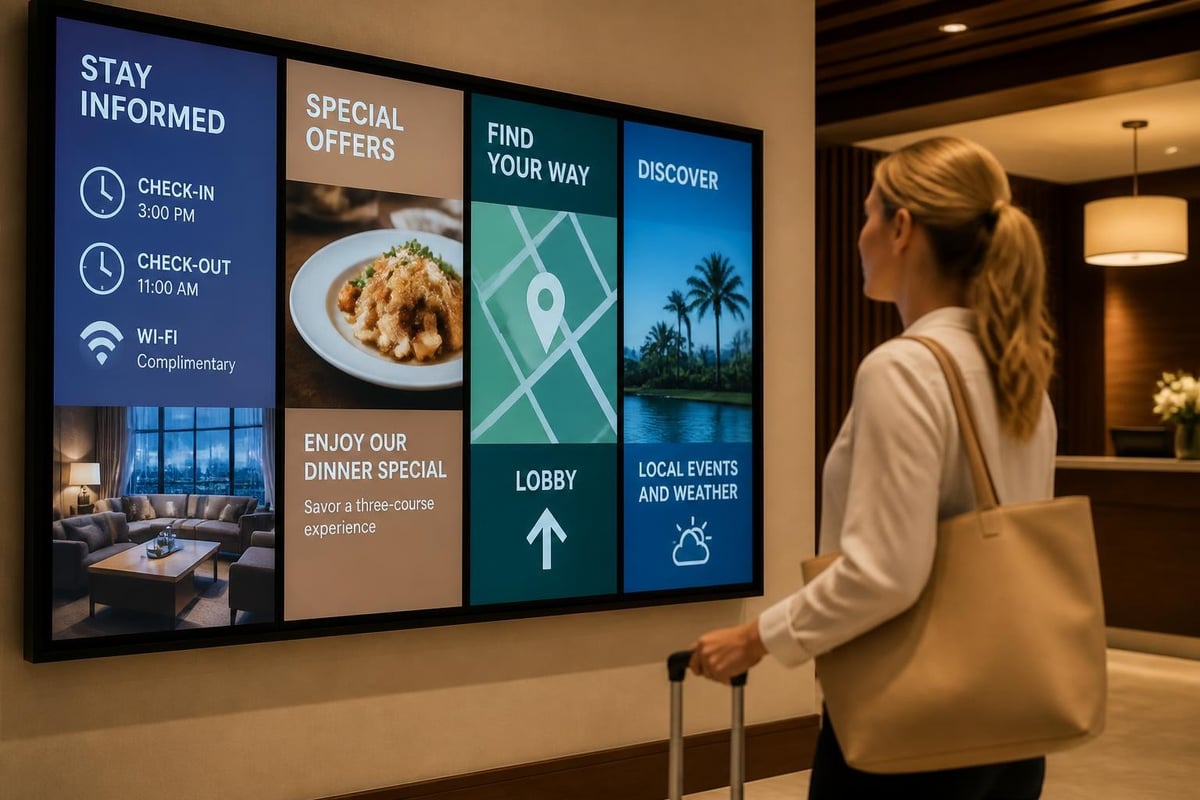
Lobby and Reception Areas function as the communication hub for most properties. Large-format displays in these spaces should prioritize welcome messages, check-in/check-out information, weather updates, and local time. Many properties also dedicate screen real estate to showcasing amenities, highlighting nearby attractions, and promoting special offers.
Elevator Lobbies and Corridors present opportunities for wayfinding assistance and promotional content. Screens in these transitional spaces work particularly well for displaying event schedules, restaurant hours, and directional information to various hotel facilities.
Conference and Event Spaces benefit enormously from digital signage that can adapt to different functions. A comprehensive guide to hotel digital signage zones explains how screens outside meeting rooms can display current bookings, upcoming sessions, and sponsor information-all updated automatically from the property management system.
| Location | Primary Content | Secondary Content | Update Frequency |
|---|---|---|---|
| Main Lobby | Welcome messages, check-in info | Promotions, local attractions | Hourly |
| Restaurants | Menu boards, daily specials | Wine selections, events | Daily |
| Fitness Centre | Class schedules, wellness tips | Spa promotions, safety info | Weekly |
| Meeting Rooms | Event schedules, wayfinding | Sponsor content, announcements | Per event |
Back-of-House Applications deserve consideration as well. Digital displays in staff areas can communicate scheduling information, performance metrics, and important operational updates, creating a more informed and engaged workforce.
Content Strategies That Engage Modern Travellers
Creating compelling content represents the difference between screens that guests ignore and displays that genuinely enhance their experience. The most successful implementations follow clear content principles that prioritize relevance, readability, and visual appeal.
Effective hotel digital signage content balances informational value with aesthetic quality. Screens should never appear cluttered or overwhelming-clean layouts with ample white space ensure messages remain digestible even for guests passing quickly through a space.
Dynamic Content Elements
Weather Integration provides immediate practical value. Displaying current conditions and forecasts helps guests plan activities and make appropriate clothing choices. Many properties extend this functionality to include sunrise/sunset times, pollen counts, and air quality indices.
Social Media Feeds create engagement opportunities when implemented thoughtfully. Curated hashtag displays showcasing guest photos and experiences foster community while providing authentic promotional content. Properties must carefully moderate these feeds to ensure appropriate content appears on screens.
Real-Time Information adds significant value in specific contexts. Flight departure boards prove particularly popular at airport hotels, whilst conference hotels display session updates and schedule changes. The Holiday Inn Calgary Airport case study demonstrates how real-time flight information significantly enhanced guest satisfaction and reduced front desk enquiries.
Performance metrics matter when evaluating content effectiveness:
- Dwell time: How long guests pause to view content
- Conversion rates: Promotion views that result in bookings or purchases
- Enquiry reduction: Decrease in common questions to staff
- Guest satisfaction: Survey responses regarding information accessibility
Technical Considerations and Hardware Selection
Choosing appropriate hardware forms the foundation of any successful hotel digital signage deployment. The unique environmental challenges of hospitality settings-varying lighting conditions, diverse viewing distances, and continuous operation requirements-demand careful specification.
Display Technology Options each offer distinct advantages. LED screens provide exceptional brightness for high-ambient-light environments like sun-filled lobbies, whilst LCD panels offer superior image quality for closer viewing distances. The range of Digital Signage from providers includes options from P10 to P1.8, suitable for both internal and external applications depending on pixel pitch requirements.
Screen size selection depends primarily on viewing distance and content complexity. A general guideline suggests one inch of screen height for every four feet of viewing distance, though this varies based on content detail and ambient conditions.
Installation and Integration Requirements
Mounting Solutions must account for both aesthetic and practical considerations. Recessed installations create sleek, integrated appearances but require advance planning during construction or renovation. Surface-mounted options offer greater flexibility and easier access for maintenance.
Network infrastructure represents a critical technical foundation. Most modern hotel digital signage systems operate via IP networks, requiring robust connectivity throughout the property. Wireless solutions provide flexibility but may introduce reliability concerns in properties with challenging architectural features.
Integration capabilities extend the value proposition significantly. Leading systems connect with:
- Property management systems for automatic content updates
- Point-of-sale systems for real-time menu and pricing changes
- Building management systems for emergency notifications
- Calendar systems for event and conference information
The Hilton Queen of Sheba Hotel implementation showcases sophisticated integration, broadcasting daily notifications, news updates, and conference schedules automatically sourced from multiple systems.
Overcoming Common Management Challenges
Despite the substantial benefits, hotel digital signage deployments often encounter operational challenges that can undermine effectiveness. Understanding these pitfalls enables properties to implement preventative strategies from the outset.
Content Management Consistency represents perhaps the most frequent issue. Properties with multiple screens often struggle to maintain updated, relevant content across all displays. A practical guide to hotel digital signage management addresses this challenge, recommending centralised content management systems with scheduled publishing workflows.
Staff training frequently receives insufficient attention during implementation. Even the most sophisticated system delivers little value if team members cannot efficiently update content or troubleshoot basic issues. Successful deployments include comprehensive training programmes and clear documentation for all relevant staff members.
Budget Planning and ROI Measurement
Initial investment costs vary considerably based on scope and specifications:
| Component | Budget Range | Considerations |
|---|---|---|
| Display Hardware | £800-£5,000 per screen | Size, technology, brightness requirements |
| Content Management Software | £200-£800 monthly | Features, screen count, cloud vs. on-premise |
| Installation | £300-£1,500 per screen | Complexity, mounting type, cabling requirements |
| Content Creation | £500-£3,000 initial | Professional design, template development |
Many properties discover that understanding their signage investment from both capital and operational perspectives enables more strategic decision-making throughout the deployment process.
Return on investment manifests through multiple channels. Direct revenue increases from promoted services and amenities typically prove easiest to quantify. Indirect benefits-reduced printing costs, decreased staff time answering routine questions, enhanced guest satisfaction scores-contribute substantially but require more sophisticated tracking methodologies.

Industry Trends Shaping Future Developments
The hotel digital signage landscape continues evolving rapidly, with several emerging trends poised to reshape how properties leverage these systems. Staying informed about these developments enables hoteliers to make future-proof investment decisions.
Artificial Intelligence Integration enables increasingly sophisticated content personalisation. Advanced systems can adjust displayed content based on audience demographics detected through camera analysis, time patterns, and historical engagement data. Whilst privacy considerations require careful navigation, the potential for relevance-driven content delivery represents a significant advancement.
Touchless Interaction Technologies accelerated dramatically in response to health concerns but continue gaining traction due to their convenience benefits. Gesture control and smartphone-triggered interactions allow guests to access detailed information without physical contact, whilst QR codes bridge digital signage and personal devices seamlessly.
Interactive wayfinding solutions have matured considerably, with many properties now deploying sophisticated mapping systems that help guests navigate complex facilities. These systems prove particularly valuable in large resort properties and convention hotels where traditional signage struggles to provide adequate directional guidance.
A comprehensive 2026 guide to hotel digital signage explores these trends in detail, noting that properties incorporating advanced features report measurably higher guest satisfaction scores compared to those using basic digital display implementations.
Sustainability and Energy Considerations
Environmental responsibility increasingly influences purchasing decisions across the hospitality sector. Modern hotel digital signage systems offer significant sustainability advantages over traditional alternatives when properly specified and managed.
LED display technology has achieved remarkable energy efficiency improvements, with current-generation screens consuming 30-50 percent less power than equivalents from just five years ago. Automated brightness adjustment based on ambient light conditions further reduces consumption whilst maintaining optimal visibility.
The elimination of printed materials represents another environmental benefit. Properties that previously produced hundreds of daily information sheets, promotional flyers, and event schedules can dramatically reduce paper consumption through digital alternatives. Some hotels report annual paper savings exceeding 50,000 sheets following comprehensive digital signage deployment.
For properties prioritising immersive experiences, integration with advanced audio visual systems creates remarkable possibilities. Specialists like ANR media, who design custom audio video solutions including bespoke home cinema installations, demonstrate how sophisticated content delivery across multiple sensory channels can transform environments-principles increasingly applicable to luxury hotel settings seeking differentiation through technology.
Content Governance and Brand Consistency
Maintaining brand standards across all customer touchpoints presents an ongoing challenge, particularly for hotel groups operating multiple properties. Hotel digital signage amplifies this challenge whilst simultaneously offering solutions through centralized management capabilities.
Template-Based Systems enable corporate marketing teams to create approved content frameworks that individual properties can customise with location-specific information. This approach ensures brand consistency whilst allowing necessary flexibility for local relevance.
Approval workflows built into modern content management platforms prevent unauthorized or off-brand content from reaching screens. Multi-tier permission structures allow different staff members appropriate access levels-front desk personnel might update event schedules whilst only marketing managers can modify promotional content.
Version control features track content changes and enable rapid rollback if issues arise. This functionality proves invaluable when multiple team members collaborate on content creation and updates.
Quality assurance processes should include:
- Regular content audits to identify outdated information
- Scheduled reviews of promotional material performance
- Technical checks ensuring all screens display correctly
- Guest feedback monitoring regarding information accuracy
Properties that implement rigorous governance frameworks report significantly fewer content-related guest complaints and higher overall satisfaction with information accessibility.
Measuring Success and Optimizing Performance
Effective hotel digital signage management requires ongoing performance evaluation and refinement. Properties that treat deployment as a continuous improvement process rather than a one-time project achieve substantially better results.
Analytics Capabilities vary considerably across content management platforms. Basic systems track simple metrics like content playback frequency, whilst advanced solutions measure audience engagement through camera-based attention analysis, dwell time measurement, and interaction tracking for touchscreen displays.
Correlation analysis reveals which content types drive desired behaviours. Properties can determine whether restaurant promotions displayed in lifts generate measurable increases in dining bookings, or if spa service advertisements in fitness areas convert viewers into customers.
A/B testing methodologies borrowed from digital marketing apply equally to physical screen deployments. Running different promotional approaches on comparable screens throughout a property identifies which messages, layouts, and calls-to-action generate optimal response rates.
Guest feedback mechanisms provide qualitative insights that complement quantitative metrics. Simple survey questions about information accessibility and helpfulness reveal whether digital signage genuinely enhances the guest experience or merely creates visual clutter.
Similar to how businesses evaluate the benefits of LED signage across various applications, hotel operators must establish clear success criteria aligned with their specific objectives-whether prioritising operational efficiency, revenue generation, or guest satisfaction improvements.
Multi-Property Deployments and Scalability
Hotel groups operating multiple locations face unique considerations when implementing digital signage across their portfolio. Standardisation offers significant advantages whilst allowing necessary customisation for individual property characteristics.
Centralized Content Management enables corporate marketing teams to push consistent brand messaging across all locations simultaneously. Promotional campaigns, seasonal offers, and corporate announcements reach every property instantly, ensuring coordinated marketing execution.
Localized content layers complement centralized control. Individual properties maintain autonomy over location-specific information like local events, property-specific amenities, and unique services whilst benefiting from corporate-created promotional content.
Procurement advantages emerge when deploying systems across multiple properties. Volume purchasing agreements reduce per-unit hardware costs, whilst consolidated software licensing typically offers substantial discounts compared to individual property purchases.
The case study of global digital signage deployment by major brands demonstrates how centralized, cloud-based content management enables consistent execution across thousands of locations whilst maintaining necessary local flexibility.
Technical support and maintenance become more manageable with standardized systems. Staff training transfers between properties, troubleshooting knowledge applies universally, and replacement parts inventories can be centralized rather than duplicated at each location.
Hotel digital signage represents a transformative technology that addresses multiple operational challenges whilst enhancing guest experiences throughout their stay. From streamlining communications and reducing staff workload to generating incremental revenue through targeted promotions, properly implemented systems deliver measurable returns across numerous dimensions. Whether you're upgrading a single property or deploying screens across an entire hotel group, partnering with experienced providers ensures successful outcomes. Signs4SA offers comprehensive digital signage solutions tailored to hospitality environments, combining quality hardware, expert installation, and ongoing support to help your property realize the full potential of this versatile communication platform.