

Fabricated Signs: Materials, Design & Fabrication Guide
Fabricated signs represent the pinnacle of custom signage craftsmanship, combining traditional metalworking techniques with modern manufacturing technology to create distinctive, durable installations that command attention and withstand the elements. Unlike mass-produced alternatives, these bespoke solutions are meticulously engineered from robust materials such as aluminium, stainless steel, and brass, offering businesses the opportunity to establish a powerful visual presence through three-dimensional lettering, intricate logos, and architectural elements. For organisations seeking premium brand representation across corporate campuses, retail environments, construction sites, and pharmaceutical facilities, understanding the fabrication process, material selection, and design considerations becomes essential to achieving a return on investment that extends decades beyond installation.
Understanding the Fabrication Process
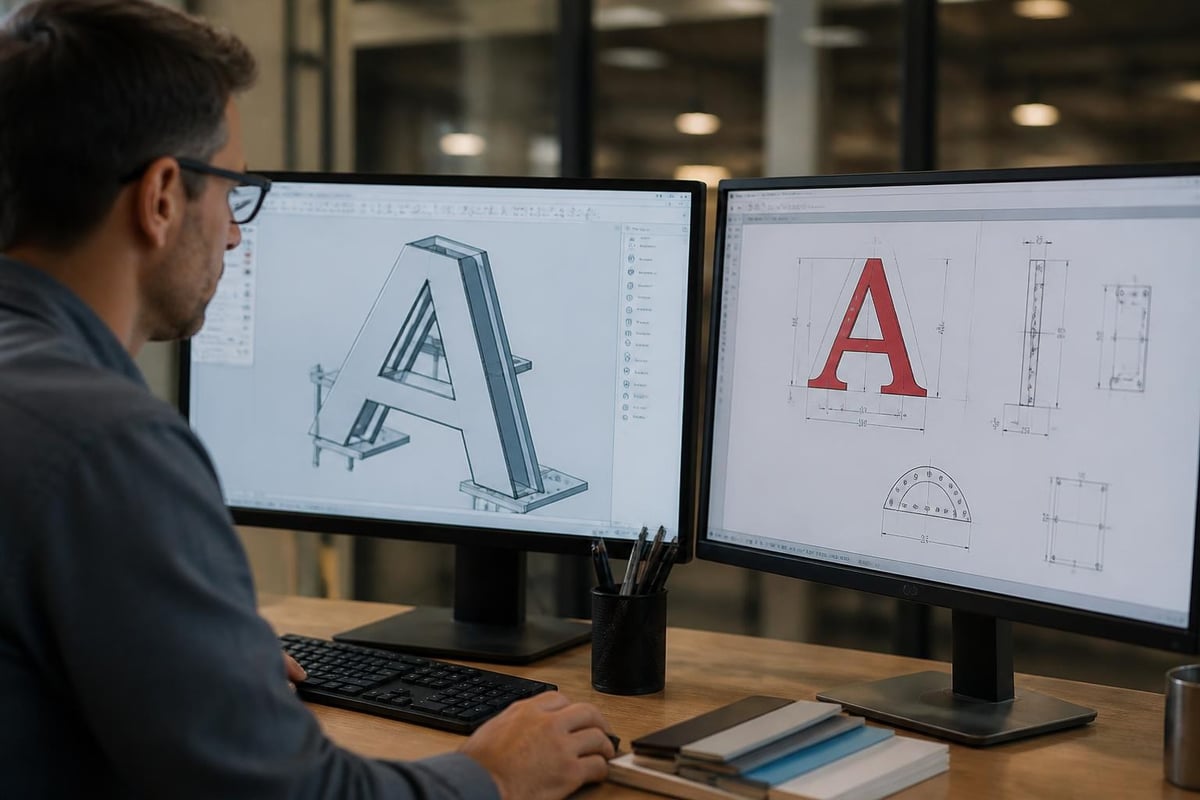
The creation of fabricated signs begins with comprehensive design consultation, where client requirements are translated into technical specifications that account for viewing distances, environmental conditions, mounting surfaces, and brand guidelines. Skilled fabricators work from detailed CAD drawings that define every dimension, weld point, and finish specification before raw materials are selected and prepared for transformation.
Computer-Aided Design and Engineering
Modern fabrication relies on precision CAD software to create three-dimensional models that preview the final product from every angle. These digital blueprints enable manufacturers to calculate exact material quantities, identify structural reinforcement requirements, and programme CNC machinery for automated cutting and routing operations. The engineering phase addresses critical factors including wind load calculations for elevated installations, weight distribution for wall-mounted applications, and expansion allowances for materials that respond to temperature fluctuations.
Design files are typically reviewed in multiple iterations with clients, allowing for adjustments to letter thickness, return depth, and decorative elements before fabrication commences. This collaborative approach minimises costly modifications during production and ensures the finished signage aligns perfectly with architectural features and brand specifications.
Material Selection and Preparation
The choice of substrate material fundamentally influences the appearance, longevity, and maintenance requirements of fabricated signs. Each material offers distinct advantages suited to specific applications and environmental conditions.
| Material | Key Characteristics | Ideal Applications | Typical Lifespan |
|---|---|---|---|
| Aluminium | Lightweight, corrosion-resistant, cost-effective | Outdoor installations, large-format letters, illuminated signs | 15-20 years |
| Stainless Steel | Premium finish, exceptional durability, low maintenance | Corporate lobbies, architectural features, coastal environments | 25-30 years |
| Brass | Distinguished appearance, natural patina development, traditional aesthetic | Heritage buildings, luxury retail, commemorative plaques | 30+ years |
| Corten Steel | Rust-finish aesthetic, weather-resistant, contemporary appeal | Modern architecture, landscape integration, artistic installations | 20-25 years |
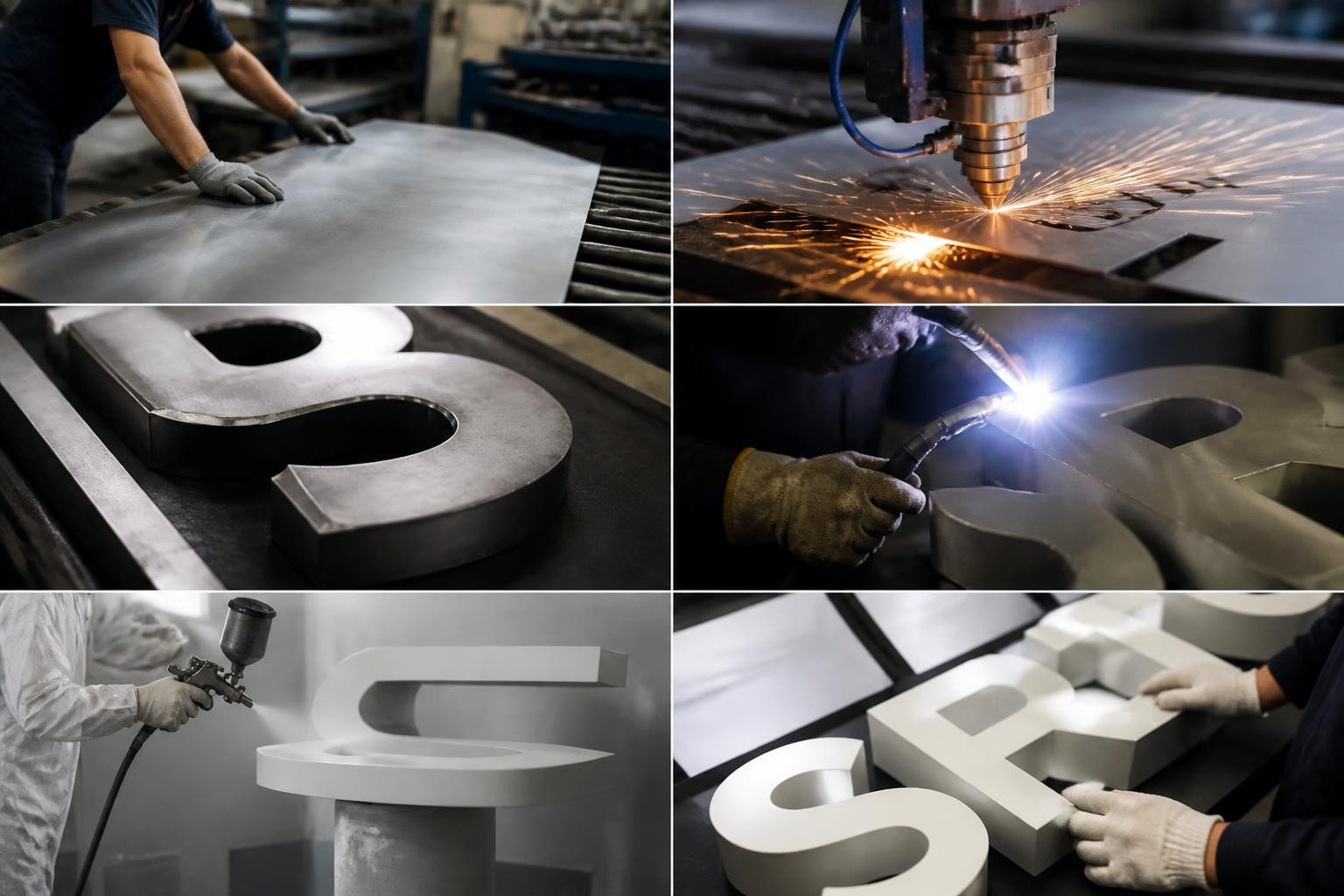
Raw materials arrive as sheets, coils, or extrusions that require careful preparation before fabrication operations begin. Surface preparation involves cleaning to remove oils and oxidation, followed by protective masking for areas that will receive special treatment. Quality fabricators maintain strict material traceability, documenting batch numbers and certification paperwork to ensure compliance with industry standards and building codes.
Cutting and Forming Techniques
Precision cutting transforms flat metal sheets into the components that will be assembled into dimensional letters, logos, and decorative elements. Contemporary fabrication facilities employ multiple cutting technologies, each selected based on material thickness, complexity of design, and required edge quality.
Laser Cutting Precision
Laser cutting technology delivers unparalleled accuracy for intricate designs, capable of achieving tolerances within 0.1mm whilst producing clean, burn-free edges that minimise finishing requirements. The process uses focused laser beams to melt or vaporise material along programmed paths, accommodating complex geometries including tight radiuses, fine serifs, and detailed logo elements that would prove challenging with traditional methods.
For fabricated signs requiring exceptional detail, laser cutting enables the production of components with crisp edges and consistent quality across production runs. The technology proves particularly valuable when working with reflective materials or when creating patterns that incorporate negative space as part of the design concept. 3D lettering signage often relies on laser-cut components that are subsequently formed and assembled into dimensional installations.
Water Jet and Plasma Cutting
Water jet cutting employs high-pressure water mixed with abrasive particles to slice through thick materials without introducing heat that could warp or discolour the substrate. This cold-cutting process proves essential for materials sensitive to thermal distortion or when working with composites that combine multiple material types within a single component.
- Water jet advantages: No heat-affected zones, suitable for all materials, minimal edge preparation
- Plasma cutting benefits: Rapid processing for ferrous metals, cost-effective for thick materials, excellent for large-format components
- Router cutting applications: Non-metallic substrates, dimensional foam cores, acrylic facing panels
Metal Forming and Bending
Dimensional fabricated signs achieve their distinctive appearance through precision forming operations that transform flat components into three-dimensional letters and shapes. Press brakes apply controlled force to bend metal along predetermined lines, creating returns that add depth and shadow lines to installations.
Skilled craftspeople calculate bend allowances that account for material springback, ensuring finished dimensions match design specifications precisely. For curved elements and non-linear forms, English wheels and shrinking techniques gradually shape metal through incremental adjustments, producing organic curves that cannot be achieved through standard bending operations.
Welding and Assembly Operations
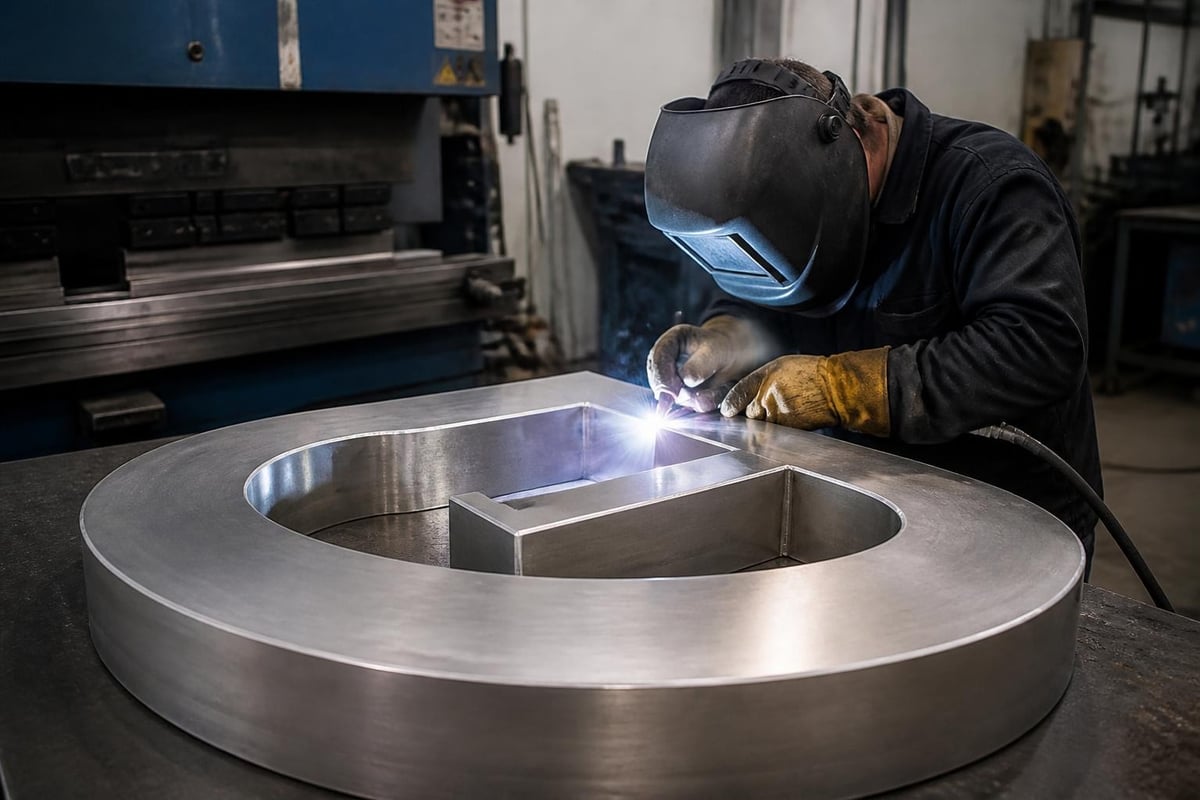
The assembly phase brings individual components together through skilled welding techniques that create seamless joints capable of supporting structural loads whilst maintaining aesthetic refinement. Professional fabricators employ multiple welding processes selected according to material type, component thickness, and finish requirements.
TIG (Tungsten Inert Gas) welding delivers the cleanest results for stainless steel and aluminium fabricated signs, producing narrow weld beads that require minimal grinding and polishing. This precision process enables fabricators to join thin-gauge materials without warping or burn-through, essential when creating lightweight letters for interior applications or elevated installations where weight becomes a structural consideration.
Structural Reinforcement
Large-format fabricated signs incorporate internal frameworks that distribute loads and prevent deformation over time. These hidden structural elements typically consist of aluminium or steel tubes welded to the interior surfaces of letter returns, creating rigid assemblies capable of maintaining dimensional accuracy despite wind loads, thermal cycling, and mounting stresses.
Reinforcement design accounts for the specific mounting method, whether the installation employs standoffs, flush-mounting systems, or direct attachment to building facades. Engineering calculations determine optimal placement of support points to prevent sagging in horizontal elements whilst ensuring vertical components remain plumb throughout the signage lifespan.
Surface Finishing and Protection
Surface finishing transforms fabricated signs from raw metalwork into refined brand statements that resist environmental degradation whilst delivering specified aesthetic qualities. The finishing process encompasses multiple stages, each contributing to appearance, durability, and long-term maintenance requirements.
Surface Preparation Standards
Proper surface preparation determines coating adhesion and ultimate longevity of fabricated signs exposed to weather, UV radiation, and atmospheric pollutants. The preparation sequence progresses through increasingly fine abrasive grades, removing mill scale, welding discolouration, and surface imperfections that would telegraph through finished coatings.
Professional fabricators adhere to internationally recognised preparation standards that specify acceptable surface profiles for different coating systems. For exterior installations, surfaces typically receive preparation to SSPC-SP6 (commercial blast cleaning) or equivalent mechanical cleaning that creates the anchor pattern required for maximum coating performance.
Powder Coating Applications
Powder coating represents the premium finishing method for most fabricated signs, delivering exceptional durability through electrostatically applied polymer powders that are thermally cured to form tough, uniform films. The process begins with comprehensive masking of areas requiring alternative finishes or mounting surfaces, followed by electrostatic application in controlled booth environments.
Powder coating advantages include:
- Superior resistance to chipping, scratching, and fading compared to liquid paints
- Environmentally responsible application with minimal VOC emissions
- Consistent film thickness across complex geometries and recessed areas
- Extensive colour matching capabilities including metallic and textured finishes
- Accelerated curing schedules that support efficient production timelines
Curing occurs in precision-controlled ovens where components reach specified temperatures that cross-link the powder particles into continuous protective films. Quality control involves film thickness measurements and adhesion testing to verify coating performance meets or exceeds manufacturer specifications.
Speciality Finishes and Patinas
Beyond standard colour applications, fabricated signs can incorporate speciality finishes that enhance visual appeal or align with architectural themes. Brushed finishes create directional grain patterns that catch light dynamically, whilst polished surfaces deliver mirror-like reflectivity suitable for luxury retail and corporate environments.
| Finish Type | Appearance | Maintenance | Best Applications |
|---|---|---|---|
| Brushed Satin | Subtle directional grain, reduces glare | Periodic cleaning, minimal upkeep | Interior lobbies, contemporary architecture |
| Mirror Polished | Highly reflective, premium aesthetic | Frequent cleaning to maintain appearance | High-end retail, luxury hospitality |
| Powder Coated | Uniform colour, matte to gloss options | Excellent durability, occasional washing | All exterior applications, brand colour matching |
| Natural Patina | Evolving aged appearance, authentic character | No maintenance required | Heritage sites, artistic installations |
Chemical patination techniques accelerate natural oxidation processes, creating controlled aged appearances on copper, brass, and bronze fabricated signs. These living finishes continue evolving over time, developing character that enhances rather than detracts from visual appeal.
Illumination Integration
Illuminated fabricated signs extend visibility into evening hours whilst creating dramatic visual impact that enhances brand recognition and wayfinding effectiveness. Modern illumination systems integrate seamlessly with metal fabrication, transforming dimensional letters into luminous focal points that command attention across distances.
LED Technology Implementation
Contemporary fabricated signs predominantly employ LED (Light Emitting Diode) technology that delivers exceptional energy efficiency, extended operational life, and minimal maintenance requirements compared to traditional lighting methods. LED modules are strategically positioned within letter returns or behind translucent facing materials, creating uniform illumination without visible hot spots or dark zones.
LED illumination benefits:
- Energy consumption reduced by 75-80% compared to neon or fluorescent alternatives
- Operational lifespan exceeding 50,000 hours minimises replacement costs
- Low heat generation prevents discolouration of painted finishes
- Digital control capabilities enable programmable sequences and dimming
- Compliance with environmental regulations regarding energy efficiency
Electrical components require thoughtful integration during the fabrication process, with conduits and junction boxes concealed within structural elements. Proper electrical design accounts for voltage drop across extended runs, thermal management to prevent premature LED failure, and accessibility for eventual maintenance activities. Understanding UL electrical safety standards ensures illuminated fabricated signs meet certification requirements for commercial installations.
Halo and Front Illumination Methods
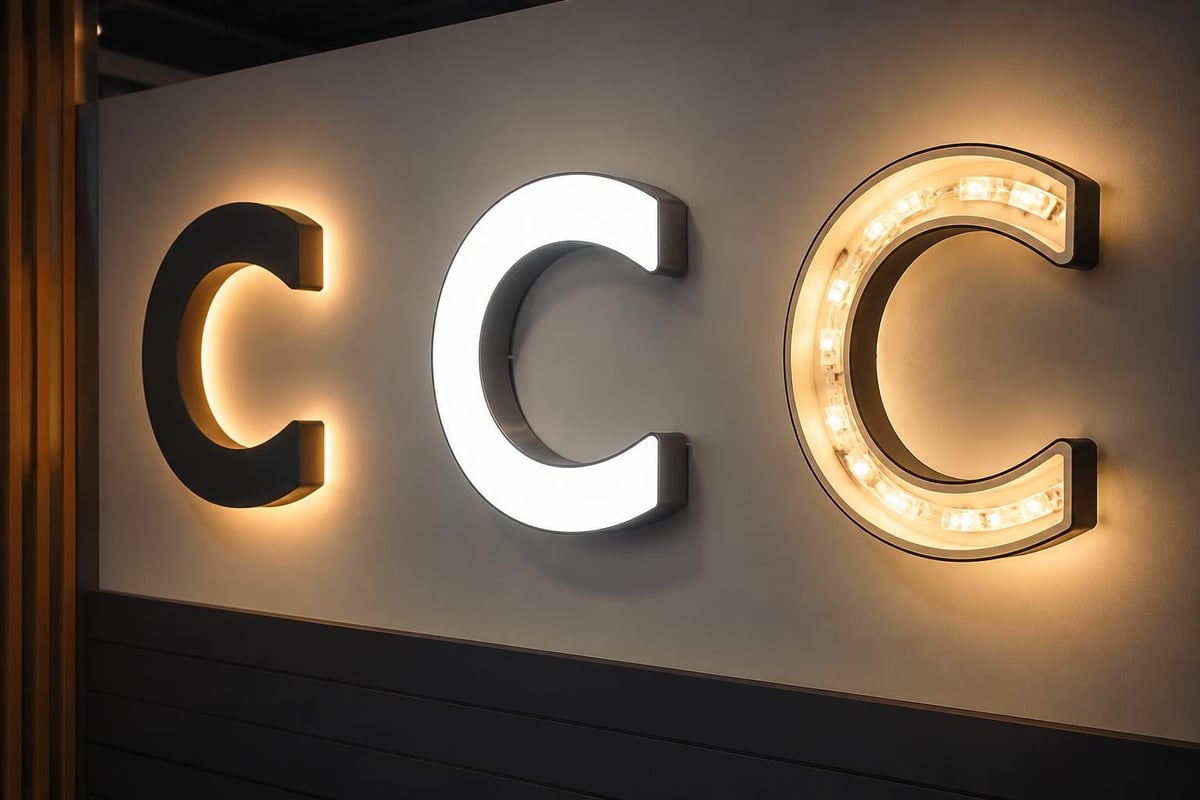
Halo illumination (also termed reverse-channel illumination) mounts LED strips behind dimensional letters, projecting light against mounting surfaces to create glowing outlines that emphasise letter forms through dramatic shadow effects. This sophisticated technique proves particularly effective for corporate installations where refined aesthetics and architectural integration take precedence over maximum brightness.
Front-illuminated fabricated signs typically incorporate translucent acrylic faces mounted to metal letter returns, with internal LED modules flooding the cavity to create evenly luminous characters. The metal returns remain non-illuminated, providing contrast and definition that enhances legibility whilst supporting structural requirements for large-scale installations.
Regulatory Compliance and Standards
Professional fabricated signs must satisfy numerous regulatory requirements that govern safety, accessibility, electrical installation, and environmental impact. Navigating this complex landscape requires familiarity with local building codes, industry standards, and statutory obligations that vary by jurisdiction and application type.
Accessibility Requirements
Interior fabricated signs serving wayfinding or identification purposes must comply with accessibility standards that ensure readability for individuals with visual impairments. The Americans with Disabilities Act (ADA) establishes detailed specifications for character height, stroke width, contrast ratios, and mounting heights that apply to permanent room identification and directional signage.
Whilst these U.S. regulations don't directly govern South African installations, similar principles inform best practices for inclusive design globally. Key considerations include:
- Tactile character requirements for room identification signs
- Minimum character height relative to viewing distance
- Non-glare finish specifications to enhance contrast
- Mounting height ranges that accommodate wheelchair users
- Braille translation positioned below corresponding text
Safety and Warning Signage Standards
Fabricated signs fulfilling safety functions within industrial, construction, or pharmaceutical environments must conform to specifications that govern colour coding, pictogram design, and message hierarchy. OSHA regulations define requirements for accident prevention signs that communicate hazards, emergency procedures, and mandatory actions through standardised formats recognised across industries.
Manufacturers producing warehouse safety signs must ensure colour specifications match regulatory requirements, with specific combinations designating danger (red), caution (yellow), and informational messages (blue or green). Material selection and mounting methods require evaluation to confirm signs remain securely attached and legible throughout their service life despite exposure to industrial processes.
Environmental Compliance
Contemporary fabrication processes incorporate environmental responsibility through material selection, finishing techniques, and waste management practices that minimise ecological impact. The EPA provides guidance on low-VOC coatings and inks that reduce atmospheric emissions whilst maintaining performance characteristics required for exterior signage applications.
Professional fabricators implement comprehensive recycling programmes that reclaim metal offcuts, recover powder coating overspray, and responsibly dispose of chemical wastes generated during surface preparation operations. These practices align with corporate sustainability objectives whilst demonstrating environmental stewardship that resonates with environmentally conscious clients.
Installation Methodologies
Proper installation techniques ensure fabricated signs perform as engineered, maintaining structural integrity, aesthetic precision, and safety throughout operational life. Installation planning begins during the design phase, with mounting methods influencing fabrication details including reinforcement placement, attachment point locations, and electrical connection provisions.
Mounting System Selection
The mounting approach depends on substrate type, sign weight, environmental exposure, and aesthetic objectives. Common methods include:
Stud mounting: Threaded studs welded to sign backs project through pre-drilled holes in mounting surfaces, secured with nuts and washers. This traditional method provides excellent load distribution and facilitates precise positioning.
Standoff systems: Decorative spacers create dimensionality by projecting signs away from mounting surfaces, producing shadow lines that enhance visual impact. Standoffs accommodate various materials and finishes whilst concealing attachment hardware.
Flush-mounting: Direct adhesion or concealed mechanical fasteners create seamless installations where signs appear integrated with architectural surfaces. This refined approach requires perfectly prepared substrates and precise fabrication tolerances.
Structural Considerations
Large-format fabricated signs and elevated installations require structural engineering analysis to verify mounting surfaces can support imposed loads including sign weight, wind pressure, and seismic forces. Professional installers conduct site surveys that document substrate conditions, identify concealed utilities, and assess access requirements for equipment and personnel.
For installations on heritage buildings or architecturally significant structures, mounting strategies must preserve building fabric whilst achieving required load capacity. Stainless steel anchors, chemical adhesives, and engineered support frames enable secure attachment without compromising structural or aesthetic integrity.
The International Sign Association maintains comprehensive resources addressing installation safety, structural requirements, and best practices that inform professional installation planning across diverse applications.
Maintenance and Longevity
Properly maintained fabricated signs deliver decades of reliable service whilst preserving the refined appearance that justifies premium investment. Maintenance requirements vary according to material selection, finish type, environmental exposure, and illumination systems, with proactive programmes preventing minor issues from escalating into costly repairs.
Routine Cleaning Protocols
Regular cleaning removes accumulated pollutants, biological growth, and atmospheric deposits that degrade appearance and potentially compromise protective finishes. Cleaning frequency depends on environmental conditions, with coastal installations, industrial areas, and high-traffic locations requiring more frequent attention than protected interior applications.
Recommended cleaning approach:
- Rinse with clean water to remove loose debris and prevent scratching
- Apply mild detergent solution using soft cloths or non-abrasive sponges
- Avoid pressure washing that can force water behind seals or damage finishes
- Thoroughly rinse to remove all cleaning agents
- Inspect for finish damage, loose fasteners, or deteriorating seals
Abrasive cleaners, steel wool, and harsh chemicals should never contact fabricated signs, as these materials can scratch protective finishes, remove decorative coatings, or initiate corrosion that compromises longevity.
Illumination System Servicing
LED-illuminated fabricated signs require periodic inspection to verify proper operation, identify failing modules, and clean optical components that accumulate dust and debris. Access panels incorporated during fabrication enable straightforward replacement of individual LED modules without removing entire installations or disrupting business operations.
Electrical connections warrant regular examination to detect loose terminals, corroded contacts, or damaged insulation that could compromise system safety or reliability. Professional maintenance teams document LED performance, tracking gradual output decline that signals approaching end-of-life and enables proactive replacement scheduling.
Industry Applications and Case Studies
Fabricated signs serve diverse applications across multiple sectors, each presenting unique requirements that influence design decisions, material selection, and fabrication approaches. Understanding industry-specific considerations enables optimal specification that balances aesthetic objectives with functional performance.
Corporate Environments
Corporate campuses and office complexes employ fabricated signs to reinforce brand identity, guide visitors, and establish professional environments that reflect organisational values. Dimensional lobby letters create impactful first impressions, whilst exterior building identification ensures visibility from roadways and parking areas.
Pharmaceutical facilities combine corporate branding with stringent regulatory compliance, requiring fabricated signs that communicate company identity whilst satisfying industry standards for cleanroom compatibility and chemical resistance. Stainless steel constructions with electropolished finishes meet hygiene requirements whilst delivering the premium aesthetic expected in highly regulated environments.
Retail and Hospitality
Retail installations leverage fabricated signs to attract customers, differentiate brands, and create memorable shopping experiences that encourage repeat visits. Three-dimensional channel letters with integrated illumination dominate façades, whilst interior wayfinding elements guide shoppers through complex environments.
For businesses requiring prominent visibility, Pylon Signage manufactured to bespoke specifications can incorporate fabricated elements including dimensional logos, decorative treatments, and architectural embellishments that elevate standard pole signs into distinctive landmarks.
Hospitality venues employ fabricated signs that complement architectural styles ranging from contemporary minimalism to heritage restoration. Material selection and finish specification align with interior design themes, creating cohesive environments where signage enhances rather than conflicts with spatial design.
Construction and Development
Construction sites utilise fabricated signs for project identification, developer branding, and regulatory compliance during building phases. Robust aluminium constructions withstand site conditions whilst maintaining professional appearance throughout extended development timelines.
Permanent site identification at completed developments incorporates architectural fabricated signs that integrate with landscape design and building aesthetics. These installations often feature combined materials, incorporating stone, timber, or masonry elements alongside metal fabrication for rich visual interest.
Design Considerations for Maximum Impact
Effective fabricated signs balance aesthetic appeal with functional performance, requiring careful consideration of typography, scale, colour theory, and environmental context. Design decisions influence not only immediate visual impact but also long-term legibility, maintenance requirements, and alignment with evolving brand standards.
Typography and Legibility
Font selection significantly affects readability across viewing distances, with letterform characteristics including x-height, stroke weight, and character spacing determining optimal performance. Sans-serif typefaces generally deliver superior legibility for exterior applications, whilst serif fonts may prove appropriate for heritage contexts or when conveying traditional brand values.
Research into sign legibility demonstrates that stroke width relative to letter height, contrast ratios between characters and backgrounds, and consistent spacing prove more influential than font style alone. Dimensional fabricated signs benefit from generous letter sizing that accounts for viewing distances, with minimum character heights calculated using established formulas that factor in expected observation ranges.
Colour Psychology and Brand Alignment
Colour selection communicates brand personality whilst influencing visibility, emotional response, and memorability. Professional colour specification accounts for material substrate, finish type, and lighting conditions that alter colour appearance between design renderings and installed reality.
Powder coating formulations enable precise colour matching to brand standards, with custom mixing accommodating proprietary colours and special effects. However, designers must recognise that metallic and pearlescent finishes appear differently under varying lighting conditions, requiring sample approval under lighting representative of final installation environments.
Environmental Integration
Successful fabricated signs complement architectural features, landscape elements, and urban contexts rather than competing for attention through excessive scale or incongruous styling. Dimensional analysis considers not only the sign itself but also negative space, sight lines, and relationships with adjacent structures.
Heritage environments particularly benefit from sensitive approaches that respect historical character whilst meeting contemporary communication requirements. Preservation guidance offers valuable principles for integrating new fabricated signs within significant contexts, ensuring additions enhance rather than compromise architectural integrity.
Material Innovation and Future Trends
The fabricated signs industry continues evolving through material science advances, digital fabrication technologies, and changing aesthetic preferences that influence contemporary installations. Forward-thinking manufacturers invest in capabilities that anticipate emerging requirements whilst maintaining craft traditions that ensure enduring quality.
Sustainable Materials and Processes
Environmental consciousness drives interest in recycled aluminium substrates, low-impact finishing systems, and manufacturing processes that minimise waste generation. Recycled aluminium performs identically to primary material whilst requiring substantially less energy for production, appealing to organisations pursuing sustainability certifications and carbon reduction objectives.
Water-based coating systems and powder formulations free from heavy metals address environmental concerns whilst delivering performance characteristics suitable for demanding exterior applications. These advances enable fabricators to satisfy both ecological responsibility and durability requirements without compromise.
Digital Integration Capabilities
Hybrid installations combining traditional fabricated elements with digital display technology create dynamic signs that maintain dimensional impact whilst enabling message flexibility. LED video panels integrate within metal frameworks, surrounded by dimensional letters and logos that establish brand identity through permanent architectural elements.
This approach particularly suits retail environments where promotional messaging requires regular updates, whilst brand identification elements benefit from the permanence and refinement that characterises quality fabricated signs. The integration requires careful electrical planning, thermal management to prevent LED heat affecting surrounding materials, and structural design that accommodates display weight and depth.
Advanced Fabrication Technologies
Robotic welding systems deliver unprecedented consistency for production runs whilst freeing skilled craftspeople to focus on complex assemblies requiring human judgement and adaptability. Five-axis CNC routing enables intricate three-dimensional forms previously achievable only through labour-intensive hand-forming techniques.
These technological advances don't replace traditional craft skills but rather complement human expertise, enabling fabricators to tackle increasingly ambitious projects whilst maintaining the quality standards that distinguish premium installations. The combination of advanced machinery with experienced craftsmanship positions professional fabricators to deliver exceptional results across diverse applications and scale ranges.
Fabricated signs represent a substantial investment in brand visibility and architectural enhancement that, when properly designed, manufactured, and maintained, delivers value measured in decades rather than years. For organisations across South Africa seeking distinctive signage solutions that withstand demanding conditions whilst projecting professional credibility, partnering with experienced fabricators ensures optimal results from concept through installation. Whether your project requires corporate identity installations, retail attractions, safety compliance signage, or architectural metalwork, Signs4SA combines advanced fabrication capabilities with skilled expertise to deliver bespoke solutions backed by national support and proven industry leadership.