


Safety Signage: Essential Guide for Compliance & Protection
Effective workplace protection begins with clear, compliant communication of hazards and safety protocols. Safety signage serves as the first line of defence in preventing accidents, guiding behaviour, and ensuring regulatory compliance across all industries. From construction sites to pharmaceutical facilities, properly designed and strategically placed safety signage creates safer environments whilst meeting stringent legal requirements. Understanding the complexities of signage standards, design principles, and implementation strategies is essential for any organisation committed to protecting employees, visitors, and assets.
Understanding Safety Signage Standards and Regulations
Regulatory compliance forms the foundation of effective workplace safety programmes. The Occupational Safety and Health Administration (OSHA) establishes comprehensive requirements for safety signage that organisations must follow to avoid penalties and ensure worker protection. These standards cover everything from colour coding to signal word hierarchy, creating a universal language of safety across diverse work environments.
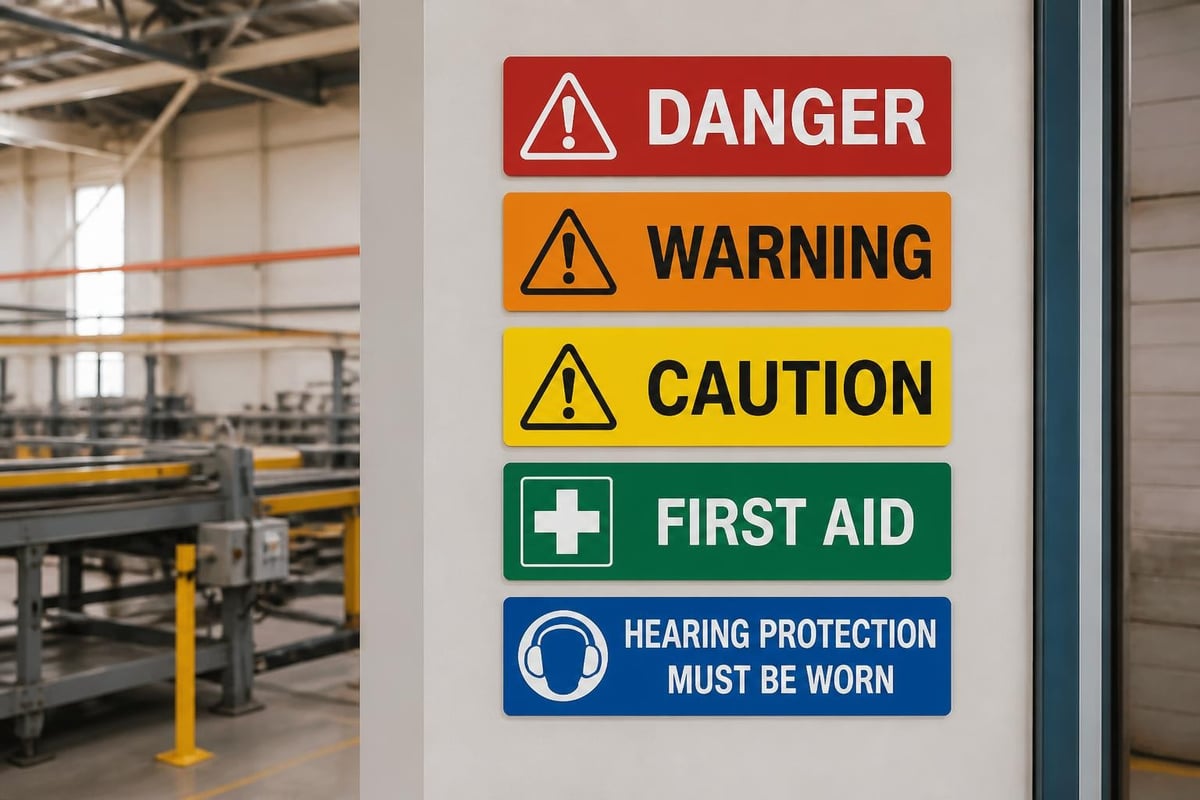
OSHA requirements and ANSI Z535 color standards provide detailed specifications for safety signage design and implementation. The signal word hierarchy establishes clear distinctions between danger, warning, and caution levels, helping workers instantly recognise the severity of potential hazards. Danger signs indicate immediate threats that could result in death or serious injury, whilst warning signs communicate hazards that could potentially cause death or serious injury. Caution signs address situations that might result in minor or moderate injury.
Colour Coding and Visual Hierarchy
The strategic use of colour in safety signage transcends aesthetic considerations-it delivers instant recognition and appropriate response. Red signals immediate danger and identifies fire protection equipment, whilst orange indicates dangerous parts of machines or energised equipment. Yellow warns of physical hazards such as slipping, tripping, or striking hazards. Understanding these colour rules and placement requirements ensures signage communicates effectively without causing confusion.
| Signal Word | Colour | Meaning | Typical Applications |
|---|---|---|---|
| Danger | Red/Black/White | Immediate hazard, death or serious injury likely | High voltage, confined spaces, toxic materials |
| Warning | Orange/Black | Potential hazard, death or serious injury possible | Moving machinery, chemical exposure, height risks |
| Caution | Yellow/Black | Moderate hazard, minor to moderate injury possible | Wet floors, low clearance, step hazards |
| Notice | Blue/White | General information, no injury risk | Operating procedures, directions, policies |
Additional specifications address design elements such as rounded corners rather than sharp edges, ensuring signs themselves don't create hazards. The specifications for design features extend to typography, spacing, and pictogram clarity, all contributing to immediate comprehension in high-stress situations.
Types of Safety Signage and Their Applications
Different workplace environments demand specialised safety signage solutions tailored to specific hazards and operational requirements. Understanding the various categories helps organisations select appropriate signage for comprehensive hazard communication.
Mandatory and Prohibition Signs
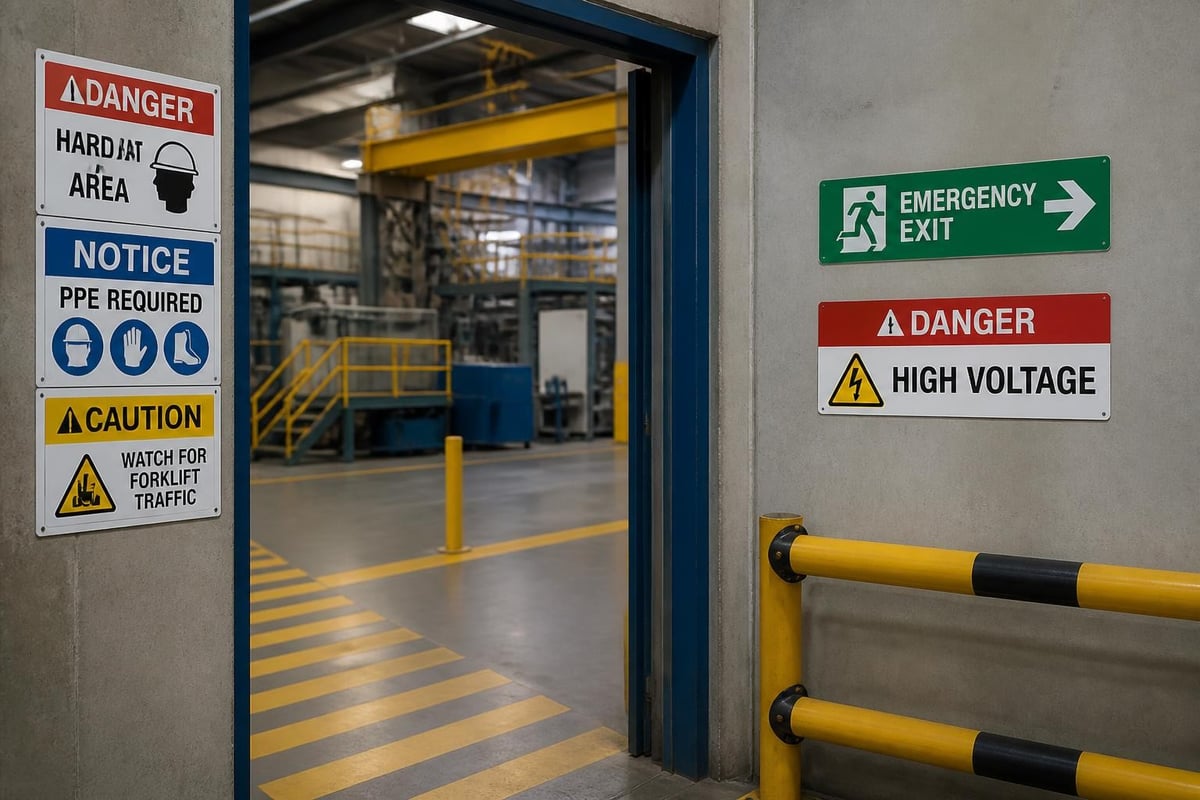
Mandatory signs communicate required actions or the use of personal protective equipment (PPE). These typically feature blue backgrounds with white symbols, instructing workers to wear hard hats, safety glasses, gloves, or other protective gear. Prohibition signs, conversely, use red circles with diagonal lines to indicate forbidden actions such as "No Smoking" or "No Entry." Together, these create clear behavioural expectations that reduce risk exposure.
Emergency and Fire Safety Signs
Emergency signage guides evacuation procedures and identifies critical safety equipment. Exit signs, assembly points, and emergency shower locations must be clearly marked and illuminated where necessary. Fire safety signage identifies extinguishers, hoses, alarms, and escape routes. These signs often incorporate photoluminescent materials that remain visible during power failures, ensuring guidance when it's needed most.
South African businesses must consider safety signage compliance requirements specific to local regulations whilst maintaining international standards. This dual compliance approach ensures protection across diverse operational contexts.
Hazard Warning Signs
Warning signs address specific dangers inherent to particular work areas or processes. Chemical storage areas require hazard communication signs detailing substance classifications and emergency procedures. Construction sites need signs warning of overhead loads, excavation dangers, and heavy machinery operation. Manufacturing facilities must identify pinch points, high temperatures, and moving parts.
- Chemical hazards: Flammable materials, corrosive substances, toxic agents
- Physical hazards: High voltage, radiation, extreme temperatures, noise levels
- Biological hazards: Biohazardous materials, contaminated areas, infection risks
- Environmental hazards: Slippery surfaces, uneven ground, confined spaces
Design Principles for Effective Safety Signage
Visual effectiveness determines whether safety signage successfully communicates its intended message. Recent research on machine learning algorithms predicting safety sign comprehension reveals that cognitive sign features and socio-demographic factors significantly influence understanding. This underscores the importance of universal design principles that transcend language barriers and cultural differences.
Visibility and Readability
Sign size must correspond to viewing distance, ensuring workers can read critical information from their typical working positions. OSHA signage requirements specify sign types, sizes, and symbols that maintain readability under various lighting conditions and environmental factors. Contrast ratios between background and text or symbols should exceed minimum standards, particularly in challenging viewing environments.
Typography selection impacts instant recognition. Sans-serif fonts provide superior readability at distance, whilst letter height ratios ensure clarity. Pictograms supplement text, providing universal communication that transcends language barriers-particularly valuable in diverse workplaces with multilingual staff.
Strategic Placement and Installation
Proper placement maximises safety signage effectiveness whilst ensuring compliance with regulatory requirements. Signs must be positioned at eye level where possible, installed securely to prevent displacement, and maintained in clean, undamaged condition. For exploring broader industry-specific signage solutions, understanding placement strategies across different sectors provides valuable insights.
Key placement considerations include:
- Positioning signs before workers encounter hazards
- Ensuring clear sightlines without obstruction
- Installing at decision points where actions must be taken
- Providing adequate illumination for 24-hour visibility
- Protecting signs from environmental damage whilst maintaining visibility
Material Selection and Durability Considerations
Environmental conditions dictate appropriate materials for safety signage longevity and continued effectiveness. Outdoor installations face UV exposure, temperature fluctuations, and moisture that can degrade inferior materials. Indoor applications must withstand cleaning chemicals, physical contact, and specific industry conditions such as extreme temperatures or chemical exposure.
Common Safety Signage Materials
Different materials offer distinct advantages depending on application requirements. Aluminium provides excellent durability for outdoor installations, resisting corrosion whilst maintaining appearance over extended periods. Rigid plastics offer lightweight alternatives with good weather resistance and easy cleaning. Reflective materials enhance visibility in low-light conditions, particularly valuable for traffic control and after-hours operations.
| Material | Durability | Best Applications | Lifespan |
|---|---|---|---|
| Aluminium | Excellent | Outdoor, industrial, permanent installations | 10-15 years |
| Rigid Plastic | Very Good | Indoor, semi-permanent, moderate conditions | 5-10 years |
| Self-Adhesive Vinyl | Good | Indoor, temporary, smooth surfaces | 3-5 years |
| Corflute | Moderate | Temporary, construction sites, events | 1-3 years |
For organisations requiring more advanced signage solutions, understanding material properties enables informed decisions balancing budget constraints with performance requirements.
Environmental and Sustainability Factors
Modern safety signage increasingly incorporates sustainable materials and production methods without compromising effectiveness. Recycled aluminium substrates, eco-friendly inks, and energy-efficient illumination options align safety requirements with environmental responsibility. Organisations committed to sustainability can achieve compliance whilst reducing environmental impact through thoughtful material selection.
Maintenance programmes preserve signage effectiveness throughout its service life. Regular inspections identify fading, damage, or obscured visibility requiring corrective action. Long-term signage maintenance strategies protect safety investments whilst ensuring continuous compliance and protection.
Implementation and Compliance Strategies
Successful safety signage programmes extend beyond purchasing and installing signs. Comprehensive implementation requires systematic planning, employee training, and ongoing maintenance to achieve intended safety outcomes.
Conducting Workplace Safety Audits
Effective programmes begin with thorough workplace assessments identifying all hazards requiring communication. These audits evaluate existing signage for compliance, effectiveness, and condition whilst identifying gaps in hazard communication. Systematic documentation creates baselines for improvement and demonstrates due diligence during regulatory inspections.
Professional safety auditors or qualified internal teams should:
- Map all workplace hazards requiring signage
- Evaluate current signage against OSHA and ANSI standards
- Assess visibility, readability, and comprehension
- Document deficiencies requiring remediation
- Prioritise improvements based on risk severity
Employee Training and Awareness
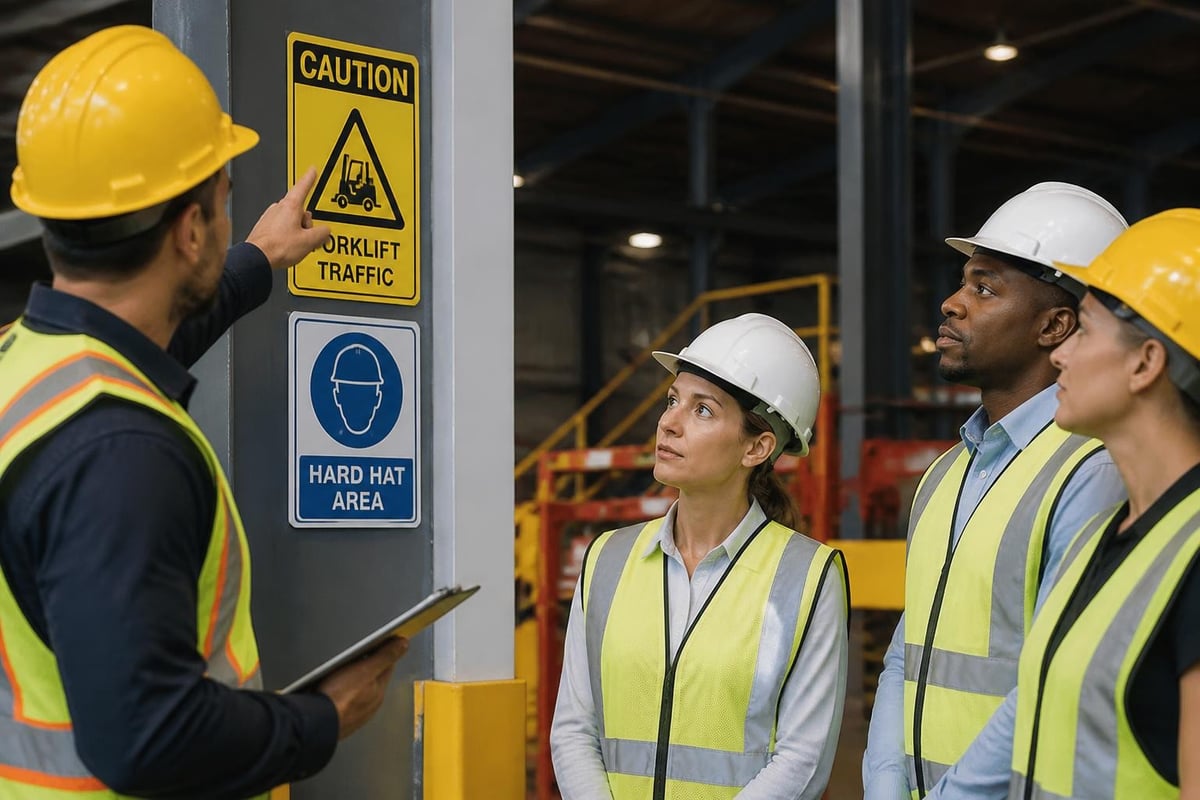
Safety signage only protects workers who understand and respond to its messages. Comprehensive training programmes educate employees about signal word meanings, colour codes, and appropriate responses to different sign types. Regular refresher training reinforces these concepts whilst introducing new signage as workplaces evolve.
Training effectiveness improves through practical demonstrations connecting signage to actual workplace hazards. Interactive sessions where employees identify signs and discuss appropriate responses build comprehension superior to passive instruction. Testing comprehension ensures workers genuinely understand rather than simply acknowledging training completion.
Digital Integration and Modern Solutions
Contemporary safety programmes increasingly incorporate digital elements complementing traditional signage. Digital Signage solutions enable dynamic hazard communication that adapts to changing conditions, displays emergency instructions during incidents, and provides multilingual messages supporting diverse workforces. These systems integrate with building management platforms, triggering alerts coordinated with visual warnings.
Digital integration particularly benefits facilities with variable hazards or temporary conditions requiring immediate communication. Construction sites, manufacturing plants with changing production lines, and facilities conducting maintenance operations benefit from adaptable safety messaging that traditional static signs cannot provide.
Industry-Specific Safety Signage Requirements
Different sectors face unique hazards demanding specialised safety signage approaches. Understanding industry-specific requirements ensures comprehensive protection tailored to particular operational contexts.
Construction and Industrial Settings
Construction sites present dynamic hazards requiring extensive safety signage systems. These environments need signs warning of excavations, overhead work, heavy equipment operation, and temporary hazards created during construction activities. Mobile equipment requires additional warnings communicating blind spots, swing radii, and reversing paths.
Industrial facilities face machinery hazards, chemical exposures, and process-specific dangers. Lock-out/tag-out procedures require dedicated signage communicating equipment isolation requirements. Chemical storage areas must display hazard classifications, emergency procedures, and personal protective equipment requirements complying with globally harmonised system (GHS) standards.
Retail and Corporate Environments
Retail spaces prioritise customer safety alongside employee protection. Public-facing safety signage must communicate clearly to visitors unfamiliar with facilities whilst maintaining aesthetic appeal appropriate for customer environments. Emergency exits, fire equipment, and first aid stations require prominent identification without creating institutional atmospheres that deter shoppers.
Corporate offices face fewer immediate physical hazards but still require emergency egress signage, fire safety equipment identification, and warnings for specific areas such as server rooms or mechanical spaces. These environments balance safety requirements with professional aesthetics that reinforce brand identity.
Pharmaceutical and Healthcare Facilities
Pharmaceutical and healthcare environments demand rigorous safety signage addressing biological hazards, radiation exposure, controlled substances, and sterile areas. These facilities must comply with industry-specific regulations beyond general OSHA requirements, incorporating colour coding and symbols specific to healthcare settings.
Contamination control areas require signage establishing gowning requirements, hand hygiene protocols, and restricted access zones. Laboratory spaces need chemical hazard warnings, biosafety level indicators, and emergency equipment identification. The comprehensive signage solutions available for different sectors demonstrate how tailored approaches address unique industry challenges.
Measuring Safety Signage Effectiveness
Installing compliant safety signage represents the beginning rather than the conclusion of effective programmes. Measuring actual effectiveness ensures signage achieves intended safety outcomes rather than simply satisfying regulatory checklists.
Incident Analysis and Prevention
Tracking workplace incidents relative to safety signage locations reveals effectiveness gaps. If accidents occur despite appropriate signage, investigation should determine whether signs were visible, comprehensible, and positioned to provide adequate warning. This analysis identifies opportunities for improved placement, enhanced visibility, or supplementary communication methods.
Effectiveness metrics include:
- Incident rates in areas with specific signage types
- Near-miss reports indicating warning effectiveness
- Employee comprehension testing results
- Compliance observation during routine operations
- Maintenance records indicating visibility issues
Continuous Improvement Processes
Safety programmes evolve through systematic improvement addressing identified weaknesses. Regular reviews incorporating employee feedback, incident analysis, and regulatory updates maintain programme relevance and effectiveness. Worker input proves particularly valuable as frontline personnel observe signage effectiveness during daily operations.
Updates to regulations and compliance requirements necessitate periodic signage audits ensuring continued conformance with evolving standards. Proactive organisations anticipate regulatory changes rather than reacting after implementation deadlines.
Cost Considerations and Return on Investment
Safety signage represents both regulatory compliance expense and strategic investment in accident prevention. Understanding cost factors enables budget planning whilst recognising that inadequate safety communication creates far greater expenses through accidents, regulatory penalties, and liability exposure.
Initial Investment Components
Comprehensive safety signage programmes involve costs beyond sign purchase. Professional assessment identifying signage needs, design services ensuring compliance and effectiveness, manufacturing to appropriate standards, and professional installation all contribute to total investment. However, these upfront expenses prevent far greater costs associated with inadequate safety communication.
Quality manufacturing ensures longevity justifying initial investment through extended service life. The cost considerations for commercial signage provide frameworks for budgeting whilst maintaining appropriate quality standards that protect safety and compliance.
Long-Term Value and Loss Prevention
Safety signage prevents accidents that generate enormous direct and indirect costs. Medical expenses, lost productivity, equipment damage, regulatory penalties, increased insurance premiums, and litigation expenses dwarf signage investment. Additionally, accidents damage employee morale, corporate reputation, and operational continuity.
Calculating return on investment requires comparing signage costs against prevented incident expenses. Even modest accident prevention justifies substantial safety signage investment, particularly when considering that single serious incidents often exceed total signage programme costs by orders of magnitude.
Future Trends in Safety Signage Technology
Safety communication continues evolving through technological advancement and enhanced understanding of human factors in hazard recognition. Emerging trends promise improved effectiveness whilst maintaining compliance with established standards.
Augmented Reality and Smart Signage
Augmented reality applications overlay digital safety information onto physical environments through mobile devices or smart glasses. Research into neural correlates of augmented reality safety warnings using EEG analysis demonstrates how these technologies affect situational awareness and cognitive performance. Whilst traditional signage remains essential, AR supplements enhance training and provide additional context during complex operations.
Smart signage systems incorporate sensors detecting environmental conditions and adapting messages accordingly. These systems can intensify warnings during detected hazard conditions, trigger alerts coordinated with other safety systems, and provide real-time data about sign visibility and function.
Improved Materials and Visibility Technologies
Advanced materials extend signage lifespan whilst improving visibility under challenging conditions. Photoluminescent technology continues advancing, providing longer glow periods and brighter illumination without electrical power. Reflective materials incorporate wider viewing angles and enhanced performance under varied lighting conditions.
Sustainable materials meeting safety requirements whilst reducing environmental impact align with corporate responsibility initiatives. Biodegradable substrates for temporary applications, recycled content in permanent signage, and energy-efficient illumination options demonstrate how sustainability complements rather than compromises safety.
Implementing comprehensive safety signage programmes protects people, ensures regulatory compliance, and demonstrates organisational commitment to workplace safety across all operational contexts. From material selection to strategic placement, every element contributes to creating environments where hazards are clearly communicated and appropriately addressed. Signs4SA delivers professional safety signage solutions tailored to your industry's specific requirements, combining regulatory expertise with manufacturing excellence to protect your workforce and operations. Contact our team today to discuss how bespoke safety signage can enhance protection whilst ensuring full compliance with applicable standards.