


Signage Business: Essential Guide for Success in 2026
The signage business represents one of the most dynamic sectors in commercial visual communications, combining creative design, manufacturing expertise, and strategic marketing solutions. As businesses across every industry recognise the critical role of effective signage in brand visibility and customer engagement, demand for professional signage solutions continues to expand. Whether you're considering entering this field or looking to enhance your existing operations, understanding the core principles, market dynamics, and operational requirements proves essential for sustainable success in this competitive industry.
Understanding the Signage Business Landscape
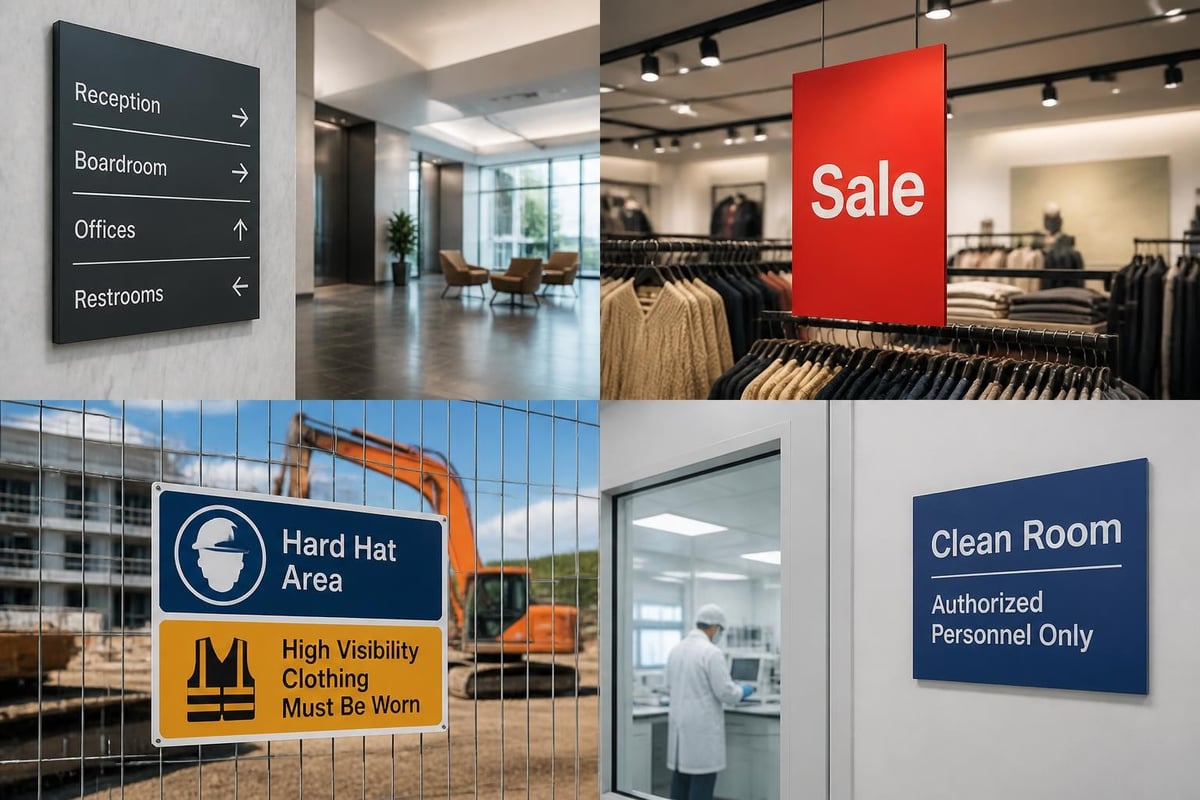
The modern signage business encompasses far more than simple sign production. Today's successful operations deliver comprehensive visual communication solutions that integrate traditional craftsmanship with cutting-edge technology. From corporate identity programmes to retail wayfinding systems, pharmaceutical compliance signage to construction site displays, the industry serves diverse sectors with specialised requirements.
Market research from the Sign Research Foundation demonstrates that effective signage generates measurable returns on investment, with on-premise signs often representing the most cost-effective form of continuous advertising. This data drives demand across all business sectors, creating opportunities for signage providers who can deliver quality, innovation, and reliability.
Market Sectors and Opportunities
Different industries present unique signage requirements and profitability profiles:
- Corporate clients require brand-consistent identity programmes, reception signage, wayfinding systems, and compliance displays
- Retail businesses depend on promotional signage, window graphics, point-of-sale displays, and illuminated channel letters
- Construction companies need safety signage, site boards, directional systems, and regulatory compliance solutions
- Pharmaceutical facilities demand strict compliance with health and safety regulations alongside professional presentation
Each sector presents distinct challenges regarding materials, regulations, installation requirements, and service expectations. Successful signage businesses often specialise in two or three sectors initially, developing deep expertise before expanding their service portfolio.
Essential Business Infrastructure and Operations
Establishing a thriving signage business requires careful planning across multiple operational areas. The U.S. Small Business Administration provides comprehensive guidance on business formation, though requirements vary significantly between jurisdictions and countries.
| Operational Area | Key Requirements | Investment Priority |
|---|---|---|
| Workshop Space | Climate-controlled area, adequate power, ventilation | High |
| Production Equipment | Printers, cutters, routers, welding equipment | High |
| Design Software | Adobe Creative Suite, CAD programmes, rendering tools | Medium |
| Vehicle Fleet | Installation trucks, service vehicles, branding | Medium |
| Safety Equipment | PPE, scaffolding, harnesses, emergency equipment | High |
| Quality Systems | Testing equipment, colour management, inspection protocols | Medium |
Your initial infrastructure decisions directly impact production capacity, quality consistency, and profitability margins. Many successful operations begin with outsourced production for specialist items whilst building core capabilities in-house.
Regulatory Compliance and Documentation
Operating a signage business requires navigating complex regulatory frameworks. Businesses must maintain proper documentation for tax purposes, as outlined in IRS Publication 583, alongside industry-specific compliance requirements.
Critical compliance areas include:
- Building and planning permissions for permanent signage installations
- Health and safety regulations governing manufacturing and installation
- Electrical certification for illuminated and digital signage systems
- Accessibility standards such as those detailed in the ADA design standards
- Environmental regulations concerning materials, waste disposal, and emissions
Understanding signage regulations and permits in your operating region prevents costly mistakes and project delays. Establishing relationships with local authorities, building inspectors, and certification bodies streamlines approval processes.
Design and Production Excellence
The heart of any successful signage business lies in its ability to translate client vision into tangible, effective visual communication. This requires balancing aesthetic appeal with functional performance, durability, and cost-effectiveness.
Superior design capabilities differentiate premium providers from basic fabricators. Understanding the psychology of colour in signage design enables designers to create solutions that genuinely influence customer behaviour and brand perception.
Material Selection and Innovation
Modern signage businesses work with an extensive palette of materials, each offering specific advantages:
Traditional Materials:
- Aluminium composite panels for durability and weather resistance
- Acrylic for illuminated applications and vibrant colour rendering
- Vinyl for cost-effective graphics and temporary applications
- Stainless steel for premium applications requiring longevity
Innovative Solutions:
- LED technology for energy-efficient illumination
- Digital displays offering dynamic content capabilities
- Sustainable materials responding to environmental concerns
- Smart signage incorporating sensors and interactive elements
Staying current with material innovations and trends positions your signage business as a forward-thinking partner rather than a commodity supplier. Investment in modern Digital Signage capabilities has become increasingly essential, with clients across all sectors seeking dynamic content solutions.

Business Development and Client Acquisition
Sustainable growth in the signage business requires strategic approaches to marketing, sales, and client relationship management. Unlike consumer-focused businesses, signage providers typically engage in longer sales cycles with multiple stakeholders and complex decision-making processes.
Marketing Strategies That Generate Qualified Leads
Your own signage serves as your most powerful marketing tool. Every installed project becomes a portfolio piece visible to potential clients. Successful operators leverage this through:
- Subtle branding on installations (where permitted)
- Project documentation for digital marketing and case studies
- Photography and videography showcasing completed installations
- Client testimonials highlighting specific challenges solved
Digital presence proves equally critical. The International Sign Association provides industry research demonstrating that decision-makers increasingly research signage providers online before making contact. Comprehensive industry insights published regularly establish expertise and attract organic search traffic.
Pricing Strategy and Profitability
Developing profitable pricing requires understanding all cost components:
- Materials and consumables including waste factors
- Direct labour for design, production, and installation
- Equipment depreciation and maintenance costs
- Overhead allocation covering rent, utilities, administration
- Profit margin appropriate to project complexity and risk
Many signage businesses struggle with underpricing, particularly when competing against low-quality providers. Educating clients about the importance of professional signage installation and long-term value proposition justifies premium pricing.
Technology Integration and Digital Transformation
The signage business has experienced remarkable technological evolution over recent years. Digital tools now permeate every aspect of operations, from initial client consultation through to project completion and ongoing maintenance.
Modern businesses leverage technology across multiple touchpoints:
| Technology Area | Applications | Business Impact |
|---|---|---|
| Design Software | 3D rendering, virtual mockups, client presentations | Reduced revisions, faster approvals |
| Production Automation | CNC routing, automated printing, robotic finishing | Higher precision, lower labour costs |
| Project Management | Scheduling, resource allocation, progress tracking | Improved efficiency, deadline reliability |
| Client Portals | Approval workflows, proofing, order tracking | Enhanced transparency, reduced administration |
| Maintenance Systems | Service scheduling, fault reporting, preventative maintenance | Recurring revenue, client retention |
Investment in digital signage capabilities opens lucrative recurring revenue streams through content management services, software licensing, and ongoing technical support.

Quality Management and Client Satisfaction
Reputation represents the most valuable asset in the signage business. A single poorly executed project can damage relationships built over years, whilst consistently excellent delivery generates referrals and repeat business.
Quality Control Protocols
Implementing systematic quality assurance throughout production prevents costly errors:
- Pre-production verification confirming all specifications, materials, and client approvals
- In-process inspection at critical manufacturing stages
- Pre-installation testing of electrical components, structural integrity, and finish quality
- Post-installation review ensuring correct placement, appearance, and functionality
- Client walkthrough documenting acceptance and identifying any concerns
These protocols prove particularly important for large-format installations like Pylon Signage, where errors become expensive to rectify after installation.
Ongoing Service and Maintenance
Forward-thinking signage businesses recognise that installation represents the beginning, not the end, of the client relationship. Offering comprehensive signage maintenance programmes creates predictable recurring revenue whilst ensuring client signage remains effective.
Maintenance services typically include:
- Regular cleaning and inspection
- Lamp and LED replacement
- Electrical system testing
- Structural integrity assessment
- Emergency repair response
- Compliance certification updates
Scaling Operations and Geographic Expansion
As your signage business matures, strategic decisions about growth become increasingly important. Expansion requires careful consideration of market capacity, competitive positioning, and operational readiness.
Diversification Strategies
Successful businesses often pursue multiple growth vectors simultaneously:
- Vertical integration by bringing previously outsourced capabilities in-house
- Service expansion into complementary areas like vehicle branding
- Geographic coverage serving clients across broader territories
- Sector specialisation developing deep expertise in profitable niches
- Product innovation pioneering new signage solutions and technologies
Each strategy presents unique advantages and risks. Geographic expansion, for instance, requires establishing installation capabilities in new regions whilst maintaining quality standards and brand consistency. Understanding safety signage compliance across different jurisdictions becomes crucial when operating nationally.
Building a Skilled Team
The signage business depends fundamentally on skilled people. As you scale, recruitment, training, and retention become critical success factors. Key roles typically include:
Design and pre-production:
- Graphic designers with signage specialisation
- Technical specifiers understanding materials and methods
- Estimators capable of accurate costing
Manufacturing and installation:
- Fabricators with metalworking and finishing skills
- Electrical technicians for illuminated systems
- Installation teams with height safety certification
Business support:
- Project managers coordinating complex installations
- Account managers maintaining client relationships
- Administrative staff handling permits and compliance
Investing in continuous professional development ensures your team remains current with evolving technologies, regulations, and best practices. The Out of Home Advertising Association provides valuable resources for teams working on large-format and digital display projects.
Financial Management and Sustainable Growth
Profitable operation requires disciplined financial management beyond simply winning projects and completing installations. Cash flow management, in particular, challenges many signage businesses due to the timing mismatch between material purchases, labour costs, and client payments.
Key Financial Metrics
Successful operators monitor several critical performance indicators:
- Gross profit margin by project type and client sector
- Utilisation rates for equipment and skilled personnel
- Project completion time against estimates and schedules
- Client acquisition cost across different marketing channels
- Lifetime client value including repeat work and referrals
- Working capital requirements for typical project portfolios
Understanding these metrics enables data-driven decisions about pricing, capacity investment, and business development priorities.
Funding Growth Initiatives
Expanding a signage business often requires significant capital investment in equipment, vehicles, premises, or acquisitions. Traditional funding sources include bank loans, equipment finance, and investor capital, each with distinct advantages and requirements.
Developing relationships with commercial lenders familiar with manufacturing businesses proves valuable. Demonstrating consistent profitability, strong client relationships, and professional financial management facilitates access to growth capital on favourable terms.
Risk Management and Business Resilience
Operating a signage business involves managing various risks, from workplace safety to client disputes, economic downturns to technological obsolescence. Proactive risk management protects both your business and your clients.
Insurance and Legal Protection
Comprehensive insurance coverage proves essential:
- Public liability protecting against third-party injury or property damage
- Professional indemnity covering design errors or specification failures
- Employers' liability meeting legal requirements for staff protection
- Tools and equipment insurance against theft or damage
- Business interruption providing cash flow during unexpected closures
Regular insurance reviews ensure coverage remains adequate as your business evolves and project scale increases.
Contractual Protections
Well-drafted contracts protect both parties whilst clarifying expectations. Essential contract elements include:
- Detailed scope of work with specifications and drawings
- Payment schedules aligned with project milestones
- Variation procedures for changes during production
- Warranty terms covering materials and workmanship
- Limitation of liability clauses protecting against unreasonable claims
- Dispute resolution procedures avoiding costly litigation
Legal advice when developing contract templates proves a worthwhile investment, particularly for larger projects or unfamiliar client sectors.
Building a successful signage business requires combining creative vision with operational excellence, technical expertise with commercial acumen, and innovative thinking with disciplined execution. As the industry continues evolving through technological advancement and changing client expectations, businesses that invest in quality, embrace innovation, and prioritise client relationships position themselves for sustainable growth. Whether you're planning corporate identity programmes, retail promotions, construction signage, or pharmaceutical compliance solutions, partnering with experienced professionals ensures exceptional results. Signs4SA delivers comprehensive signage solutions backed by skilled experts, cutting-edge technology, and a proven national footprint, transforming your vision into powerful visual communication that drives real business results.