


Big Outdoor Signs: Professional Guide for 2026
Big outdoor signs represent one of the most powerful marketing investments a business can make in 2026, offering unmatched visibility and continuous brand exposure. Whether you're establishing a retail location, marking a corporate headquarters, or guiding customers to your premises, these substantial advertising structures deliver measurable returns through constant audience reach. Understanding the strategic considerations behind size, materials, placement, and design ensures your investment performs optimally for years to come.
Understanding the Strategic Value of Large-Format Signage
The effectiveness of big outdoor signs stems from their ability to command attention in environments saturated with visual stimuli. Unlike digital advertisements that disappear after seconds or print media with limited circulation, these permanent fixtures work continuously, creating thousands of impressions daily without ongoing media costs.
Key performance metrics demonstrate their value:
- Average viewing distance of 150-300 metres for major installations
- Estimated 50,000-70,000 daily impressions in high-traffic locations
- Return on investment typically achieved within 18-24 months
- Brand recall rates exceeding 65% for well-designed installations
Location analysis forms the foundation of successful deployment. High-traffic corridors, major intersections, and elevated positions near commercial centres offer maximum exposure, whilst placement near decision points influences immediate customer action.
Size Specifications and Visibility Standards
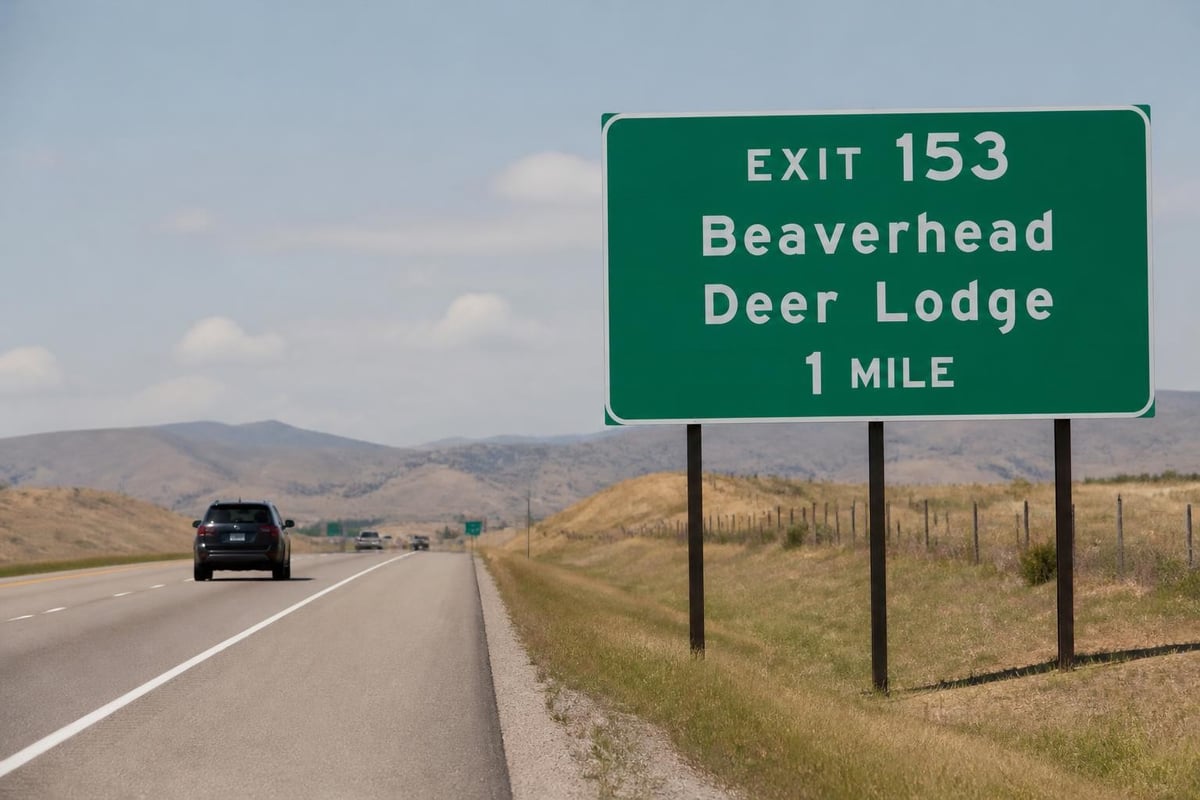
Determining appropriate dimensions requires careful analysis of viewing distances, speed of passing traffic, and surrounding visual competition. Industry standards suggest minimum letter heights of 300mm for every 30 metres of viewing distance, though big outdoor signs often exceed these baselines to ensure dominance.
| Viewing Distance | Minimum Letter Height | Recommended Sign Width | Typical Application |
|---|---|---|---|
| 30-50 metres | 300-500mm | 3-5 metres | Retail parks, business estates |
| 50-100 metres | 500-900mm | 5-8 metres | Highway-adjacent locations |
| 100-200 metres | 900-1500mm | 8-15 metres | Major motorway positions |
| 200+ metres | 1500mm+ | 15+ metres | Landmark installations |
Environmental factors influence these calculations significantly. Urban settings with slower traffic allow smaller dimensions, whilst motorway installations demand substantially larger formats to ensure legibility at speed.
Material Selection for Durability and Performance
Material choices directly impact longevity, maintenance requirements, and visual impact. South Africa's diverse climate zones present unique challenges, from coastal salt exposure to inland UV intensity, making material selection critical for performance.
Primary Construction Materials
Aluminium composite panels dominate the market for good reason. Lightweight yet rigid, these panels resist warping, offer excellent printability, and maintain colour fastness under harsh sunlight. Their thermal expansion properties suit temperature fluctuations without structural compromise.
Steel frameworks provide essential structural integrity for larger installations. Galvanised and powder-coated options resist corrosion whilst supporting substantial face areas and withstanding wind loads exceeding 150 km/h.
High-density polyethylene (HDPE) offers advantages for specific applications, particularly where impact resistance matters. Shopping centres and high-traffic pedestrian areas benefit from its durability, though UV stabilisation remains essential for colour retention.
For businesses seeking maximum impact, Pylon Signage combines structural engineering with visual prominence, creating freestanding monuments that establish powerful brand presence whilst meeting stringent safety standards.
Regulatory Compliance and Permitting Requirements
Navigating municipal regulations proves essential before installation. South African municipalities maintain specific bylaws governing size restrictions, setback requirements, and illumination standards that vary significantly between jurisdictions.
Standard regulatory considerations include:
- Maximum height restrictions (typically 6-12 metres in commercial zones)
- Setback distances from property boundaries
- Illumination intensity limits and dark-sky compliance
- Wind load certifications and structural engineering approvals
- Environmental impact assessments for sensitive areas
The Manual on Uniform Traffic Control Devices provides internationally recognised standards that inform local regulations, particularly for signs visible from public roadways. Compliance ensures not only legal operation but also optimal safety for pedestrians and motorists.
Heritage and Aesthetic Considerations
Conservation areas and heritage zones impose additional restrictions designed to preserve architectural character. These limitations often cap sizes, restrict materials to traditional options, and prohibit illumination entirely. Early consultation with municipal heritage departments prevents costly redesigns.
Working with experienced signage manufacturers who understand local requirements streamlines approvals and ensures compliance from initial design through final installation.
Design Principles for Maximum Impact
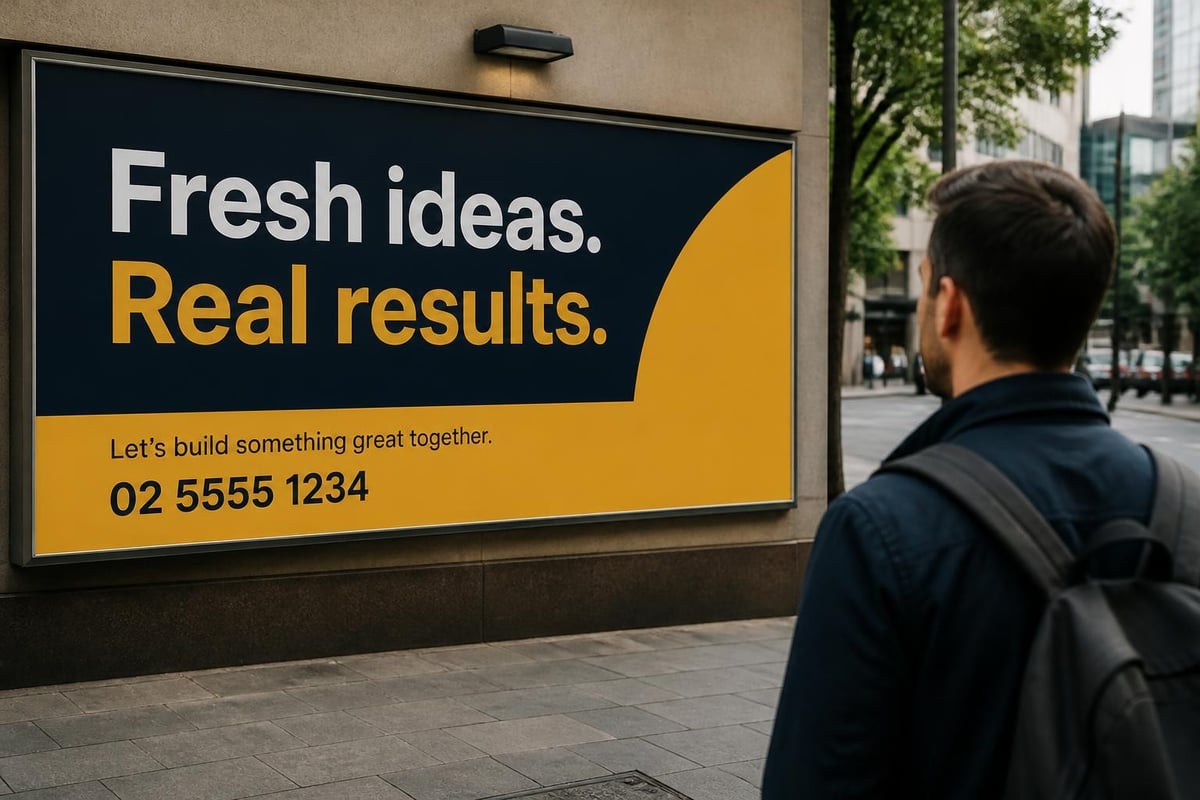
Effective big outdoor signs balance immediate recognition with sustained visual appeal. Simplicity trumps complexity at viewing distances exceeding 50 metres, where detail becomes indistinguishable and strong shapes carry messages most effectively.
Typography and Readability
Sans-serif typefaces with uniform stroke weights deliver superior legibility. Avoid condensed or extended variations that compromise recognition. Letter spacing should increase proportionally with viewing distance, with 15-20% of letter height recommended for optimal clarity.
Colour contrast ratios matter critically:
- Light-on-dark combinations (white on blue, yellow on black) offer 70% better readability than dark-on-light
- Complementary colours create visual vibration that reduces comprehension
- Corporate colour schemes may require adjustment for outdoor applications
- Reflective or retroreflective materials enhance night visibility without illumination
Brand consistency remains important, yet outdoor applications sometimes necessitate simplification. Complex logos with fine detail should be redrawn specifically for large-format reproduction, maintaining brand essence whilst ensuring recognition.
Illumination Technologies and Energy Efficiency
Modern LED systems have revolutionised outdoor sign illumination, delivering brilliant, even lighting whilst consuming 75% less energy than traditional fluorescent or neon options. This efficiency translates into operational savings exceeding R15,000 annually for large installations.
Available illumination methods include:
- Front-lit systems: External LED floods highlighting face graphics
- Cabinet illumination: Internal lighting through translucent panels
- Halo/reverse-lit: LEDs creating dramatic glow effects behind dimensional letters
- Edge-lit acrylic: Energy-efficient option for thinner profile requirements
Timer controls and photocells optimise energy consumption by adjusting brightness based on ambient conditions and operating only during effective hours. Smart systems now integrate with building management platforms, enabling remote monitoring and diagnostic capabilities.
For retailers operating extended hours, light box signs offer consistent illumination that maintains visibility regardless of natural light conditions, ensuring brand presence throughout operating periods.
Installation Methods and Structural Engineering
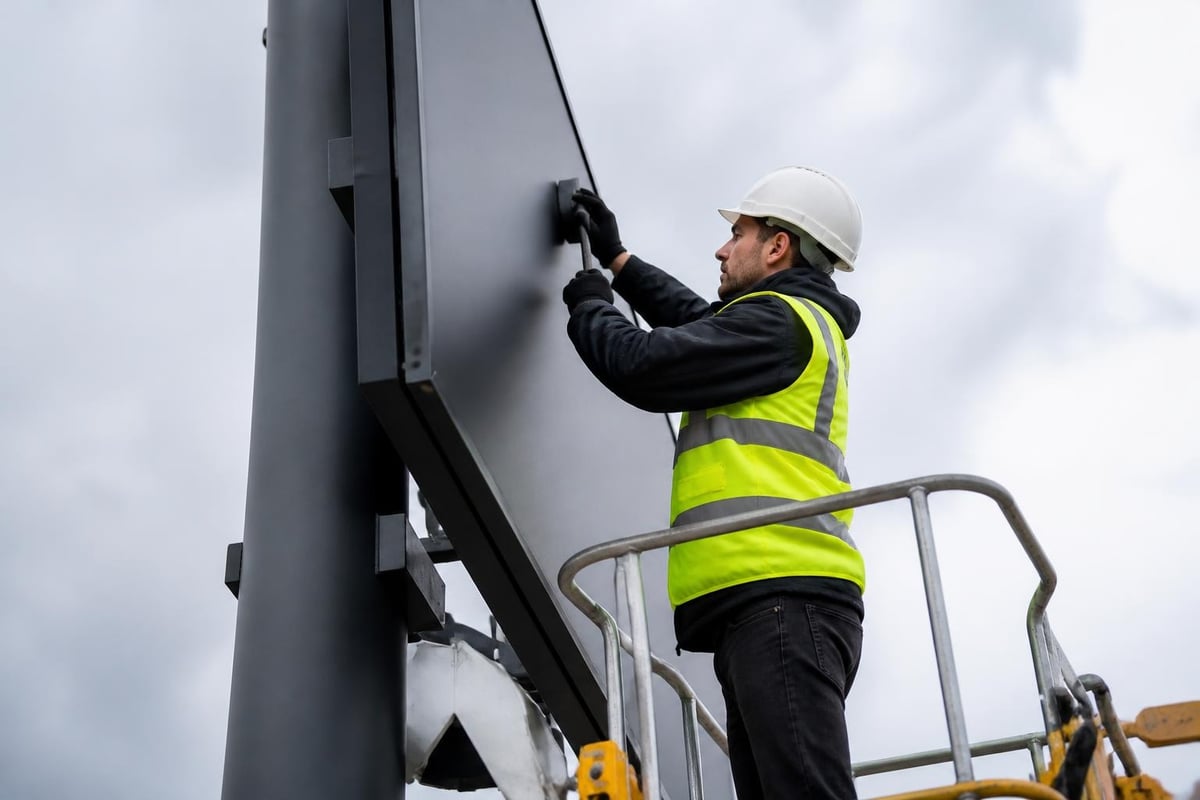
Professional installation begins with comprehensive site assessment. Soil composition, wind exposure, seismic considerations, and proximity to utilities all influence mounting methodology and structural requirements.
Foundation Requirements
Ground-mounted big outdoor signs demand substantial foundations proportional to exposed surface area. Engineers calculate wind loading based on local meteorological data, typically designing for forces 20% above recorded maxima. Concrete foundations extending below frost lines (where applicable) prevent seasonal movement.
| Sign Face Area | Typical Foundation Depth | Concrete Volume | Anchor Bolt Specification |
|---|---|---|---|
| 10-20 m² | 1.5-2.0 metres | 2-3 m³ | M20 x 400mm |
| 20-40 m² | 2.0-2.5 metres | 3-5 m³ | M24 x 500mm |
| 40-60 m² | 2.5-3.0 metres | 5-8 m³ | M30 x 600mm |
| 60+ m² | 3.0+ metres | 8+ m³ | Engineered specific |
Building-mounted installations require structural analysis confirming adequate load-bearing capacity. Facade attachments distribute weight through multiple anchor points, often penetrating to structural members rather than relying on cladding alone.
The U.S. Forest Service sign design guidance offers detailed specifications for materials and installation methods that ensure longevity in challenging outdoor environments, principles equally applicable to commercial installations.
Maintenance Strategies for Long-Term Performance
Proactive maintenance preserves appearance and extends operational life significantly. Neglected big outdoor signs deteriorate rapidly, with visible degradation undermining the professional image they're meant to project.
Recommended maintenance schedule:
- Monthly inspections: Check illumination functionality, loose fasteners, and surface damage
- Quarterly cleaning: Remove accumulated dirt, pollution residue, and biological growth
- Annual professional service: Comprehensive electrical testing, structural assessment, and refinishing
- Bi-annual detailed inspection: Paint touch-ups, sealant replacement, corrosion treatment
Coastal installations require intensified schedules due to salt exposure accelerating corrosion. Monthly washing with fresh water removes salt deposits before they compromise protective coatings.
The City of San Diego's maintenance guidance provides comprehensive protocols for extending sign life through systematic care, emphasising preventive approaches over reactive repairs.
Common Deterioration Patterns
Understanding typical failure modes enables early intervention. UV degradation manifests as colour fading and surface chalking, typically emerging after 5-7 years without protective coatings. Water infiltration around seams leads to internal corrosion and electrical failures, often preventable through proper sealant maintenance.
Wind damage generally affects inadequately engineered installations or those where foundation settlement has occurred. Annual structural inspections identify developing issues before catastrophic failure occurs.
Return on Investment and Performance Measurement
Quantifying the effectiveness of big outdoor signs requires establishing clear measurement frameworks. Unlike digital marketing with instant analytics, outdoor advertising delivers value through sustained exposure and brand building over extended periods.
Calculating Actual Returns
Direct measurement approaches include:
- Traffic counting studies establishing daily impression volumes
- Customer surveys identifying signage as discovery method
- Promotional code tracking when signs include specific offers
- Geographic analysis of customer origins relative to sign locations
Industry benchmarks suggest quality installations in premium locations generate cost-per-thousand-impressions (CPM) ranging from R2-R8, dramatically lower than most broadcast or digital alternatives. A R250,000 installation viewed by 60,000 daily observers delivers approximately 22 million annual impressions, yielding a CPM under R12 in year one and declining annually thereafter.
Secondary benefits include enhanced property values, improved wayfinding reducing customer frustration, and establishment of market presence that competitors must counter. Retailers near prominent big outdoor signs report 15-25% higher foot traffic than comparable locations without major signage.
Future Trends Shaping Outdoor Advertising
Technology integration continues transforming traditional static installations into dynamic communication platforms. Digital displays now rival print quality whilst offering message flexibility previously impossible with fixed graphics.
Emerging developments include:
- Dynamic content systems: Scheduled message rotation responding to time, weather, or traffic conditions
- Interactive elements: QR codes, NFC tags, and augmented reality triggers connecting physical signs to digital experiences
- Sustainability features: Solar power systems, recycled materials, and biodegradable components
- Integrated analytics: Camera-based traffic analysis and engagement measurement
Digital Signage solutions now offer outdoor-rated displays ranging from P10 to P1.8 pixel pitches, delivering crisp imagery visible in direct sunlight whilst maintaining energy efficiency through intelligent brightness control.
Environmental consciousness influences both materials and messaging strategies. Consumers increasingly expect brands to demonstrate sustainability commitments, making eco-friendly construction and energy-efficient operation valuable brand attributes beyond their operational benefits.
Industry-Specific Applications and Considerations
Different sectors leverage big outdoor signs with unique strategic approaches aligned to their operational models and customer behaviours.
Retail and Hospitality
Shopping centres and retail parks depend on prominent signage for tenant identification and customer wayfinding. Multi-tenant developments often standardise sizes and mounting methods, creating visual harmony whilst ensuring individual brand recognition. Restaurants and hotels emphasise illumination ensuring 24-hour visibility.
Corporate and Industrial
Manufacturing facilities and corporate campuses utilise signage for brand projection and visitor guidance. Professional aesthetics matter critically, with materials and finishes reflecting corporate positioning. Security considerations sometimes limit information displayed, balancing visibility with operational discretion.
Healthcare and Pharmaceutical
Medical facilities prioritise clear wayfinding alongside brand presence. Regulatory compliance extends beyond general advertising standards, with healthcare-specific requirements governing claims and messaging. Industry solutions address these specialised needs through compliant design and messaging strategies.
Construction and Development
Project sites use temporary installations announcing future developments, attracting pre-leasing interest and establishing market positioning. Robust construction withstands harsh site conditions, whilst modular designs facilitate repositioning as projects progress.
Cost Structures and Budget Planning
Investment in big outdoor signs varies substantially based on size, complexity, materials, and installation requirements. Comprehensive budgeting encompasses design, fabrication, permitting, installation, and ongoing maintenance.
Typical cost components include:
| Element | Percentage of Total | Cost Range (ZAR) |
|---|---|---|
| Design and engineering | 8-12% | R20,000-R60,000 |
| Materials and fabrication | 45-55% | R100,000-R400,000 |
| Electrical and illumination | 15-20% | R40,000-R120,000 |
| Permits and approvals | 3-5% | R8,000-R25,000 |
| Installation and commissioning | 18-25% | R50,000-R150,000 |
Quality fabrication commands premium pricing but delivers superior longevity and lower lifecycle costs. Economising on materials or installation frequently results in premature failure, requiring costly remediation or complete replacement within 3-5 years rather than achieving expected 12-15 year operational lives.
Financing options include outright purchase, lease arrangements, and advertising partnerships where property owners provide space in exchange for revenue sharing. Each model offers distinct advantages depending on cash flow preferences and strategic objectives.
Big outdoor signs remain powerful marketing assets delivering continuous brand exposure and measurable business impact when strategically planned and professionally executed. From material selection through installation and ongoing maintenance, each decision influences performance and return on investment. Whether you're establishing a new location, refreshing an existing presence, or expanding across multiple sites, expert guidance ensures optimal outcomes. Signs4SA combines comprehensive signage expertise with national reach, delivering bespoke solutions supported by skilled professionals who understand the unique requirements of South African businesses across retail, corporate, construction, and pharmaceutical sectors.