




Road Safety Signs: Essential Guide for 2026
Road safety signs form the backbone of modern traffic management systems, providing essential visual communication that protects road users and ensures smooth traffic flow. These vital components of road infrastructure serve multiple purposes: they regulate behaviour, warn of hazards, guide navigation, and inform drivers of rules and conditions. As urbanisation continues and vehicle ownership expands globally, the importance of clear, effective road safety signs has never been more critical. Understanding the different categories, design principles, and implementation standards helps organisations and municipalities create safer road environments for all users.
Understanding Road Safety Sign Categories
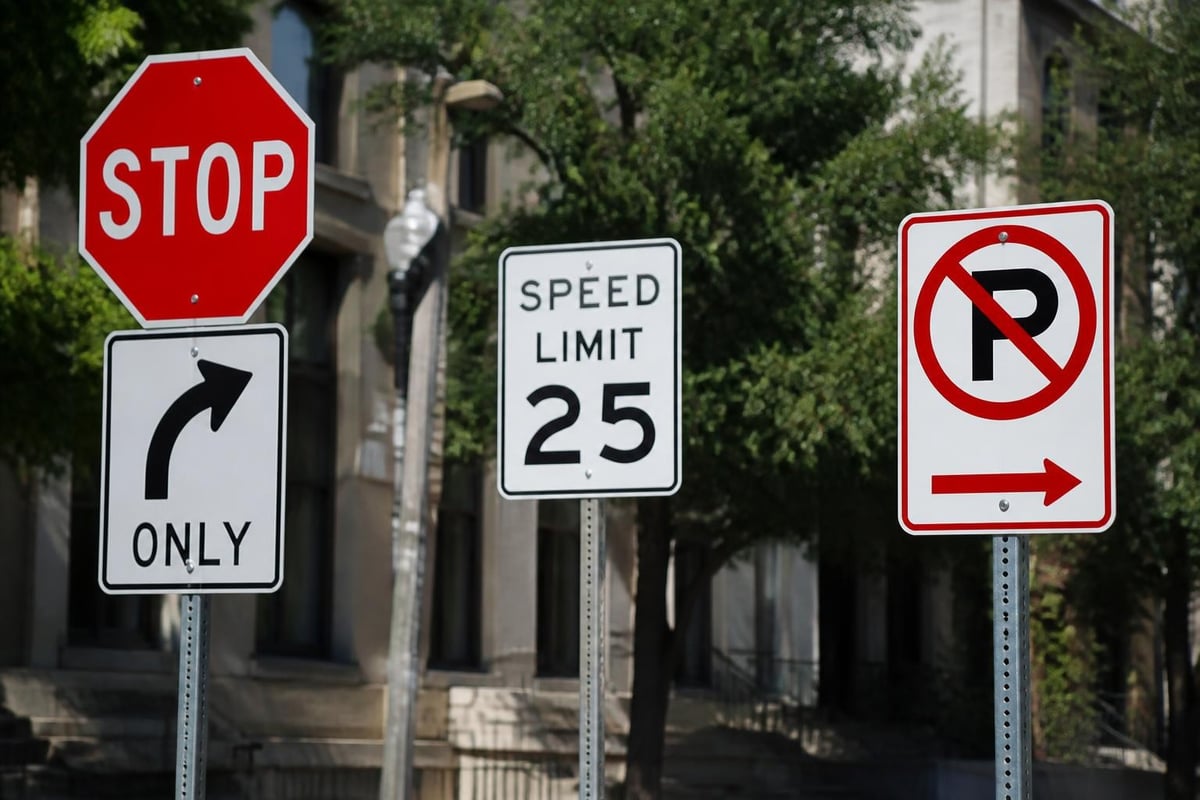
Road safety signs fall into three primary categories, each serving distinct purposes in traffic management. Regulatory signs establish legal requirements that drivers must follow, including stop signs, speed limits, and prohibition markers. These signs carry the force of law and non-compliance typically results in penalties.
Warning signs alert road users to potential hazards or changes in road conditions ahead. These include curve warnings, pedestrian crossings, animal crossing zones, and road work notifications. The advance notice these signs provide gives drivers critical time to adjust speed and position.
Informational signs guide navigation and provide useful data without imposing legal requirements. Direction signs, distance markers, service information, and tourist attraction indicators all fall within this category. Together, these three categories create a comprehensive communication system that addresses every aspect of the road environment.
Regulatory Sign Standards and Applications
Regulatory road safety signs must meet strict specifications to ensure universal recognition and compliance. The Manual on Uniform Traffic Control Devices provides detailed guidance on sign design, placement, and application standards recognised internationally.
Key regulatory sign types include:
- Stop and yield signs controlling intersection priority
- Speed limit signs establishing maximum velocities
- Prohibition signs indicating restricted actions or access
- Mandatory direction signs requiring specific movements
- Parking restriction signs defining when and where parking is permitted
| Sign Type | Shape | Colour Scheme | Primary Purpose |
|---|---|---|---|
| Stop | Octagon | Red/White | Complete halt required |
| Yield | Triangle (inverted) | Red/White | Give way to traffic |
| Speed Limit | Rectangle | White/Black | Maximum velocity |
| No Entry | Circle | Red/White | Access prohibited |
The World Health Organization's Global Plan for the Decade of Action emphasises that proper regulatory signage directly contributes to reducing road fatalities and serious injuries worldwide.
Warning Signs: Anticipating Road Hazards
Warning road safety signs provide advance notice of conditions that require extra caution or speed reduction. These signs typically feature a diamond shape with yellow or amber backgrounds, ensuring they stand out from regulatory and informational signage.
Effective warning sign placement requires careful consideration of sight distances, approach speeds, and reaction times. Generally, warning signs should appear far enough in advance to allow drivers to perceive the message, recognise the hazard, decide on appropriate action, and execute that response safely.
Critical Warning Sign Applications
The most effective warning sign programmes address location-specific hazards systematically. Schools zones, hospital precincts, pedestrian-heavy areas, and wildlife corridors all require tailored warning sign strategies. Recent research from the Insurance Institute for Highway Safety demonstrates that well-placed speed limit and gateway signs significantly improve compliance rates.
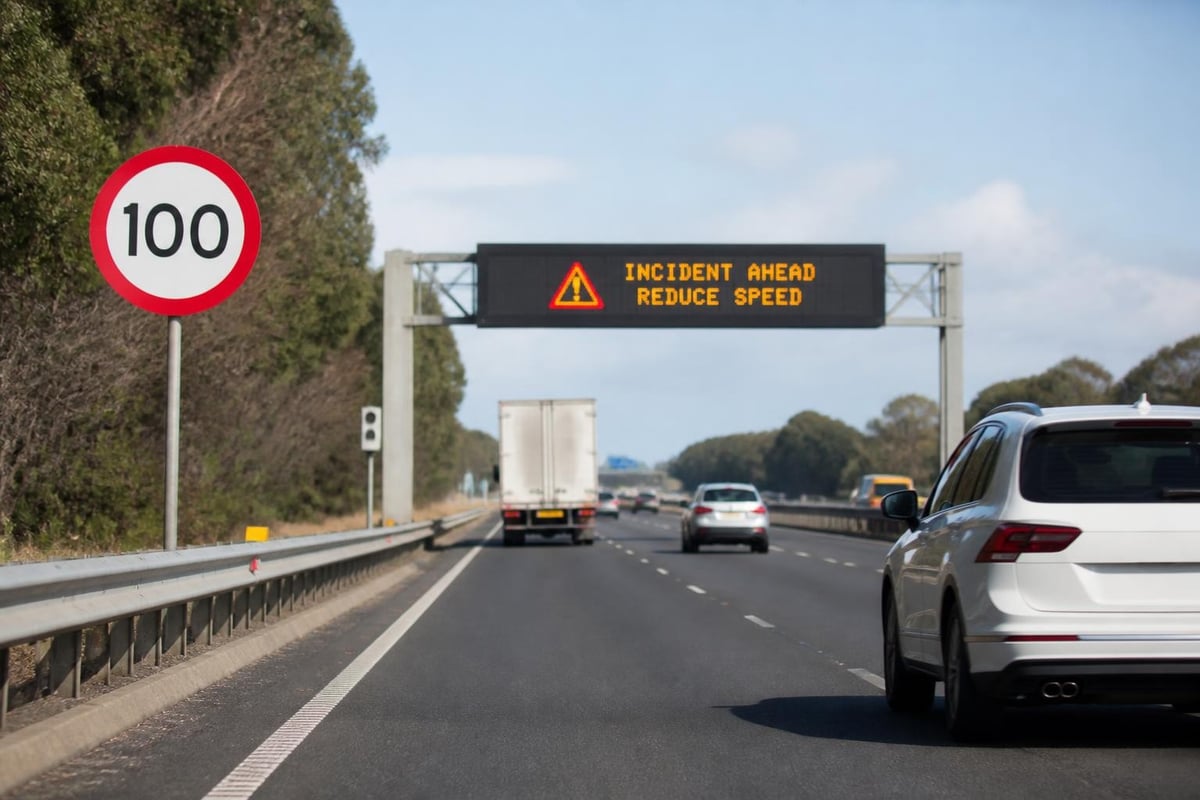
Construction zones present unique challenges for warning signage. Temporary warning signs must be highly visible, frequently updated, and positioned to account for changing site conditions. Many organisations now supplement traditional road safety signs with variable message boards that provide real-time information about delays, detours, and hazards.
Essential warning sign categories include:
- Geometric warnings (curves, intersections, grade changes)
- Operational warnings (signal ahead, stop ahead, merge points)
- Pedestrian and cyclist warnings (crossings, shared paths)
- Environmental warnings (ice, flooding, wind, wildlife)
- Temporary condition warnings (construction, incidents, detours)
For businesses requiring comprehensive safety signage solutions, exploring safety signage compliance resources provides valuable insights into regulatory requirements and best practices.
Informational and Guide Signs
Informational road safety signs facilitate navigation and provide useful data without imposing legal obligations. These signs help drivers make informed decisions about routes, services, and destinations. Clear, consistent informational signage reduces driver stress, minimises wrong turns, and improves overall traffic flow efficiency.
Direction signs form the largest subcategory of informational signage. Motorway signs, route markers, distance indicators, and destination signs all work together to create intuitive navigation systems. Colour coding plays a crucial role: motorways typically use blue or green backgrounds, while tourist destinations often appear on brown signs.
Service information signs alert drivers to upcoming facilities such as fuel stations, restaurants, accommodation, and rest areas. These signs prove particularly valuable on long-distance routes where service availability may be limited. Modern informational signage increasingly incorporates symbols alongside text to overcome language barriers and improve quick recognition.
Digital Integration and Variable Messaging
The evolution of road safety signs now includes digital signage technology that allows real-time message updates. Variable message signs (VMS) provide dynamic information about traffic conditions, incidents, weather, and alternative routes. These systems significantly enhance the traditional static sign network by responding to changing conditions instantly.
Digital road safety signs offer several advantages:
- Real-time updates reflecting current conditions
- Message flexibility addressing multiple scenarios
- Enhanced visibility through LED technology
- Reduced clutter by replacing multiple static signs
- Cost efficiency over long-term operation
Material Selection and Visibility Requirements
The effectiveness of road safety signs depends heavily on material quality and visibility characteristics. Signs must remain legible in all weather conditions, throughout day and night cycles, and across their expected service life. Material selection balances durability, reflectivity, and cost considerations.
Aluminium sheeting serves as the standard substrate for most permanent road safety signs due to its excellent strength-to-weight ratio, corrosion resistance, and longevity. The sheeting typically ranges from 1.6mm to 3.0mm thickness depending on sign size and wind load requirements.
Retroreflective sheeting applied to the substrate determines nighttime visibility. The National Academies guidance on retroreflectivity management provides comprehensive frameworks for maintaining adequate reflective performance throughout a sign's lifecycle.
| Sheeting Type | Typical Application | Expected Lifespan | Reflectivity Level |
|---|---|---|---|
| Engineer Grade | Low-speed roads | 7-10 years | Basic |
| High Intensity | Motorways, arterials | 10-12 years | Enhanced |
| Diamond Grade | Critical locations | 12-15 years | Premium |
| Fluorescent | Work zones, schools | 5-7 years | High visibility |
Weather resistance remains paramount in material selection. Signs must withstand ultraviolet radiation, temperature extremes, moisture, and pollutants without significant degradation. Quality manufacturers subject materials to accelerated weathering tests that simulate years of exposure in compressed timeframes.
Placement Strategy and Visibility Optimisation
Strategic placement of road safety signs requires balancing multiple factors: sight distance, decision-making time, clutter minimisation, and consistency with established conventions. The European Commission's road infrastructure guidelines offer detailed frameworks for network-wide sign placement optimisation.
Sight Distance Calculations
Proper sign placement begins with understanding available sight distance at the design speed. The formula accounts for perception-reaction time (typically 2.5 seconds), decision-making requirements, and any necessary manoeuvring. Complex intersections or unusual geometric conditions may require extended sight distances beyond minimum standards.
Vertical placement also affects visibility significantly. Signs mounted too low risk obstruction by vegetation, other vehicles, or roadside furniture. Mounting too high can position signs outside drivers' typical scanning zones. Standard mounting heights typically range from 1.5 metres to 2.1 metres for low-speed roads and 2.1 metres to 2.4 metres for high-speed routes.
Key placement considerations include:
- Longitudinal positioning relative to the decision point
- Lateral offset from the carriageway edge
- Vertical mounting height above road surface
- Orientation angle perpendicular to sight lines
- Relationship to other signs and roadside objects
Similar to how businesses position outdoor signage to attract customers, road safety signs must compete for attention in increasingly cluttered visual environments whilst maintaining clarity of message.

Maintenance and Lifecycle Management
Effective road safety signs require systematic maintenance programmes to preserve visibility and structural integrity throughout their service life. Sign degradation occurs gradually through weathering, vandalism, impact damage, and retroreflective sheeting deterioration. Proactive inspection and replacement schedules prevent signs from falling below minimum performance standards.
Regular inspection programmes should assess several key parameters. Retroreflectivity measurements using calibrated instruments ensure nighttime visibility remains adequate. Structural condition checks identify rust, cracks, or deformation that compromise stability. Message legibility evaluations confirm that text and symbols remain clear and unobstructed.
The Transport Research Laboratory's guidance on sign visibility and maintenance provides evidence-based recommendations for inspection frequencies and replacement criteria.
Replacement Triggers and Scheduling
Organisations typically adopt one of two maintenance approaches: time-based replacement at predetermined intervals or condition-based replacement when signs fall below performance thresholds. Hybrid approaches combine both methods, using age as a screening tool with condition assessments determining final replacement decisions.
Common replacement triggers include:
- Retroreflectivity readings below minimum standards
- Physical damage affecting more than 25% of sign area
- Colour fading that reduces contrast ratios
- Message obsolescence due to standard changes
- Structural deterioration compromising mounting integrity
Just as signage maintenance tips for long-term performance apply to commercial installations, road safety signs benefit from regular cleaning, vegetation management, and prompt repair of minor damage before it escalates.
Design Principles for Maximum Effectiveness
Effective road safety signs follow established design principles that maximise comprehension whilst minimising cognitive load on drivers. The Institute of Transportation Engineers' Traffic Engineering Handbook provides comprehensive guidance on sign design fundamentals applicable across contexts.
Simplicity remains the cornerstone principle. Signs should communicate a single, clear message without unnecessary detail or complexity. Each additional element increases processing time and potential for confusion. Symbol-based communication often outperforms text for quick recognition, particularly at high speeds or among diverse populations.
Consistency with established standards ensures drivers recognise sign meanings instantly based on prior experience. Deviating from conventional colours, shapes, or symbols reduces effectiveness even when individual designs might seem logical. This principle applies globally, though regional variations exist.
Colour Psychology and Recognition
Colour selection in road safety signs follows consistent conventions developed over decades of research and practice. Red universally indicates prohibition, mandatory stops, or danger. Yellow or amber signals caution and warnings. Blue typically denotes informational content or mandatory actions. Green guides navigation and direction. Brown highlights tourist and recreational facilities.
These colour associations aren't arbitrary. They leverage natural psychological responses and cultural learning. Similar to how colour psychology in signage design influences commercial applications, road sign colours trigger rapid, intuitive responses that support safe driving behaviour.
High contrast between message and background proves critical for legibility. Black text on white backgrounds or white text on dark backgrounds provide maximum contrast ratios. Reflective sheeting maintains this contrast during nighttime conditions when headlight illumination activates the retroreflective properties.
Emerging Technologies and Future Developments
Road safety signs continue evolving through technological advancement and changing transportation paradigms. Connected vehicle systems, autonomous driving technologies, and smart infrastructure initiatives are reshaping how signs communicate with road users. The integration of physical signage with digital systems creates hybrid approaches that leverage the strengths of both mediums.
Vehicle-to-Infrastructure (V2I) communication allows road safety signs to transmit data directly to equipped vehicles. This technology enables signs to communicate beyond visual ranges, through adverse weather, and with greater precision than traditional approaches allow. Speed limit changes, temporary restrictions, and hazard warnings can reach drivers before signs become visible.
Solar-powered active signage addresses visibility challenges in specific locations without requiring electrical infrastructure. These self-contained units combine photovoltaic panels, batteries, and LED elements to provide enhanced visibility during critical periods such as school zone hours or variable speed limit enforcement.
For businesses exploring cutting-edge signage solutions, understanding industry solutions across sectors provides context for how technological advances translate into practical applications.
Regulatory Compliance and Standards Frameworks
Manufacturing and installing road safety signs requires adherence to comprehensive regulatory frameworks. These standards ensure consistency, quality, and effectiveness across road networks. Non-compliant signage creates legal liability and compromises road user safety, making standards knowledge essential for professionals in the field.
National standards organisations develop specifications covering every aspect of road safety signs from material composition to installation methods. These standards typically reference international frameworks whilst incorporating local requirements related to climate, language, and specific road safety priorities. Understanding signage regulations and permits helps organisations navigate compliance requirements effectively.
Key standard categories include:
- Material specifications and performance requirements
- Design templates for each sign type
- Reflectivity standards and measurement methods
- Structural and wind load requirements
- Installation height and setback parameters
Quality assurance processes verify that manufactured signs meet specifications before installation. Testing protocols evaluate retroreflectivity, colour accuracy, adhesive bonding strength, and corrosion resistance. Documentation trails ensure accountability and traceability throughout the supply chain.
Specialist Applications and Custom Requirements
While standardised road safety signs address most situations, certain contexts require custom solutions that balance regulatory compliance with unique needs. Industrial facilities, private road networks, and special event venues often need signage that extends beyond standard catalogues whilst maintaining consistency with public road conventions.
Private road networks serving commercial, industrial, or residential developments must implement clear wayfinding and safety signage. These systems often blend standard traffic signs with custom directional and informational elements. Maintaining visual consistency with public road signage helps drivers transition seamlessly between networks.
Large-scale infrastructure like motorway service areas, airport precincts, and port facilities require comprehensive sign systems that manage complex circulation patterns. Pylon signage often serves as a key element in these environments, providing high-visibility direction and identification that complements ground-level road safety signs.
Temporary event management presents unique signage challenges. Concert venues, sporting events, and festivals create temporary road networks requiring clear, effective signs that function for hours or days before removal. These applications demand durable materials that withstand handling and storage for repeated deployment.
International Harmonisation Efforts
Global commerce and tourism drive efforts toward international harmonisation of road safety signs. While complete standardisation remains elusive due to regional preferences and established systems, significant convergence has occurred in symbol design, colour coding, and basic principles. The Vienna Convention on Road Signs and Signals established a framework adopted by numerous countries, though notable exceptions including the United States maintain distinct systems.
Symbol standardisation progresses most rapidly, as pictographic communication transcends language barriers more effectively than text-based signs. Icons for parking, fuel, food services, accommodation, and common hazards achieve near-universal recognition. This convergence benefits international travellers and supports multinational fleet operations.
Trade relationships increasingly reference signage standards, particularly for cross-border road freight. Harmonised signs reduce confusion, improve compliance, and enhance safety when drivers operate in unfamiliar jurisdictions. Regional trade blocs often establish common signage frameworks as part of broader transport integration initiatives.
For multinational corporations, ensuring vehicle fleets comply with various jurisdictional requirements involves coordination between operations, safety, and compliance teams. Resources on industry insights help organisations stay current with evolving standards across markets.
Cost Considerations and Budget Planning
Implementing comprehensive road safety sign systems requires careful budget planning that accounts for initial installation costs and ongoing maintenance expenses. Material choices significantly impact both capital and lifecycle costs, making value analysis essential for optimisation.
Initial cost components include:
- Sign substrate and sheeting materials
- Posts, mounting hardware, and foundations
- Manufacturing and fabrication
- Transportation to site
- Installation labour and equipment
| Cost Factor | Economy Option | Standard Option | Premium Option |
|---|---|---|---|
| Sign face material | Engineer grade | High intensity | Diamond grade |
| Post type | Timber | Steel (standard) | Steel (galvanised) |
| Foundation | Direct burial | Concrete sleeve | Engineered foundation |
| Expected lifespan | 7-10 years | 10-12 years | 12-15 years |
Lifecycle costing provides a more complete picture by incorporating maintenance, replacement, and potential liability costs. Premium materials commanding higher initial prices often deliver superior value over extended timeframes through reduced maintenance frequency and longer service life. Organisations managing extensive sign inventories benefit significantly from systematic approaches to understanding signage investment.
Road safety signs represent a critical investment in infrastructure that directly impacts user safety, operational efficiency, and regulatory compliance. The principles of clear communication, strategic placement, quality materials, and systematic maintenance create effective sign systems that serve communities reliably for years. Whether you're planning a new development, upgrading existing infrastructure, or maintaining current installations, Signs4SA offers the expertise, quality manufacturing, and nationwide support to deliver road safety signage solutions that meet the highest standards and serve your specific requirements effectively.