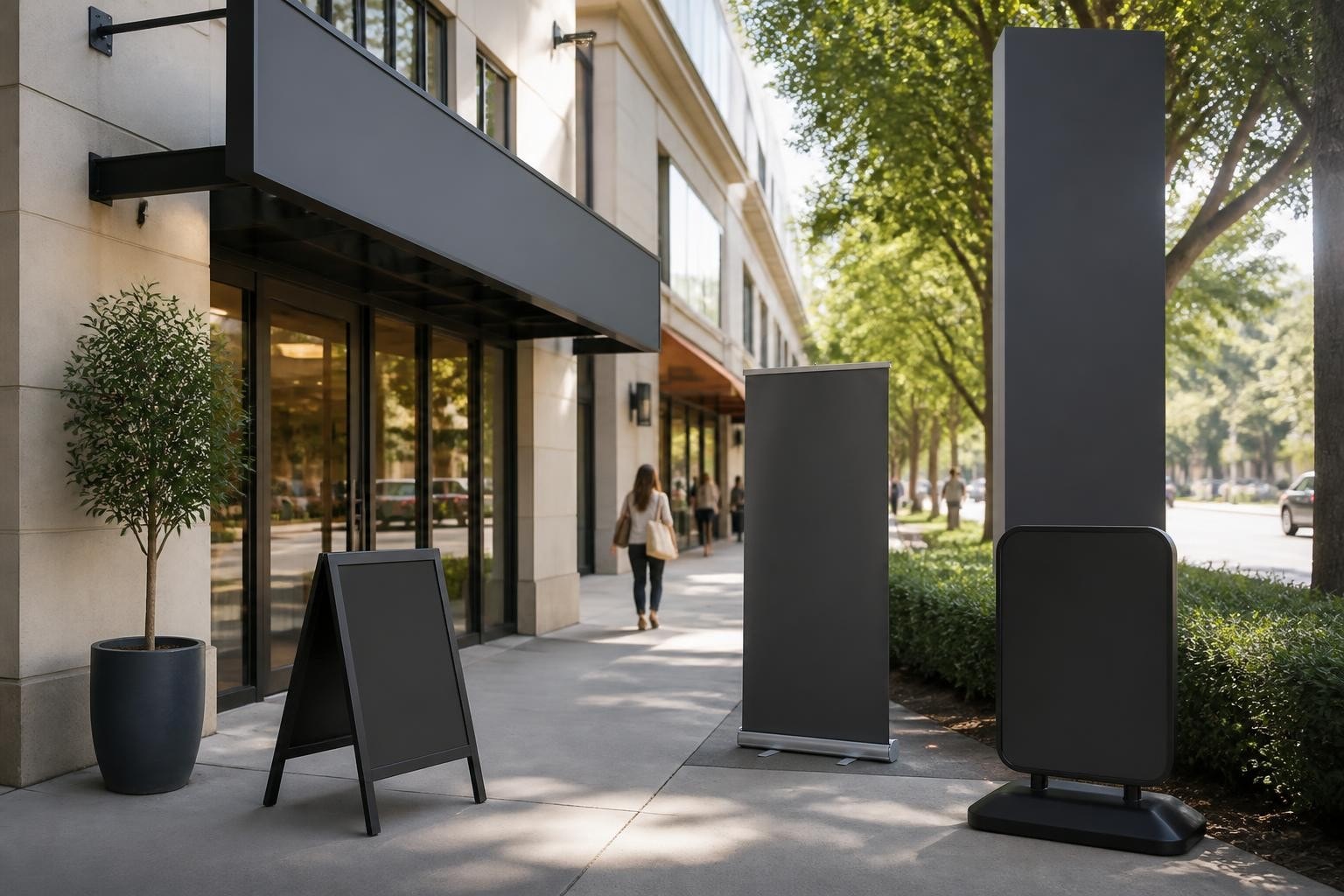




Signage and Printing: Professional Standards Guide
The convergence of signage and printing technologies has revolutionised how businesses communicate their brand identity, wayfinding systems, and promotional messaging. Modern signage manufacturing relies on sophisticated printing processes that deliver vibrant, durable graphics across materials ranging from vinyl and aluminium to acrylic and fabric. Understanding the technical foundations, quality standards, and material science behind professional signage and printing enables businesses to make informed decisions that enhance visibility, ensure regulatory compliance, and maximise return on investment.
Technology Evolution in Modern Signage Manufacturing
Digital printing has transformed the signage industry from labour-intensive screen printing and hand-painting to automated, high-precision production systems. Large-format printers now deliver photo-quality images at remarkable speeds, whilst maintaining colour accuracy across diverse substrates.
Wide-Format Printing Technologies
Today's signage manufacturers employ several core printing technologies, each suited to specific applications and materials:
- UV-curable printing - instant drying enables printing on heat-sensitive materials
- Latex printing - water-based inks provide environmental benefits without sacrificing durability
- Solvent and eco-solvent - excellent outdoor durability for long-term exterior applications
- Dye-sublimation - vibrant colour transfer for fabric displays and soft signage
The ISO 12647 family of standards provides international benchmarks for printing process control, ensuring predictable colour reproduction regardless of substrate or technology. These standards establish parameters for colour management, proofing protocols, and process variables that professional signage manufacturers follow.

Print resolution varies by viewing distance. Close-proximity interior signage typically requires 720-1440 dpi, whilst pylon signage viewed from motorways performs well at 360 dpi or even lower, as the increased viewing distance makes individual pixels imperceptible.
Colour Management and Consistency
Professional signage and printing demands rigorous colour control to ensure brand consistency across multiple installations and production runs. The G7 calibration methodology has become industry standard for achieving colour accuracy.
Key colour management components:
- Spectrophotometer calibration and regular profiling
- ICC colour profiles for each substrate and ink combination
- Proof-to-print matching protocols
- Ambient lighting considerations for colour evaluation
- Documentation of colour values using industry-standard references
The PRINTING United Alliance offers comprehensive G7+ resources that address multi-substrate calibration challenges specific to signage production. Their white papers provide actionable guidance for maintaining consistency when printing identical designs on aluminium composite, vinyl, and translucent films.
Substrate Selection and Material Science
Material selection fundamentally impacts both printing performance and finished signage longevity. Each substrate presents unique characteristics affecting ink adhesion, colour vibrancy, weatherability, and structural integrity.
| Material Category | Primary Applications | Key Advantages | Printing Considerations |
|---|---|---|---|
| Aluminium Composite | Exterior panels, fascia | Lightweight, rigid, weather-resistant | Requires primer or pre-treatment |
| Vinyl Film | Vehicle graphics, window displays | Conformable, removable options | Edge sealing critical for longevity |
| Acrylic | Illuminated displays, interior wayfinding | Clarity, light transmission | UV printing or second-surface application |
| Fabric | Exhibition displays, soft signage | Portability, wrinkle-resistance | Dye-sublimation or latex preferred |
The Sign Research Foundation provides extensive research on digital print substrates, examining how surface treatments, coating chemistries, and core materials affect print quality and durability across environmental conditions.
Environmental Durability Factors
Outdoor signage and printing must withstand ultraviolet radiation, temperature fluctuations, moisture, and physical wear. Material specifications should address:
- UV stability rating - measured in years of expected performance
- Temperature range tolerance - expansion/contraction coefficients
- Water resistance - edge sealing and substrate porosity
- Impact resistance - relevant for vandalism-prone locations
Lamination adds a protective layer that extends print life considerably. Cast vinyl laminates with UV inhibitors can double or triple the lifespan of digitally printed graphics, particularly in harsh South African climates where sun exposure is intense.
Quality Control and Production Standards
Professional signage and printing requires systematic quality assurance throughout the production workflow. Defects caught early prevent costly reprints and installation delays.
Pre-Press Verification
Before committing files to production, thorough pre-flight checks identify potential issues:
- Resolution verification at intended viewing distance
- Colour space conversion (RGB to CMYK where appropriate)
- Bleed allowances for trimmed edges
- Font embedding or outline conversion
- Image compression artefact inspection
Many printing errors originate in file preparation rather than equipment malfunction. Establishing standardised templates and checklists ensures consistency across projects.
Production Monitoring
During printing, operators monitor multiple parameters to maintain quality standards. Modern printers include automated systems that detect nozzle clogs, colour drift, and media positioning errors. Manual inspection remains essential, particularly for:
- Banding or streaking in solid colours
- Registration accuracy on multi-pass prints
- Edge sharpness and fine detail resolution
- Colour matching against approved proofs
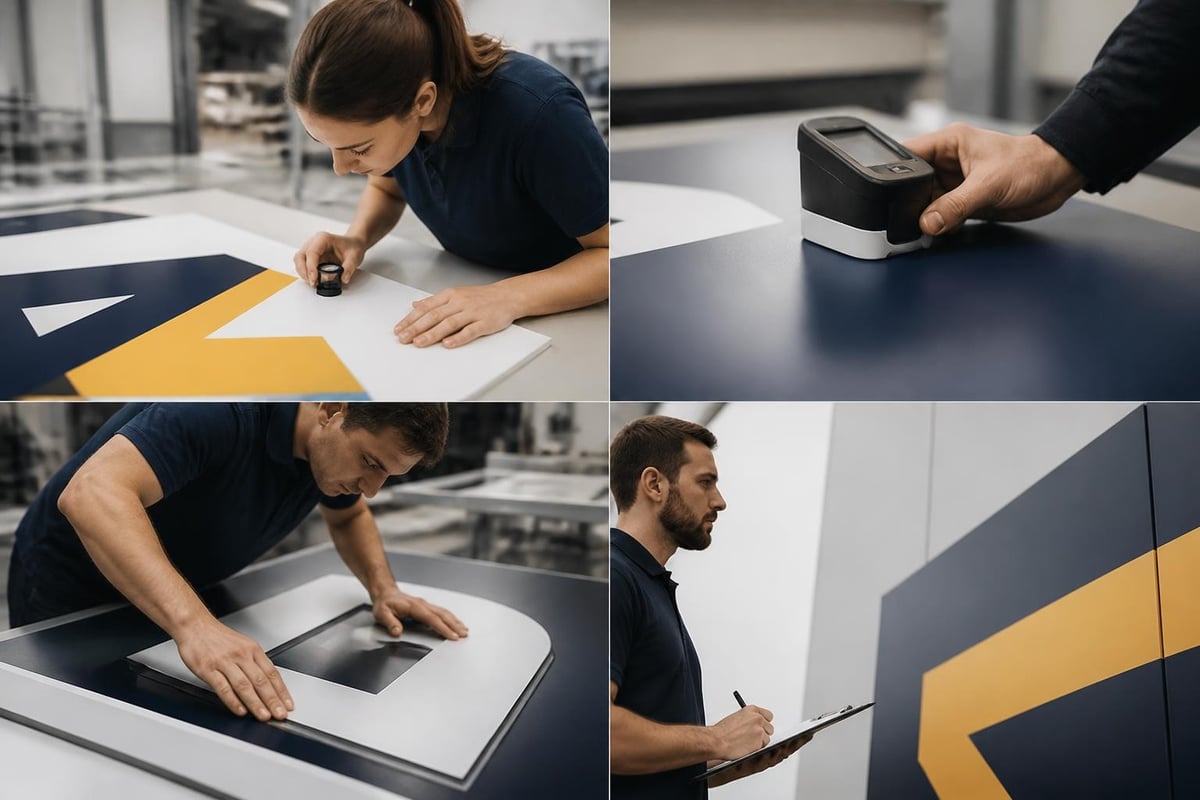
Post-printing finishing operations - including lamination, mounting, trimming, and fabrication - require equal attention to quality. Improper lamination creates bubbles or silvering, whilst inaccurate cutting compromises professional appearance.
Regulatory Compliance and Accessibility Standards
Certain signage applications must meet specific regulatory requirements that influence both design and printing specifications. Understanding these standards ensures legal compliance whilst avoiding costly modifications.
ADA and Accessibility Requirements
Interior wayfinding and identification signage often falls under accessibility regulations. The U.S. Access Board provides detailed ADA signage requirements covering tactile characters, Braille, contrast ratios, and mounting specifications.
Printing considerations for accessible signage include:
- High contrast ratios - typically 70% minimum between text and background
- Non-glare finishes - matte laminates prevent reflective hotspots
- Colour selection - avoiding combinations problematic for colour-blind individuals
- Font weight and spacing - ensuring legibility at specified reading distances
Even when legal requirements don't mandate accessibility features, incorporating these principles improves usability for all viewers.
Traffic and Wayfinding Standards
Road signage and directional signs must comply with standardised design criteria. The Manual on Uniform Traffic Control Devices establishes specifications for colours, retroreflectivity, dimensions, and typography in traffic control applications.
Printing retroreflective sheeting requires specialised equipment and materials. Different retroreflective grades offer varying performance levels based on viewing angles and illumination conditions. For more insights on selecting appropriate outdoor signage solutions, explore our guide on how to choose the right outdoor signage.
Design Principles for Print-Ready Signage
Effective signage and printing begins with design fundamentals that account for production realities and viewing conditions. Designers must balance aesthetic goals with technical constraints.
Typography and Legibility
Font selection significantly impacts readability across distances. Research from the International Sign Association demonstrates measurable differences in legibility between typeface families, particularly at extended viewing distances.
Typography best practices for signage:
- Sans-serif fonts typically outperform serif designs for distance viewing
- Minimum stroke width should equal 1/6 of letter height
- Letter spacing (tracking) affects readability more than many designers appreciate
- Mixed case text reads faster than all-capitals for longer messages
- Condensed fonts sacrifice legibility to save space
Stroke width becomes particularly critical when reverse printing (light text on dark backgrounds). Thin letterforms may lose definition or appear to break up when viewed from distance.
Colour Psychology and Brand Consistency
Colour choices communicate psychological associations whilst reinforcing brand identity. The psychology of colour in signage design explores how different hues influence viewer perception and behaviour.
Beyond psychology, colour selection must account for printing gamut limitations. Certain Pantone colours cannot be accurately reproduced using CMYK process printing, requiring spot colour inks or acceptance of closest-match alternatives.
| Industry Sector | Common Colour Palettes | Strategic Reasoning |
|---|---|---|
| Healthcare | Blues, greens, white | Cleanliness, trust, calm |
| Retail | Red, yellow, orange | Energy, urgency, appetite stimulation |
| Corporate | Navy, grey, white | Professionalism, stability, authority |
| Hospitality | Earth tones, warm hues | Comfort, welcome, relaxation |
Maintaining brand consistency across different signage types requires documented colour standards and regular calibration. Corporate identity guidelines should specify both Pantone solid colours and CMYK build formulas.
Digital Signage Integration
Whilst traditional printed signage remains essential, digital signage offers dynamic content capabilities that complement static installations. Understanding when each technology provides optimal value helps businesses allocate resources effectively.
Comparative Analysis: Print vs Digital
Printed signage advantages:
- Zero ongoing power consumption
- No technical maintenance or content management required
- Superior outdoor visibility in direct sunlight
- Lower initial investment for permanent messaging
- Unaffected by network connectivity issues
Digital display advantages:
- Real-time content updates without physical replacement
- Scheduled messaging for time-specific promotions
- Motion and animation capture attention effectively
- Multiple messages rotate through single display location
- Analytics track viewer engagement and dwell time
Many successful signage strategies employ both technologies strategically. Permanent branding, wayfinding, and regulatory signs utilise printed solutions, whilst promotional areas, menu boards, and interactive zones leverage digital displays.

Production Efficiency and Workflow Optimisation
Professional signage and printing operations balance quality, speed, and cost-effectiveness through optimised workflows and strategic automation. Efficient production systems reduce turnaround times whilst maintaining consistent standards.
Batching and Material Planning
Grouping similar projects maximises material utilisation and minimises printer setup time:
- Nesting multiple designs on single print sheets reduces waste
- Grouping jobs by substrate type eliminates media changeover delays
- Scheduling similar colour profiles consecutively reduces calibration frequency
- Planning panel fabrication in standard sizes improves inventory management
Material waste represents significant cost in signage production. Professional shops typically achieve 85-92% material yield through careful planning and nesting software.
Automation and Technology Investment
Strategic technology investments accelerate production whilst improving consistency:
- Automated cutting tables - precision trimming at speeds impossible manually
- Flatbed UV printers - direct-to-substrate printing eliminates mounting steps
- CNC routers - repeatable dimensional fabrication for channel letters and 3D elements
- Workflow management software - job tracking from quotation through installation
For businesses exploring comprehensive signage solutions, understanding the full scope of available options helps optimise investments. Review signage solutions for every industry to identify technologies aligned with specific sector requirements.
Installation Considerations in Design
Effective signage and printing accounts for installation requirements during the design phase. Mounting methods, structural support, and environmental exposure influence material selection and graphic treatment.
Mounting Systems and Substrates
Different installation methods demand specific substrate characteristics:
- Direct wall mounting - requires rigid substrates or backer boards
- Stand-off hardware - accommodates thinner materials with edge protection
- Channel letter returns - necessitates formable or fabricated materials
- Post-and-panel systems - demand wind-load calculations and structural engineering
Discussing installation parameters early in the design process prevents situations where intended graphics cannot be practically mounted. The importance of professional signage installation extends beyond aesthetics to encompass safety, longevity, and regulatory compliance.
Environmental Protection Strategies
Protecting printed graphics from environmental degradation requires appropriate specification:
- UV-resistant laminates - block degrading ultraviolet radiation
- Edge sealing - prevents moisture infiltration at panel perimeters
- Clearance from grade - maintains minimum distance from ground moisture
- Ventilation for illuminated signs - prevents heat accumulation damaging graphics
- Anti-graffiti coatings - enable cleaning without graphic damage
South African conditions present particular challenges, with intense UV exposure and dramatic temperature swings in many regions. Material specifications must account for these environmental stressors.
Cost Optimisation Without Compromising Quality
Strategic decisions throughout the signage and printing process control costs whilst maintaining professional standards. Understanding cost drivers enables informed trade-offs aligned with project priorities.
Material Selection Economics
Premium materials deliver superior performance but aren't always necessary:
| Application Context | Appropriate Material Choice | Cost Optimisation Strategy |
|---|---|---|
| Short-term promotional | Economy vinyl, no laminate | Match material life to campaign duration |
| Long-term exterior branding | Premium cast vinyl, UV laminate | Longer replacement cycle reduces lifetime cost |
| Interior wayfinding | Mid-grade materials, matte finish | Balance durability with lower abuse exposure |
| High-traffic retail | Commercial-grade, protective coating | Prevent replacement from wear and damage |
Our comprehensive cost guide for commercial signage provides detailed breakdowns of how material, size, complexity, and quantity influence pricing across different signage categories.
Production Efficiency Gains
Optimising design for production efficiency reduces costs without sacrificing visual impact:
- Standard sizing aligned with material sheet dimensions minimises waste
- Limiting colour counts reduces setup complexity in some printing processes
- Designing for common mounting hardware eliminates custom fabrication
- Consolidating multiple signs into single production runs leverages economies of scale
Maintenance and Longevity Planning
Even the highest-quality signage and printing requires maintenance to preserve appearance and functionality throughout its service life. Proactive care extends replacement intervals significantly.
Cleaning and Care Protocols
Different materials and finishes demand specific cleaning approaches:
General cleaning best practices:
- Use pH-neutral cleaners rather than harsh chemicals
- Microfibre cloths prevent scratching during cleaning
- Test cleaning products on inconspicuous areas first
- Rinse thoroughly to prevent residue accumulation
- Schedule regular cleaning before visible soiling occurs
Laminated graphics generally tolerate cleaning better than unprotected prints. Anti-graffiti coatings enable removal of vandalism without damaging underlying graphics. For comprehensive guidance, consult our signage maintenance tips covering various material types and environmental conditions.
Inspection and Preventive Maintenance
Regular inspections identify emerging issues before they necessitate complete replacement:
- Check mounting hardware for loosening or corrosion
- Inspect graphics for edge lifting, fading, or delamination
- Verify illumination functionality on lit signage
- Assess structural integrity of posts and supports
- Document condition changes to predict replacement timing
Establishing maintenance schedules based on environmental exposure optimises resource allocation. Coastal installations require more frequent attention than sheltered interior applications.
Industry-Specific Applications
Different sectors employ signage and printing solutions tailored to unique operational requirements, regulatory frameworks, and customer expectations.
Retail Environment Graphics
Retail signage balances promotional urgency with brand consistency. Point-of-purchase displays, window graphics, and directional wayfinding guide customer journeys whilst reinforcing brand identity.
Seasonal campaigns demand cost-effective solutions that can be replaced frequently without excessive expense. Adhesive vinyl window graphics, coroplast signs, and fabric banners provide flexibility for changing promotions.
Corporate Campus Wayfinding
Corporate facilities require comprehensive wayfinding systems integrating exterior monumentation, building identification, interior directories, and department markers. Consistency across hundreds of individual signs demands rigorous template standards and quality control.
Understanding industry-specific signage solutions helps align specifications with operational requirements, regulatory obligations, and budgetary constraints unique to each sector.
Construction Site Signage
Construction applications prioritise durability, visibility, and regulatory compliance over refined aesthetics. Corrosion-resistant substrates, reflective materials for low-light conditions, and robust mounting withstand harsh site conditions.
Safety signage must meet specific standards for colour, symbols, and messaging. Temporary construction signage often employs economy materials appropriate for project duration rather than permanent installations.
Professional signage and printing combines technical expertise, material science, and design principles to create effective visual communications that enhance brand visibility and guide customer interactions. Strategic material selection, rigorous quality control, and understanding of regulatory requirements ensure signage investments deliver measurable returns. When you're ready to implement signage solutions that reflect your brand professionally whilst meeting technical standards and budgetary objectives, Signs4SA brings national manufacturing capabilities, industry expertise across corporate, retail, construction, and pharmaceutical sectors, and commitment to quality that makes us one of South Africa's fastest-growing signage providers.