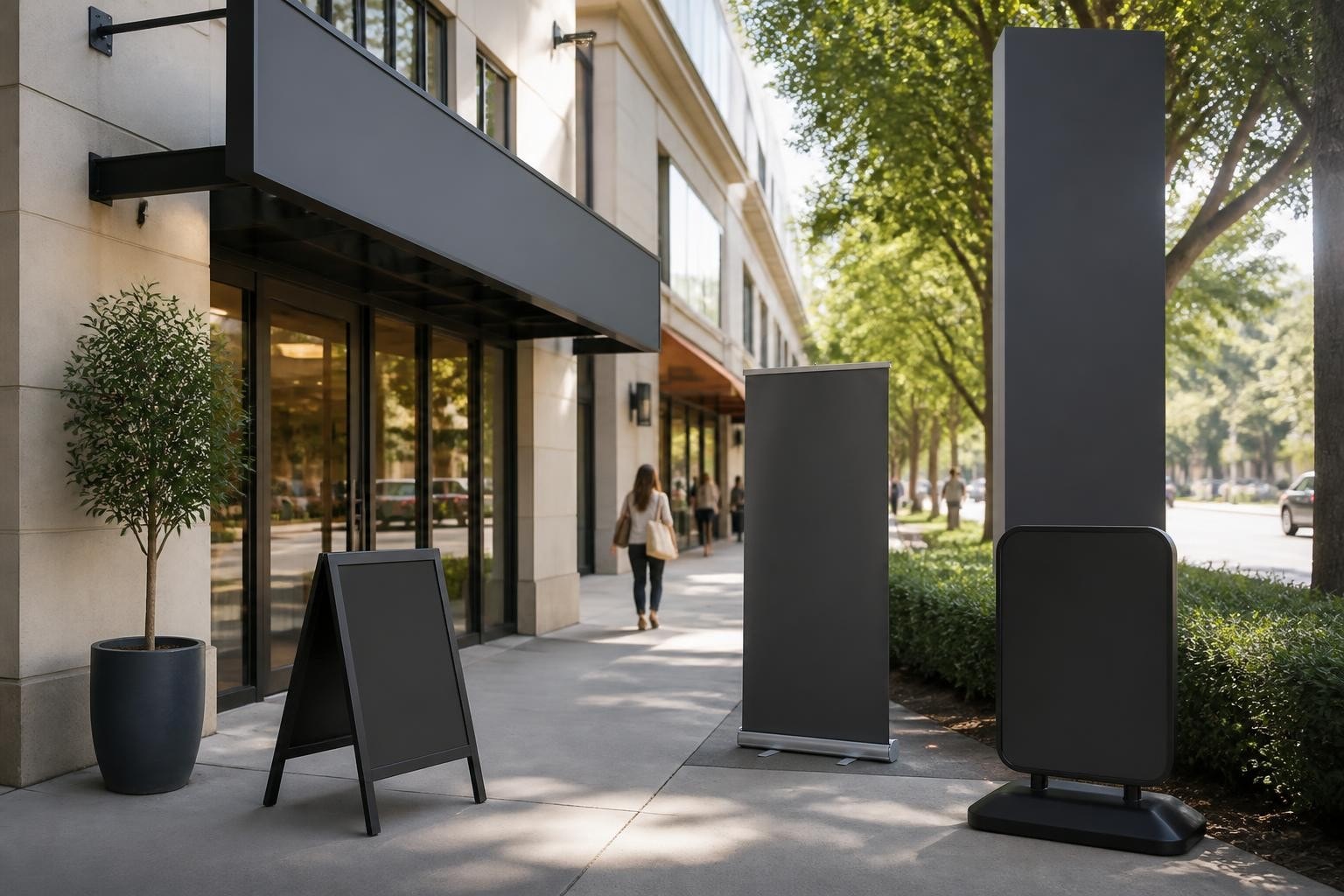



Signage Making: The Complete Guide for 2026
Signage making represents the intersection of artistry, engineering, and commercial communication, transforming raw materials into powerful business assets. From the initial design concept through to final installation, the process demands technical expertise, creative vision, and meticulous attention to detail. Whether you're outfitting a retail complex, marking a construction site, or establishing corporate identity across multiple locations, understanding the fundamentals of signage making ensures you make informed decisions that deliver lasting value. This comprehensive guide explores the essential elements that professional manufacturers consider when creating high-quality signage solutions for diverse industries.
The Foundation of Professional Signage Making
Signage making begins with understanding the client's objectives, environment, and regulatory requirements. Professional manufacturers conduct thorough site assessments to evaluate visibility requirements, mounting surfaces, electrical access, and local compliance standards.
The initial consultation phase establishes crucial parameters:
- Brand alignment: ensuring colour accuracy, typography, and design elements reflect corporate identity
- Environmental factors: accounting for weather exposure, viewing distances, and ambient lighting conditions
- Budget constraints: balancing quality expectations with financial realities
- Timeline requirements: coordinating production schedules with installation deadlines and business operations
Material selection forms the backbone of quality signage making. Substrates range from traditional aluminium composite panels and acrylic to modern high-density foam boards and sustainable alternatives. Each material offers distinct advantages in durability, weight, fabrication ease, and cost-effectiveness.
Design Considerations That Impact Production
Effective signage making requires designers to work within manufacturing constraints whilst maximising visual impact. Research on sign design for conspicuity and legibility demonstrates that letter height, stroke width, and contrast ratios directly influence readability at various distances.
Typography choices significantly affect production methods. Simple sans-serif fonts translate well across fabrication techniques, whereas ornate scripts may require additional processes or material considerations. Designers must account for minimum stroke widths that prevent structural failure in cut letters and ensure adequate spacing for manufacturing tolerances.

Colour specification involves more than selecting Pantone references. Professional signage making accounts for material substrate effects, UV stability, and viewing conditions. Backlit signage requires translucent materials and different colour approaches compared to externally illuminated or non-lit applications.
Manufacturing Processes in Modern Signage Making
| Process | Materials | Applications | Key Advantages |
|---|---|---|---|
| CNC Routing | Aluminium, acrylic, PVC foam | Dimensional letters, panels | Precision, repeatability, complex shapes |
| Vinyl Application | Various substrates | Graphics, decals, vehicle wraps | Cost-effective, quick turnaround, versatile |
| Digital Printing | Fabric, vinyl, rigid boards | Banners, photo-quality graphics | Full colour, photographic detail |
| Laser Cutting/Engraving | Acrylic, wood, metal | Detailed logos, wayfinding | Intricate detail, clean edges |
CNC routing technology has revolutionised signage making, enabling manufacturers to produce consistent, complex shapes from various substrates. Computer-controlled cutting heads follow digital paths with tolerances measured in fractions of millimetres, ensuring perfect replication across production runs.
Vinyl graphics application requires skilled craftsmanship despite technological advances. Professional installers eliminate air bubbles, align registration marks, and account for substrate irregularities. Premium cast vinyls with air-release adhesives facilitate large-format applications whilst calendared vinyls serve shorter-term requirements cost-effectively.
Illumination Techniques
Illuminated signage making incorporates electrical systems that demand compliance with safety standards. The National Electrical Code (NFPA 70) provides essential guidance for electrical installations, transformer specifications, and listing requirements.
LED technology dominates contemporary signage making due to energy efficiency, longevity, and versatility. Modern LED modules offer:
- Consistent illumination across large sign faces
- Programmable colour temperature options
- Dimming capabilities for time-based adjustments
- Reduced maintenance requirements compared to fluorescent or neon alternatives
Channel letters represent a sophisticated illumination approach where individual letterforms house LED modules. Face-lit, back-lit (halo), and combination configurations create distinct aesthetic effects whilst maintaining brand visibility after dark.
Digital signage solutions integrate display technology with content management systems, requiring manufacturers to address environmental protection, thermal management, and power distribution. External installations demand higher brightness ratings (typically 2,500-5,000 nits) compared to internal displays, along with weatherproof enclosures rated for local climate conditions.
Materials Science in Signage Making
Substrate selection fundamentally influences durability, appearance, and fabrication methodology. Aluminium composite material (ACM) panels consist of polyethylene cores bonded between aluminium skins, offering excellent flatness, weather resistance, and workability. Available in numerous colours and finishes, ACM suits both flat-mounted panels and dimensional cabinet construction.
Acrylic (polymethyl methacrylate) provides optical clarity essential for illuminated applications. Cast acrylic offers superior quality with better dimensional stability, whilst extruded variants serve budget-conscious projects. Thickness selection balances structural requirements against light transmission efficiency and cost considerations.
High-density urethane (HDU) foam enables intricate carved details impossible with traditional materials. CNC routers create three-dimensional forms from digital models, and the closed-cell structure accepts various coating systems. HDU's lightweight nature reduces installation loads on building facades.
Finishing Processes That Ensure Longevity
Professional signage making extends beyond fabrication to comprehensive finishing treatments. Powder coating provides durable, uniform colour application on metal components, with electrostatic application ensuring complete coverage and minimal environmental impact compared to liquid paints.
UV-resistant clear coats protect printed graphics from fading and weathering. Manufacturers select appropriate laminates based on expected service life, with premium films offering ten-year warranties against colour shift and delamination.
Edge treatments separate amateur from professional work. Polished acrylic edges, sealed foam surfaces, and properly flashed metal joints prevent moisture ingress and premature deterioration.
Installation Expertise and Safety Protocols
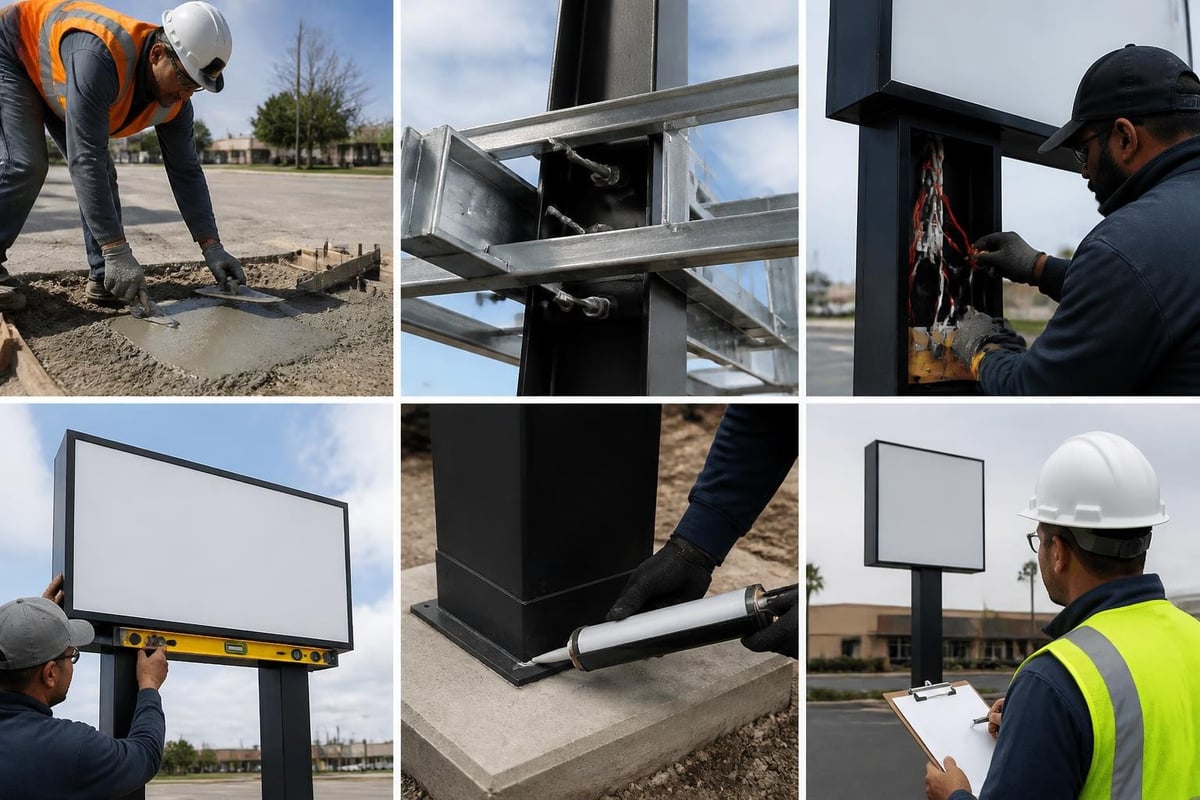
Signage making culminates in professional installation that ensures structural integrity and regulatory compliance. Mounting methods vary based on substrate weight, building material, and local wind load requirements.
Typical mounting approaches include:
- Direct fastening through sign faces into structural framing
- Standoff systems creating dimensional separation from mounting surfaces
- Concealed fastener systems for seamless appearances
- Raceway installations housing electrical components
- Stud mounting for individual dimensional letters
High-level installations require certified professionals working with appropriate fall protection and lifting equipment. Professional manufacturers maintain comprehensive insurance coverage and worker safety training programmes that protect both personnel and property.
Accessibility requirements under the Americans with Disabilities Act mandate specific characteristics for certain signage types, including tactile lettering, Braille translation, mounting heights, and finish specifications. Whilst primarily US-focused, these guidelines inform international best practices for inclusive wayfinding systems.
Regulatory Compliance in Signage Making
Municipal regulations significantly impact signage making, governing size restrictions, illumination standards, setback requirements, and aesthetic guidelines. Local planning authorities establish sign codes balancing commercial communication needs against community character preservation.
Professional manufacturers navigate permitting processes efficiently, preparing accurate drawings and specifications that satisfy regulatory requirements. Understanding zoning classifications, variance procedures, and historic district restrictions prevents costly redesigns and installation delays.
Traffic control signage demands adherence to strict federal standards. The Manual on Uniform Traffic Control Devices specifies precise dimensions, colours, retroreflectivity requirements, and placement criteria ensuring consistent road signage nationwide.
Environmental regulations increasingly influence signage making practices. Solvent-based inks give way to eco-friendly alternatives, sustainable substrates gain market share, and energy-efficient illumination becomes standard rather than premium options.
Quality Control Measures
Rigorous quality control distinguishes professional signage making from inferior alternatives. Inspection protocols verify:
- Colour accuracy against approved standards
- Dimensional tolerances within specification
- Finish quality free from defects
- Electrical functionality and safety compliance
- Structural integrity of mounting systems
Photography documentation creates records for warranty purposes and provides clients with as-built confirmation before installation commences.
Industry Trends Shaping Signage Making
Digital integration transforms traditional signage making, with industry progress reports highlighting sustained growth in interactive and networked display technologies. Content management capabilities enable real-time messaging updates, scheduled programming, and data-driven optimisation.
Sustainability considerations increasingly influence material selection and manufacturing processes. Recyclable substrates, low-VOC finishing systems, and energy-efficient illumination align with corporate environmental commitments whilst reducing operational costs.
Modular systems facilitate future updates and reconfiguration. Tenants in retail environments appreciate signage solutions that accommodate branding changes without complete replacement, reducing costs and minimising installation disruption.
| Trend | Impact on Signage Making | Timeline |
|---|---|---|
| AI-powered design | Automated layout optimisation, accessibility checking | Current adoption |
| Sustainable materials | Bio-based substrates, recyclable components | Accelerating |
| AR integration | QR-triggered augmented experiences linked to physical signs | Emerging |
| Predictive maintenance | IoT sensors monitoring illumination performance | Early adoption |
Three-dimensional printing expands creative possibilities in signage making, producing complex geometries and custom fixtures economically for short production runs. As technology matures and material options broaden, additive manufacturing will increasingly complement traditional fabrication methods.
Sector-Specific Applications
Corporate signage making emphasises brand consistency across distributed locations. Standardised design systems ensure visual coherence whilst accommodating site-specific variations. Professional manufacturers maintain detailed specifications enabling accurate reproduction as organisations expand or refresh their facilities.
Retail environments demand signage that balances promotional flexibility with permanent wayfinding elements. Promotional display signage systems incorporate interchangeable graphics, seasonal messaging, and point-of-purchase elements that drive customer engagement.
Construction sites require temporary signage solutions that withstand harsh conditions whilst maintaining visibility and compliance. Weather-resistant materials, robust mounting systems, and reflective treatments ensure safety messaging remains effective throughout project duration.
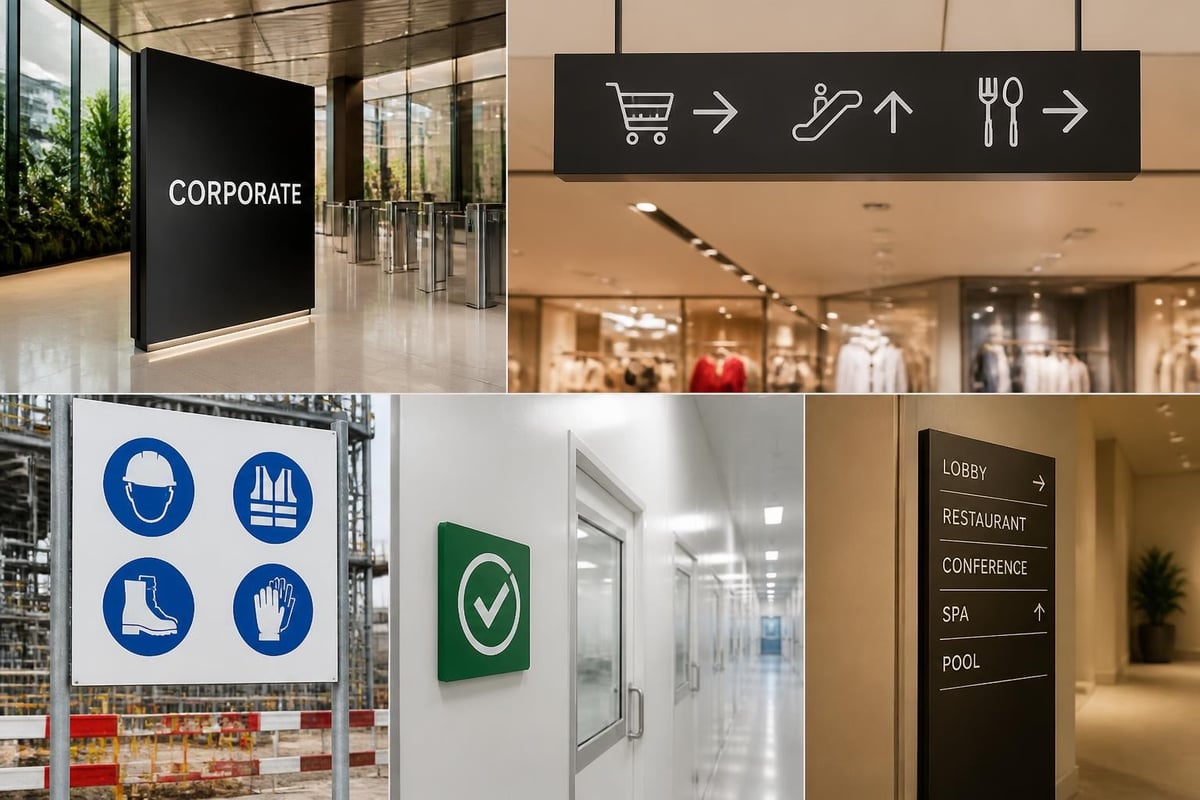
Pharmaceutical facilities face stringent regulatory signage requirements addressing safety protocols, material restrictions, and documentation standards. Professional signage making for this sector incorporates chemical-resistant materials, easily cleaned surfaces, and compliance with Good Manufacturing Practice (GMP) guidelines.
Maintenance and Lifecycle Management
Professional signage making includes aftercare considerations that maximise return on investment. Regular maintenance schedules address cleaning requirements, illumination component replacement, and structural inspections that identify potential issues before failures occur.
Cleaning protocols vary by material and finish. Anodised aluminium tolerates different cleaners than painted surfaces, whilst acrylic requires non-abrasive techniques that preserve optical clarity. Building signage maintenance programmes typically specify quarterly inspections for illuminated elements and bi-annual comprehensive assessments.
Documentation systems tracking installation dates, warranty periods, and maintenance history enable proactive lifecycle management. As signage approaches expected service life, planned replacement prevents emergency situations and allows budget allocation.
Repair and Refurbishment Options
Damaged signage doesn't always require complete replacement. Professional manufacturers assess repair feasibility based on damage extent, component availability, and cost-effectiveness compared to new fabrication.
Common repairs include:
- LED module replacement in channel letters
- Vinyl graphic updates on existing substrates
- Structural reinforcement of mounting systems
- Powder coat refinishing of metal components
- Acrylic panel replacement in illuminated cabinets
Refurbishment extends signage life economically whilst accommodating brand refreshes or messaging updates. Converting existing structures to LED illumination, for instance, reduces energy consumption without discarding serviceable cabinet frameworks.
Working With Professional Manufacturers
Selecting qualified signage making partners involves evaluating technical capabilities, industry experience, and service comprehensiveness. Professional manufacturers offer complete solutions spanning design consultation, fabrication, permitting assistance, installation, and maintenance.
Portfolio reviews demonstrate manufacturing versatility across applications and materials. Previous work examples reveal attention to detail, finish quality, and problem-solving creativity when addressing challenging installations.
Geographic reach matters for organisations operating across multiple regions. Manufacturers with national footprints coordinate consistent implementations whilst managing local permitting and installation logistics efficiently.
Technical capabilities should match project requirements. Organisations needing indoor retail signs benefit from manufacturers experienced in retail environments who understand traffic flow, lighting conditions, and brand presentation standards.
Request detailed quotations specifying materials, fabrication methods, installation procedures, and warranty terms. Transparent pricing enables accurate comparisons whilst avoiding misunderstandings that arise from incomplete specifications.
Communication protocols established upfront prevent frustration during production. Regular progress updates, approval checkpoints, and responsive account management characterise professional signage making relationships that deliver successful outcomes.
Successful signage making combines technical expertise, creative vision, and meticulous execution across every project phase from initial consultation through long-term maintenance. Understanding the processes, materials, and considerations outlined in this guide empowers you to make informed decisions that deliver lasting value and effective brand communication. Whether you need comprehensive corporate signage systems, sector-specific safety solutions, or innovative display technologies, partnering with experienced professionals ensures quality outcomes. Signs4SA brings national reach, technical capability, and industry expertise to signage projects across corporate, retail, construction, and pharmaceutical sectors throughout South Africa and beyond.