


The Complete Guide to Banners for Business Marketing
Banners remain one of the most versatile and cost-effective marketing tools available to businesses across all sectors. From retail promotions to corporate events, construction site announcements to pharmaceutical product launches, these dynamic signage solutions deliver messages with impact and flexibility. Whether deployed as traditional vinyl prints or modern digital displays, banners offer unmatched adaptability in reaching target audiences at critical decision-making moments. Understanding the nuances of banner design, material selection, placement strategy, and performance measurement empowers businesses to maximise their marketing investment whilst maintaining brand consistency across every customer touchpoint.
Understanding Banner Types and Applications
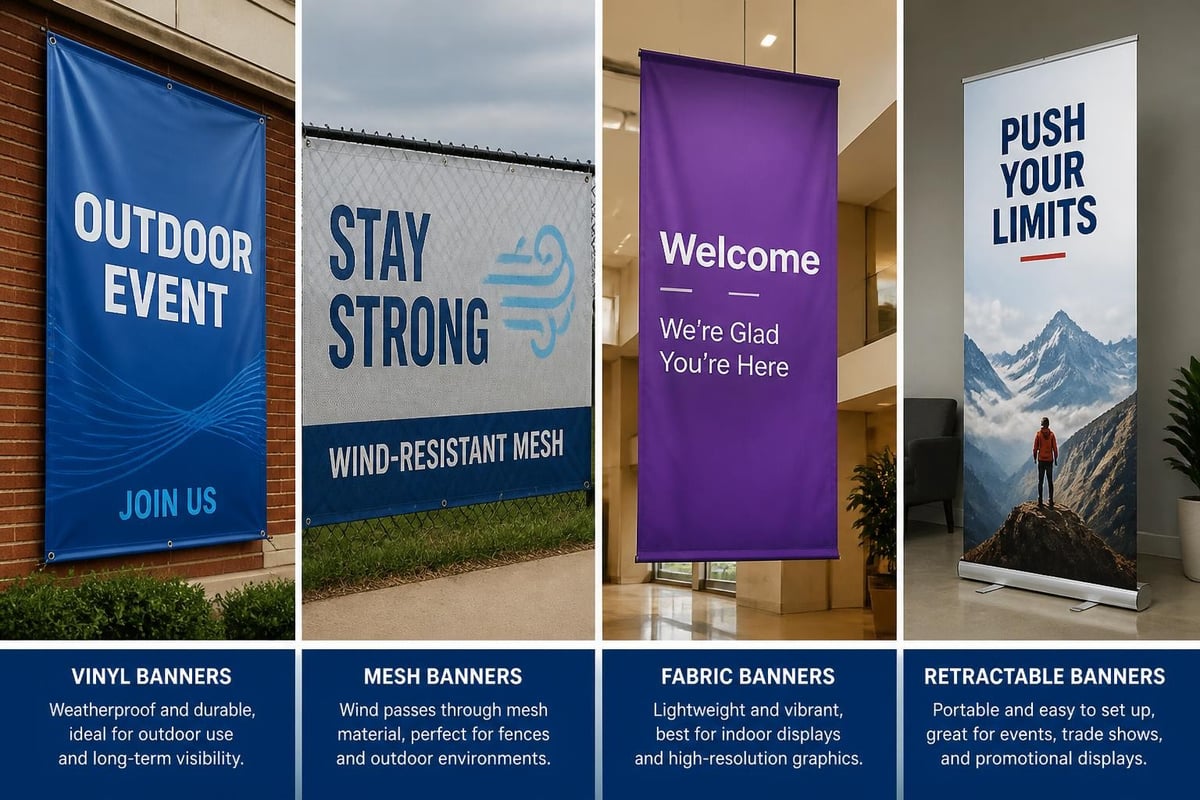
Modern businesses have access to an impressive array of banner formats, each suited to specific marketing objectives and environmental conditions. Vinyl banners continue to dominate outdoor applications due to their weather resistance and durability, making them ideal for prolonged campaigns lasting weeks or months. Mesh banners incorporate perforated materials that allow wind to pass through, reducing structural stress on mounting points and extending lifespan in exposed locations.
Indoor applications often benefit from lighter-weight materials such as polyester fabric or non-woven synthetic textiles. These materials produce less glare under artificial lighting and fold compactly for storage between events. Retractable banner stands have become essential equipment for trade shows, conferences, and temporary retail environments, offering professional presentation with rapid deployment capabilities.
The digital evolution has introduced Digital Signage as a dynamic alternative to static printed banners, enabling real-time content updates and scheduled messaging throughout the day. According to the IAB Internet Advertising Revenue Report, digital display advertising continues to show robust growth, with businesses increasingly recognising the value of programmable visual communications.
Material Selection Criteria
Choosing the right substrate determines banner performance, longevity, and overall return on investment. The table below outlines key considerations for common banner materials:
| Material | Durability | Wind Resistance | Indoor/Outdoor | Typical Lifespan | Best Applications |
|---|---|---|---|---|---|
| 13oz Vinyl | Excellent | Moderate | Both | 2-5 years | Permanent outdoor signage |
| 18oz Blockout Vinyl | Outstanding | High | Both | 3-7 years | Double-sided applications |
| Mesh (70/30) | Very Good | Excellent | Outdoor | 1-3 years | High-wind locations |
| Fabric Polyester | Good | Low | Indoor | 1-2 years | Trade shows, retail |
| Canvas | Moderate | Low | Indoor | 6-12 months | Art reproductions, temporary |
Environmental exposure dictates material requirements significantly. Coastal locations demand enhanced UV protection and rust-resistant grommets to combat salt air corrosion. Construction sites benefit from heavy-gauge vinyl with reinforced edges to withstand dust, debris, and frequent repositioning. Pharmaceutical environments may require antimicrobial-coated substrates that comply with hygiene protocols.
The wide-format printing industry research indicates that substrate innovation continues to advance, with eco-conscious alternatives gaining market share among environmentally responsible organisations seeking sustainable marketing solutions.
Design Principles for Maximum Impact
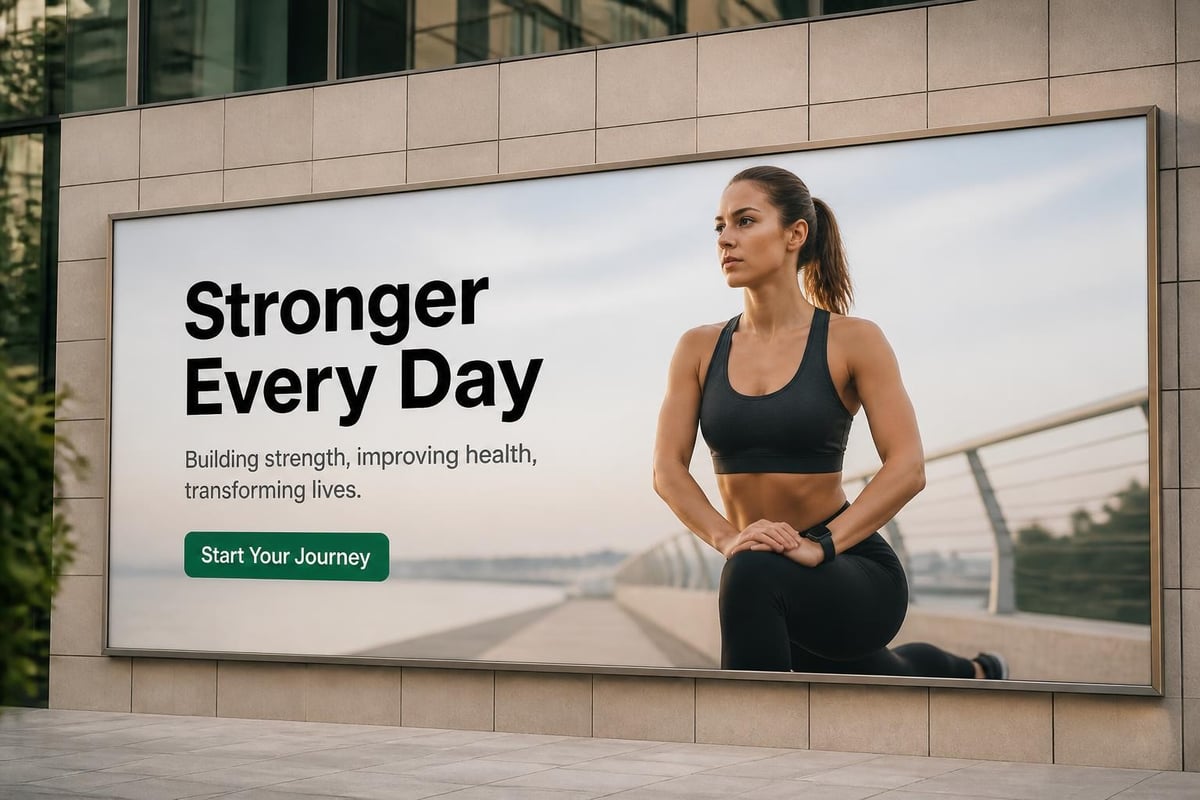
Effective banner design balances visual appeal with message clarity, ensuring immediate comprehension even at distance or during brief viewing windows. Hierarchy of information must guide layout decisions, with the most critical message elements sized proportionally larger and positioned where eye-tracking research confirms natural gaze patterns begin.
Typography selection directly influences readability across viewing distances. Sans-serif fonts generally outperform serif alternatives for outdoor applications, offering cleaner letter forms that remain distinct when viewed from multiple metres away. A practical guideline suggests that one inch of letter height provides legibility for every ten feet of viewing distance, though this varies based on font weight, colour contrast, and ambient lighting conditions.
Colour selection extends beyond aesthetic preference into strategic communications territory. High-contrast combinations such as dark text on light backgrounds (or the inverse) ensure optimal legibility under varied lighting conditions. The International Color Consortium provides essential guidance on colour management for print applications, ensuring that digital designs translate accurately to physical output without unexpected shifts in hue or saturation.
Critical Design Elements
- Clear call-to-action: Every banner should guide viewers toward a specific next step, whether visiting a website, calling a number, or entering a location
- Brand consistency: Logos, colour palettes, and typography must align with established brand guidelines
- Whitespace utilisation: Strategic empty areas prevent visual clutter and direct attention to priority messages
- Image quality: Raster graphics require minimum 150 dpi at final print size to avoid pixelation
- Contact information: Essential details must remain readable at typical viewing distances
The HP large-format printing best practices emphasise proper file preparation to avoid costly reprints, including PDF/X standards, embedded fonts, and CMYK colour mode specification. These technical considerations prevent common production issues that compromise final output quality and delay campaign launches.
Strategic Placement and Installation Methods
Banner effectiveness correlates directly with placement strategy, requiring careful analysis of target audience movement patterns, sight lines, and competing visual stimuli. Traffic flow analysis identifies high-visibility locations where potential customers naturally direct their attention during daily routines. Retail environments benefit from banners positioned at decision points such as entrances, checkout queues, and category transitions.
External mounting options vary in complexity and permanence. Pole pockets allow banners to slide onto vertical supports, creating taut displays that resist wind damage. Grommets with bungee cord attachments provide flexibility during gusts whilst maintaining presentation quality. More permanent installations might employ aluminium frames with tensioning systems that eliminate wrinkles and preserve crisp appearance throughout extended campaigns.
Building facades present substantial opportunities for large-scale banner installations that transform architectural surfaces into advertising real estate. These applications require structural assessment to ensure adequate attachment points can safely support banner weight plus wind load. Professional installation expertise becomes essential when working at height or with complex mounting scenarios. Businesses exploring comprehensive signage strategies should review industry solutions guidance for sector-specific recommendations.
Installation Best Practices
- Site assessment: Evaluate mounting surface condition, accessibility, and environmental exposure
- Hardware selection: Choose corrosion-resistant grommets, D-rings, or pole pockets appropriate for location
- Tensioning strategy: Implement proper tautness to prevent flapping and premature wear
- Safety compliance: Follow working-at-height regulations and secure proper permits for public installations
- Maintenance planning: Schedule regular inspections to identify and address wear before failure occurs
The relationship between outdoor signage effectiveness and placement decisions cannot be overstated. A brilliantly designed banner positioned where target audiences cannot see it delivers zero marketing value, whilst even modest designs in optimal locations generate consistent engagement.
Regulatory Compliance and Permission Requirements
South African businesses must navigate municipal bylaws governing banner size, placement duration, and content restrictions before deployment. Signage regulations and permits vary by municipality, with major metropolitan areas typically enforcing stricter controls than rural districts. Temporary event banners often receive more lenient treatment than permanent installations, though duration limits and removal requirements remain enforced.
Heritage areas and conservation zones impose additional restrictions to preserve aesthetic character and historical integrity. These locations may prohibit certain materials, limit colour palettes, or require design approval from heritage committees before installation proceeds. Failure to secure proper permissions risks enforcement action including removal orders and financial penalties.
Private property installations require landlord approval even when the business operates as a tenant. Shopping centres and commercial parks frequently maintain design guidelines ensuring visual coherence across all tenant signage. These standards may specify mounting methods, size limitations, and approved colour schemes that override individual business preferences.
| Compliance Area | Key Requirements | Typical Processing Time | Common Restrictions |
|---|---|---|---|
| Municipal Permits | Application with site plan, specifications | 2-6 weeks | Size limits, placement zones |
| Building Management | Landlord approval, design conformity | 1-3 weeks | Mounting methods, visual standards |
| Heritage Sites | Committee review, aesthetic assessment | 4-12 weeks | Materials, colours, historical appropriateness |
| Temporary Events | Event organiser permission, duration limits | 1-7 days | Removal deadlines, designated areas |
Performance Measurement and Return on Investment
Quantifying banner effectiveness enables data-driven optimisation of future campaigns and justifies marketing expenditure to stakeholders. Impression tracking estimates how many individuals potentially viewed the banner based on location traffic counts and duration of display. Whilst less precise than digital analytics, this methodology provides baseline performance indicators for physical advertising assets.
Call tracking numbers unique to each banner deployment reveal which installations generate direct customer enquiries. QR codes linked to campaign-specific landing pages offer another measurement avenue, capturing engagement data whilst bridging physical and digital marketing channels. These codes have experienced renewed popularity following widespread smartphone adoption and improved camera functionality that enables instant scanning without dedicated applications.
A/B testing different banner designs at comparable locations isolates design variables' impact on customer response. This experimental approach identifies which colour schemes, headlines, or calls-to-action resonate most strongly with target demographics. The programmatic measurement research demonstrates how sophisticated attribution models track customer journeys across multiple touchpoints, principles that increasingly inform physical signage strategy.
ROI Calculation Framework
Investment costs encompass design fees, material expenses, printing charges, installation labour, and ongoing maintenance requirements. Revenue attribution tracks sales increases, inquiry volume growth, or website traffic upticks during banner display periods. The basic ROI formula divides net profit (revenue minus costs) by total investment, expressing the result as a percentage.
- Calculate total campaign investment including all production and installation costs
- Establish baseline performance metrics from pre-campaign period
- Measure incremental improvement during campaign deployment
- Attribute reasonable percentage of improvement to banner influence
- Compute ROI and compare against alternative marketing channels
Sophisticated businesses incorporate customer lifetime value into ROI calculations, recognising that banner-acquired customers may generate revenue across multiple transactions spanning months or years. This long-term perspective often reveals higher true returns than simple immediate-sales calculations suggest.
Maintenance and Longevity Optimisation
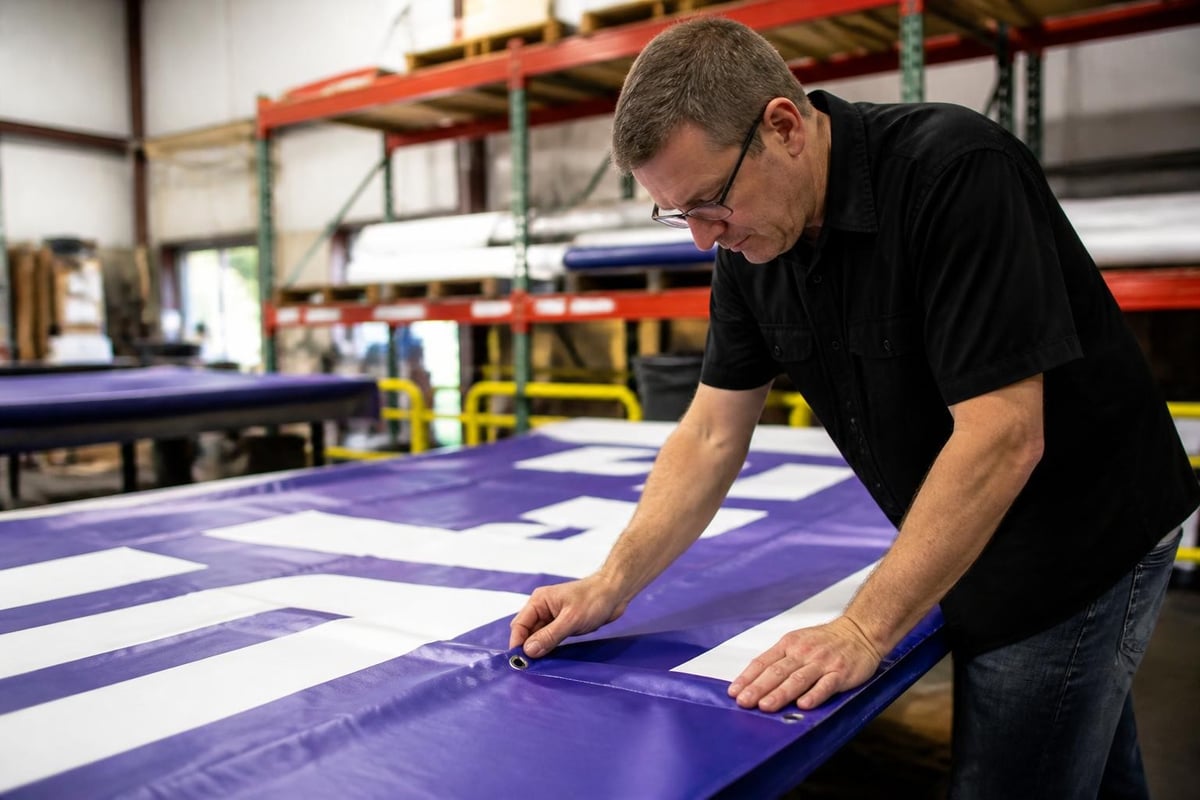
Proactive banner maintenance extends usable lifespan and preserves professional appearance throughout deployment periods. Regular cleaning removes accumulated dust, pollen, and atmospheric pollutants that degrade visual clarity and accelerate material deterioration. Mild detergent solutions applied with soft cloths suffice for most vinyl and fabric substrates, whilst high-pressure washing risks damage to printed surfaces and structural seams.
Inspection schedules identify early-stage issues before they evolve into failures requiring complete replacement. Checking grommet integrity prevents tears that propagate across banner surfaces during wind events. Examining mounting hardware reveals loosening fasteners, corroding components, or structural weakening that compromises safe installation. The maintenance guidance available through industry resources outlines comprehensive protocols for various signage types.
Storage between seasonal campaigns significantly impacts reusability. Banners should be cleaned thoroughly, allowed to dry completely, and rolled rather than folded to prevent permanent creases. Climate-controlled environments protect materials from temperature extremes and humidity fluctuations that promote mould growth or adhesive degradation. Proper inventory management systems track each banner's usage history, deployment locations, and condition assessments to inform replacement decisions.
Common Issues and Solutions
| Problem | Cause | Prevention | Remedy |
|---|---|---|---|
| Fading | UV exposure, low-quality ink | UV-resistant materials, premium inks | Early replacement, colour correction |
| Tearing | Wind stress, weak grommets | Mesh materials, reinforced edges | Patch repair, grommet replacement |
| Wrinkles | Improper storage, inadequate tension | Rolling storage, proper installation | Heat treatment, re-tensioning |
| Mould Growth | Moisture exposure, poor ventilation | Complete drying before storage | Antimicrobial cleaning, thorough drying |
Material quality fundamentally determines maintenance requirements and replacement frequency. Whilst premium substrates command higher initial costs, their extended lifespan and reduced maintenance demands often deliver superior total cost of ownership compared to budget alternatives requiring frequent replacement.
Integration with Comprehensive Marketing Strategies
Banners function most effectively as components within integrated marketing campaigns rather than isolated tactics. Message consistency across banners, digital advertising, social media, and traditional media reinforces brand recognition and increases customer recall. Visual elements established in banner designs should echo throughout all marketing materials, creating cohesive brand experiences regardless of customer touchpoint.
Seasonal campaigns benefit from coordinated banner refreshes that align with promotional calendars and inventory cycles. Retail environments might rotate banners monthly to highlight current offers, new arrivals, or seasonal merchandise. This dynamic approach maintains customer interest whilst preventing visual fatigue that diminishes advertising effectiveness over extended exposure periods.
Cross-channel attribution tracking reveals how banner exposure influences online behaviour, store visits, and purchase decisions. Customers might first encounter a brand through roadside banners, subsequently research online, then visit physical locations to complete transactions. Understanding these complex customer journeys enables marketing budget allocation optimisation across channels based on actual contribution to conversion outcomes rather than simplistic last-click attribution models.
Businesses exploring comprehensive visual communications should examine how custom signage solutions complement banner deployments to create immersive brand environments. The synergy between permanent architectural signage, temporary promotional banners, and dynamic digital displays creates layered messaging that addresses customers throughout their decision-making processes.
Industry-Specific Banner Applications
Corporate environments deploy banners for internal communications, event branding, and campus wayfinding in addition to external marketing functions. Trade show participation demands portable banner solutions that establish professional booth presence whilst transporting efficiently between venues. Retractable stands, tension fabric displays, and modular banner systems serve these requirements through lightweight construction and tool-free assembly.
The retail sector leverages banners for promotional announcements, seasonal campaigns, and point-of-purchase messaging that drives impulse purchases. Window banners attract passing traffic into stores, whilst interior banners guide customers toward featured categories or clearance sections. The design trends shaping retail environments increasingly favour bold typography and minimalist compositions that communicate instantly amidst visually cluttered shopping environments.
Construction sites utilise banners for project marketing, safety messaging, and stakeholder communications. Developer banners announce upcoming projects to surrounding communities, generating interest among potential buyers or tenants before completion. Safety banners reinforce protocols and warn of hazards, contributing to accident prevention and regulatory compliance. Durable materials withstand the harsh conditions typical of active construction environments.
Pharmaceutical applications demand precision in colour reproduction and content accuracy given regulatory scrutiny and professional audience expectations. Conference banners, clinic wayfinding, and product launch displays must reflect the industry's emphasis on credibility, scientific rigour, and patient safety. Material selections often prioritise indoor-appropriate substrates with superior print resolution capabilities.
Future Developments in Banner Technology
Sustainable materials continue advancing as businesses respond to environmental concerns and corporate responsibility mandates. Recyclable substrates manufactured from post-consumer waste reduce environmental impact whilst maintaining performance characteristics comparable to traditional vinyl. Bio-based inks derived from renewable resources replace petroleum-based alternatives without sacrificing colour vibrancy or longevity.
Smart banner technology integrates near-field communication (NFC) chips and augmented reality triggers that transform static displays into interactive experiences. Customers scanning banners with smartphones access additional product information, video content, or exclusive promotional offers that deepen engagement beyond simple visual exposure. These innovations blur boundaries between physical and digital marketing whilst providing enhanced measurement capabilities.
Improved printing technologies deliver higher resolutions at faster production speeds, reducing lead times and enabling more responsive marketing campaigns. Latex and UV-curable inks offer enhanced durability and environmental safety compared to traditional solvent-based systems. These advances democratise high-quality banner production, making premium results accessible to businesses of all sizes.
The convergence of traditional banners with digital display technology creates hybrid solutions offering static-print backup for programmable content screens. These systems maintain visibility during power failures or technical issues whilst providing dynamic messaging capabilities during normal operation. Such redundancy proves valuable for critical communications where message delivery cannot be interrupted.
Effective banner deployment requires careful consideration of design principles, material selection, placement strategy, and performance measurement to maximise marketing impact and return on investment. Whether launching temporary promotional campaigns or establishing permanent brand presence, the versatility and cost-effectiveness of professional banners make them indispensable tools across industries. Signs4SA delivers comprehensive banner solutions backed by manufacturing expertise, national reach, and commitment to quality that helps South African businesses communicate their messages with confidence and clarity.