


Wayfinder Digital Signage: A Complete Guide for South African Businesses
Navigating complex environments such as shopping centres, hospitals, corporate campuses, and airports has become increasingly challenging as these facilities expand and evolve. Wayfinder digital signage represents a technological leap forward in helping visitors find their destinations quickly and efficiently. Unlike traditional static directional signs, these interactive systems combine touchscreen technology, real-time data, and dynamic mapping to create intuitive navigation experiences. For businesses across South Africa's corporate, retail, pharmaceutical, and construction sectors, implementing effective wayfinding solutions has become essential for improving customer satisfaction, reducing staff workload, and creating professional, accessible environments that serve diverse audiences.
Understanding Wayfinder Digital Signage Technology
Wayfinder digital signage differs fundamentally from standard digital displays by incorporating interactive elements specifically designed for navigation purposes. These systems typically feature touchscreen interfaces that allow users to search for specific locations, view multi-floor maps, and receive step-by-step directions customised to their current position within a building or campus.
The technology integrates several sophisticated components working in harmony. At the core sits content management software that controls map displays, directory information, and promotional content. This connects to high-resolution displays engineered for continuous operation in public spaces, often featuring anti-glare screens for visibility in various lighting conditions. Many modern installations also incorporate sensors and beacons that enable location-aware features, whilst some advanced systems connect to mobile devices for continued navigation assistance beyond the kiosk.
Interactive Capabilities That Set Wayfinders Apart
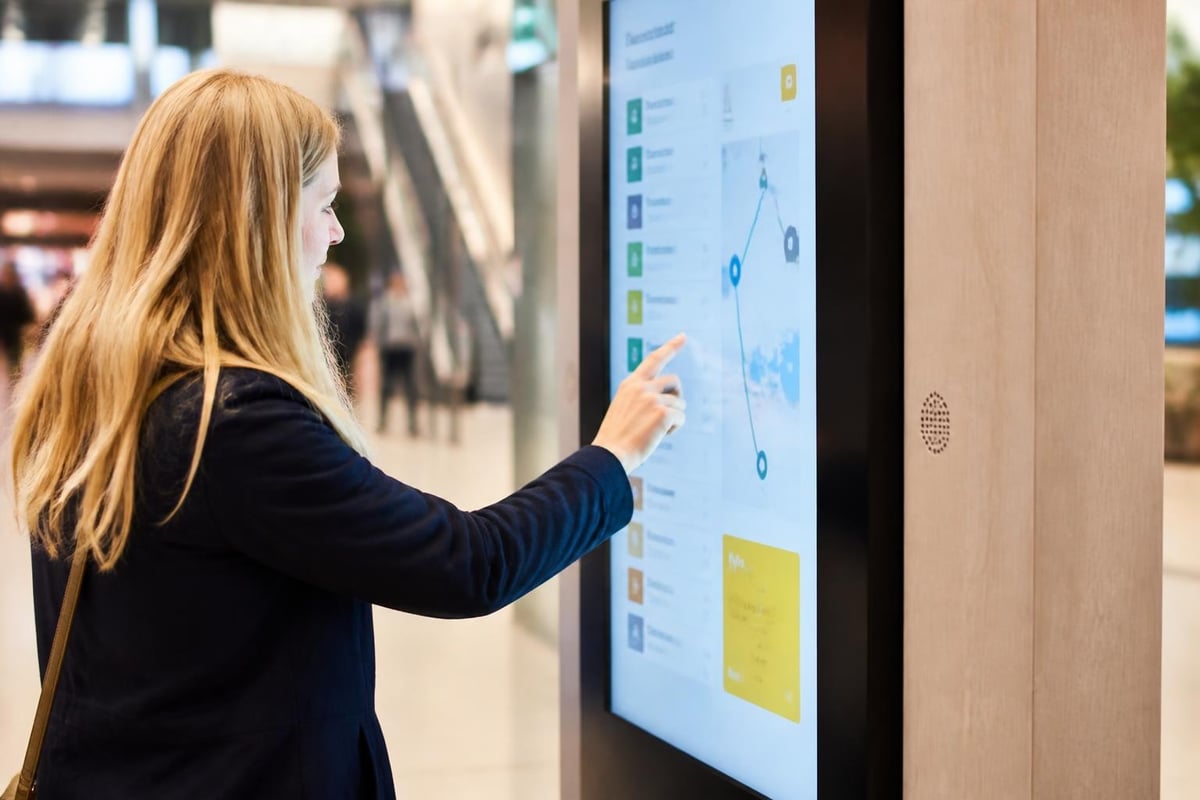
What distinguishes wayfinder digital signage from conventional directional signage is the interactive experience it delivers. Users can search alphabetically for tenants, browse by category, or select destinations from visual maps. The system then generates optimised routes considering factors such as accessibility requirements, construction detours, or the shortest path.
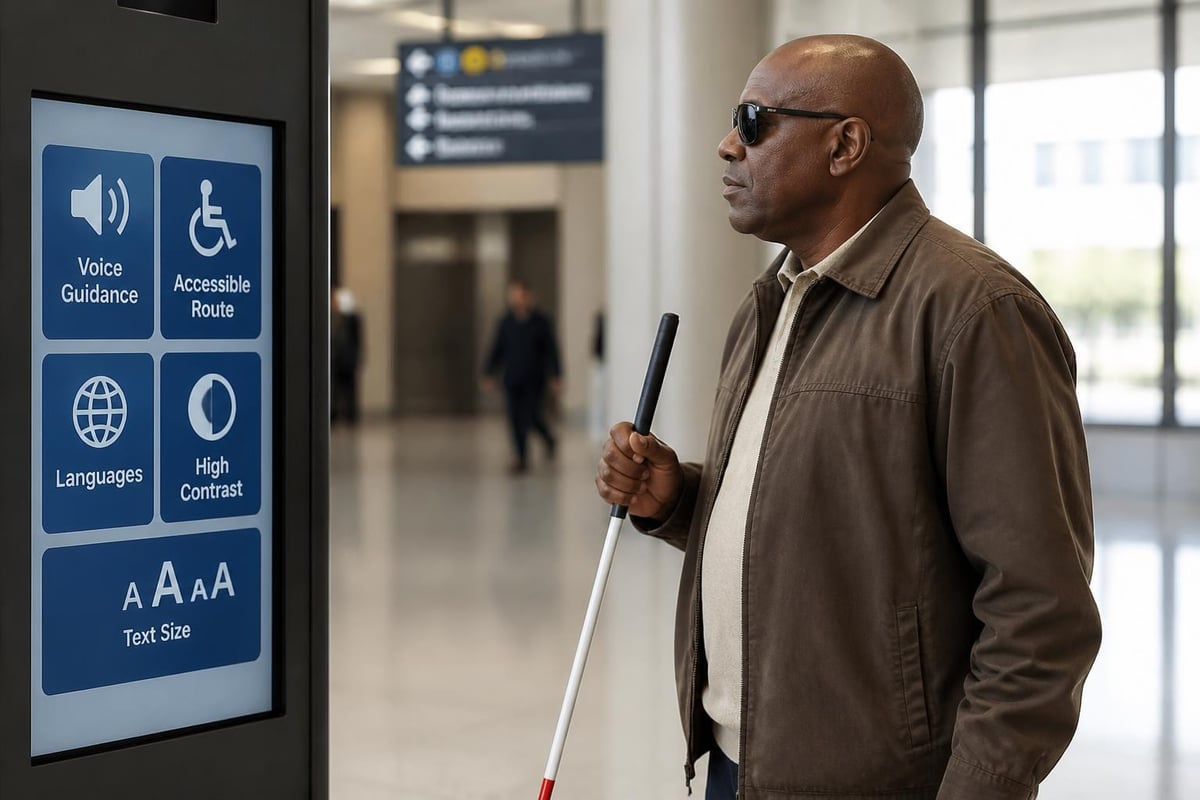
Modern wayfinding kiosks often include accessibility features ensuring compliance with universal design principles:
- Voice guidance for visually impaired visitors
- Adjustable height displays accommodating wheelchair users
- Multi-language support serving diverse communities
- High-contrast modes improving readability for various visual abilities
- QR code generation transferring directions to smartphones
These capabilities transform wayfinding from a passive information delivery system into an engaging tool that adapts to individual user needs, creating more inclusive environments across healthcare facilities, educational institutions, and commercial properties.
Strategic Implementation Across Different Sectors
Retail and Shopping Centre Applications
Shopping centres represent perhaps the most common deployment environment for wayfinder digital signage. These complex, multi-level environments constantly change as tenants relocate, new stores open, and temporary exhibitions occupy available space. Static signage simply cannot keep pace with this dynamism.
Within retail environments, wayfinding systems serve multiple purposes simultaneously. They guide shoppers to specific stores, highlight current promotions, display wait times for popular restaurants, and even integrate with loyalty programmes to offer personalised recommendations. According to research on commercial digital signage in shopping malls, understanding audience engagement patterns helps optimise placement and interaction design for maximum effectiveness.
The business case for retail wayfinder digital signage extends beyond customer convenience. Property managers report reduced enquiries to information desks, improved tenant satisfaction through increased foot traffic, and additional revenue streams through advertising opportunities on the same displays. For shopping centres seeking to differentiate themselves in competitive markets, sophisticated Digital Signage solutions create memorable experiences that encourage repeat visits.
Healthcare and Hospital Navigation
Healthcare facilities present unique wayfinding challenges. Anxious patients and visitors navigate stressful situations whilst searching for specific departments, consulting rooms, or patient wards. Effective wayfinder digital signage in hospitals reduces this anxiety whilst improving operational efficiency.
| Healthcare Wayfinding Benefit | Impact |
|---|---|
| Reduced patient stress | Improved satisfaction scores |
| Fewer directional enquiries | Staff focus on clinical duties |
| Better appointment punctuality | Optimised scheduling efficiency |
| Enhanced accessibility compliance | Inclusive care environment |
Hospital wayfinding systems often integrate with appointment scheduling systems, allowing patients to enter confirmation codes and receive personalised directions to their specific appointment location. This integration extends to visitor management, where guests can search for patients by name (with appropriate privacy controls) and receive directions to the correct ward.
The pharmaceutical and medical sectors served by professional signage providers require solutions meeting stringent healthcare standards whilst maintaining infection control protocols. Antimicrobial touchscreen coatings, easily sanitised surfaces, and contactless interaction options have become standard features in healthcare wayfinder implementations.
Design Principles for Effective Wayfinding Systems
Creating truly effective wayfinder digital signage requires more than installing screens and loading maps. Success depends on thoughtful design that considers human behaviour, architectural context, and technological capabilities.
Visual Hierarchy and Information Architecture
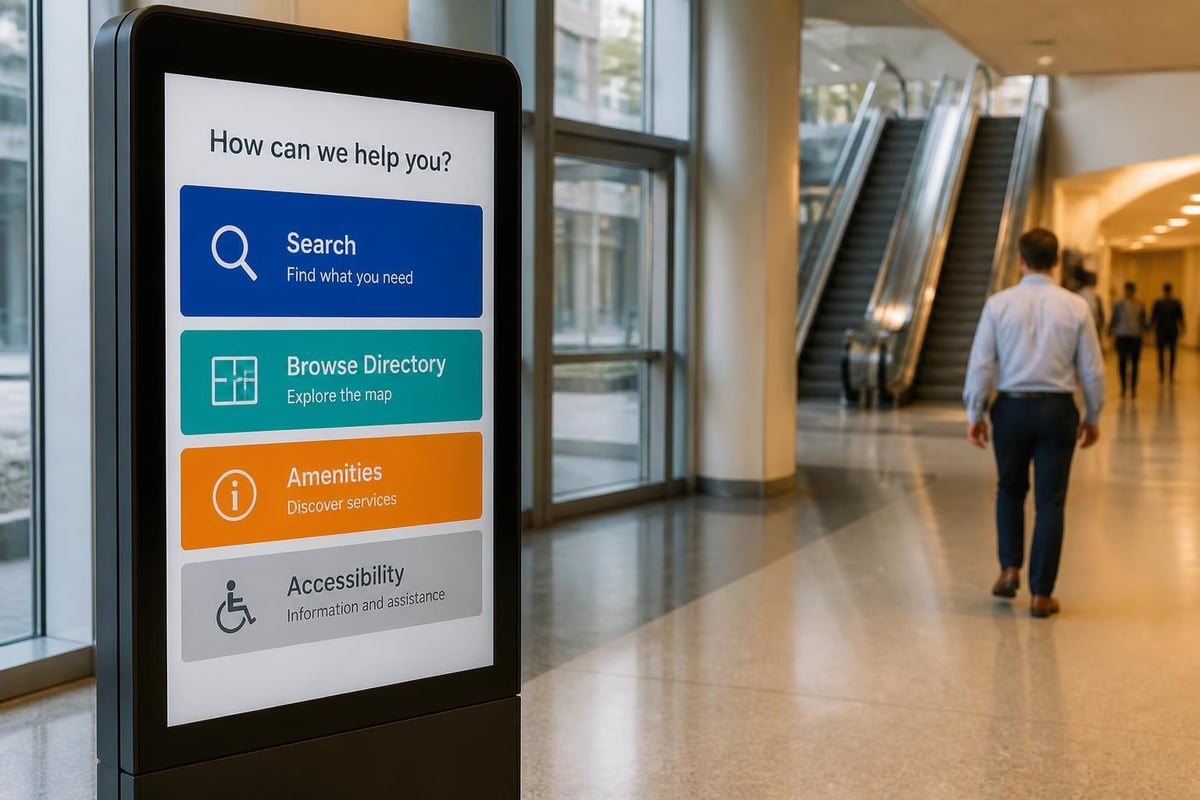
The most critical element of wayfinder design involves establishing clear visual hierarchy. Users should immediately understand the primary action-typically "Where do you want to go?"-without reading detailed instructions. Secondary functions such as browsing directories or viewing amenities should support rather than compete with this primary purpose.
Information architecture must mirror how people naturally think about destinations. Rather than organising locations by building numbers or floor codes, effective systems group destinations by function: medical services, retail categories, department names, or service types. For insights into effective signage design principles, exploring industry insights reveals best practices across sectors.
Colour coding provides another powerful organisational tool. Consistent colour schemes linking wayfinder displays to physical signage throughout a facility create visual continuity. A visitor who receives directions via a blue route on the digital display should encounter blue directional markers as they navigate, reinforcing confidence in the system.
Physical Placement and Network Strategy
Strategic placement determines whether wayfinding systems succeed or languish unused. High-traffic decision points-building entrances, lift lobbies, corridor intersections-represent ideal locations where visitors naturally pause to orient themselves.
A comprehensive wayfinding network distributes touchpoints throughout a facility:
- Primary kiosks at main entrances offering full functionality
- Secondary displays at decision points showing simplified directional information
- Tertiary signs providing confirmation along routes
- Destination markers confirming arrival at the intended location
This layered approach, detailed in comprehensive resources about wayfinding signage, ensures visitors receive guidance throughout their journey rather than only at the starting point. The network effect multiplies the value of each individual display whilst reducing cognitive load on users.
Content Management and Maintenance Considerations
The operational success of wayfinder digital signage depends heavily on content management practices and ongoing maintenance protocols. Even the most sophisticated hardware becomes ineffective when displaying outdated information or experiencing technical failures.
Dynamic Content Updates and Real-Time Integration
Modern wayfinding systems excel when integrated with other operational systems. Retail wayfinders connected to lease management databases automatically update when tenants change locations. Healthcare systems linked to appointment scheduling display real-time clinic availability. Corporate wayfinders integrated with meeting room booking systems direct visitors to the correct conference facility.
This integration requires robust content management systems (CMS) designed specifically for wayfinding applications. Generic digital signage CMS platforms often lack the specialised features needed for map management, routing algorithms, and location database synchronisation. Purpose-built wayfinding CMS solutions offer tools for:
- Multi-floor map editing and zone management
- Route calculation considering temporary obstacles
- A/B testing different interface designs
- Analytics tracking popular destinations and search terms
- Remote content updates across distributed networks
Proactive Maintenance and Performance Monitoring
Wayfinder digital signage operates in demanding public environments with constant interaction, exposure to temperature variations, and continuous operation requirements. Establishing proactive maintenance schedules prevents minor issues from escalating into system failures that frustrate users and damage facility reputations.
| Maintenance Task | Frequency | Purpose |
|---|---|---|
| Screen cleaning | Daily | Visibility and hygiene |
| Touch calibration | Weekly | Accuracy and responsiveness |
| Software updates | Monthly | Security and features |
| Hardware diagnostics | Quarterly | Prevent component failures |
| Content accuracy audit | Quarterly | Information reliability |
Remote monitoring capabilities enable facility managers to identify and address issues before they impact users. Alerts for screen failures, software crashes, or connectivity problems allow technical teams to respond quickly, maintaining high system availability. For organisations managing multiple sites, centralised monitoring dashboards provide visibility across entire wayfinding networks.
The importance of professional signage installation extends to wayfinder systems, where proper mounting, power supply configuration, and network connectivity directly impact long-term reliability and maintenance requirements.
Enhancing User Experience Through Advanced Features
As wayfinder digital signage technology matures, advanced features increasingly differentiate exceptional systems from basic implementations. These capabilities address specific user needs whilst creating memorable interactions that reflect positively on facility management.
Mobile Integration and Journey Continuity
One significant limitation of traditional wayfinding kiosks involves the transition from digital directions to physical navigation. Users must memorise routes or photograph screens before departing. Modern systems address this friction through mobile integration, allowing visitors to transfer directions to smartphones via QR codes, SMS, email, or dedicated applications.
This continuity extends the wayfinding experience beyond the kiosk. As visitors navigate corridors, their mobile devices can provide turn-by-turn directions, distance remaining, and estimated arrival times. Some advanced implementations incorporate indoor positioning using Bluetooth beacons or Wi-Fi triangulation, enabling real-time location tracking and dynamic rerouting around congested areas or temporary closures.
Mobile integration also enables pre-visit planning. Visitors can research destinations, plan routes, and save favourites before arriving at a facility. Upon arrival, they simply scan a code at the wayfinder kiosk to load their pre-planned route, streamlining the experience whilst reducing interaction time.
Personalisation and Accessibility Features
Sophisticated wayfinder digital signage adapts to individual user preferences and requirements. Accessibility settings allow users to specify mobility needs, triggering route calculations that prioritise lifts over stairs, avoid steps, and account for door widths accommodating wheelchairs or mobility aids.
Language localisation extends beyond simple translation, incorporating cultural considerations in iconography, colour associations, and navigation preferences. For South African implementations serving diverse communities, supporting multiple official languages alongside international languages creates inclusive environments welcoming all visitors.
Best practices from institutions like Glendale Community College emphasise legibility and concise messaging as fundamental accessibility considerations. Typography choices, contrast ratios, and animation speeds all impact how effectively different users can interact with wayfinding systems.
Business Case and Return on Investment
Investing in wayfinder digital signage represents a significant capital expenditure requiring clear business justification. However, multiple return on investment (ROI) factors often make these systems financially compelling beyond their obvious navigational benefits.
Quantifiable Operational Benefits
The most direct ROI comes from reduced staffing requirements at information desks. Facilities report 40-60% reductions in directional enquiries after implementing comprehensive wayfinding networks, allowing receptionists and security personnel to focus on higher-value interactions. In healthcare settings, this translates to clinical staff spending less time providing directions and more time on patient care.
Additional quantifiable benefits include:
- Reduced late arrivals for appointments and meetings improving scheduling efficiency
- Shorter dwell times in retail environments as shoppers find destinations faster
- Decreased signage production costs as digital systems eliminate printed directory updates
- Lower staff training requirements for new employees learning facility layouts
Revenue Generation Opportunities
Beyond cost savings, wayfinder digital signage creates revenue opportunities through advertising and sponsorship programmes. Retail environments particularly benefit from this dual-purpose functionality. The same display guiding shoppers to destinations can promote current sales, highlight featured retailers, or display paid advertisements from tenants.
Directory listings present another revenue stream. Premium placement in search results, featured tenant status, or enhanced listing details with images and promotional messages command higher lease rates or additional fees. Some shopping centres integrate loyalty programmes, generating transaction fees from redemptions initiated at wayfinding kiosks.
Corporate environments leverage wayfinding displays for internal communications, delivering training reminders, safety messages, and corporate announcements to captive audiences already engaged with the system. This functionality particularly valuable for organisations managing large campuses or multiple buildings benefits from signage solutions for every industry.
Future Trends in Wayfinding Technology
The wayfinding industry continues evolving rapidly as new technologies emerge and user expectations shift. Understanding these trends helps organisations make future-proof investments that remain relevant as capabilities advance.
Artificial Intelligence and Predictive Navigation
Artificial intelligence increasingly influences wayfinding system capabilities. Machine learning algorithms analyse usage patterns to predict popular destinations at specific times, proactively suggesting relevant locations. In shopping centres, AI might recommend restaurants during lunch hours or specific departments based on seasonal shopping patterns.
Natural language processing enables conversational interfaces where users speak or type queries in everyday language rather than navigating hierarchical menus. "Where's the nearest bathroom?" or "Take me to Dr. Smith's office" become viable interactions, particularly benefiting users with limited mobility or vision who find touchscreen navigation challenging.
Research into automated wayfinding design optimisation suggests future systems may automatically adapt layouts and routing based on real-time congestion data, accessibility requirements, and individual user preferences without manual configuration.
Augmented Reality Integration
Augmented reality (AR) represents perhaps the most transformative trend in wayfinding technology. Rather than viewing directions on a screen then navigating from memory, AR overlays directional arrows and information directly onto the physical environment through smartphone cameras or dedicated AR glasses.
Studies examining AR wayfinding systems for older adults demonstrate enhanced spatial learning and navigation confidence compared to traditional methods. As AR technology becomes more accessible and smartphone adoption continues growing, the integration between fixed wayfinding kiosks and mobile AR experiences will likely deepen.
For specialised environments like home entertainment spaces, where navigation meets experiential design, companies such as ANR media demonstrate how custom audiovisual solutions create immersive environments that may eventually incorporate AR wayfinding for complex multi-room installations.
Sustainability and Energy Efficiency
Environmental considerations increasingly influence wayfinder digital signage specifications. Energy-efficient displays, motion-activated standby modes, and optimised brightness based on ambient light conditions reduce operational costs whilst supporting sustainability commitments.
The shift toward modular, upgradeable hardware platforms extends equipment lifecycles, reducing electronic waste. Rather than replacing entire kiosks when technology advances, organisations can upgrade specific components-displays, computers, or software-whilst retaining structural elements and mounting systems. Case studies like ChromeOS implementation for digital wayfinders demonstrate how modern operating systems reduce maintenance overhead and improve energy efficiency.
Integration with Broader Signage Ecosystems
Wayfinder digital signage rarely operates in isolation. Effective implementations coordinate with comprehensive signage programmes incorporating static directional signs, architectural features, and environmental graphics. This integration creates cohesive wayfinding experiences where digital and physical elements reinforce each other.
The distinction between wayfinding and wayfinder signage clarifies this relationship. Wayfinding represents the complete system guiding people through environments, whilst wayfinder signage specifically refers to the informational elements-both digital and static-comprising that system. Digital displays provide detailed information and dynamic routing, whilst physical signs offer confirmation and reassurance along routes.
Coordination extends to design consistency. Typography, colour schemes, iconography, and terminology must align across digital kiosks and physical signage. A visitor who searches for "Radiology" on a digital wayfinder should encounter signs labelled "Radiology" rather than "Medical Imaging," even if both terms refer to the same department. This consistency reduces cognitive load and builds confidence in the wayfinding system.
Professional signage providers understand these integration requirements. Organisations can explore various custom signage solutions that complement digital wayfinding systems, creating unified visual languages throughout facilities. From building identification to department markers and regulatory compliance signs, comprehensive programmes deliver superior results compared to piecemeal implementations.
Wayfinder digital signage has evolved from simple directory displays into sophisticated navigation systems that enhance visitor experiences across retail, healthcare, corporate, and institutional environments. The technology delivers measurable operational benefits whilst creating opportunities for revenue generation and brand differentiation. Whether you're planning a new facility, renovating an existing space, or seeking to improve visitor satisfaction, implementing effective wayfinding solutions requires expertise in both technology and signage manufacturing. Signs4SA combines comprehensive digital signage capabilities with professional design, installation, and support services to create wayfinding systems that truly serve your visitors and your business objectives.