



Signage for Advertising: A Complete Guide for South African Businesses
Signage for advertising represents one of the most powerful yet often underutilised marketing tools available to businesses today. Unlike digital advertisements that disappear with a scroll or broadcast media that vanishes after seconds, physical signage creates persistent brand impressions that work around the clock. Whether positioned along busy motorways, outside retail premises, or within shopping centres, well-designed advertising signage captures attention, communicates messages, and drives consumer action. Understanding how to leverage this medium effectively can transform your marketing investment from mere visual presence into a strategic asset that delivers measurable returns.
The Strategic Value of Advertising Signage
Advertising signage differs fundamentally from other marketing channels through its permanence and geographic specificity. When you invest in quality signage, you're securing a marketing position that continues delivering impressions long after the initial installation cost.
Research demonstrates that physical signage creates stronger memory retention than many digital alternatives. The human brain processes visual information through multiple pathways when encountering three-dimensional, illuminated, or strategically positioned signs. This multi-sensory engagement translates to higher recall rates and stronger brand associations.
Design Principles That Drive Results
Effective signage for advertising succeeds or fails based on design fundamentals. Your sign has approximately 3-7 seconds to capture attention, communicate a message, and prompt action from passing viewers.
Legibility forms the foundation of successful advertising signage. According to essential design principles, text must be readable from the intended viewing distance. For highway signage, this means letters at least 300mm tall; for pedestrian-focused retail signs, 75-150mm may suffice.
Colour selection dramatically influences effectiveness. High-contrast combinations like black on yellow or white on dark blue achieve maximum visibility across various lighting conditions. Brand colours should be balanced against readability requirements, sometimes necessitating adaptations for signage applications.
Typography and Messaging Hierarchy
Simple, bold fonts outperform decorative typefaces in advertising contexts. Your signage should communicate its primary message through:
- Brand identifier (logo or company name)
- Primary message (your key value proposition)
- Call to action (what viewers should do next)
- Contact information (how to respond)
Research on effective calls to action reveals that specific, actionable language drives higher response rates than generic messaging. "Visit Today" outperforms "Welcome," whilst "Save 30% This Week" generates more action than "Great Deals."
Exploring design trends can help businesses stay current whilst maintaining timeless legibility standards that ensure long-term effectiveness.
Location Strategy and Placement Optimisation
Where you position signage for advertising matters as much as its design. Strategic placement multiplies effectiveness by putting your message before the right audiences at optimal moments.
Traffic pattern analysis should inform every placement decision. Morning commuters travelling east see different signs than evening commuters heading west. Pedestrian flow around retail environments creates high-value zones where dwell time increases message absorption.

High-Impact Placement Zones
Different environments offer distinct advantages:
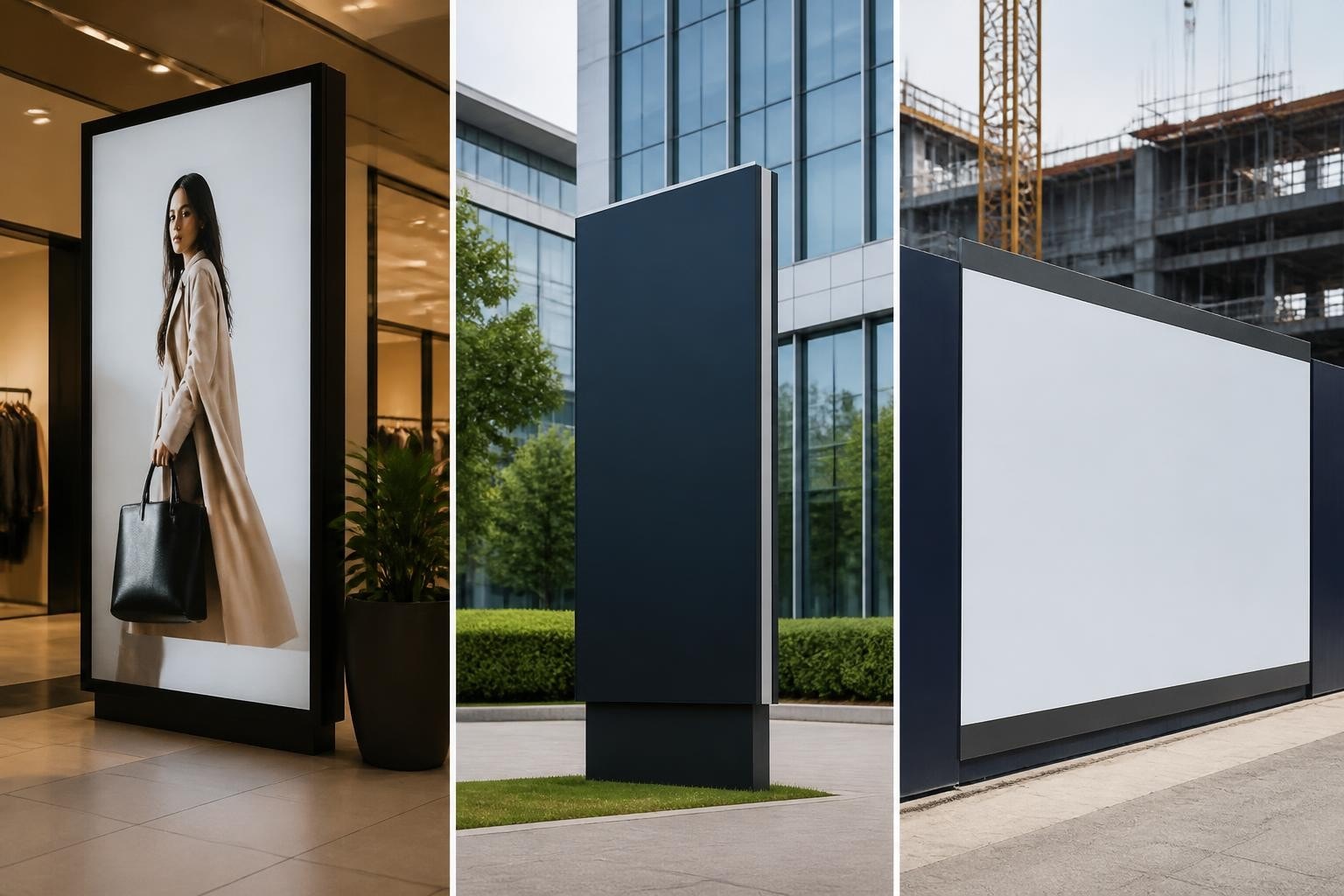
- Highway corridors: Maximum impressions, brand awareness focus
- Retail frontage: Conversion-oriented, immediate action prompts
- Shopping centre interior: Dwell-time messaging, detailed information
- Construction sites: Credibility building, community awareness
- Corporate campuses: Professional positioning, B2B engagement
For businesses requiring prominent highway visibility, bespoke Pylon Signage designed to specification offers commanding presence that captures attention from considerable distances whilst communicating brand professionalism.
The psychology behind placement extends beyond simple visibility. Signs positioned at decision points, where viewers can immediately act on messaging, convert at higher rates than those requiring delayed response. A directional sign 100 metres before your entrance outperforms one at your driveway because it allows drivers time to safely react.
Material Selection for Durability and Impact
Signage for advertising represents a long-term investment, making material selection crucial for both initial impact and ongoing performance. South African conditions, characterised by intense UV exposure, variable rainfall, and temperature extremes, demand materials engineered for resilience.
| Material Type | Lifespan | Weather Resistance | Best Applications |
|---|---|---|---|
| Aluminium Composite | 10-15 years | Excellent | Corporate, retail facades |
| Acrylic | 7-10 years | Very good | Illuminated displays |
| Vinyl Graphics | 3-5 years | Good | Temporary promotions |
| Steel Fabrication | 15+ years | Excellent | Structural pylons |
| LED Modules | 50,000+ hours | Excellent | Digital displays |
Understanding material properties helps businesses make informed decisions that balance budget constraints against longevity requirements.
Illumination Options
Visibility extends beyond daylight hours when you incorporate illumination. Several approaches serve different needs:
- Internal LED illumination: Energy-efficient, even light distribution
- External spotlighting: Dramatic shadows, architectural emphasis
- Backlit channel letters: Premium appearance, individual letter definition
- Edge-lit acrylic: Sleek modern aesthetic, lower power consumption
Studies on advertising effectiveness demonstrate that illuminated signage generates significantly higher view-through rates during evening hours, effectively extending your advertising window by 50% or more compared to non-illuminated alternatives.
Businesses interested in modern display technology can explore LED signage benefits that combine dynamic content capabilities with exceptional visibility.
Digital Versus Static Advertising Signage
The emergence of digital display technology has created new possibilities for signage for advertising, though static solutions retain significant advantages in many contexts.
Digital signage offers unmatched flexibility. Content updates happen remotely, messaging adapts to time of day or current promotions, and motion attracts attention more effectively than static images. Shopping centres increasingly deploy digital networks that rotate multiple advertisers, maximising space utilisation.
However, digital solutions require ongoing operational considerations. Power consumption, content management systems, regular updates, and technical maintenance represent recurring commitments.
Comparative Analysis
Digital advantages include:
- Real-time content updates
- Multiple messages in rotation
- Motion and animation capabilities
- Data-driven scheduling
- Remote management
Static signage strengths encompass:
- Lower initial investment
- Zero ongoing content costs
- No power requirements
- Simpler installation process
- Proven longevity
According to digital signage best practices, successful implementations balance technological capabilities against audience attention spans, avoiding content complexity that overwhelms rather than engages.
For businesses weighing options, reading about LED versus traditional comparisons provides detailed analysis of scenarios where each approach delivers optimal value.
Regulatory Compliance and Permit Navigation
Signage for advertising operates within regulatory frameworks designed to maintain aesthetic standards, ensure public safety, and manage visual competition. Understanding these requirements prevents costly redesigns and installation delays.
Municipal regulations vary significantly across jurisdictions. Size restrictions, setback requirements, illumination limitations, and zoning classifications all influence what you can install and where. Construction sites face different rules than retail premises, whilst pharmaceutical facilities may encounter additional health-related signage mandates.

The approval process typically involves:
- Preliminary site assessment and zoning verification
- Design submission with technical specifications
- Review period by planning authorities
- Revision cycle addressing feedback
- Final approval and permit issuance
- Post-installation inspection confirming compliance
Navigating South African signage regulations requires understanding both national standards and local municipal variations that can significantly impact project timelines.
Professional signage manufacturers maintain current knowledge of regulatory landscapes, streamlining the approval process through compliant designs submitted with complete documentation. This expertise prevents common pitfalls that delay projects or necessitate expensive modifications.
Measuring Advertising Signage Performance
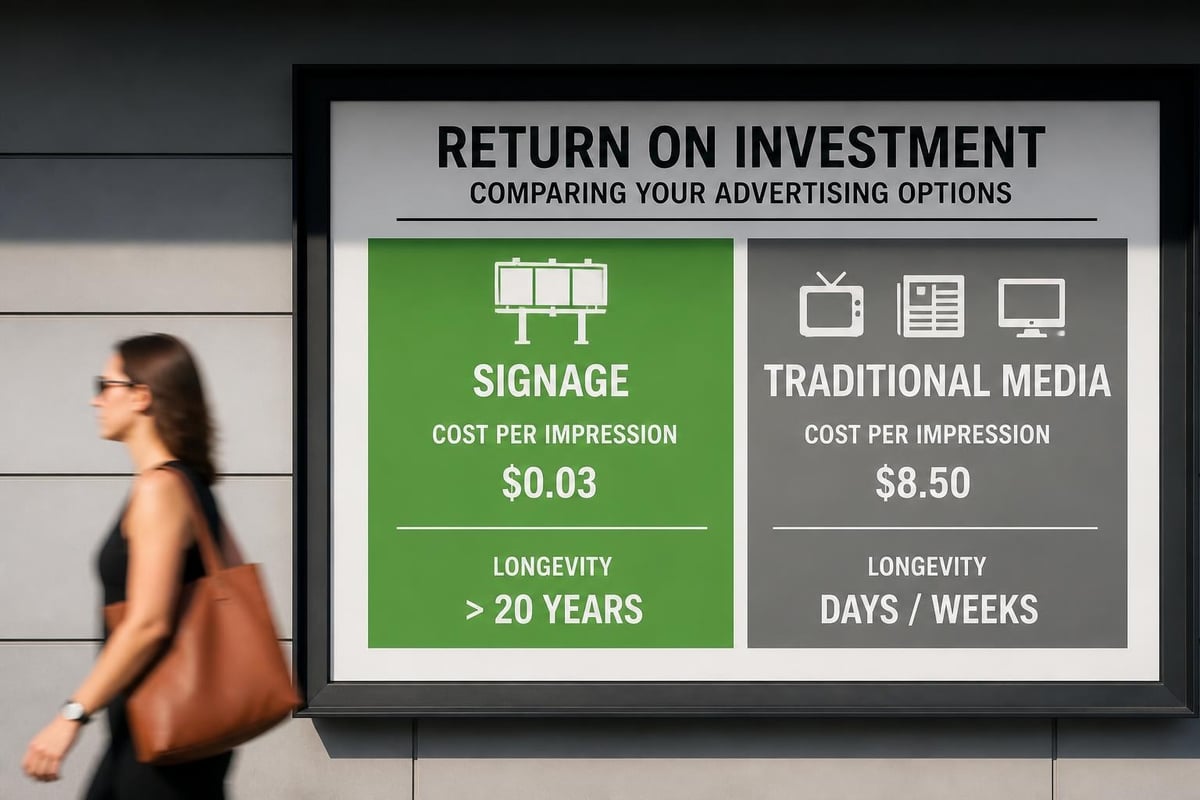
Quantifying return on investment validates signage for advertising expenditure and informs future marketing decisions. Unlike digital channels with built-in analytics, physical signage requires intentional measurement strategies.
Traffic counting establishes baseline impression volumes. Manual counts, automated sensors, or mobile phone data can estimate daily exposure. Multiply these figures by sign lifespan to calculate total impressions, then divide installation cost by this number for cost-per-impression metrics.
Response tracking mechanisms include:
- Unique promotional codes displayed on signage
- Dedicated phone numbers or URLs
- Customer surveys asking "How did you hear about us?"
- Geofenced mobile advertising retargeting viewers
- Sales lift analysis in periods following installation
Research exploring digital advertising market dynamics highlights measurement challenges that apply equally to physical signage, emphasising the importance of establishing clear attribution methodologies before deployment.
Performance Benchmarks
Industry data suggests well-positioned signage for advertising can achieve strong results in terms of daily impressions, message recall, and conversion attribution. Businesses focused on maximising visibility should review strategies for attracting customers through outdoor signage, which details tactics for converting impressions into foot traffic.
Industry-Specific Applications
Different sectors leverage signage for advertising in distinctive ways, each capitalising on unique advantages whilst addressing specific challenges.
Retail Environments
Retail signage balances brand building with immediate conversion goals. Window displays attract initial attention, directional signage guides movement through spaces, and promotional signs highlight current offers. According to shopping centre digital signage considerations, successful retail implementations create visual hierarchy that prevents overwhelming customers whilst maintaining engagement.
Corporate Facilities
Corporate signage projects authority and professionalism. Reception areas, campus wayfinding, and building identification all contribute to brand perception. Subtle sophistication typically outperforms aggressive promotional messaging in these contexts.
Construction Sites
Construction signage serves dual purposes: advertising the developer or contractor whilst providing community information about the project. Large-scale installations communicate ambition and capability, positioning companies for future opportunities beyond the current site.
Understanding industry-specific solutions helps businesses implement approaches proven effective within their sectors.
Pharmaceutical Applications
Pharmaceutical signage must balance marketing objectives against regulatory constraints regarding health claims and professional standards. Clean, clinical aesthetics typically align with brand positioning whilst maintaining compliance.
Maintenance and Longevity Strategies
Preserving signage for advertising effectiveness requires proactive maintenance that addresses both functional integrity and aesthetic appeal. Environmental exposure gradually degrades even premium materials without proper care.
Regular cleaning schedules prevent accumulation that dims illumination, obscures messaging, or creates unprofessional appearances. Frequency depends on location: urban environments with higher pollution require monthly attention, whilst rural installations may need only quarterly cleaning.
Inspection protocols should identify:
- Illumination failures requiring bulb or LED replacement
- Loose fixings compromised by wind or vibration
- Surface damage from impact or vandalism
- Colour fading indicating need for refinishing
- Structural concerns affecting safety or stability
Following comprehensive maintenance guidance extends signage lifespan significantly, protecting your advertising investment whilst maintaining optimal performance throughout its service life.
Preventative Versus Reactive Approaches
Scheduled maintenance is more cost-effective and less disruptive than emergency repairs. Establishing relationships with professional signage providers ensures access to technical expertise, replacement components, and rapid response when issues arise. Many manufacturers offer maintenance contracts that provide predictable service levels.
Integration With Broader Marketing Strategies
Signage for advertising achieves maximum impact when integrated within comprehensive marketing approaches rather than functioning as isolated elements. Consistent messaging across channels reinforces brand recognition and amplifies individual touchpoint effectiveness.
Visual continuity between signage, digital presence, print materials, and packaging creates cohesive brand experiences. Customers encountering consistent colours, typography, and messaging across multiple exposures develop stronger brand associations and higher trust levels.
Consider how signage complements:
- Social media campaigns announcing new locations or promotions
- Vehicle branding that extends your advertising reach beyond fixed locations
- Email marketing reinforcing messages displayed on physical signage
- Website content reflecting current signage promotions
- Print advertising maintaining visual consistency with outdoor displays
Exploring vehicle branding opportunities demonstrates how mobile advertising extends geographic reach beyond static installations.
Strategic timing coordination ensures various channels support each other. Launch signage installation alongside digital campaigns, creating multiple touchpoints that reinforce identical messaging during concentrated periods.
Emerging Technologies and Future Developments
Signage for advertising continues evolving through technological advancement and changing consumer expectations. Staying informed about emerging capabilities helps businesses maintain competitive advantages.
Interactive elements transform passive viewing into active engagement. QR codes enable instant mobile connections, NFC technology facilitates contactless interactions, and augmented reality applications overlay digital content onto physical signs through smartphone cameras.
Sustainability considerations increasingly influence material selection and operational practices. Solar-powered illumination reduces environmental impact whilst eliminating electrical infrastructure requirements. Recyclable materials and responsible disposal processes address growing environmental consciousness among consumers and regulators.
Content design practices are adapting based on research into attention patterns and information processing. Studies on digital signage content design reveal that bulleted lists, limited text quantities, and appropriate image sizing improve comprehension and retention, principles equally applicable to static installations.
Artificial Intelligence Applications
AI-driven systems can optimise digital signage content based on real-time factors like weather conditions, traffic patterns, or demographic data. Morning commuters might see breakfast promotions whilst afternoon viewers receive different messaging, maximising relevance without manual intervention.
Computer vision technology enables anonymous audience measurement, tracking dwell time, attention patterns, and demographic estimation. This data informs content refinement and validates advertising effectiveness with unprecedented precision.
Quality Standards and Professional Implementation
The difference between mediocre and exceptional signage for advertising often lies in manufacturing quality and installation expertise. Substandard execution undermines even brilliant design, whilst professional implementation elevates modest concepts.
Manufacturing precision ensures consistent colour reproduction, accurate dimensions, and reliable component integration. Professional facilities employ calibrated equipment, quality control processes, and experienced craftspeople who understand material behaviours and assembly techniques.
Installation expertise addresses site-specific challenges that specifications alone cannot anticipate. Wind loads, substrate variations, access constraints, and electrical integration all require experienced judgment. Understanding professional installation importance highlights how proper execution protects both investment value and ongoing performance.
Selecting Manufacturing Partners
Evaluation criteria when choosing signage providers should include:
- Portfolio demonstrating relevant project experience
- Manufacturing capabilities matching your requirements
- Understanding of regulatory compliance procedures
- Maintenance and support service availability
- Project management expertise ensuring timeline adherence
- Warranty coverage protecting your investment
Established manufacturers with national footprints offer advantages including consistent service across multiple locations, established supplier relationships ensuring material quality, and proven processes that minimise project risks.
Effective signage for advertising combines strategic thinking, design excellence, quality manufacturing, and ongoing maintenance into cohesive programmes that deliver measurable business results. From initial concept through years of reliable performance, every decision impacts your return on investment and brand perception. Whether you're establishing new visibility, refreshing existing installations, or exploring emerging technologies, partnering with experienced professionals ensures your signage investment achieves its full potential. Signs4SA combines comprehensive manufacturing capabilities, industry expertise across corporate, retail, construction, and pharmaceutical sectors, and a national presence to deliver signage solutions that transform marketing objectives into tangible results.