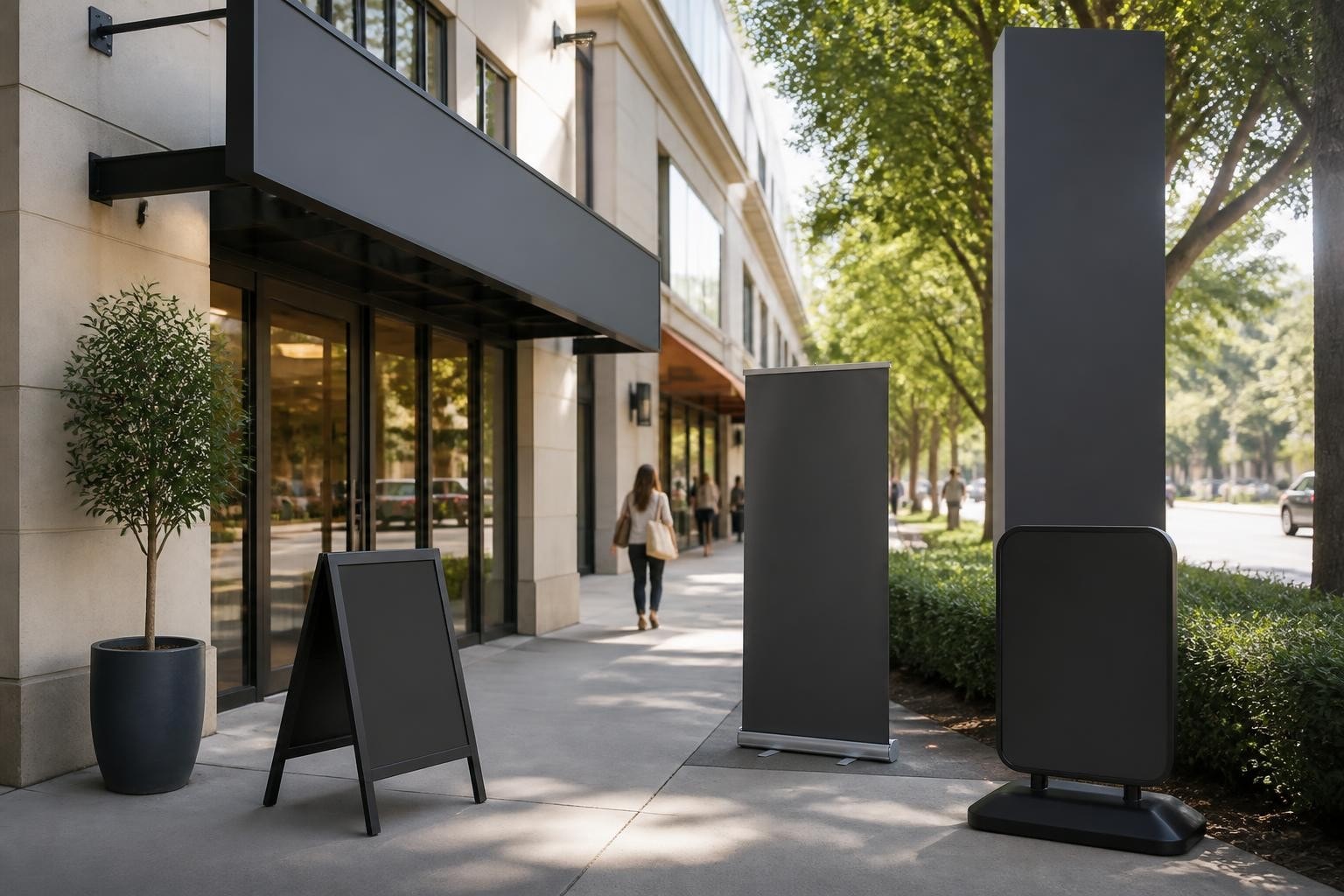


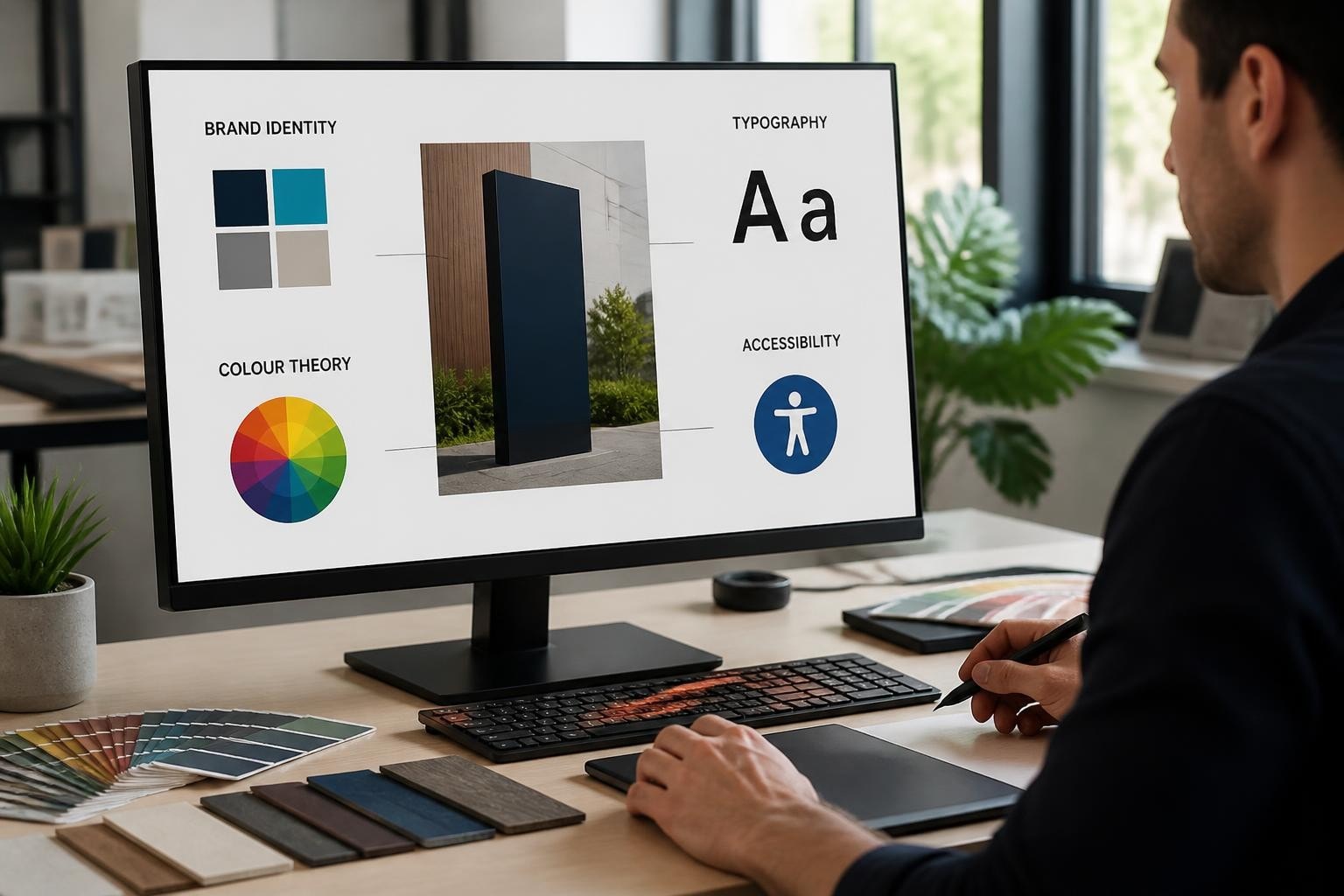
Signage Board Design: Essential Principles for 2026
Effective signage board design combines artistic vision with strategic communication to create powerful visual touchpoints that guide, inform, and persuade audiences. Whether you're developing wayfinding systems for a hospital complex, promotional displays for a retail environment, or compliance signage for a pharmaceutical facility, understanding the fundamental principles of design ensures your message reaches its intended audience with clarity and impact. The difference between signage that performs and signage that fails often comes down to deliberate design choices made during the planning and conceptual phases.
Understanding the Core Purpose of Signage Board Design
Before selecting fonts, colours, or materials, every signage project must begin with a clear understanding of its purpose. Different signage types serve distinct functions, and effective signage board design aligns visual elements with these objectives.
Primary signage functions include:
- Identification (building names, room numbers, department labels)
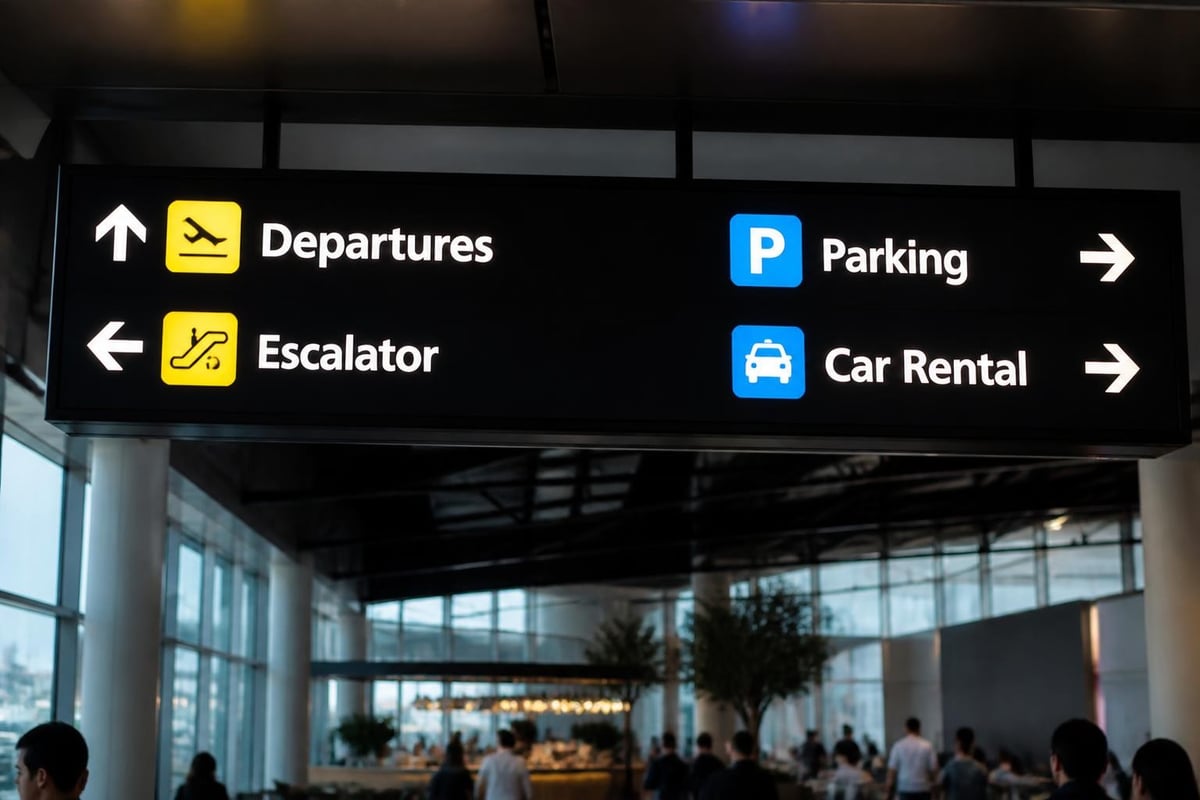
- Directional guidance (wayfinding arrows, maps, distance markers)
- Informational communication (operating hours, facility rules, safety protocols)
- Promotional messaging (special offers, brand campaigns, product highlights)
- Regulatory compliance (health warnings, fire exits, accessibility notifications)
The pharmaceutical industry, for instance, requires signage that communicates complex information about controlled substances and safety protocols with absolute clarity. Retail environments demand signage that captures attention whilst maintaining brand consistency across multiple touchpoints. Understanding these nuanced requirements from the outset shapes every subsequent design decision.
Audience Analysis and Environmental Context
Successful signage board design considers who will interact with the sign and under what conditions. A corporate reception area serves a different audience than a construction site, and the design must reflect these distinctions.
Consider viewing distance, lighting conditions, and the duration of interaction. Motorists passing at 120 kilometres per hour require dramatically different design approaches compared to pedestrians browsing a shopping centre. Environmental factors such as direct sunlight, artificial lighting, weather exposure, and surrounding visual clutter all influence legibility and effectiveness.

Typography and Readability Fundamentals
Typography forms the backbone of effective signage board design. The typeface selection, size, spacing, and treatment directly impact whether your message is read and understood.
Font Selection Criteria
Sans-serif typefaces generally perform better for signage applications due to their clean lines and high legibility at distance. Fonts like Helvetica, Gotham, and Futura have become signage staples because their letterforms remain distinct even when viewed from considerable distances or unfavourable angles.
Avoid ornate scripts, condensed fonts with tight letter spacing, or typefaces with ambiguous characters (where 'I', 'l', and '1' appear nearly identical). Decorative fonts may support brand personality but should be reserved for accent text rather than primary messaging.
| Typography Consideration | Recommended Approach | Common Mistake |
|---|---|---|
| Character height | Minimum 25mm per metre of viewing distance | Using uniform sizes regardless of placement |
| Letter spacing | 15-20% of character height | Tight kerning that merges at distance |
| Weight | Medium to bold for primary text | Light weights that disappear in bright conditions |
| Case | Sentence case for extended text | ALL CAPS blocks that reduce reading speed |
Sizing for Distance and Impact
The relationship between character height and viewing distance follows established formulas that ensure legibility. As a baseline, characters should measure approximately 25mm in height for every metre of intended viewing distance. A sign meant to be read from 10 metres requires letters at least 250mm tall.
However, this represents the minimum threshold. Optimal design often exceeds these minimums, particularly for pylon signage that must capture attention from passing vehicles. Understanding these calculations prevents the costly mistake of producing beautifully crafted signs that nobody can actually read.
Colour Theory and Contrast in Signage Board Design
Colour selection influences both aesthetic appeal and functional performance. Strategic colour application creates hierarchy, guides attention, and ensures adequate contrast for legibility across varying conditions.
Contrast Ratios and Accessibility
The Web Content Accessibility Guidelines (WCAG) provide scientifically validated standards for contrast that apply equally to digital and physical signage. Minimum contrast ratios ensure that text remains readable for individuals with varying levels of visual acuity.
Standard contrast requirements:
- Normal text: Minimum 4.5:1 contrast ratio
- Large text (18pt+): Minimum 3:1 contrast ratio
- Graphic elements: 3:1 for meaningful graphics
Dark text on light backgrounds typically achieves better legibility than reversed combinations, particularly under varying lighting conditions. Black text on white, dark blue on yellow, or white on dark green represent time-tested high-contrast pairings.
Psychological and Cultural Colour Associations
Colour carries meaning that extends beyond mere aesthetics. Red signals urgency, warning, or prohibition across most cultures. Blue communicates trust, professionalism, and calm. Green indicates safety, permission, or environmental consciousness. Understanding colour psychology in signage design ensures your visual choices support rather than contradict your message.
Within South African contexts, colour choices should respect cultural diversity whilst maintaining universal accessibility standards. Safety signage, in particular, must adhere to standardised colour codes recognised internationally to prevent confusion or misinterpretation.
Material Selection and Durability Considerations
The substrate you select for signage board design directly impacts longevity, appearance, and appropriateness for the installation environment. Choosing the right signage materials requires balancing budget constraints with performance requirements.
Common Signage Substrates
Different materials suit different applications. The comprehensive guide to sign materials from industry resources provides detailed comparisons of properties and ideal use cases.
| Material | Indoor Lifespan | Outdoor Lifespan | Best Applications |
|---|---|---|---|
| Aluminium Composite | 10+ years | 7-10 years | Building fascia, dimensional letters |
| Acrylic (Perspex) | 10+ years | 5-7 years | Illuminated boxes, retail displays |
| PVC Foamboard | 5-7 years | 2-3 years | Interior directional, temporary promotional |
| Dibond | 10+ years | 8-10 years | High-end exterior signage, architectural applications |
| High-Density Urethane | 15+ years | 10-15 years | Dimensional signage, carved elements |
Outdoor signage requires UV-resistant materials and finishes that withstand South Africa's intense sunlight. Coastal installations demand additional corrosion resistance. Industrial environments may require impact-resistant substrates. Each context presents unique challenges that material selection must address.
Printing and Finishing Techniques
Modern signage board design leverages advanced printing technologies that deliver photographic quality and exceptional durability. UV-curable inks resist fading far better than traditional solvent-based alternatives. Digital printing enables complex graphics and photographic elements impossible with traditional vinyl application.
Protective laminates extend lifespan by shielding printed surfaces from abrasion, UV exposure, and chemical contact. Anti-graffiti coatings allow easy cleaning without damaging underlying graphics. Selecting appropriate finishing treatments based on anticipated environmental stresses represents sound investment in long-term performance.
Regulatory Compliance and Accessibility Standards
Professional signage board design incorporates relevant regulations and accessibility requirements from the initial concept phase. Retrofitting compliance after fabrication proves far more expensive than building it into the original design.
ADA and Universal Design Principles
The Americans with Disabilities Act (ADA) establishes detailed requirements for signage that inform best practices globally. Whilst South Africa operates under its own regulatory framework, ADA standards represent internationally recognised benchmarks for accessible design.
Key accessibility requirements include:
- Tactile characters with specific depth, spacing, and height parameters
- Grade 2 Braille positioned beneath corresponding text
- Non-glare finish to prevent reflection that obscures text
- Mounting heights between 1200mm and 1525mm from floor to baseline
- Pictograms with minimum 150mm finish dimension for verbal descriptor field
The ADA Technical Assistance Manual provides detailed guidance on implementing these standards across various facility types. Even when not legally mandated in a jurisdiction, these principles ensure signage serves the broadest possible audience.
Industry-Specific Regulatory Requirements
Pharmaceutical facilities face stringent requirements around hazardous material labelling, controlled substance identification, and safety warnings. Construction sites require highly visible temporary signage meeting occupational health standards. Retail environments must comply with consumer protection regulations regarding pricing and product information disclosure.
Understanding signage regulations and permits in South Africa prevents costly compliance failures and potential legal liability. Professional signage providers maintain current knowledge of evolving standards and incorporate them seamlessly into the design process.
Strategic Layout and Information Hierarchy
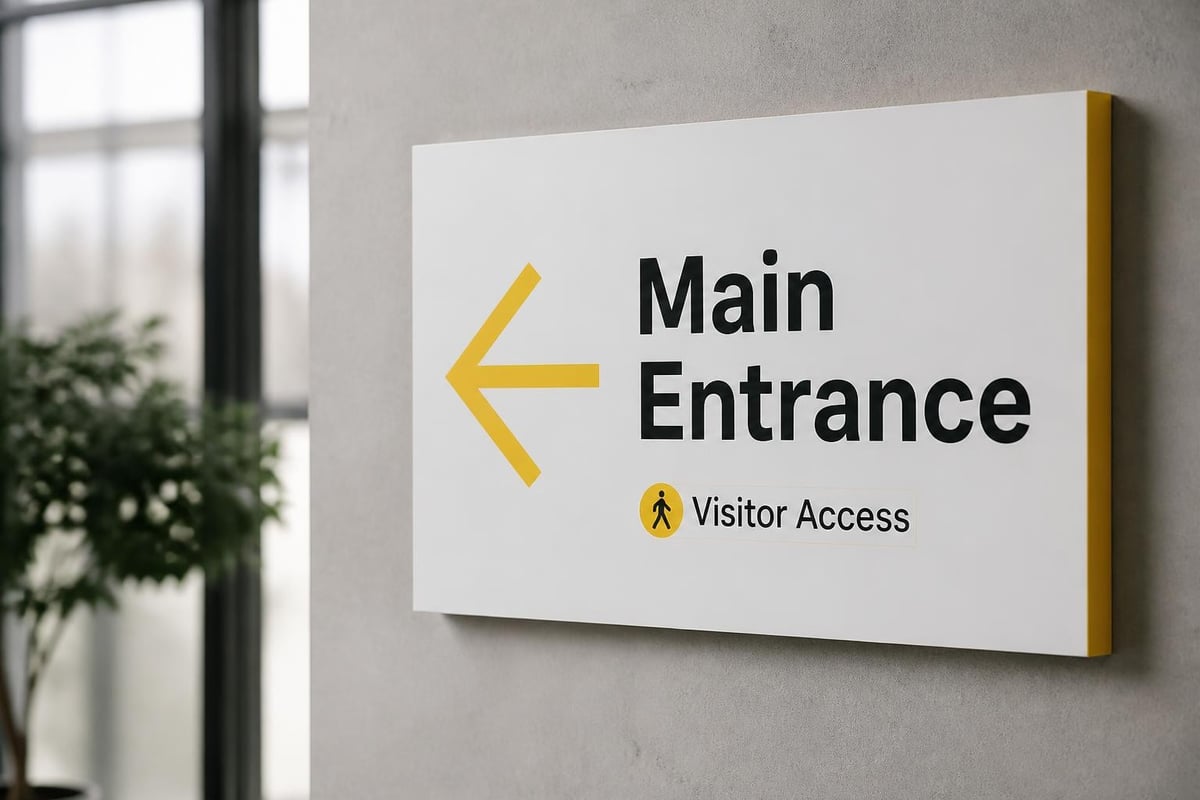
Effective signage board design organises information logically, guiding the viewer's eye through content in order of importance. Poor hierarchy creates visual confusion where nothing stands out and everything competes for attention simultaneously.
The Z-Pattern and F-Pattern Reading Models
Research into reading behaviour reveals predictable eye movement patterns. Western audiences typically scan in a Z-pattern (top left to top right, diagonal down, left to right again) or F-pattern (horizontal scan across top, down left side, partial horizontal scan). Signage board design leverages these natural tendencies by placing critical information where eyes naturally travel first.
Primary messaging belongs in the upper portion of the sign. Supporting details occupy the middle section. Contact information, disclaimers, or tertiary content sits at the bottom. This vertical hierarchy aligns with how people naturally process visual information.
White Space as a Design Element
Novice designers often attempt to fill every millimetre of available space, creating cluttered compositions that overwhelm viewers. Professional signage board design recognises white space (negative space) as an active design element that provides visual breathing room and enhances legibility.
Adequate margins around text blocks prevent information from appearing cramped. Separation between distinct elements clarifies relationships and improves comprehension. The most effective signage often communicates more by including less.
Brand Integration and Visual Consistency
Signage represents a physical manifestation of brand identity. Consistency across all touchpoints reinforces recognition and builds trust. Effective signage board design balances brand expression with functional communication requirements.
Brand Guidelines and Signage Applications
Established brands typically maintain detailed guidelines covering logo usage, colour specifications, typography, and tone of voice. These guidelines ensure consistency across marketing materials, digital presence, and physical signage.
However, brand guidelines developed primarily for print or digital media sometimes require adaptation for signage applications. A logo that performs beautifully on a business card may lack sufficient detail for recognition at 50 metres. Colours that look vibrant on a computer screen may shift when reproduced on aluminium with specific paint formulations.
Professional signage board design respects brand guidelines whilst making necessary adjustments for medium-specific requirements. This might involve simplified logo versions for small-scale applications or adjusted colour values that maintain brand intent whilst optimising for outdoor viewing conditions.
Creating Cohesive Signage Systems
Organisations with multiple locations or complex facilities benefit from cohesive signage systems where individual signs share common design DNA. The Society for Experiential Graphic Design provides extensive resources on developing comprehensive wayfinding and environmental graphic design programmes.
System elements typically include:
- Primary identification (building names, facility markers)
- Directional signage (arrows, distances, maps)
- Informational signs (hours, policies, instructions)
- Room identification (numbers, department names, function labels)
- Regulatory and safety signage (exits, warnings, compliance notices)
A unified type family, consistent colour palette, standardised shapes, and repeated graphic elements create visual coherence across diverse sign types. This systematic approach transforms individual signs into an integrated communication network.
Illumination and Visibility Enhancement
Lighting dramatically influences signage effectiveness, particularly during evening hours when many commercial operations remain active. Strategic illumination extends sign visibility beyond daylight hours and enhances impact even during daytime.
Internal Illumination Options
Internally illuminated signage creates dramatic visual impact whilst ensuring 24-hour visibility. LED technology has revolutionised illuminated signage by dramatically reducing energy consumption whilst increasing brightness and colour rendering capability. Modern digital signage takes this further by enabling dynamic content that can be updated remotely and programmed for different times or events.
Internal illumination methods include:
- Face-lit: LEDs illuminate translucent sign face from within
- Back-lit (halo): Light projects around sign edges creating glowing outline
- Channel letters: Individual three-dimensional letters with internal illumination
- LED modules: Exposed LED elements creating maximum brightness
Energy efficiency considerations extend beyond operational costs to environmental responsibility. LED systems consume approximately 80% less power than traditional fluorescent or neon alternatives whilst lasting significantly longer, reducing both energy consumption and maintenance requirements.
External Lighting Strategies
When internal illumination isn't feasible or appropriate, external lighting provides effective alternatives. Gooseneck fixtures, spotlights, and wash lighting can dramatically enhance sign visibility after dark.
Directional lighting prevents light pollution whilst focusing illumination where it matters. Colour temperature selection influences mood and visibility, cooler temperatures (4000K-5000K) enhancing readability whilst warmer temperatures (2700K-3000K) creating inviting atmospheres.
Digital Integration and Dynamic Content
Contemporary signage board design increasingly incorporates digital elements that enable real-time content updates, interactive features, and data-driven messaging adaptation. This convergence of traditional fabrication with digital technology creates new possibilities for engagement.
Static vs Dynamic Signage Applications
Traditional static signage remains appropriate and cost-effective for permanent information unlikely to change frequently. Building identification, room numbers, and compliance signage rarely require dynamic capability.
However, promotional messaging, event schedules, wayfinding updates, and emergency notifications benefit enormously from digital flexibility. A retail environment might display different promotional content during morning commute hours versus evening shopping periods. Corporate facilities can automatically update meeting room schedules or direct visitors to appropriate locations.
The decision between static and dynamic signage board design should consider update frequency, content complexity, and total cost of ownership including installation, energy consumption, and ongoing maintenance.
Interactive and Responsive Elements
Advanced signage systems incorporate sensors and interactive capabilities that respond to environmental conditions or user input. Touchscreen wayfinding kiosks enable visitors to search directories and receive customised routing instructions. Occupancy sensors trigger relevant messaging based on detected activity. Weather-responsive displays adjust content based on current conditions.
These sophisticated applications require careful planning during the design phase to ensure adequate power supply, network connectivity, and physical accommodation for required hardware. Professional signage manufacturers with experience in integrated systems prove invaluable when developing these complex installations.
Prototyping and Testing Methodologies
Professional signage board design incorporates prototype development and real-world testing before committing to full production. This phase identifies issues invisible in computer renderings but obvious in physical reality.
Mock-Up Development
Full-scale mock-ups placed in actual installation locations reveal problems with scale, visibility, and integration with surrounding architecture. Colours that appeared perfect in a controlled studio environment may shift dramatically under natural daylight or specific architectural lighting.
Mock-ups enable stakeholder review with tangible examples rather than abstract concepts. Decision-makers can physically stand at intended viewing distances and evaluate legibility, comprehensiveness, and aesthetic integration. This investment in prototyping prevents expensive corrections after fabrication.
Environmental Testing
Materials and finishes must withstand anticipated environmental stresses. UV exposure testing predicts fade resistance. Temperature cycling identifies expansion/contraction issues. Salt spray testing evaluates coastal corrosion resistance. Impact testing confirms durability in high-traffic areas.
Professional signage manufacturers conduct these evaluations systematically, selecting proven material combinations with documented performance histories. Exploring affordable signage solutions in South Africa doesn't mean compromising on testing and quality assurance.
Installation Considerations in Design
Signage board design must account for practical installation realities. A beautifully designed sign that proves impossible to install properly fails to deliver value. Professional signage installation requires careful coordination between design intent and execution logistics.
Mounting Methods and Structural Requirements
Different substrates and sign types demand specific mounting approaches. Heavy dimensional signage requires substantial backing and secure anchoring capable of supporting weight plus wind loads. Lightweight foam board signs may use simple adhesive mounting.
Common mounting approaches include:
- Through-bolting with decorative caps
- Stud mounting with concealed fasteners
- Standoff mounting creating dimensional separation
- Frame systems enabling easy panel replacement
- Adhesive mounting for lightweight interior applications
Building façade materials influence mounting possibilities. Mounting to glass curtain walls differs dramatically from brick, concrete, or metal panel installation. Design must acknowledge these constraints from the outset.
Maintenance Accessibility
Long-term performance depends on regular maintenance. Signage board design should facilitate cleaning, lamp replacement, and eventual graphic updates. Illuminated signs requiring annual lamp replacement but mounted 10 metres high without provision for safe access create ongoing liability and expense.
Consider signage maintenance requirements during design development. Modular systems enabling panel replacement without complete sign removal reduce lifecycle costs. Access panels in appropriate locations enable service without specialised equipment. Design choices made early in development influence maintenance realities for years to come.
Industry-Specific Design Considerations
Different sectors present unique signage challenges requiring specialised knowledge and tailored approaches. Understanding these nuances elevates signage board design from generic execution to strategic solution.
Pharmaceutical and Healthcare Environments
Healthcare settings demand absolute clarity in wayfinding to reduce patient stress and ensure timely arrival at appointments. Pharmaceutical facilities require specific hazard communication following international standards. Hygiene considerations influence material selection, favouring non-porous surfaces that resist bacterial colonisation and withstand frequent cleaning with hospital-grade disinfectants.
Colour coding systems help differentiate departments whilst maintaining accessibility standards. Multilingual signage addresses diverse patient populations. Privacy considerations influence information display, particularly around patient areas.
Retail and Commercial Spaces
Retail signage serves dual purposes: providing functional information whilst creating atmospheric experiences that reinforce brand positioning. Promotional signage must capture attention in visually competitive environments without creating overwhelming clutter.
Seasonal flexibility proves valuable, enabling regular refreshment that maintains customer interest. Materials and mounting systems should facilitate updates without complete replacement. Custom signage solutions tailored to specific retail environments deliver superior results compared to generic approaches.
Construction and Industrial Applications
Construction sites require highly visible temporary signage addressing safety, access restrictions, and contractor identification. Durability under harsh conditions, resistance to vandalism, and cost-effectiveness for temporary deployment drive material selection.
Industrial facilities often operate under stringent safety regulations requiring specific signage types, placements, and messaging. Chemical resistance, explosion-proof illumination, and compliance with occupational health standards become paramount considerations.
Emerging Trends and Future Directions
Signage board design continues evolving as new technologies, materials, and design philosophies emerge. Staying current with developments ensures signage investments remain relevant and effective.
Sustainable and Eco-Conscious Design
Environmental responsibility increasingly influences signage decisions. Recyclable materials, low-VOC inks and coatings, energy-efficient LED illumination, and modular systems enabling component replacement rather than complete disposal align with sustainability objectives.
Longevity itself represents sustainable practice. Durable signage requiring replacement less frequently reduces material consumption and waste generation over extended timeframes. Quality construction and timeless design prove more sustainable than disposable approaches requiring frequent replacement.
Integration with Digital Ecosystems
Contemporary signage increasingly connects to broader digital infrastructure. QR codes bridge physical signage with digital content, enabling detailed information access beyond what fits on physical signs. Near-field communication (NFC) tags enable smartphone interaction. Augmented reality applications overlay digital information onto physical environments viewed through device cameras.
These hybrid approaches expand signage capabilities whilst maintaining physical presence and wayfinding functionality. The most effective strategies leverage each medium's strengths rather than attempting to replace one with the other.
Effective signage board design synthesises aesthetic vision, strategic communication, technical expertise, and practical execution into cohesive solutions that serve audiences whilst advancing organisational objectives. Whether you're developing comprehensive wayfinding systems, promotional displays, or compliance signage, partnering with experienced professionals ensures your investment delivers lasting value. Signs4SA brings decades of expertise across corporate, retail, construction, and pharmaceutical sectors, combining skilled craftsmanship with strategic insight to create signage solutions that truly perform.