



Construction Signs: Essential Guide for Safe Work Zones
Construction sites present unique challenges for traffic management, worker safety, and public navigation. Whether you're managing a major infrastructure project or a simple roadworks operation, effective signage forms the foundation of a safe and compliant work zone. The proper deployment of construction signs not only protects workers and the public but also ensures regulatory compliance and minimises project disruptions. Understanding the types, placement, and standards governing these critical safety devices enables construction managers, civil engineers, and signage professionals to create safer work environments whilst maintaining traffic flow and public confidence.
Understanding Construction Sign Categories
Construction signs serve multiple purposes across different phases of site operations. These temporary traffic control devices fall into distinct categories, each designed to address specific communication needs within and around work zones.
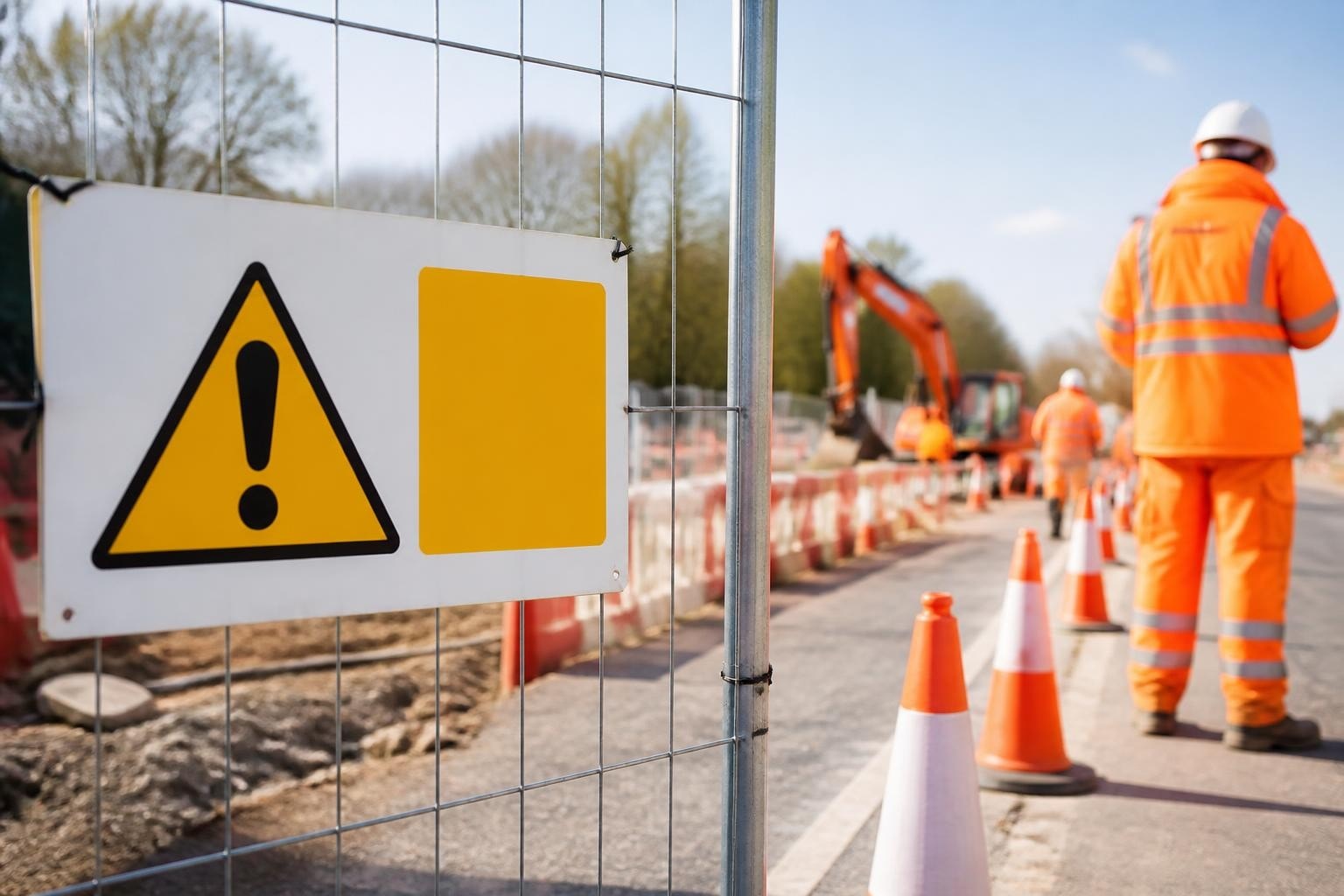
Warning signs alert motorists and pedestrians to upcoming hazards or changed conditions. These typically feature black symbols on orange or yellow backgrounds and include messages such as "Road Works Ahead", "Slow Down", or "Workers Present". The high-visibility colours ensure detection from considerable distances, giving road users adequate time to adjust speed and lane position.
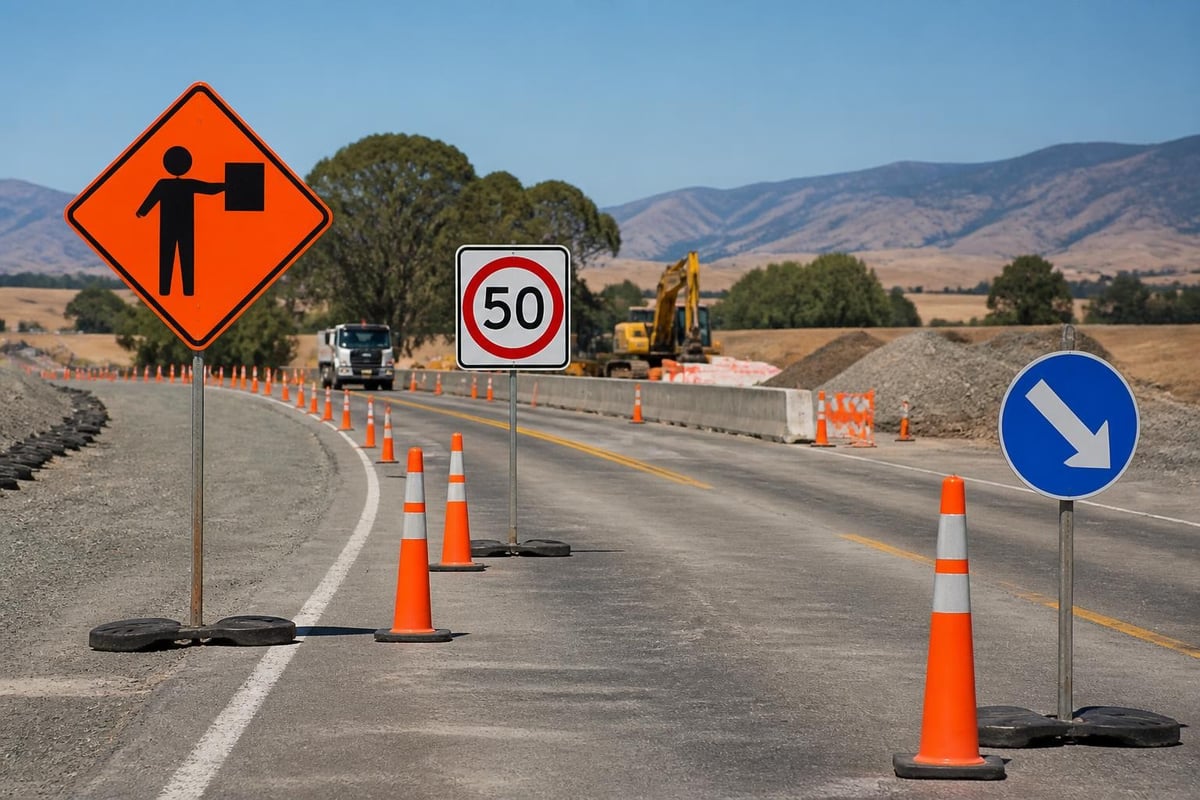
Regulatory signs communicate legal requirements that drivers must obey within construction zones. Speed limit reductions, lane closures, and no-entry restrictions all fall within this category. Non-compliance with regulatory construction signs carries the same legal weight as permanent traffic control devices, making proper placement and visibility crucial for enforcement and safety.
Guide signs help navigate altered traffic patterns by directing vehicles and pedestrians through or around work zones. Detour routes, temporary access points, and alternative pathways require clear, sequential guidance to prevent confusion and maintain traffic flow during construction activities.
Specialised Construction Signage Types
Beyond standard traffic control devices, modern construction projects require specialised signage solutions:
- Pedestrian protection signs ensure safe passage for foot traffic around construction perimeters
- Equipment warning signs identify specific hazards such as overhead cranes or reversing vehicles
- Site identification boards communicate project information, contractor details, and completion timelines
- Emergency information signs display critical contact numbers and assembly points
- Environmental protection notices highlight dust suppression, noise restrictions, or protected species areas
Regulatory Standards and Compliance Requirements
Effective construction signs must comply with national and international standards that govern design, placement, and visibility. The Manual on Uniform Traffic Control Devices (MUTCD) establishes comprehensive guidelines for temporary traffic control devices in the United States, whilst other jurisdictions maintain similar frameworks.
These regulations specify precise requirements for sign dimensions, retroreflectivity, colour specifications, and symbol design. For instance, warning signs typically require a minimum size based on road speed, with faster roads necessitating larger signs to ensure adequate reaction time. Retroreflective sheeting materials must meet specific performance grades to maintain visibility during night-time or low-light conditions.
The Work Zone Safety and Mobility Rule further emphasises systematic approaches to temporary traffic control, requiring agencies to develop policies for work zone safety management. This federal guidance addresses installation procedures, maintenance protocols, and positive protection requirements that directly impact construction sign deployment.
Material and Durability Specifications
| Material Type | Typical Lifespan | Weather Resistance | Cost Factor |
|---|---|---|---|
| Aluminium composite | 5-7 years | Excellent | Medium-High |
| Corflute (corrugated plastic) | 1-2 years | Good | Low |
| Dibond | 5-8 years | Excellent | High |
| Reinforced vinyl | 6-12 months | Moderate | Low |
Material selection significantly impacts both performance and lifecycle costs. Whilst temporary construction signs may only remain in place for weeks or months, they must withstand harsh environmental conditions including wind loading, temperature extremes, and UV exposure. Professional signage manufacturers like Signs4SA understand these requirements and can specify appropriate materials for different project durations and exposure conditions.
Strategic Placement and Visibility Optimisation
Proper placement transforms construction signs from mere regulatory compliance items into effective communication tools. The National Academies guidance on crashworthiness emphasises that sign supports must meet specific safety standards to prevent additional hazards in the event of vehicle impact, particularly relevant for temporary installations in high-speed environments.
Advance warning distance represents one of the most critical placement considerations. Signs must appear far enough ahead of hazards to allow appropriate driver response. For high-speed roads (above 80 km/h), initial warning signs typically appear 500-1000 metres before the work zone, with additional signs at intermediate distances reinforcing the message.
Sight lines and vertical alignment affect sign visibility substantially. Signs positioned too high may be obscured by truck cabs, whilst those placed too low disappear behind smaller vehicles in multi-lane traffic. The standard mounting height of 1.5-2.0 metres above ground level balances visibility across different vehicle types whilst maintaining adequate clearance for pedestrian movement.
Sequence and Spacing Protocols
Construction sign sequences follow established patterns that road users recognise intuitively:
- Initial warning (500-1000m ahead): General notification of upcoming works
- Specific hazard identification (300-500m ahead): Nature of hazard or changed conditions
- Action required (100-300m ahead): Speed reduction or lane change instruction
- Immediate warning (at hazard): Final reminder at point of maximum risk
- End of restriction (after hazard): Return to normal conditions notification
This systematic approach, supported by human factors research on road systems, creates predictable communication patterns that drivers can process without excessive cognitive load, even in unfamiliar areas.
Design Principles for Maximum Effectiveness
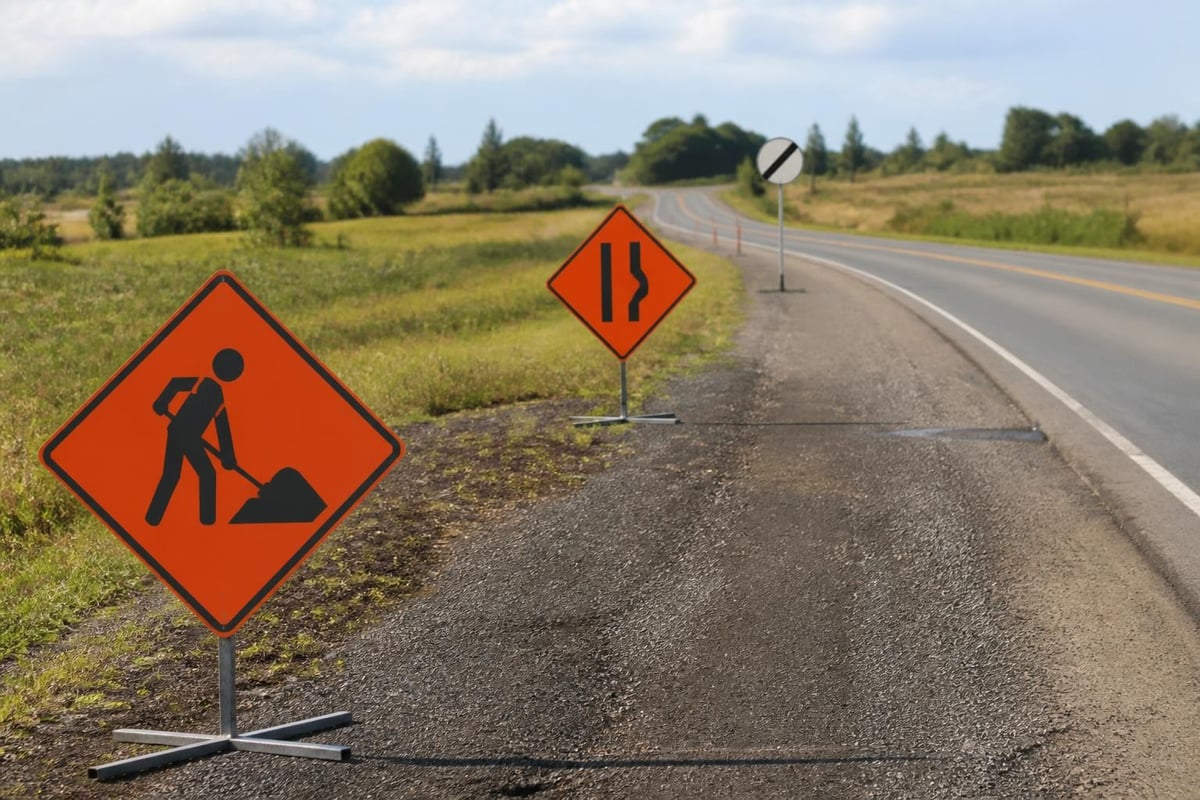
Effective construction signs balance regulatory compliance with practical readability. Symbol recognition occurs faster than text processing, making standardised pictograms essential for international recognition and rapid comprehension. However, supplementary text panels provide necessary detail when symbols alone cannot convey complete information.
Colour psychology plays a significant role in construction signage effectiveness. Orange has become universally associated with temporary traffic control and construction activities, creating immediate recognition of changed conditions. This convention allows drivers to distinguish permanent road features from temporary alterations at a glance. Understanding the psychology of colour in signage design helps create more effective construction communications.
Font selection impacts legibility under varying conditions. Sans-serif typefaces with consistent stroke widths perform best on construction signs, particularly the FHWA Series fonts developed specifically for traffic control applications. Letter height must scale appropriately with viewing distance, with minimum sizes specified by speed limit and sign category.
Retroreflectivity and Night-Time Performance
| Sheeting Type | Minimum Performance (cd/lx/m²) | Recommended Applications |
|---|---|---|
| Type I (Engineer Grade) | 50-70 | Low-speed, short-duration |
| Type III (High Intensity) | 250-300 | Moderate speeds, medium-term |
| Type IV (High Intensity Prismatic) | 400-500 | High speeds, long-term |
| Type XI (Diamond Grade) | 800-1000 | Critical warnings, all speeds |
Night-time visibility depends entirely on retroreflective materials that return light to its source. Construction projects operating under night-time traffic conditions require higher-grade sheeting materials than daytime-only operations. Regular retroreflectivity testing ensures signs maintain minimum performance standards throughout their service life, as detailed in safety signage compliance requirements.
Installation and Maintenance Best Practices
Professional installation ensures construction signs perform their intended function from day one. Sign supports must provide adequate stability against wind loading whilst remaining crashworthy in the event of vehicle impact. The UK Traffic Signs Manual provides comprehensive guidance on temporary sign installation methods appropriate for different surface types and exposure durations.
Portable sign stands offer flexibility for frequently-moved construction signs but require proper ballasting to prevent wind-related failures. Spring-loaded supports, sandbags, or water-filled bases must provide sufficient weight to withstand local wind conditions whilst remaining manageable for manual repositioning. For Pylon Signage applications in construction contexts, permanent or semi-permanent mounting systems may be more appropriate.
Daily inspection protocols should verify that signs remain clean, properly oriented, and securely mounted. Dust accumulation, mud splatter, or vandalism can severely compromise visibility within hours on active construction sites. Regular cleaning schedules maintain retroreflective performance and ensure messages remain legible to passing traffic.
Common Maintenance Issues and Solutions
- Wind damage: Check mounting hardware tightness and replace damaged supports immediately
- Fading: Monitor colour retention and replace signs showing significant degradation
- Retroreflectivity loss: Test annually or when visual inspection suggests reduced performance
- Vandalism: Document incidents, replace damaged signs, consider anti-graffiti coatings
- Vegetation encroachment: Maintain clear zones around all signs with regular trimming
The Transport for London Temporary Traffic Management Handbook emphasises that poorly maintained construction signs create liability exposure and undermine public confidence in the entire traffic management scheme. Investment in regular maintenance pays dividends through improved safety outcomes and reduced incident rates.

Technology Integration and Modern Innovations
Contemporary construction sites increasingly incorporate technological enhancements into traditional signage systems. Variable message signs (VMS) enable real-time communication updates, allowing project managers to adjust messages based on changing conditions, traffic volumes, or weather events. These electronic displays complement rather than replace traditional fixed signs, providing flexibility for complex or long-duration projects.
Solar-powered LED enhancements improve visibility during twilight hours and adverse weather conditions. Embedded LEDs in sign borders or faces draw attention to critical warnings without requiring electrical infrastructure or generator support. Battery technology advances enable these systems to operate reliably for extended periods between maintenance cycles.
GPS-enabled sign management systems help large contractors track sign inventory across multiple simultaneous projects. Digital asset management platforms record deployment locations, maintenance histories, and compliance documentation, streamlining audits and reducing equipment loss. This technological approach proves particularly valuable for organisations managing extensive construction programmes across wide geographical areas.
Integration with Traffic Management Systems
Modern construction projects benefit from integration between signage and broader intelligent transportation systems:
- Real-time traffic flow data informs message content on variable signs
- Weather monitoring triggers automated safety message changes
- Incident detection systems activate warning sequences automatically
- Queue detection alerts drivers to downstream congestion
- Connected vehicle systems receive direct construction zone notifications
These integrated approaches represent the future of construction zone management, creating dynamic safety environments that respond to actual conditions rather than static assumptions. However, traditional construction signs remain essential backup systems when technology fails or power supplies are interrupted.
Cost Considerations and Budgeting Strategies
Construction sign expenditure represents a necessary investment in safety and compliance rather than an optional cost centre. Budget allocation must account for initial procurement, installation labour, ongoing maintenance, storage, and eventual replacement. The cost guide for commercial signage provides frameworks applicable to construction applications.
Rental versus purchase decisions depend on project duration and sign reusability. Short-term projects (under three months) often benefit from rental arrangements that include maintenance and replacement services. Longer-term projects or organisations with continuous construction activity typically achieve better value through outright purchase and dedicated inventory management.
| Approach | Initial Cost | Maintenance | Flexibility | Best For |
|---|---|---|---|---|
| Purchase | High | Owner responsibility | Low | Long-term, repeated use |
| Rental | Low | Provider responsibility | High | Short-term, variable needs |
| Hybrid | Medium | Shared | Medium | Mixed project portfolios |
Quality considerations significantly impact lifecycle costs. Premium materials and construction methods deliver longer service lives and better performance, reducing replacement frequency and maintenance interventions. Organisations must balance upfront expenditure against total cost of ownership when specifying construction signs, as explored in understanding signage investment.
Training and Competency Requirements
Effective construction signage deployment requires trained personnel who understand regulatory requirements, placement principles, and safety protocols. Traffic control personnel certifications vary by jurisdiction but typically cover temporary traffic management planning, sign installation procedures, and work zone safety practices. Many regions mandate specific qualifications for individuals placing signs on public roads.
Toolbox talks and site-specific briefings ensure all workers understand the signage scheme for their particular project. These sessions should cover not only the technical aspects of sign placement but also the reasoning behind specific configurations, empowering workers to identify and report problems before they compromise safety.
Ongoing professional development keeps signage practitioners current with evolving standards, materials, and best practices. Industry associations offer workshops, webinars, and certification programmes that address emerging topics such as connected vehicle integration, sustainable materials, and human factors research applications. For comprehensive signage solutions across every industry, including construction applications, partnering with experienced manufacturers ensures access to current expertise.
Essential Competencies for Construction Signage Personnel
- Regulatory standard interpretation and application
- Traffic flow analysis and impact assessment
- Risk identification and mitigation planning
- Material specification and durability assessment
- Installation technique selection and execution
- Quality control and compliance verification
- Emergency response and incident management
Organisations investing in comprehensive training programmes demonstrate commitment to safety excellence whilst reducing liability exposure through documented competency development. This systematic approach to personnel capability building supports consistent quality across all construction projects regardless of size or complexity.
Environmental and Sustainability Considerations
Modern construction signage procurement increasingly considers environmental impacts alongside functional performance. Sustainable material selection, responsible manufacturing processes, and end-of-life recycling programmes contribute to reduced environmental footprints for construction projects pursuing green building certifications or corporate sustainability objectives.
Recycled aluminium substrates offer equivalent performance to virgin materials whilst significantly reducing embodied carbon. Many manufacturers now offer construction signs manufactured from post-consumer recycled content without compromising structural integrity or weather resistance. These sustainable alternatives align with broader industry movements towards circular economy principles.
Reusability planning extends sign service life through modular designs that permit message panel replacement without discarding entire assemblies. Standardised mounting systems enable rapid reconfiguration for different projects, maximising utilisation across varied applications. Storage infrastructure that protects signs between deployments preserves material condition and reduces premature replacement needs.
Solar-powered illumination systems eliminate diesel generator requirements and associated emissions, noise, and fuel logistics. LED technology minimises energy consumption whilst delivering superior visibility compared to traditional incandescent systems. These innovations support construction companies' carbon reduction commitments whilst delivering operational cost savings through eliminated fuel purchases and reduced generator maintenance.
Effective construction signs represent far more than regulatory compliance checkboxes-they form essential safety infrastructure that protects workers, road users, and the public throughout project lifecycles. By understanding design principles, placement strategies, regulatory requirements, and emerging technologies, construction professionals can implement signage programmes that enhance safety outcomes whilst maintaining operational efficiency. Whether you're planning a major infrastructure development or managing routine maintenance activities, Signs4SA delivers comprehensive construction signage solutions backed by manufacturing expertise, regulatory knowledge, and nationwide support infrastructure to ensure your projects maintain the highest safety and compliance standards.