




Construction Warning Signs: Essential Safety & Compliance
Construction sites present inherent risks to workers, visitors, and the general public. Effective communication of these hazards through proper signage is not merely a regulatory requirement but a fundamental component of any comprehensive safety management system. Construction warning signs serve as the first line of defence against accidents, providing clear, immediate information about potential dangers, restricted areas, and required safety protocols. In 2026, with increasingly complex construction projects and stricter liability frameworks, the strategic deployment of warning signage has become more critical than ever for contractors, site managers, and property developers across South Africa and globally.
Understanding the Core Categories of Construction Warning Signs
Construction warning signs encompass several distinct categories, each serving specific communication purposes on active worksites. Regulatory signs mandate specific behaviours and are legally enforceable, whilst warning signs alert individuals to potential hazards without necessarily requiring specific actions. Informational signs provide guidance and directions, and prohibition signs explicitly forbid certain activities or entry to unauthorised personnel.
The hierarchy of signage importance typically places life-safety warnings at the top, followed by regulatory compliance signs, then operational guidance signage. This prioritisation ensures that critical information receives appropriate visual prominence and placement where workers and visitors will encounter it at decision points.
Temporary Traffic Control Signage
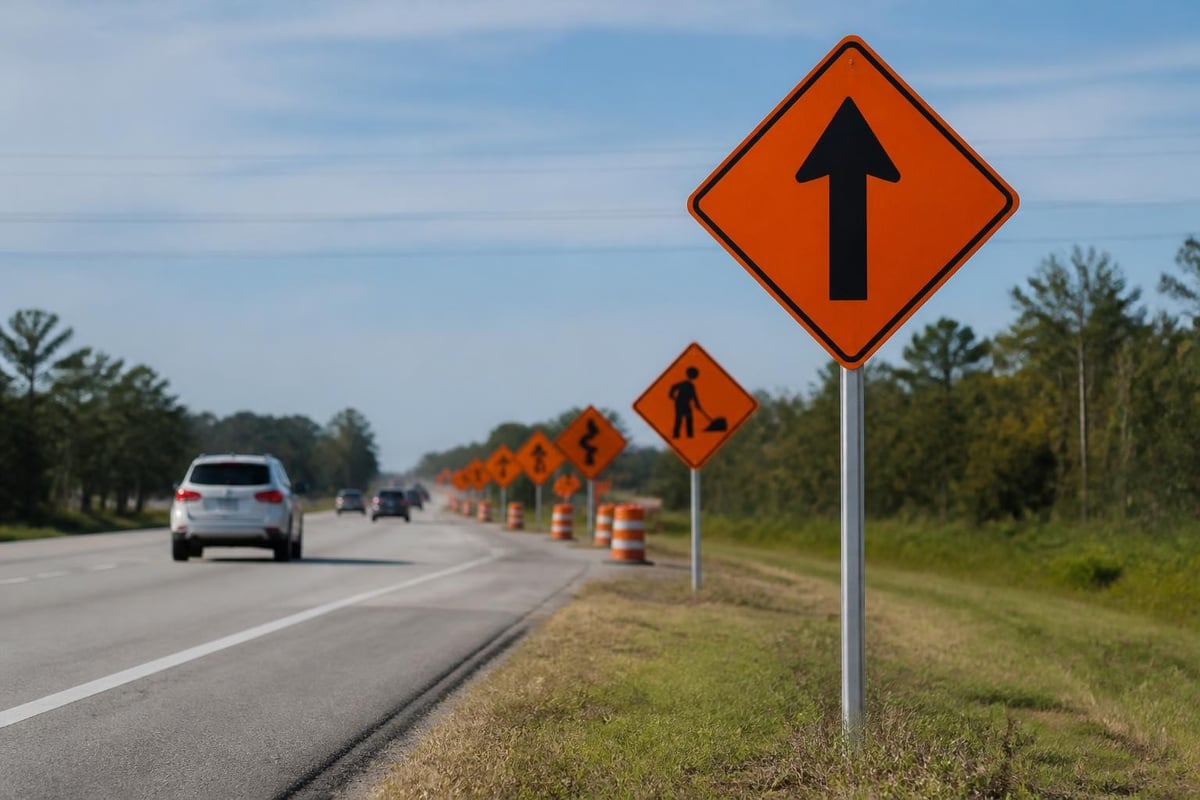
Construction projects that impact public roadways or pedestrian routes require sophisticated temporary traffic control systems. According to the Federal Highway Administration's MUTCD standards, these signs must meet specific size, colour, and retroreflectivity requirements to ensure visibility during day and night conditions. Temporary traffic control signs include:
- Road work ahead warnings
- Lane closure notifications
- Detour routing signs
- Speed reduction alerts
- Pedestrian crossing warnings
- Construction vehicle entry/exit points
The placement and spacing of these signs follow precise calculations based on approach speeds, sight distances, and reaction times. Research on driver behavior in work zones demonstrates that properly sequenced warning signs significantly reduce accident rates when drivers receive information at appropriate intervals allowing adequate response time.
Regulatory Framework and Compliance Standards
Construction warning signs in South Africa must comply with multiple regulatory frameworks, including the Occupational Health and Safety Act, South African National Standards (SANS), and municipal building regulations. These standards specify everything from colour coding and symbol design to minimum text heights and mounting requirements.
International best practices, particularly those outlined by the Institute of Transportation Engineers, provide additional guidance for complex projects. Contractors working on multinational projects or infrastructure developments often adopt these enhanced standards to ensure consistency across jurisdictions.
| Sign Category | Primary Colour | Shape | Typical Application |
|---|---|---|---|
| Danger/Warning | Yellow/Black | Triangle | Immediate hazards |
| Prohibition | Red/White | Circle with slash | Restricted actions |
| Mandatory | Blue/White | Circle | Required PPE/actions |
| Emergency | Green/White | Rectangle | Safety equipment location |
Material Selection and Durability Requirements
The harsh conditions on construction sites demand signage materials that withstand weather exposure, physical impacts, and UV degradation. Modern construction warning signs utilise materials including:
- Aluminium composite panels for long-term installations
- Corrugated plastic for temporary applications
- Rigid PVC for moderate-duration signage
- Reflective sheeting meeting ASTM standards for night visibility
- Weather-resistant inks maintaining legibility throughout exposure
Professional manufacturers like Signs4SA provide materials testing data and durability certifications, ensuring compliance with specified performance standards. The investment in quality materials reduces replacement costs and maintains consistent safety communication throughout project duration.
Strategic Placement and Site Planning
Effective construction warning signs require strategic positioning based on hazard assessment, traffic patterns, and human factors principles. Simply mounting signs at property boundaries provides inadequate protection; instead, signage must guide individuals through progressive decision points as they approach and move through hazardous areas.
Site safety managers conduct detailed hazard mapping exercises identifying all points where workers, delivery drivers, or the public might encounter risks. This mapping then informs a layered signage strategy with advance warnings, point-of-hazard notifications, and confirmation signs verifying required actions.
Visibility and Conspicuity Factors
Multiple environmental and design factors influence whether construction warning signs achieve their intended communication objectives:
- Mounting height: Signs positioned between 1.5 and 2.5 metres typically achieve optimal visibility for standing viewers
- Background contrast: High-contrast colour schemes ensure detection against varied backgrounds
- Illumination: Adequate lighting or retroreflective materials for low-light conditions
- Viewing angle: Signs oriented perpendicular to primary approach directions
- Obstruction clearance: Minimum setback from equipment, materials, or vegetation that might obscure visibility
Research demonstrates that sign effectiveness decreases dramatically when more than three pieces of information compete for attention simultaneously. This finding supports the use of multiple, focused signs rather than attempting to communicate complex messages on single panels.
Hazard-Specific Warning Applications
Different construction activities generate distinct hazard profiles requiring tailored warning sign strategies. Excavation work, overhead operations, confined spaces, and hazardous material handling each demand specific signage approaches aligned with the nature and severity of risks present.
Excavation and Groundwork Warnings
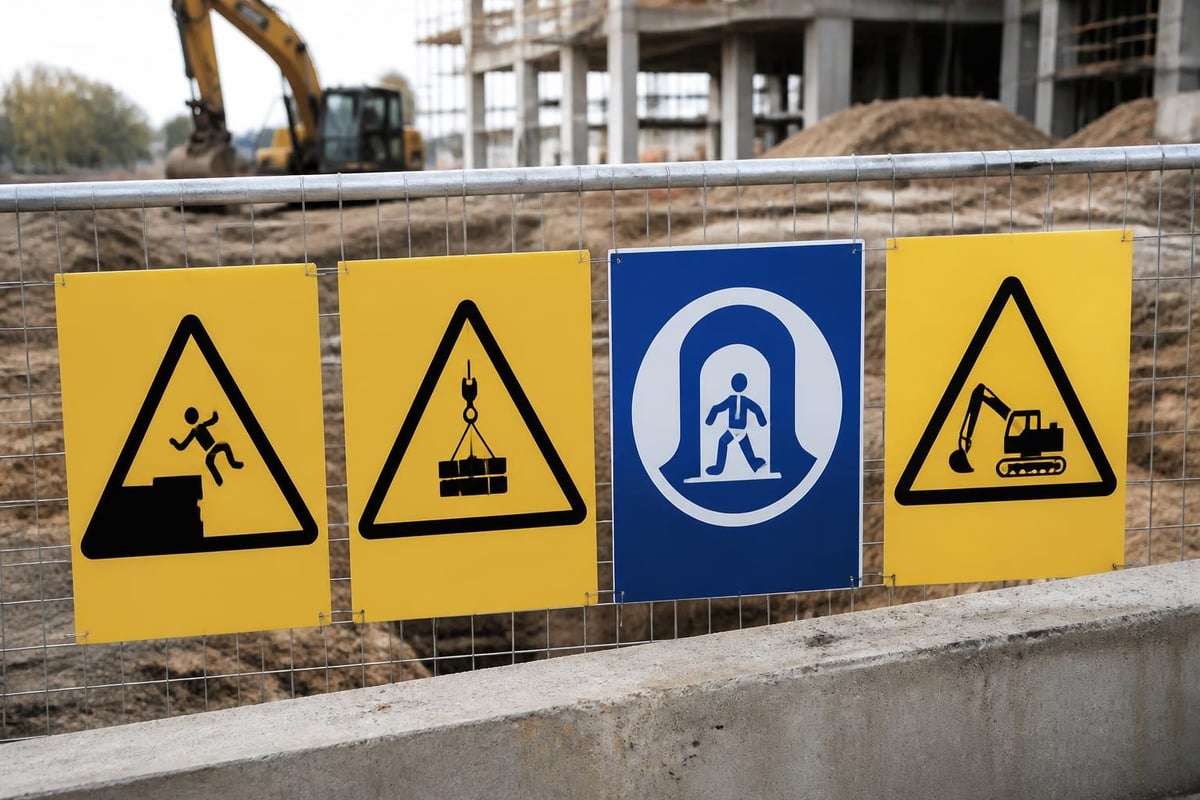
Deep excavations present fall hazards, unstable edges, and buried utility risks. Effective warning signage for excavation work includes perimeter barriers with integrated warning panels, depth indicators, and restricted access notifications. Signs must remain visible from multiple approach directions as site topography changes throughout excavation phases.
The safety sign portfolio offered by professional manufacturers includes excavation-specific warnings meeting South African standards for construction sites. These signs typically incorporate pictograms recognisable regardless of language proficiency, addressing diverse workforce compositions common on modern construction projects.
Overhead Work and Falling Object Hazards
Construction activities occurring above ground level create falling object hazards requiring protected zones and appropriate warning signage. Hard hat enforcement areas, exclusion zones beneath crane operations, and material hoist perimeters all require clear demarcation through signage systems.
Dynamic hazards, where danger zones shift as work progresses, present particular challenges. Some contractors implement movable sign systems on wheeled bases, allowing rapid repositioning as scaffolding, formwork, or lifting operations relocate throughout the site.
Integration with Digital Safety Systems
Modern construction warning signs increasingly integrate with digital safety management platforms. Electronic message boards, variable message signs, and connected worker technologies supplement traditional static signage, providing real-time hazard updates as site conditions evolve.
Digital Signage solutions enable contractors to display changing information such as site access restrictions, weather warnings, or emergency response instructions. These systems prove particularly valuable on large infrastructure projects where conditions vary significantly across different work zones.
| Technology | Primary Benefit | Typical Application |
|---|---|---|
| Variable Message Signs | Real-time updates | Traffic management |
| LED Warning Beacons | High visibility alerts | Active hazard zones |
| Digital Access Boards | Current restriction info | Site entry points |
| Connected Wearables | Proximity warnings | Worker protection |
The integration of traditional construction warning signs with digital technologies creates redundant communication systems. This redundancy ensures that safety information reaches workers even when power failures, network disruptions, or equipment malfunctions affect electronic systems.
Maintenance and Inspection Protocols
Construction warning signs deteriorate through weather exposure, vandalism, and physical damage from site operations. Systematic inspection and maintenance programmes ensure signage remains effective throughout project duration. Industry best practices recommend weekly visual inspections of all safety signage, with immediate replacement of damaged, faded, or obscured signs.
Inspection checklists should document:
- Physical condition and structural integrity
- Legibility of text and symbols
- Retroreflective performance (night visibility)
- Mounting security and stability
- Appropriate positioning without obstructions
- Continued relevance to current site conditions
Many contractors incorporate signage inspection into daily safety briefings, assigning responsibility to site supervisors or safety officers. This approach ensures consistent monitoring and rapid response when signage deficiencies are identified.
Lifecycle Management and Replacement Scheduling
Different sign types and materials exhibit varying service lives under construction site conditions. Temporary paper or cardboard signs may require replacement after days or weeks, whilst engineered aluminium signs might perform effectively for months or years. Professional signage manufacturers provide expected service life data enabling proactive replacement scheduling.
Budget planning should account for signage replacement as a recurring cost throughout project timelines. Contractors who defer sign replacement to reduce expenses expose themselves to significantly higher costs through regulatory penalties, increased accident rates, and potential litigation following incidents.
Worker Training and Signage Literacy
Even the most carefully designed and positioned construction warning signs prove ineffective if workers lack understanding of their meanings. Comprehensive site induction training must include signage familiarisation, ensuring all personnel can interpret warning symbols, understand colour coding conventions, and respond appropriately to different sign types.
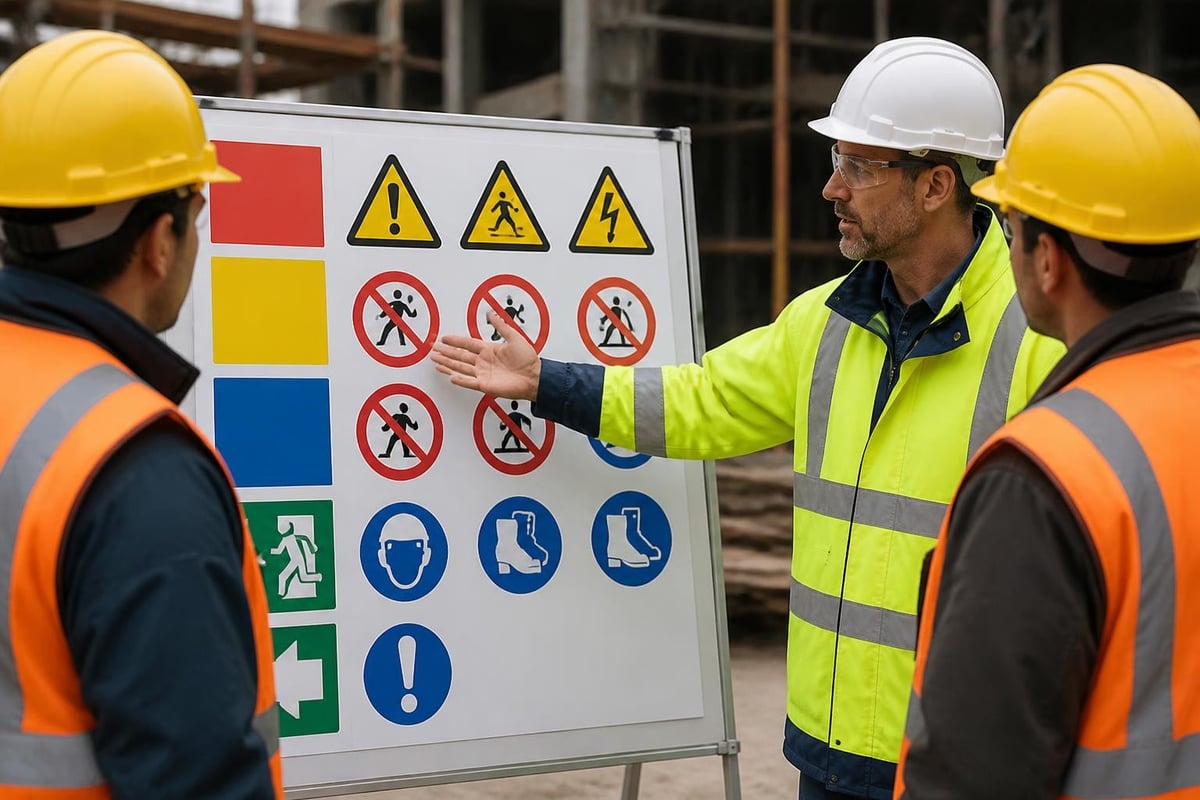
Cultural and linguistic diversity on construction sites requires signage systems transcending language barriers. The preference for pictogram-based warnings over text-heavy signs reflects this reality. However, where text is necessary, multilingual signs or supplementary language cards ensure universal comprehension across diverse workforces.
Behavioural Response and Sign Effectiveness
The ultimate measure of construction warning signs lies not in their aesthetic quality or regulatory compliance but in behavioural outcomes. Effective signs produce measurable changes in worker and visitor behaviour, reducing risk exposure through appropriate actions.
Behavioural observation studies conducted on construction sites reveal that sign effectiveness correlates strongly with:
- Simplicity of message and required action
- Consistency with industry-standard conventions
- Logical placement at decision points
- Regular reinforcement through supervision
- Integration with broader safety culture initiatives
Contractors achieving the lowest incident rates typically implement signage as one component within comprehensive safety management systems rather than relying on warnings alone to prevent accidents.
Temporary Versus Permanent Installation Considerations
Construction projects require both temporary signage addressing short-term hazards and permanent installations marking enduring risks or regulatory requirements. The distinction influences material selection, mounting methods, and maintenance approaches.
Temporary construction warning signs often utilise lighter-weight materials and portable mounting systems allowing rapid deployment and repositioning. These signs might attach to temporary fencing, be staked into the ground, or mount on wheeled stands. The ability to adapt signage placement as work progresses provides significant operational flexibility.
Permanent signage marking utilities, property boundaries, or structural load limits requires more robust installation methods. These signs typically use weatherproof fasteners, embedded mounting posts, or bonded attachment systems designed to resist unauthorised removal whilst withstanding environmental stresses over extended periods.
Emerging Technologies and Future Developments
The construction signage sector continues evolving with new technologies enhancing traditional warning sign effectiveness. Augmented reality applications allow workers wearing smart glasses to receive contextual hazard warnings overlaid on their field of view as they approach danger zones. These systems complement rather than replace physical signage, providing additional layers of safety communication.
Solar-powered LED-enhanced signs improve visibility during dawn, dusk, and night operations without requiring connection to site electrical systems. Battery technology improvements enable these signs to operate reliably throughout typical construction project durations with minimal maintenance.
Sustainable materials and manufacturing processes address environmental concerns whilst maintaining performance standards. Recycled aluminium substrates, water-based inks, and biodegradable temporary sign materials reduce construction projects' ecological footprints without compromising safety effectiveness.
Professional roofing contractors like Mark 1 Roofing Service recognise the importance of proper warning signage when working on elevated surfaces, ensuring both worker safety and public protection around residential and commercial properties. Similarly, specialised construction projects such as those undertaken by Prestige Wine Cellars in creating custom wine storage solutions require appropriate signage managing access to climate-controlled construction areas and protecting sensitive installations.
Cost-Benefit Analysis and Return on Investment
Construction warning signs represent a modest investment relative to overall project budgets, yet deliver substantial returns through accident prevention, regulatory compliance, and liability management. A comprehensive signage programme typically costs less than 0.5% of total project value whilst potentially preventing incidents generating costs orders of magnitude higher.
| Cost Factor | Typical Range | Notes |
|---|---|---|
| Initial signage procurement | R15,000 - R75,000 | Varies with site size |
| Installation labour | R5,000 - R20,000 | Depends on complexity |
| Maintenance/replacement | R2,000 - R10,000 monthly | Ongoing throughout project |
| Inspection programmes | Included in safety budget | Part of standard procedures |
Beyond direct cost avoidance, effective construction warning signs contribute to enhanced corporate reputation, improved stakeholder confidence, and potentially reduced insurance premiums through demonstrated risk management commitment. Clients increasingly scrutinise contractors' safety records when awarding projects, making comprehensive signage systems a competitive differentiator.
Contractors seeking to implement or upgrade their construction warning sign systems should consult with experienced signage professionals who understand both regulatory requirements and practical site applications. Expert guidance ensures appropriate sign selection, optimal placement strategies, and compliance with evolving standards whilst maximising safety outcomes and cost effectiveness.
Effective construction warning signs form an essential component of comprehensive site safety management, protecting workers and the public whilst ensuring regulatory compliance throughout project lifecycles. Whether you're managing a small renovation or a major infrastructure development, Signs4SA provides expert signage solutions tailored to your specific construction safety requirements, backed by industry-leading manufacturing quality and nationwide service across South Africa.