


Digital Signage Display Monitors: A Complete Guide
The transformation of static signage into dynamic digital communication platforms has revolutionised how businesses engage with their audiences. Digital signage display monitors have become the cornerstone of modern visual communication strategies across retail, corporate, pharmaceutical, and construction sectors. These specialised displays differ significantly from consumer televisions, offering superior durability, enhanced brightness capabilities, and extended operational lifespans designed for continuous commercial deployment. Understanding the technical specifications, deployment considerations, and strategic advantages of these monitors enables businesses to make informed investment decisions that deliver measurable returns.
Understanding Commercial Display Technology
Digital signage display monitors employ fundamentally different engineering principles compared to residential screens. Commercial displays are manufactured with industrial-grade components capable of operating 16 to 24 hours daily, often in challenging environmental conditions.
Core Technical Specifications
The foundation of any digital signage deployment rests upon selecting monitors with appropriate technical specifications. Brightness, measured in nits or candelas per square metre, determines visibility in various lighting conditions. Indoor environments typically require 350-700 nits, whilst outdoor installations demand 2,500 nits or higher.
Critical specification categories include:
- Panel type: IPS, VA, or OLED technologies each offering distinct viewing angle and colour reproduction characteristics
- Resolution: From Full HD (1920×1080) to 4K (3840×2160) and beyond
- Refresh rate: 60Hz minimum for standard content, higher for interactive applications
- Operating temperature range: Extended ranges for outdoor or industrial environments
- MTBF (Mean Time Between Failures): Commercial displays typically offer 50,000+ hours
Contrast ratios significantly impact image quality, particularly in environments with variable ambient lighting. VESA standards and specifications provide industry benchmarks for evaluating display performance, including the DisplayHDR certification that ensures consistent high dynamic range capabilities.
Professional vs Consumer Displays
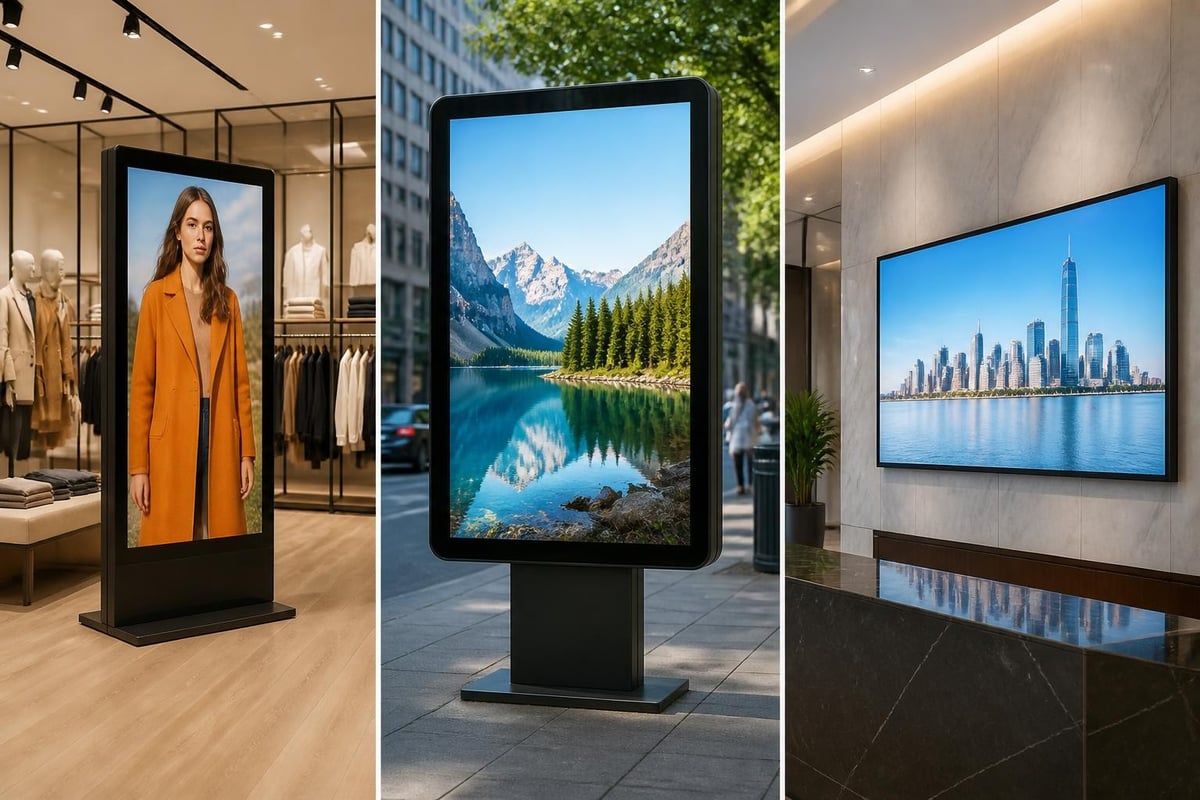
The distinction between consumer televisions and commercial digital signage display monitors extends beyond durability. Professional displays incorporate features specifically engineered for business applications, including landscape and portrait orientation support, advanced thermal management systems, and commercial-grade warranties.
| Feature | Consumer TV | Commercial Display |
|---|---|---|
| Daily operational hours | 4-8 hours | 16-24 hours |
| Warranty period | 1-2 years | 3-5 years |
| Thermal management | Basic | Advanced heat dissipation |
| Connectivity options | Limited | Extensive (SDI, DVI, HDMI, DisplayPort) |
| Remote management | Consumer apps | Enterprise CMS integration |
Professional displays also eliminate consumer-oriented features such as tuners and smart TV functionality, reducing potential failure points whilst lowering total cost of ownership.
Deployment Considerations for Business Environments
Strategic deployment of digital signage display monitors requires careful analysis of environmental conditions, audience demographics, and content delivery requirements. The AVIXA digital signage guidance provides comprehensive best practices for professional audiovisual installations.
Environmental Assessment
Successful digital signage installations begin with thorough environmental evaluation. Ambient light levels, temperature fluctuations, and physical space constraints directly influence monitor selection.
Indoor retail environments present unique challenges, including extended operating hours and high customer traffic. These settings benefit from displays featuring anti-glare coatings and robust physical construction. Pharmaceutical facilities require displays compatible with stringent hygiene protocols, often necessitating sealed enclosures and antimicrobial surface treatments.
Construction sites demand ruggedised solutions capable of withstanding dust, vibration, and temperature extremes. Outdoor installations require IP-rated weatherproof enclosures and displays with automatic brightness adjustment responding to changing daylight conditions.
Content Strategy Integration
Hardware capabilities must align with content strategies. High-resolution displays supporting 4K content enable detailed product visualisation and sophisticated brand messaging. Interactive touchscreen displays transform passive viewing into engaging customer experiences.
The relationship between content management systems and display hardware determines overall system effectiveness. Digital signage content powered by CMS platforms enables centralised control across multiple locations, essential for businesses operating national or regional networks.
Content delivery considerations include:
- Network infrastructure requirements (bandwidth, latency, redundancy)
- Content scheduling capabilities across time zones
- Real-time content updates and emergency messaging
- Integration with existing business systems (inventory, CRM, scheduling)
- Analytics and proof-of-play reporting

Energy Efficiency and Sustainability
Operating costs significantly impact total cost of ownership for digital signage networks. Energy-efficient displays reduce electricity consumption whilst supporting corporate sustainability objectives.
ENERGY STAR Certification
The ENERGY STAR displays specification establishes rigorous energy efficiency criteria for commercial displays. Certified monitors consume significantly less power than non-certified alternatives, particularly important for installations operating continuously.
Modern digital signage display monitors incorporate intelligent power management features, including automatic brightness adjustment based on ambient light sensors and occupancy-based power scheduling. These features can reduce energy consumption by 30-50% compared to first-generation commercial displays.
LED backlighting technology has revolutionised display energy efficiency. Contemporary LED-backlit monitors consume 40-60% less energy than legacy CCFL-backlit displays whilst delivering superior brightness and colour performance.
Long-term Operational Planning
Lifecycle planning extends beyond initial purchase considerations. Maintenance requirements, spare parts availability, and eventual disposal all influence total cost of ownership.
Commercial displays with modular component design enable field-replaceable power supplies, media players, and even panel assemblies. This serviceability extends operational lifespan and reduces downtime during repairs. Businesses exploring various signage technologies should review industry insights to understand evolving best practices.
Advanced Display Technologies
Innovation in display technology continues accelerating, introducing capabilities that expand creative possibilities for digital signage applications.
HDR and Enhanced Visual Performance
High Dynamic Range (HDR) technology dramatically improves image quality through expanded brightness ranges and enhanced colour reproduction. The updated DisplayHDR specification from VESA defines performance tiers from DisplayHDR 400 through DisplayHDR 1400, enabling businesses to select appropriate capability levels.
HDR displays excel in environments requiring premium visual impact, such as luxury retail, corporate lobbies, and automotive showrooms. The technology ensures consistent image quality across varying ambient light conditions, maintaining viewer engagement throughout the day.
LED Video Wall Technology
Fine-pitch LED displays represent the premium tier of digital signage display monitors, offering seamless large-format installations without visible bezels. Pixel pitches ranging from P10 down to P1.8 enable applications from large-scale outdoor advertising to detailed indoor visualisations.
Signs4SA offers comprehensive Digital Signage solutions ranging from P10 to P1.8, suitable for both internal and external applications. These systems provide exceptional brightness levels, superior viewing angles, and virtually unlimited scalability.
| Pixel Pitch | Optimal Viewing Distance | Primary Applications |
|---|---|---|
| P10 | 10+ metres | Outdoor advertising, large venues |
| P6 | 6+ metres | Retail facades, transport hubs |
| P4 | 4+ metres | Indoor retail, corporate environments |
| P2.5 | 2.5+ metres | Conference rooms, control centres |
| P1.8 | 1.8+ metres | Broadcast studios, premium retail |
Integration with Business Systems
Modern digital signage display monitors function as networked endpoints within broader business intelligence ecosystems. This integration enables data-driven content delivery and measurable performance analytics.
Programmatic Digital Out-of-Home
The convergence of digital signage and programmatic advertising has created sophisticated audience engagement capabilities. The IAB's DOOH definition and core features establish frameworks for automated content delivery based on audience demographics, environmental conditions, and real-time data feeds.
Programmatic capabilities enable dynamic content adaptation, displaying different messages based on time of day, weather conditions, or audience composition detected through integrated analytics systems. Technical standards from IAB Tech Lab ensure interoperability between displays, content management platforms, and programmatic exchanges.
Data Analytics and Performance Measurement
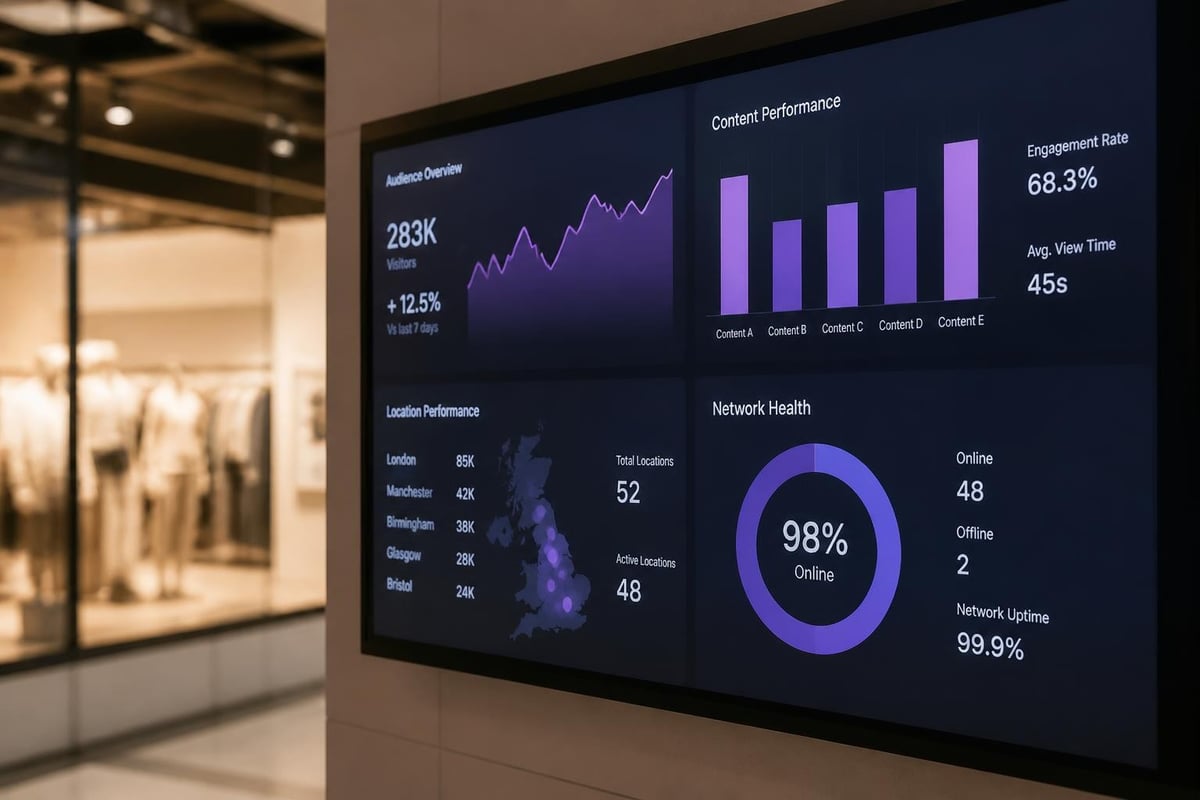
Contemporary digital signage networks generate valuable data regarding audience engagement, content performance, and operational efficiency. Advanced display systems incorporate sensors and cameras enabling anonymous audience measurement, dwell time analysis, and attention tracking.
Analytics capabilities include:
- Impression counting and verification
- Demographic composition analysis
- Content completion rates
- Peak engagement periods
- System health monitoring and predictive maintenance alerts
These insights enable continuous optimisation of content strategies, ensuring maximum return on signage investments. For businesses evaluating investment implications, understanding signage investment fundamentals provides essential context.
Installation and Maintenance Best Practices
Proper installation and ongoing maintenance ensure digital signage display monitors deliver optimal performance throughout their operational lifespan.
Professional Installation Requirements
Commercial display installations demand expertise beyond residential mounting. Weight distribution, thermal management, cable management, and seismic considerations all influence installation methodology. Professional installers understand signage installation importance and implement best practices ensuring safety and reliability.
Installation considerations include:
- Structural load analysis and reinforcement requirements
- Electrical infrastructure including dedicated circuits and surge protection
- Network connectivity with redundancy provisions
- Ventilation requirements for thermal management
- Accessibility for maintenance and component replacement
- Security measures preventing tampering or theft
Outdoor installations require additional considerations including weatherproofing, vandal-resistant enclosures, and environmental controls maintaining optimal operating temperatures.
Preventive Maintenance Programmes
Structured maintenance protocols extend display lifespan and prevent costly unplanned downtime. Monthly cleaning schedules, quarterly performance testing, and annual comprehensive inspections identify potential issues before they impact operations.
Cleaning procedures must accommodate specific display technologies. LCD panels require gentle cleaning with approved solutions, avoiding abrasives that damage anti-glare coatings. LED video walls benefit from compressed air cleaning removing accumulated dust from pixel assemblies.
Firmware updates delivered through network-connected displays ensure optimal performance and security. Update schedules should align with business operational patterns, typically occurring during low-traffic periods to minimise audience disruption.
Market Trends and Future Developments
The digital signage industry continues rapid evolution, driven by technological innovation and changing consumer expectations. Market research from Grand View Research indicates sustained growth across all segments, with hardware, software, and services expanding in tandem.
Emerging Technologies
MicroLED technology promises to revolutionise digital signage display monitors through superior brightness, exceptional colour accuracy, and virtually infinite lifespan. Unlike OLED displays susceptible to burn-in, microLED technology eliminates image retention concerns crucial for static signage elements.
Transparent OLED displays create compelling window and showcase applications, overlaying digital content onto physical products. These displays enable innovative retail merchandising and architectural integration previously impossible with conventional monitors.
Artificial Intelligence Integration
AI-powered content optimisation systems analyse audience engagement patterns and automatically adjust messaging for maximum impact. Machine learning algorithms identify optimal content sequences, durations, and scheduling patterns without manual intervention.
Computer vision technologies enable sophisticated audience analysis whilst maintaining privacy compliance. These systems detect viewer attention, estimate demographics, and measure emotional responses, providing unprecedented insights into content effectiveness. Partnerships with technology providers such as Global Tronix Computer Trading LLC ensure access to cutting-edge IT infrastructure supporting these advanced capabilities.
Sustainability Initiatives
Environmental considerations increasingly influence purchasing decisions. Manufacturers prioritise recyclable materials, reduced packaging, and take-back programmes facilitating responsible disposal. Energy efficiency improvements continue reducing operational costs whilst minimising environmental impact.
Solar-powered digital signage solutions enable off-grid installations in remote locations or temporary deployments. Battery-backed systems ensure continuous operation during power disruptions, critical for emergency messaging and wayfinding applications.
Sector-Specific Applications
Different industries leverage digital signage display monitors in unique ways, each requiring specialised capabilities and deployment strategies.
Retail Environments
Retail digital signage influences purchasing decisions at critical moments throughout the customer journey. Window displays attract foot traffic, in-store displays promote featured products, and queue-line screens reduce perceived wait times whilst driving impulse purchases.
Dynamic pricing displays enable real-time price adjustments responding to inventory levels, competitor pricing, or promotional strategies. Integration with point-of-sale systems ensures pricing consistency across physical and digital touchpoints.
Corporate Communications
Corporate environments utilise digital signage display monitors for employee communications, wayfinding, and visitor management. Lobby displays reinforce brand identity whilst directory systems guide visitors efficiently through complex facilities.
Meeting room displays integrate with scheduling systems, showing room availability and upcoming bookings. These systems reduce scheduling conflicts whilst improving space utilisation through data-driven insights.
Healthcare and Pharmaceutical Applications
Healthcare facilities require displays meeting strict hygiene standards whilst delivering critical patient information. Antimicrobial surfaces, sealed enclosures, and easily cleaned materials prevent pathogen transmission in clinical environments.
Queue management systems improve patient flow whilst reducing perceived wait times. Digital directories guide patients and visitors through complex medical campuses, reducing stress and improving overall experience.
Construction and Industrial Sites
Temporary construction installations require ruggedised displays capable of withstanding harsh conditions. Safety messaging, project timelines, and visitor management all benefit from digital signage solutions designed for challenging environments.
Mobile digital signage units mounted on trailers enable flexible positioning around large construction sites, ensuring critical information reaches workers regardless of location. Understanding appropriate solutions for different contexts, such as reviewing how to choose the right outdoor signage, ensures optimal outcomes.
Selecting the Right Display Solution
Choosing appropriate digital signage display monitors requires balancing technical capabilities, budget constraints, and strategic objectives. A structured evaluation process ensures investments deliver anticipated returns.
Requirements Analysis Framework
Technical requirements assessment:
- Viewing distance and optimal resolution
- Ambient light conditions and required brightness
- Operating hours and environmental conditions
- Connectivity and network infrastructure
- Content types and refresh requirements
Business requirements evaluation:
- Budget allocation (capital and operational)
- Deployment timeline and phasing
- Integration with existing systems
- Maintenance and support capabilities
- Scalability for future expansion
Vendor Selection Criteria
Partner selection significantly impacts deployment success. Established providers offer technical expertise, reliable support, and proven track records managing complex installations.
Evaluation criteria should include warranty terms, spare parts availability, response times for service calls, and training provisions for internal staff. Local presence ensures rapid response to issues whilst understanding regional regulatory requirements and environmental conditions.
Total cost of ownership calculations must encompass initial purchase price, installation costs, ongoing maintenance, energy consumption, and eventual disposal or replacement. Lower-cost displays often incur higher long-term expenses through increased failures and higher energy consumption.
Digital signage display monitors represent powerful tools for business communication when selected and deployed strategically. Understanding technical specifications, environmental requirements, and integration possibilities ensures investments deliver measurable value across retail, corporate, pharmaceutical, and construction applications. Signs4SA brings extensive expertise in digital signage solutions, combining technical knowledge with manufacturing excellence to deliver bespoke systems tailored to your specific requirements. Contact our team today to explore how professional digital signage can transform your business communications and drive meaningful engagement with your audiences.