



Digital Signage Display Guide for Business Success
Modern businesses face an ongoing challenge: capturing attention in an increasingly crowded marketplace. The digital signage display has emerged as a powerful solution, transforming how organisations communicate with customers, employees, and visitors. These dynamic platforms combine cutting-edge technology with strategic messaging to deliver information that engages, informs, and influences behaviour in real time. From retail environments to corporate lobbies, pharmaceutical facilities to construction sites, digital displays have become essential infrastructure for businesses seeking competitive advantage in 2026.
Understanding Digital Signage Display Technology
A digital signage display represents far more than a simple screen mounted on a wall. These sophisticated systems integrate hardware, software, content management platforms, and network infrastructure to deliver targeted messages at precisely the right moment. The technology has evolved dramatically over the past decade, with improvements in resolution, brightness, energy efficiency, and interactive capabilities reshaping what's possible.
Core Components and Architecture
Every digital signage display system comprises several fundamental elements working in concert. The display panel itself, whether LCD, LED, or emerging technologies like MicroLED, forms the visible interface. Behind the scenes, a media player or system-on-chip processes content and manages playout schedules. Content management software enables remote control, scheduling, and analytics, whilst network connectivity ensures real-time updates and monitoring.
The choice of display technology significantly impacts performance and suitability:
- LCD panels offer excellent colour reproduction and cost efficiency for indoor environments
- LED displays provide superior brightness for outdoor visibility and large-format installations
- OLED screens deliver exceptional contrast ratios and viewing angles for premium applications
- Transparent displays create eye-catching installations without blocking sight lines
- Interactive touchscreens enable two-way engagement and self-service functionality

Performance specifications demand careful consideration. Brightness, measured in nits, determines visibility under varying lighting conditions. Indoor applications typically require 300-700 nits, whilst outdoor digital signage displays need 2,500-5,000 nits to remain readable in direct sunlight. Resolution affects clarity and viewing distance, with 4K becoming standard for close-proximity installations where detail matters.
Power Efficiency and Operating Costs
The U.S. Department of Energy's display analysis reveals significant variations in power consumption across display technologies. Understanding these differences helps businesses make informed decisions balancing initial investment against long-term operating costs.
| Display Type | Typical Power (per sq metre) | Annual Cost (8hrs/day)* | Lifespan |
|---|---|---|---|
| LCD Commercial | 120-180W | R4,200-R6,300 | 50,000-60,000 hrs |
| LED Direct View | 200-350W | R7,000-R12,250 | 100,000+ hrs |
| OLED | 150-250W | R5,250-R8,750 | 30,000-50,000 hrs |
*Based on R0.20/kWh average commercial rate
Strategic Applications Across Industries
Digital signage displays serve dramatically different purposes depending on the business context and operational requirements. Understanding these applications helps organisations identify opportunities where dynamic displays create measurable value.
Retail and Customer Experience
Retail environments leverage digital displays to influence purchasing decisions at critical moments. Dynamic pricing enables real-time adjustments based on inventory, competitor activity, or time of day. Product demonstrations delivered via video content educate customers more effectively than static signage, whilst interactive displays allow shoppers to explore catalogues, check stock, or access detailed specifications.
SignResearch demonstrates that digital displays capture 400% more views than static signage, with 63% of consumers reporting that digital screens capture their attention. The dynamic nature of content creates novelty, drawing eyes even in familiar environments.
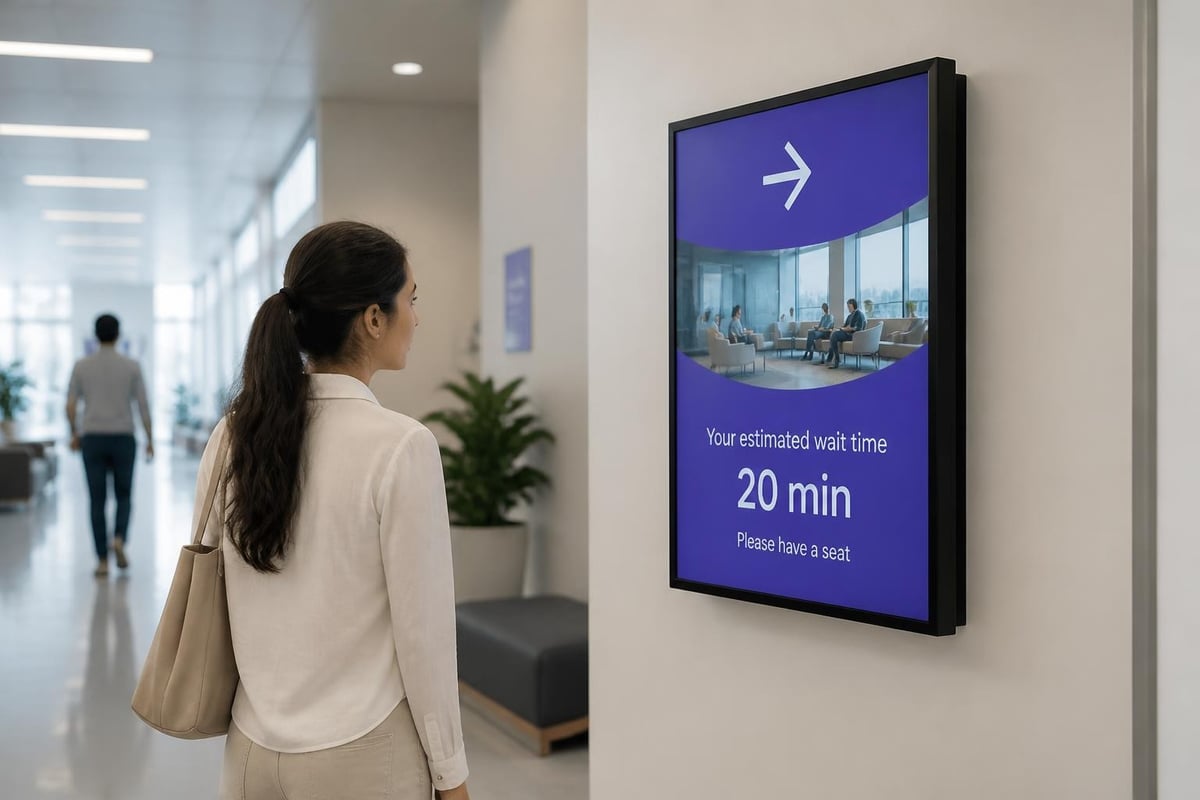
Queue management represents another powerful application. Digital displays entertain waiting customers whilst communicating estimated wait times, reducing perceived delays by up to 35%. This psychological effect improves satisfaction even when actual service times remain unchanged.
Corporate Communications and Wayfinding
Corporate environments deploy digital signage displays to streamline internal communications and enhance visitor experiences. Reception areas make powerful first impressions through branded welcome messages, company achievements, and dynamic content showcasing organisational culture. Meeting room displays eliminate scheduling confusion by showing real-time availability and booking information at each entrance.
Emergency messaging capabilities prove invaluable during critical situations. Digital displays instantly broadcast evacuation instructions, severe weather alerts, or security notifications across entire facilities, ensuring information reaches all occupants simultaneously. This speed proves impossible with traditional communication methods.
Employee engagement increases when digital displays share company news, celebrate achievements, and recognise team contributions. Unlike email announcements that disappear into overflowing inboxes, strategically placed screens ensure visibility without requiring active attention from busy staff.
Pharmaceutical and Healthcare Settings
Pharmaceutical facilities and healthcare environments face unique regulatory and operational requirements. Digital displays support compliance by communicating safety protocols, quality standards, and procedural updates with perfect consistency. Unlike printed materials that become outdated, digital content updates instantly across all screens.
Patient education benefits from video content explaining procedures, medication instructions, and health information in easily digestible formats. Studies show patients retain information 65% better when delivered through multimedia content compared to verbal instructions alone.
Wayfinding proves critical in large medical campuses where confusion causes stress and delays. Interactive digital directories help visitors navigate complex facilities, whilst corridor displays provide reassurance with directional cues and department identifiers.
Construction and Project Sites
Construction environments present challenging conditions for signage, yet digital displays deliver important advantages. Safety messaging reaches workers at critical moments, with content cycling through hazard warnings, PPE requirements, and procedural updates. The dynamic nature ensures messages don't fade into background noise as static signs tend to do.
Project progress visualisations help stakeholders understand complex timelines and milestones. Digital displays can showcase architectural renderings, construction phases, and completion schedules, keeping teams aligned and clients informed. For companies like Koh Samui Construction, this transparency builds trust and reduces miscommunication.
Weather-resistant displays designed for harsh environments withstand dust, moisture, and temperature extremes whilst maintaining readability. Industrial-grade enclosures protect sensitive electronics whilst IP65 or IP66 ratings ensure reliability in demanding conditions.
Content Strategy and Management
Hardware represents only half the equation. Effective content separates successful digital signage deployments from expensive disappointments. Strategic content planning, creation, and management determine whether displays engage audiences or become ignored background noise.
Planning Content That Performs
Successful content begins with clear objectives. Are displays intended to inform, persuade, entertain, or direct? Each goal demands different creative approaches and success metrics. Informational content prioritises clarity and retention, persuasive content emphasises benefits and calls to action, whilst directional content requires instant comprehension.
Content duration significantly impacts effectiveness. Research shows optimal message length varies by context:
- Transit environments (3-5 seconds): Ultra-brief headlines and single images
- Queue situations (10-20 seconds): Short videos or multi-panel information
- Waiting areas (30-60 seconds): Detailed content, tutorials, or entertainment
- Background displays (15-30 seconds): Ambient content with periodic key messages
Visual hierarchy guides attention to essential elements. The human eye follows predictable patterns, entering displays at the upper left, moving right, then down. Placing critical information in these "hot zones" ensures visibility even during brief glances.
Accessibility and Inclusive Design
The U.S. Access Board's guidance and Department of Justice accessibility requirements apply equally to digital content displayed on screens as to traditional signage. Though enforcement varies by jurisdiction, ethical businesses recognise that inclusive design benefits all users whilst expanding potential audiences.
Key accessibility considerations include:
- High contrast ratios ensure readability for visually impaired individuals (minimum 4.5:1 for normal text, 3:1 for large text)
- Text alternatives for important visual information enable screen reader compatibility where interactive displays are deployed
- Adequate text size relative to viewing distance prevents strain and exclusion
- Motion controls allow users to pause animated content that may trigger discomfort
- Colour-independent information ensures messages remain clear to colour-blind viewers
Content Management Systems and Workflow
Modern content management systems transform multi-display networks from overwhelming complexity into manageable operations. Cloud-based platforms enable remote control from anywhere, scheduling content weeks or months ahead whilst maintaining flexibility for urgent updates.
Role-based permissions ensure appropriate control. Marketing teams might schedule promotional content whilst facility managers handle emergency messaging, each with appropriate access levels. Approval workflows prevent unauthorised or inappropriate content from reaching displays, protecting brand consistency and compliance requirements.
Integration capabilities extend functionality beyond basic scheduling. Weather APIs automatically adjust outdoor display brightness for optimal visibility. Calendar integrations show meeting room availability. Social media feeds pull real-time content that maintains freshness without manual intervention. Inventory systems trigger promotional content when stock levels require clearing.
Security and Risk Management
Connected devices introduce security vulnerabilities that demand proactive management. Digital signage displays, often overlooked in cybersecurity planning, represent potential entry points for malicious actors or vectors for embarrassing content hijacking.
Network Security Fundamentals
NIST's IoT Device Cybersecurity Guidance and HKCERT's Digital Signage Security Guideline provide comprehensive frameworks for securing networked displays. Implementation begins with network segmentation, isolating digital signage on separate VLANs that prevent compromised displays from accessing sensitive business systems.
Authentication requirements prevent unauthorised access to content management systems. Multi-factor authentication adds layers beyond passwords, whilst regular credential rotation limits exposure from compromised accounts. Default passwords, present on countless devices, must be changed immediately upon installation.
Firmware updates patch vulnerabilities as manufacturers discover them. Automated update mechanisms ensure displays receive security patches promptly, whilst testing protocols prevent updates from disrupting operations during critical business periods. Maintaining update logs satisfies compliance requirements whilst providing visibility into security posture.
Physical security matters too. Media players and network connections require protection from tampering, whether malicious or accidental. Locked enclosures, tamper-evident seals, and restricted access areas prevent unauthorised physical access that could compromise even well-secured networks.
Content Security and Brand Protection
Beyond network threats, content security protects brand reputation and message integrity. Digital rights management ensures licensed content doesn't exceed usage terms, preventing legal liability from unauthorised use of images, videos, or music.
Content approval workflows catch inappropriate materials before they reach displays. Automated profanity filters, image recognition that flags problematic content, and mandatory human review for sensitive categories create multiple defensive layers. These controls prove especially important when user-generated content or social media feeds integrate into displays.
Backup systems ensure business continuity when primary content sources fail. Local caching stores recent content on media players, allowing displays to continue operating during network outages. Redundant content management servers prevent single points of failure that could leave displays dark or frozen on stale content.

Measuring Return on Investment
Digital signage displays represent significant investments demanding justification through measurable business outcomes. Sophisticated measurement approaches demonstrate value whilst identifying optimisation opportunities.
Direct Measurement Approaches
Point-of-sale integration provides the most direct ROI measurement for retail environments. Tracking purchases immediately following display exposure reveals conversion rates and revenue attribution. A/B testing compares performance between displays showing different content, quantifying which messages drive superior results.
The IAB's DOOH measurement guidance establishes standards for audience measurement and attribution in advertising contexts. Impression counts estimate how many individuals view displays, whilst dwell time measures engagement duration. Advanced systems using computer vision track demographics, attention patterns, and emotional responses, though privacy considerations require careful implementation.
Queue time reduction delivers quantifiable value in service environments. Comparing average wait times before and after digital signage installation, controlling for service capacity changes, isolates the psychological impact of entertainment and information on perceived waiting. Customer satisfaction scores provide additional validation.
Indirect Benefits and Soft ROI
Many digital signage display benefits resist direct measurement yet deliver substantial value. Brand perception improvements might not immediately boost sales but create long-term competitive advantages. Employee satisfaction from improved internal communications reduces turnover costs, though attribution challenges exist.
Cost displacement offers tangible savings. Digital displays eliminate printing, distribution, and disposal costs for materials they replace. Environmental benefits from reduced paper consumption align with sustainability commitments whilst cutting expenses. Updating digital content costs fractions of reprinting materials, especially for frequently changing information.
Flexibility value emerges during unexpected situations. The ability to instantly communicate emergency information, sudden promotional opportunities, or operational changes provides options unavailable with static signage. Quantifying this optionality proves difficult, yet businesses consistently report that responsiveness alone justifies investments.
| Metric Category | Measurement Method | Typical Timeline |
|---|---|---|
| Sales impact | POS correlation, A/B testing | 30-90 days |
| Engagement | Dwell time, interaction rates | Immediate |
| Efficiency | Queue time, service throughput | 14-60 days |
| Cost savings | Print reduction, labour time | 90-365 days |
| Satisfaction | Survey scores, feedback volume | 60-180 days |
Implementation Best Practices
Successful digital signage display deployments require careful planning that addresses technical, operational, and human factors. Avoiding common pitfalls accelerates value realisation whilst preventing expensive mistakes.
Site Survey and Planning
Professional site surveys identify optimal placement, technical requirements, and potential obstacles before installation begins. Viewing angles, ambient lighting, mounting options, and power availability all influence placement decisions. Traffic patterns determine which locations capture maximum attention whilst architectural constraints might limit ideal positions.
Network infrastructure assessment prevents connectivity surprises. Ethernet availability offers superior reliability compared to wireless connections, yet running cables might prove impractical in certain locations. Bandwidth requirements scale with content resolution and update frequency, demanding adequate capacity for smooth operation.
Content planning should begin before hardware selection. Understanding intended messages, update frequency, and creative requirements influences technology choices. Interactive content demands touchscreens or gesture recognition, high-resolution product imagery requires 4K panels, whilst simple text messaging might function adequately on more modest displays.
Professional installation ensures displays meet safety standards, electrical codes, and structural requirements. Weight-bearing calculations prevent mounting failures, whilst proper cable management protects against damage and maintains professional appearance. Incorrect installation creates liability risks and shortens equipment lifespan through inadequate ventilation or stress on mounting points.
Training and Change Management
Technology succeeds only when people embrace it. User training on content management systems prevents frustration whilst maximising feature utilisation. Different stakeholders require different training: content creators need design and scheduling skills, whilst technical staff focus on troubleshooting and maintenance.
Change management addresses the human side of new technology. Communicating benefits to affected stakeholders, involving them in planning, and addressing concerns proactively builds support. Resistance often stems from fear that new systems create additional work or complexity. Demonstrating how digital displays simplify existing processes or eliminate frustrating manual tasks converts sceptics into advocates.
Documentation provides ongoing reference when memories fade. Standard operating procedures for routine tasks, troubleshooting guides for common issues, and contact information for technical support reduce dependency on individual knowledge whilst ensuring consistency.
Maintenance and Lifecycle Management
Proactive maintenance extends equipment life whilst preventing embarrassing failures. Regular cleaning maintains visual quality as dust and grime accumulate on screens. Gentle cleaning with appropriate materials prevents scratches or damage to protective coatings that compromise display quality.
Performance monitoring identifies issues before they impact operations. Temperature sensors detect cooling problems, whilst bandwidth monitoring catches network congestion that affects content delivery. Alert systems notify technical teams when parameters exceed thresholds, enabling proactive intervention.
Lifecycle planning prepares for eventual replacement or upgrades. Display technology evolves rapidly, with capabilities and costs shifting dramatically over typical 5-7 year deployments. Budgeting for refresh cycles prevents surprise expenses whilst enabling strategic timing that captures technological advances.
Emerging Trends and Future Developments
Digital signage display technology continues evolving, with emerging capabilities reshaping what's possible. Forward-thinking businesses monitor trends to identify strategic opportunities whilst avoiding investments in dying technologies.
Artificial Intelligence Integration
AI-powered content optimisation analyses viewer response patterns to automatically adjust messaging for maximum impact. Machine learning algorithms identify which content variations drive superior engagement, continuously refining approaches without human intervention. Demographic recognition enables dynamic content adaptation, showing different messages to different audience segments occupying the same space at different times.
Predictive analytics forecast future needs based on historical patterns. Retail displays might anticipate inventory requirements, corporate displays could surface relevant information before employees realise they need it, whilst facility displays might proactively communicate maintenance schedules or room availability.
Natural language processing enables conversational interfaces for interactive displays. Rather than navigating menus, users speak requests naturally, with AI understanding intent and delivering appropriate responses. This reduces friction whilst making technology accessible to users uncomfortable with touchscreen interfaces.
Advanced Display Technologies
MicroLED technology promises to combine the best attributes of existing displays whilst eliminating weaknesses. Superior brightness, contrast, and efficiency rival OLED, whilst lifespan and burn-in resistance surpass LCD. Current costs limit applications to premium installations, though prices continue declining as manufacturing scales.
Transparent and flexible displays create novel applications impossible with rigid panels. Window displays overlay information on storefronts without blocking merchandise views. Curved installations follow architectural features, whilst rollable screens enable portable displays that pack compactly between uses.
Holographic and volumetric displays move beyond flat screens, projecting three-dimensional images into space. Though currently expensive and limited in scale, these technologies capture extraordinary attention, making them valuable for flagship installations where impact justifies investment.
Integration and Interoperability
The W3C's Web-based Signage specifications promote standardisation that enables content created for one platform to function across different systems. This interoperability reduces vendor lock-in whilst simplifying content creation workflows. Understanding these emerging use cases and requirements helps businesses prepare for more flexible ecosystems.
Integration with broader business systems amplifies value. CRM connections enable personalised greetings when customers with loyalty accounts approach displays. ERP integration triggers displays about production status or inventory alerts. HR systems populate employee directories and organisational charts automatically, eliminating manual maintenance.
The rise of digital business cards and modern networking tools presents interesting integration opportunities. Platforms like Spreadly's digital business cards enable seamless contact sharing through QR codes displayed on digital signage, allowing visitors to instantly capture information without manual entry. This convergence of digital signage displays with mobile technology creates frictionless experiences that traditional approaches cannot match.
Choosing the Right Solution Provider
Selecting appropriate partners determines success as much as technology choices. Capability assessment should examine track record, technical expertise, service offerings, and alignment with business needs.
Evaluating Technical Competence
Request case studies demonstrating experience with similar applications, industries, and scale. Providers familiar with your specific context understand nuances that generalists might miss. Pharmaceutical clients require knowledge of compliance requirements, retail needs merchandising psychology, corporate deployments demand integration capabilities, whilst construction applications need rugged solutions.
Technical certifications indicate professional knowledge and manufacturer relationships. Certified installers receive training on proper techniques and maintain access to technical support that uncertified contractors lack. Manufacturer partnerships often provide preferential pricing, warranty support, and early access to new technologies.
References from existing clients reveal real-world performance beyond marketing claims. Speak with organisations facing similar challenges to understand how providers performed under pressure, handled unexpected issues, and supported ongoing operations after installation completed.
Service and Support Considerations
Response time commitments determine how long displays might remain dark during failures. Premium service agreements offer same-day or next-day response, whilst economy options might wait several days. The business impact of downtime justifies appropriate service levels. A retail flagship location losing sales every hour demands faster response than a corporate lobby display.
Content creation services help organisations without in-house creative capabilities. Full-service providers handle concept development, production, and ongoing content refreshment. This convenience carries higher costs but ensures professional quality whilst freeing internal resources for core business activities.
Training programmes prepare internal teams for effective self-management. Comprehensive onboarding covers technical operation, content creation, scheduling, and basic troubleshooting. Ongoing education keeps skills current as software updates introduce new features or workflows evolve.
Signs4SA's Digital Signage offerings span P10 to P1.8 pixel pitches for both internal and external applications, providing flexibility across viewing distances and environmental conditions. Their bespoke approach ensures solutions match specific requirements rather than forcing businesses into predetermined packages.
Total Cost of Ownership Analysis
Initial purchase prices tell incomplete stories. Operating costs over expected lifespan often exceed acquisition expenses, making TCO analysis essential for sound decisions. Power consumption, maintenance, content creation, and eventual disposal all contribute to lifetime expenses.
Financing options spread costs whilst preserving capital for other priorities. Lease arrangements might offer tax advantages compared to outright purchases, though total payments typically exceed purchase prices. Subscription models that bundle hardware, software, content management, and support into monthly fees provide predictable budgeting whilst including regular upgrades.
Scalability considerations prevent costly replacements when needs expand. Systems designed for growth accommodate additional displays without replacing central infrastructure. Cloud-based management scales effortlessly, whilst on-premises systems might require hardware upgrades that weren't budgeted.
Regional Considerations for South African Businesses
Local context influences digital signage display deployment in meaningful ways. Power reliability, connectivity infrastructure, environmental conditions, and regulatory requirements differ from international markets where most guidance originates.
Power and Infrastructure Challenges
Load shedding necessitates backup power solutions that international best practices might overlook. Battery backup systems maintain operation during short outages, whilst generator integration supports extended periods. Automatic failover prevents displays from disrupting content mid-message, maintaining professional appearance even during power fluctuations.
Surge protection proves critical where power quality varies. South African electrical infrastructure in some areas experiences voltage spikes that damage sensitive electronics. Industrial-grade surge suppressors prevent expensive repairs whilst extending equipment lifespan through cleaner power delivery.
Connectivity options vary dramatically across regions. Metropolitan areas enjoy reliable fibre connectivity with generous bandwidth, whilst rural locations might depend on cellular networks with data caps and variable speeds. Content management approaches must accommodate these realities through efficient encoding, local caching, and update scheduling during off-peak periods.
Climate and Environmental Factors
High UV exposure accelerates screen degradation in South Africa's intense sunlight. Outdoor displays require enhanced protection beyond specifications adequate for temperate climates. UV-resistant coatings, higher initial brightness accounting for faster degradation, and shade structures extend effective lifespan whilst maintaining visibility.
Temperature extremes challenge equipment designed for moderate climates. Summer heat in many regions exceeds operating specifications for consumer-grade equipment, demanding industrial components with enhanced cooling. Dust ingress in drier areas requires higher IP ratings than coastal installations where humidity presents different challenges.
Security considerations reflect local crime realities. Physical protection against theft or vandalism influences installation design, mounting methods, and component selection. Secure enclosures, tamper-resistant fasteners, and strategic placement that balances visibility against vulnerability prove necessary.
Businesses exploring comprehensive signage strategies might also consider complementary solutions such as affordable signage options that integrate with digital displays to create cohesive communication systems.
Digital signage display technology has matured from novelty to essential business infrastructure, offering capabilities that transform customer experiences, streamline operations, and deliver measurable returns. Success demands careful planning that addresses technical requirements, content strategy, security concerns, and regional realities whilst maintaining focus on business objectives rather than technology for its own sake. Whether you're exploring digital displays for retail environments, corporate communications, pharmaceutical facilities, or construction sites, Signs4SA brings the expertise, national footprint, and bespoke approach that turns strategic vision into effective reality across South Africa's diverse business landscape.