


Info Signs: Essential Guide for Business Communication
Info signs serve as critical communication tools that bridge the gap between organisations and their audiences, delivering essential information at precisely the moment it's needed. From guiding visitors through complex facilities to conveying safety instructions and regulatory compliance, these unsung heroes of visual communication shape experiences across every sector. In South Africa's rapidly evolving business landscape, understanding the strategic deployment of informational signage has become indispensable for companies seeking to enhance operational efficiency, improve customer satisfaction, and maintain regulatory standards.
Understanding the Core Functions of Info Signs
Information signage encompasses a broad spectrum of visual communication devices designed to inform, instruct, and guide audiences without requiring human intervention. These signs function as permanent ambassadors for organisations, working around the clock to answer questions, prevent confusion, and facilitate smooth operations.
The primary purpose of info signs extends beyond simple direction-finding. They establish institutional identity, reinforce brand standards, communicate policies, and create inclusive environments for all users. In corporate settings, these signs might display office directories, department identifications, or health and safety protocols. Retail environments utilise informational signage to highlight product features, pricing structures, and customer service policies.
Categories of Informational Signage
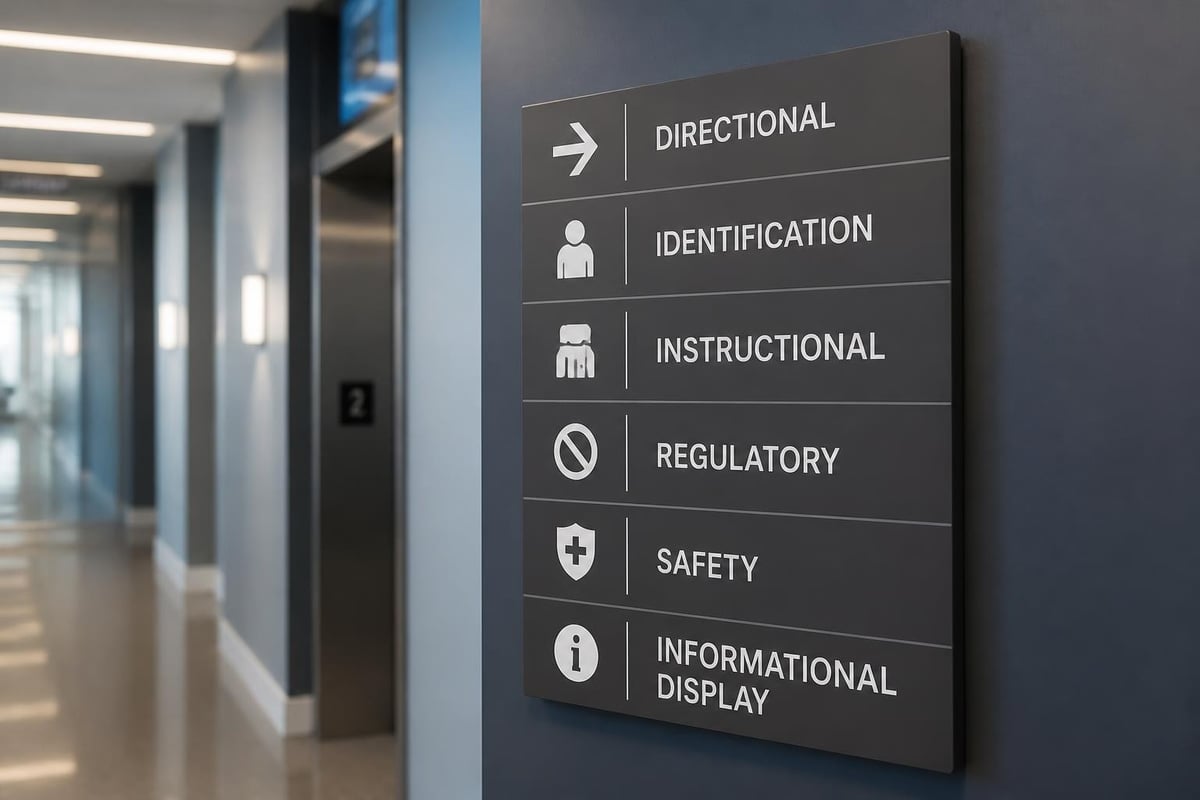
Different environments demand specific types of info signs, each serving distinct communication objectives:
- Directional signs guide people through spaces, indicating routes to destinations
- Identification signs label rooms, departments, buildings, and facilities
- Instructional signs provide step-by-step guidance or operational procedures
- Regulatory signs communicate rules, restrictions, and legal requirements
- Safety signs warn of hazards and indicate emergency procedures
- Informational displays share general knowledge, schedules, or announcements
Manufacturing facilities require comprehensive safety and operational signage, whilst pharmaceutical environments demand precise regulatory compliance signage. The construction industry relies heavily on temporary informational signs that adapt to changing site conditions, whilst corporate offices benefit from sophisticated wayfinding systems that enhance visitor experiences.
Design Principles for Effective Information Signage
Creating impactful info signs requires balancing aesthetic appeal with functional clarity. The most successful informational signage disappears into the user's journey whilst simultaneously delivering critical information exactly when needed.
Typography selection stands as the foundation of readable signage. Sans-serif typefaces generally provide superior legibility at distance, with character spacing and stroke weight carefully calibrated for the intended viewing distance. Minimum letter heights follow established formulas: approximately 25mm of letter height for every metre of viewing distance ensures readability for users with standard vision.
Colour Psychology and Contrast Requirements
Colour choices in info signs serve dual purposes: creating visual hierarchy whilst triggering psychological responses. Red universally signals prohibition or danger, whilst green indicates safety or permission. Blue conveys mandatory actions, and yellow warns of caution. Beyond psychological associations, colour contrast ratios determine whether information remains accessible to all users.
Contrast ratio requirements for optimal legibility:
| Background/Foreground | Minimum Ratio | Recommended Ratio |
|---|---|---|
| Light on Dark | 3:1 | 7:1 |
| Dark on Light | 3:1 | 7:1 |
| Coloured Combinations | 3:1 | 5:1 |
The U.S. Access Board provides comprehensive guidance on visual contrast requirements that ensure info signs remain accessible to individuals with varying visual capabilities. These standards have influenced global best practices, making them valuable references even for projects outside American jurisdictions.
Material selection significantly impacts both longevity and maintenance requirements. Aluminium composite panels offer durability for outdoor applications, whilst acrylic provides clarity for internally illuminated signs. Vinyl graphics on various substrates create cost-effective solutions for temporary or frequently updated information displays.
Regulatory Compliance and Accessibility Standards
Info signs in public-facing environments must satisfy stringent regulatory requirements designed to ensure universal accessibility. These regulations protect organisations from liability whilst simultaneously creating inclusive spaces that serve all users regardless of physical capabilities.
The ADA Standards for Accessible Design establish specific requirements for permanent room identification signs, including raised characters, Grade 2 Braille, and precise mounting heights. Whilst these American standards don't directly govern South African installations, they represent international best practices that inform safety signage compliance across industries.
Tactile and Braille Requirements
Permanent identification signs serving individuals with visual impairments require tactile characters and Braille translations. Raised letters must protrude between 0.8mm and 1.5mm from their background surface, with character heights between 16mm and 51mm depending on viewing distance. Braille dots follow Grade 2 specifications, positioned below the corresponding visual characters.
Healthcare facilities face particularly complex wayfinding challenges, necessitating sophisticated signage strategies. NHS England's wayfinding guidance demonstrates how comprehensive information signage systems address the unique needs of patients, visitors, and staff navigating stressful, time-sensitive situations in complex environments.
Transportation and traffic-related info signs operate under separate regulatory frameworks. The Manual on Uniform Traffic Control Devices governs roadway signage specifications in the United States, establishing standardised symbols, colours, and placements that ensure consistent interpretation across jurisdictions.

Strategic Placement and Hierarchy Systems
The positioning of info signs determines their effectiveness more powerfully than their design quality. Signs placed where users naturally look during decision-making moments provide seamless guidance, whilst poorly positioned signs create frustration regardless of their aesthetic excellence.
Decision points represent critical placement opportunities. These locations occur where users must choose between multiple pathways or options: building entrances, corridor intersections, lift lobbies, and stairwell landings. Info signs positioned at decision points answer questions before they fully form in users' minds.
Creating Logical Wayfinding Sequences
Effective signage systems employ hierarchical structures that guide users from general to specific information:
- Primary signs establish major destinations and general orientation
- Secondary signs provide directional guidance towards specific areas
- Tertiary signs confirm arrival and identify specific rooms or features
- Quaternary signs deliver detailed information about services or procedures
Mounting heights follow ergonomic principles, with primary text positioned between 1200mm and 1500mm from finished floor level for optimal visibility to both standing and seated users. Projecting signs mounted perpendicular to corridors provide visibility from multiple approach angles, particularly valuable in busy circulation spaces.
Signage density requires careful calibration. Excessive signage creates visual clutter that overwhelms users, whilst insufficient signage leaves visitors confused. Professional wayfinding audits identify optimal sign placement by tracing common user journeys and identifying information gaps.
Material Selection for Different Environments
Info signs must withstand the specific environmental conditions of their intended locations whilst maintaining visual clarity throughout their service life. Indoor signs face minimal weather exposure but may encounter cleaning chemicals, whilst outdoor installations battle UV radiation, temperature fluctuations, and moisture penetration.
Environmental considerations for material selection:
| Environment | Primary Challenges | Recommended Materials |
|---|---|---|
| Indoor Corporate | Cleaning, minor impacts | Acrylic, brushed aluminium |
| Outdoor Retail | UV exposure, weather | Aluminium composite, marine-grade vinyl |
| Industrial | Chemical exposure, impacts | Stainless steel, reinforced plastics |
| Healthcare | Infection control, cleaning | Non-porous materials, antimicrobial coatings |
Aluminium remains the workhorse material for permanent info signs, offering exceptional durability-to-weight ratios and natural corrosion resistance. When powder-coated or anodised, aluminium signs maintain their appearance for decades even in harsh outdoor conditions. The material accepts various graphic application methods, from direct printing to vinyl graphics and routed dimensional letters.
Digital alternatives have transformed certain information signage applications. Digital Signage solutions enable real-time content updates, dynamic messaging, and interactive capabilities that static signs cannot match. These systems excel in environments requiring frequent information updates: airports, shopping centres, corporate lobbies, and educational institutions.
Sustainability considerations increasingly influence material choices. Recyclable substrates, low-VOC inks, and energy-efficient illumination systems reduce environmental impacts whilst often delivering lifecycle cost savings through extended service life and reduced replacement frequency.
Illumination Technologies and Visibility Enhancement
Lighting transforms info signs from daytime-only communication tools into 24-hour information resources. The appropriate illumination strategy depends on viewing conditions, power availability, maintenance capabilities, and budget constraints.
External vs Internal Illumination Methods
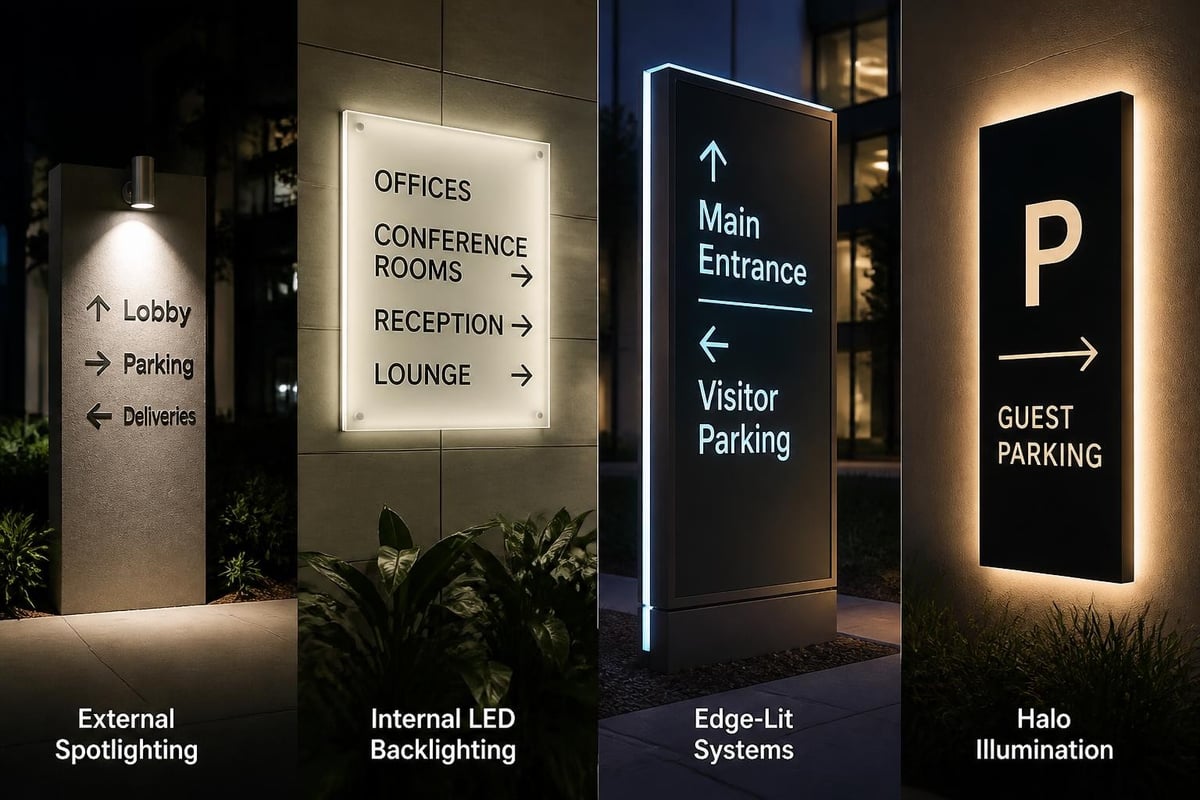
Externally illuminated signs employ spotlights or wall-mounted fixtures directed at sign faces. This approach suits heritage environments where internal illumination might compromise architectural character, and provides flexibility for signage updates without electrical modifications. However, external lighting creates shadows and uneven brightness distribution.
Internally illuminated signs house light sources within sign cabinets, producing uniform face illumination. LED technology has revolutionised internal illumination, offering exceptional energy efficiency, minimal heat generation, and service lives exceeding 50,000 hours. These systems particularly suit channel letters, light boxes, and information directories requiring high visibility in low-light conditions.
- LED edge-lit acrylic provides slim profiles with uniform illumination
- Backlit vinyl graphics create vibrant colours with excellent contrast
- Halo-lit dimensional letters produce sophisticated indirect lighting effects
- Projected illumination enables dynamic content display on architectural surfaces
Photocell controls automatically adjust illumination levels based on ambient light conditions, reducing energy consumption whilst maintaining optimal visibility. Timer systems ensure signs illuminate during business hours without manual intervention, whilst occupancy sensors activate wayfinding signs only when needed.
Integration with Digital Wayfinding Systems
Modern information strategies increasingly combine physical info signs with digital wayfinding technologies, creating hybrid systems that leverage the strengths of both approaches. Static signage provides constant, reliable orientation cues whilst digital systems deliver dynamic, personalised information.
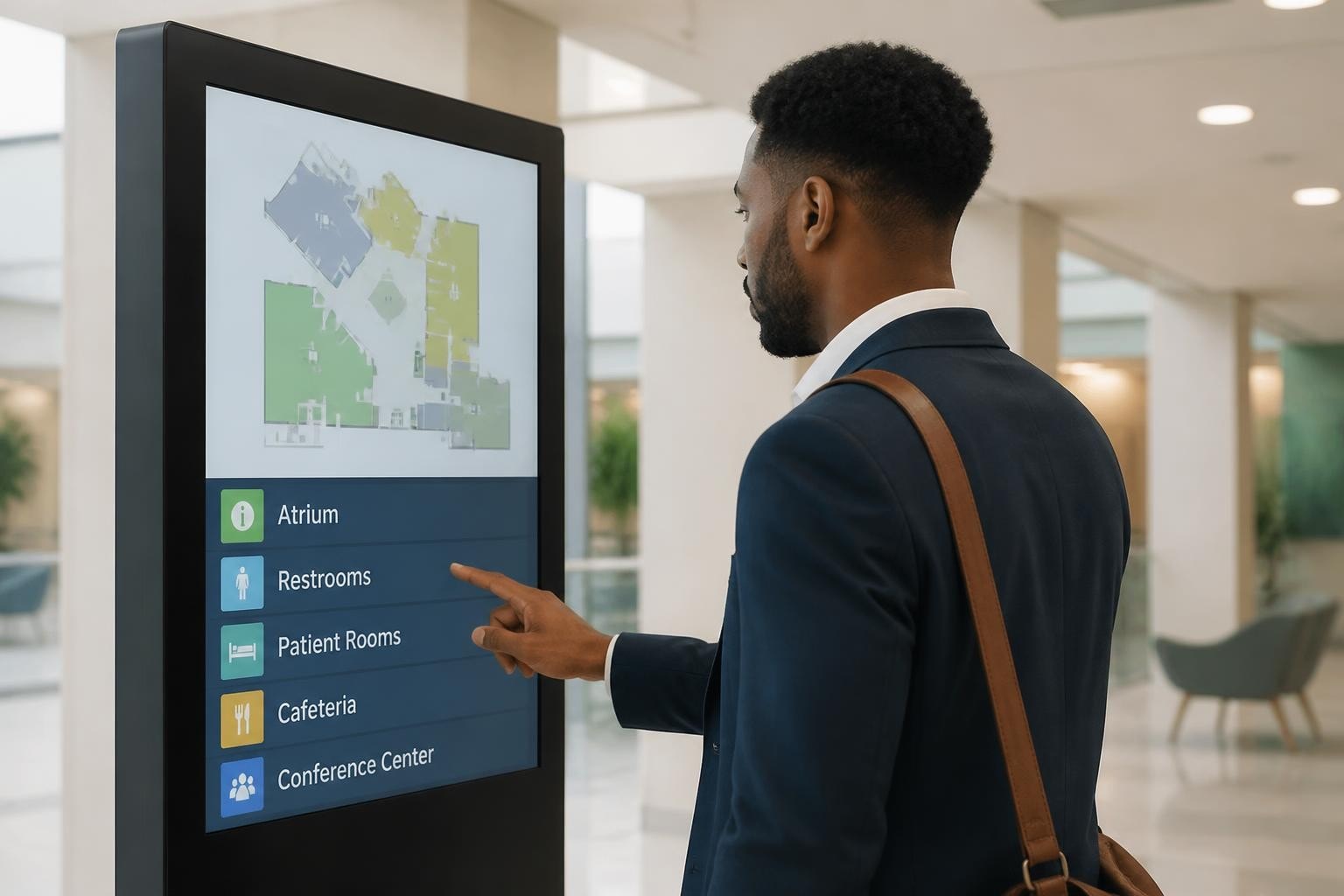
Interactive directories accept user input to generate customised route guidance, accommodating changing building layouts and temporary facility closures that would require constant updates to static signage. These systems integrate with building management platforms, displaying real-time room availability, event schedules, and emergency notifications.
Mobile wayfinding applications complement physical info signs by providing pre-arrival route planning, accessibility-specific routing, and multi-language support. QR codes on traditional signage create bridges to digital content, enabling users to access detailed information, translations, or multimedia explanations without cluttering physical sign faces.
The most effective implementations maintain physical signage as the primary wayfinding system whilst digital enhancements provide supplementary capabilities. This approach ensures universal access regardless of technological capabilities or device availability, whilst offering enhanced experiences for digitally equipped users.
Industry-Specific Information Signage Requirements
Different sectors demand tailored approaches to info signs that reflect unique operational requirements, user expectations, and regulatory obligations.
Pharmaceutical facilities operate under strict regulatory oversight requiring comprehensive documentation of processes, safety protocols, and quality control measures. Information signage in these environments must withstand frequent cleaning with aggressive disinfectants whilst maintaining legibility under cleanroom lighting conditions. Material selections favour non-shedding, non-porous surfaces that won't compromise sterile environments.
Corporate environments emphasise brand alignment and professional aesthetics alongside functionality. Reception directories, department identifications, and amenity signage contribute to overall workplace experience whilst supporting efficient building navigation. These implementations often incorporate corporate colour schemes, typeface standards, and material palettes that reinforce organisational identity.
Construction sites present unique challenges for temporary information signage. Safety warnings, site access instructions, and contractor directories must remain visible despite dust, mud, and weather exposure. Robust mounting systems prevent wind damage, whilst high-contrast colour schemes ensure visibility in variable lighting conditions.
Retail environments utilise info signs to enhance customer experience whilst driving commercial objectives. Product information displays, pricing signage, and service policy communications must balance promotional appeal with clear information delivery. The psychology of colour in signage design plays particularly significant roles in retail applications where emotional responses influence purchasing decisions.
Maintenance Protocols and Lifecycle Management
Well-designed info signs represent long-term investments requiring systematic maintenance to preserve functionality and appearance. Proactive maintenance programmes prevent minor issues from escalating into costly replacements whilst ensuring continuous communication effectiveness.
Cleaning and Inspection Schedules
Regular cleaning removes environmental contaminants before they permanently stain or degrade sign materials:
- Monthly cleaning for high-traffic indoor locations using manufacturer-approved cleaning solutions
- Quarterly cleaning for outdoor signs exposed to weather and pollution
- Annual deep cleaning including inspection of mounting hardware and illumination systems
- Post-storm inspection after severe weather events to identify damage requiring immediate attention
Aluminium signs tolerate pressure washing when properly mounted, whilst acrylic faces require gentle cleaning with soft cloths to prevent scratching. Vinyl graphics benefit from protective coatings that resist UV degradation and facilitate cleaning without graphic deterioration.
Illuminated sign maintenance extends beyond face cleaning to include lamp replacement, ballast inspection, and electrical connection verification. LED systems dramatically reduce maintenance demands compared to traditional fluorescent or neon technologies, with some installations operating five years or longer without requiring lamp changes.
Documentation systems tracking sign locations, installation dates, and maintenance histories enable efficient lifecycle management. These records identify underperforming sign types, inform replacement scheduling, and support budget planning for signage refreshes. Understanding signage maintenance requirements helps organisations maximise return on their signage investments.
Cost Considerations and Value Assessment
Info signs span enormous price ranges depending on size, materials, complexity, and installation requirements. Simple directional signs might cost hundreds of rand, whilst comprehensive wayfinding systems for large facilities represent investments of hundreds of thousands.
Initial purchase price represents only one component of total ownership cost. Installation labour, electrical connections, ongoing maintenance, and eventual replacement or updates contribute to lifecycle expenses. Energy consumption for illuminated signs adds ongoing operational costs that favour efficient LED technologies over traditional lighting.
Cost drivers for information signage projects:
| Factor | Impact Level | Cost Range Influence |
|---|---|---|
| Size and quantity | High | 40-60% of total |
| Material selection | Medium-High | 20-30% of total |
| Illumination complexity | Medium | 15-25% of total |
| Installation difficulty | Medium | 10-20% of total |
| Customisation level | Low-Medium | 5-15% of total |
Value assessment extends beyond financial metrics to encompass operational improvements and risk mitigation. Effective info signs reduce staff time spent providing directions, decrease visitor frustration, improve safety compliance, and enhance institutional image. These benefits often justify premium investments in comprehensive signage systems.
Phased implementation strategies make large-scale signage projects financially manageable whilst delivering immediate improvements in critical areas. Priority sequencing addresses high-traffic decision points first, extending coverage systematically as budgets allow. This approach generates tangible benefits earlier whilst building organisational support for subsequent phases.
Implementation Planning and Project Management
Successful info signs projects begin with comprehensive planning that identifies user needs, establishes clear objectives, and defines measurable success criteria. Rushed implementations frequently result in incomplete coverage, inconsistent messaging, or signs positioned where users don't naturally look.
Stakeholder consultation reveals diverse perspectives on wayfinding challenges and information gaps. Front-line staff interact daily with visitors asking directions, whilst facilities managers understand building complexities and maintenance requirements. User surveys and observational studies identify actual navigation patterns that may differ from designers' assumptions.
Site audits document existing conditions, photograph decision points, and measure viewing distances that inform sign sizing calculations. These assessments reveal mounting surface conditions, electrical infrastructure availability, and potential obstructions affecting sign visibility. Professional signage installation teams conduct thorough pre-installation surveys to prevent surprises during implementation.
Content development establishes consistent terminology, abbreviations, and messaging hierarchies across the entire signage system. Standardised naming conventions prevent confusion when different signs reference the same destination using varied terminology. Multi-language requirements demand careful translation and cultural review to ensure appropriate communication across diverse user populations.
Proof approval processes verify designs before manufacturing begins, confirming dimensions, colours, content accuracy, and material specifications. Physical mockups enable stakeholders to evaluate sign appearance at actual size in representative lighting conditions, revealing issues invisible in computer renderings.
Info signs represent fundamental infrastructure for effective organisational communication, guiding people safely and efficiently whilst reinforcing brand standards and regulatory compliance across every business sector. From accessibility requirements to strategic placement, material selection to maintenance planning, successful implementations demand expertise spanning design, manufacturing, and installation disciplines. Signs4SA delivers comprehensive signage solutions tailored to corporate, retail, construction, and pharmaceutical environments throughout South Africa, combining skilled craftsmanship with national coverage to transform your communication challenges into seamless wayfinding experiences.