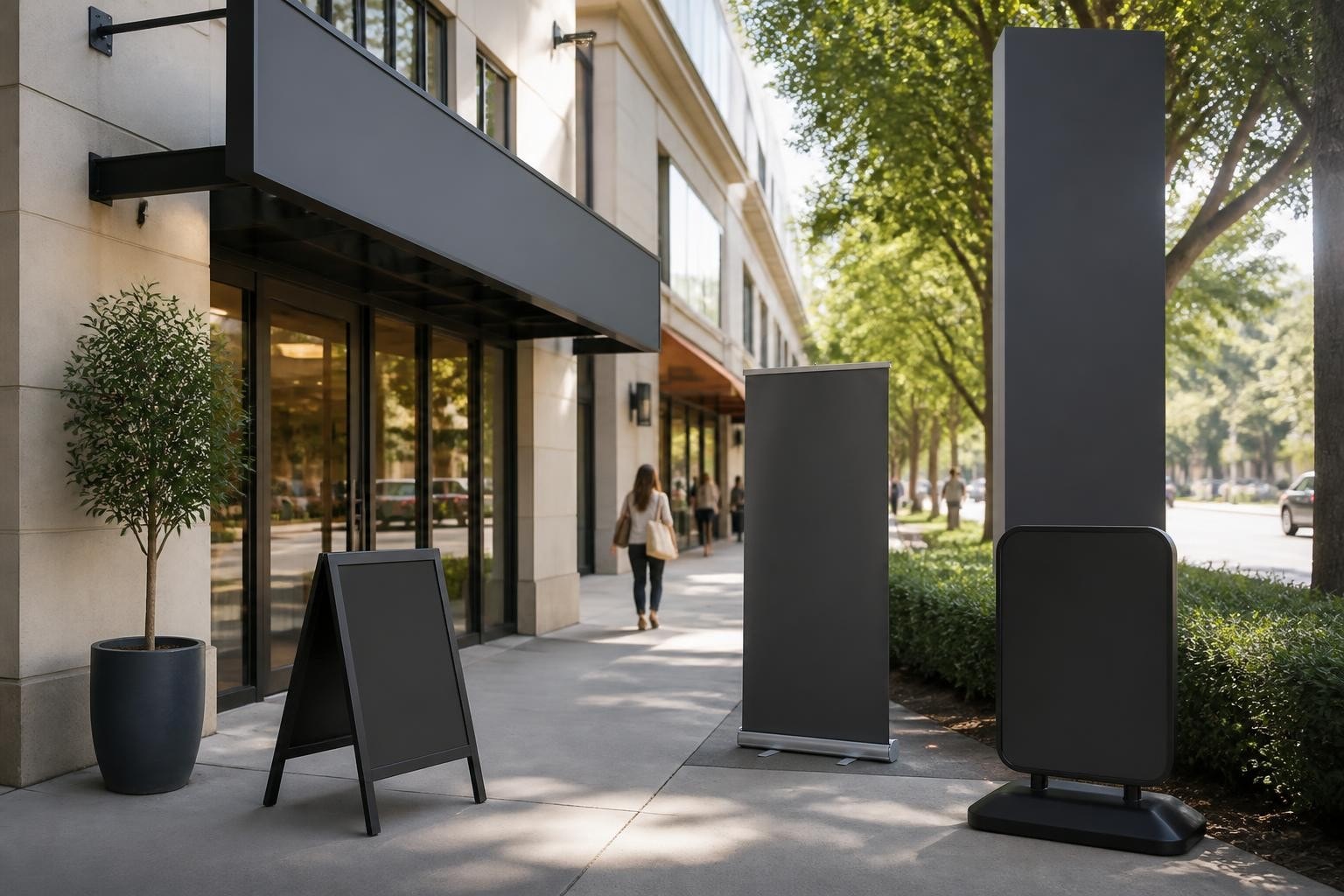



Digital Display Signage: A Complete Guide for 2026
Modern businesses face an ongoing challenge: capturing attention in an increasingly crowded marketplace. Traditional static signage, whilst still valuable, cannot compete with the dynamic capabilities of digital display signage. This technology has transformed how organisations communicate with customers, employees, and visitors, offering unprecedented flexibility in messaging, scheduling, and content delivery. From retail environments to corporate lobbies, pharmaceutical facilities to construction sites, digital displays have become essential tools for engagement and information dissemination. Understanding the technology, applications, and strategic implementation of these systems enables businesses to maximise their investment and achieve measurable communication outcomes.
Understanding Digital Display Signage Technology
Digital display signage encompasses a broad range of electronic displays that present dynamic content including text, images, video, and interactive elements. The technology has evolved dramatically since early LED ticker boards, now offering high-resolution displays with sophisticated content management systems.
Core technologies powering digital displays include:
- LED (Light Emitting Diode) panels, measured by pixel pitch from P10 (outdoor-suitable) to P1.8 (ultra-high-definition indoor)
- LCD (Liquid Crystal Display) screens ranging from standard commercial displays to video wall configurations
- OLED (Organic LED) technology offering superior contrast and viewing angles
- Projection systems for large-format installations where direct-view displays prove impractical
- E-paper displays providing energy-efficient solutions for static or infrequently changing content
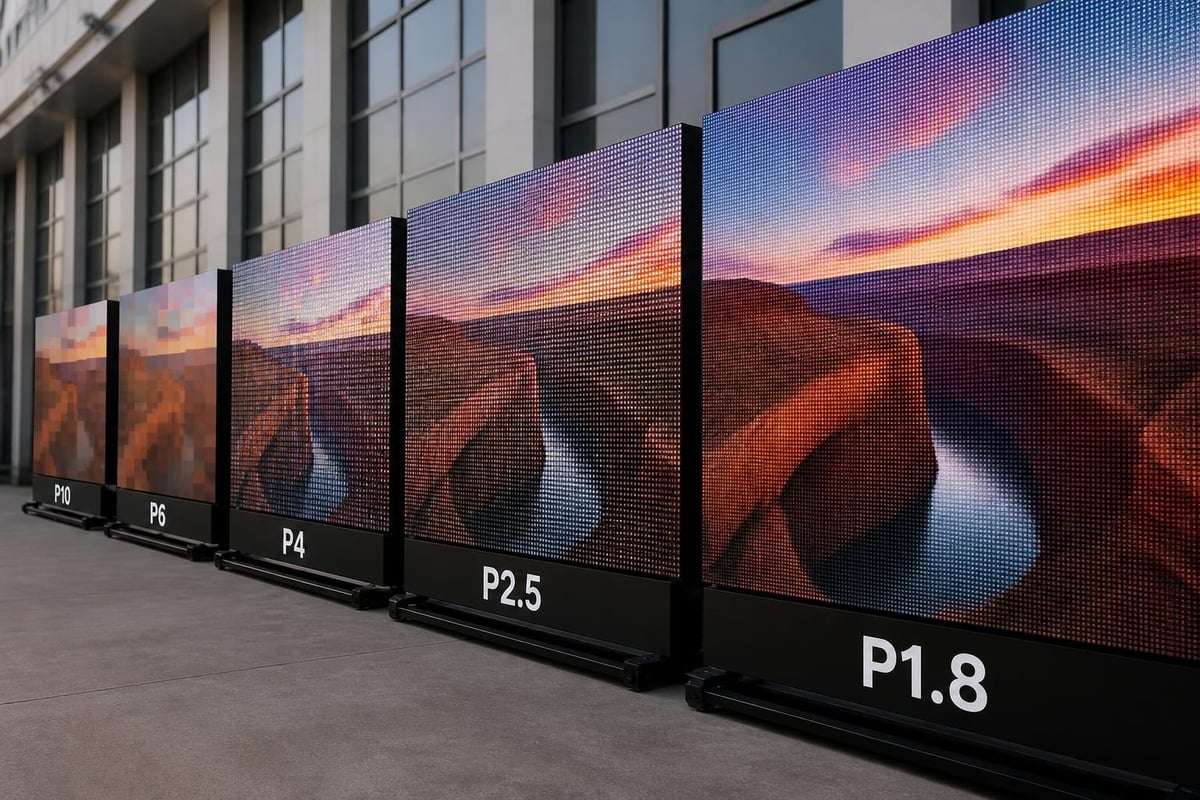
The pixel pitch specification proves critical when selecting LED technology. P10 displays feature pixels 10 millimetres apart, making them ideal for viewing from greater distances such as roadside installations. Conversely, P1.8 displays with 1.8-millimetre pixel spacing deliver stunning clarity for close-range viewing in reception areas or conference rooms. The AVIXA recommended standard V202.01 provides valuable guidance on display image size calculations relative to viewing distance.
Content Management Systems
The true power of digital display signage lies not merely in the hardware but in sophisticated content management systems (CMS) that orchestrate what appears on screens, when, and under what conditions. Modern CMS platforms enable centralised control over networks spanning multiple locations, time zones, and display types.
Advanced systems incorporate:
- Scheduling capabilities that automate content rotation based on time, day, or calendar events
- Triggered content responding to external data inputs such as weather, traffic, or inventory levels
- Multi-zone layouts dividing single screens into regions displaying different content simultaneously
- Analytics integration measuring viewer engagement, dwell time, and content performance
- Remote management allowing updates and monitoring from any internet-connected device
Cloud-based platforms have largely supplanted on-premises servers, offering enhanced reliability, automatic updates, and simplified deployment. This architectural shift particularly benefits organisations with distributed locations, as content updates propagate instantly across entire networks without requiring physical intervention at each site.
Applications Across Industries
Digital display signage serves diverse functions across virtually every commercial sector. Understanding industry-specific applications helps organisations identify opportunities and develop effective implementation strategies.
Retail Environments
Retailers leverage digital displays to influence purchasing behaviour at critical decision points. Research from the Out of Home Advertising Association of America demonstrates that digital out-of-home advertising achieves significantly higher recall rates than static alternatives.
| Application | Purpose | Typical Location |
|---|---|---|
| Promotional displays | Highlight offers and new products | End caps, entrance areas |
| Wayfinding | Guide customers through store layouts | Main aisles, department transitions |
| Queue management | Reduce perceived wait times with entertainment | Checkout areas, service counters |
| Product information | Provide detailed specifications and comparisons | Product displays, demonstration areas |
| Brand storytelling | Communicate values and heritage | Featured walls, fitting rooms |
Dynamic pricing represents an emerging application, with displays automatically updating to reflect inventory levels, competitor pricing, or demand fluctuations. This capability, whilst requiring sophisticated backend integration, can significantly enhance margin management.
Corporate Communications
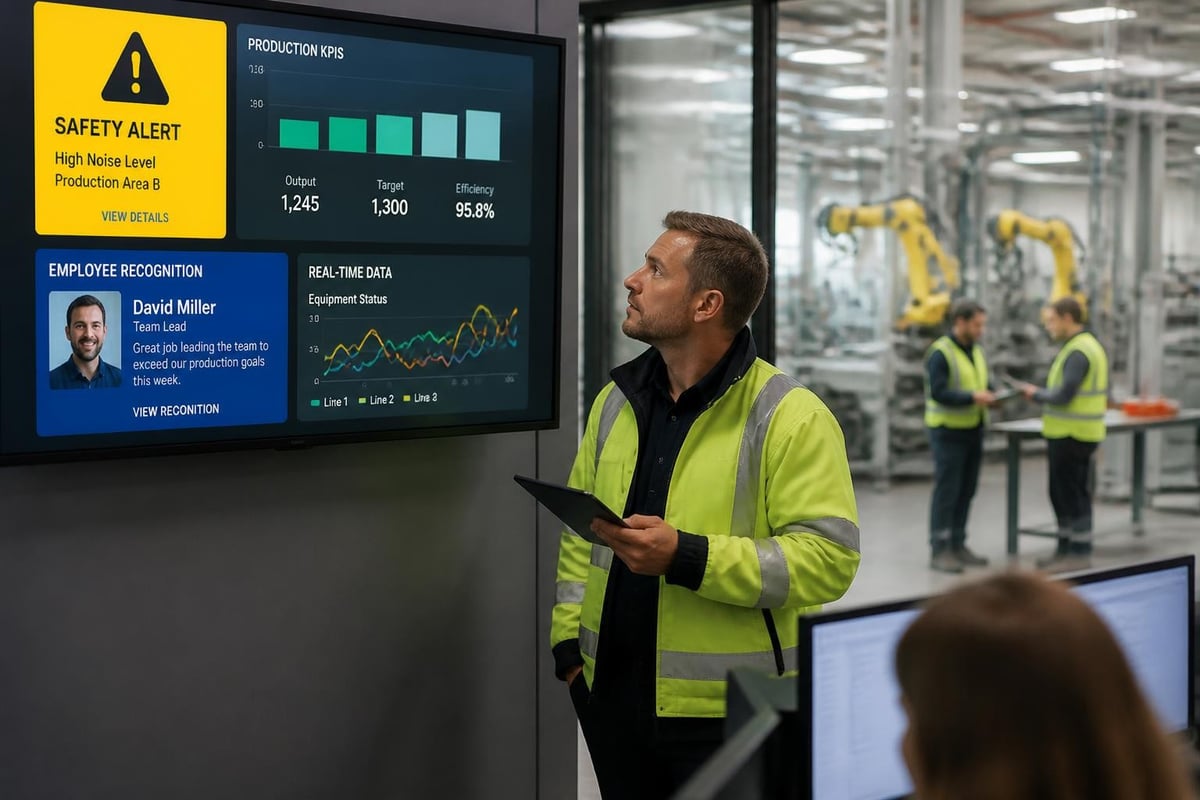
Organisations increasingly deploy digital display signage for internal communications, recognising that email alone cannot ensure message penetration across diverse employee populations. Manufacturing facilities, warehouses, and areas where employees don't maintain regular computer access particularly benefit from visual communication channels.
Corporate applications include safety announcements, production metrics, recognition programmes, and social media feeds showcasing company culture. Signs4SA's experience across corporate clients demonstrates that well-implemented internal digital signage significantly improves information retention compared to traditional notice boards.
Healthcare and Pharmaceutical Sectors
Healthcare environments present unique signage challenges: complex wayfinding, regulatory compliance requirements, and the need to communicate effectively with stressed, distracted visitors. Digital display signage addresses these challenges whilst maintaining the professional, reassuring atmosphere essential in medical settings.
Pharmaceutical manufacturing facilities utilise displays for safety protocols, quality control processes, and compliance reminders. The ability to instantly update information when procedures change ensures all personnel access current protocols, reducing error risk and supporting audit readiness.
Technical Specifications and Selection Criteria
Selecting appropriate digital display signage requires careful consideration of environmental conditions, viewing distances, content requirements, and budget constraints. No single solution suits every application, making systematic evaluation essential.
Environmental factors influencing selection:
- Brightness requirements: Outdoor installations require 5,000+ nits; indoor environments typically need 500-2,500 nits
- Weatherproofing: IP65 or higher ratings essential for exterior applications exposed to rain, dust, and temperature extremes
- Operating temperature: Standard displays function 0-40°C; extended-range models accommodate -30°C to +50°C
- Viewing angles: Wide-angle requirements favour LED technology; controlled viewing environments may accept narrower LCD viewing cones
The SMPTE standards provide authoritative technical specifications for professional digital signage workflows, particularly valuable for installations requiring colour accuracy, synchronisation across multiple displays, or integration with broadcast systems.
Resolution and Pixel Density Calculations
Determining appropriate resolution requires understanding viewing distances and content detail requirements. A simple formula guides this calculation: optimal viewing distance equals pixel pitch (in millimetres) multiplied by viewing distance factor (typically 1,000 for general viewing, 500 for detailed content).
For example, P6 displays (6mm pixel pitch) suit viewing distances of approximately 6 metres for general content or 3 metres for detailed information. This relationship explains why digital signage specifications vary dramatically between billboard-scale installations and close-proximity retail displays.
| Display Type | Typical Resolution | Optimal Viewing Distance | Common Applications |
|---|---|---|---|
| P10 LED | Variable | 10+ metres | Outdoor billboards, stadium displays |
| P6 LED | Variable | 6+ metres | Exterior building facades, car parks |
| P3 LED | Variable | 3+ metres | Shopping centre directories, transit hubs |
| Commercial LCD | 1920×1080 (Full HD) | 2+ metres | Retail displays, corporate lobbies |
| Professional LCD | 3840×2160 (4K) | 1+ metres | Conference rooms, control centres |
Content Strategy and Design Principles
Hardware capabilities mean little without compelling content that engages viewers and drives desired actions. Digital display signage content strategy differs fundamentally from traditional advertising or web design, requiring specific approaches optimised for brief viewing windows and varying attention levels.
The Seven-Second Rule
Research consistently shows that digital signage captures viewer attention for approximately seven seconds in most environments. Wayfinding applications may receive longer dwell times when viewers actively seek information, whilst promotional content in high-traffic areas must communicate instantly.
Effective content observes these principles:
- Single message focus: Each screen rotation should communicate one primary idea
- Visual hierarchy: Use size, colour, and position to direct attention to critical elements
- Minimal text: Limit word count to what viewers can comfortably read in available time
- High contrast: Ensure legibility under varying lighting conditions and viewing angles
- Motion purpose: Use animation strategically to attract attention, not merely for aesthetic appeal
Accessibility considerations extend beyond physical signage to digital displays. The W3C guidance on WCAG2ICT offers practical accessibility guidance applicable to digital signage, including caption requirements, colour contrast ratios, and text sizing standards. Organisations subject to accessibility regulations should consult ADA.gov guidance when designing content strategies.
Content Refresh Frequency
Static displays gather "visual dust" as viewers stop noticing unchanging elements. Digital display signage avoids this pitfall through regular content rotation, but determining optimal refresh frequency requires balancing several factors.

High-traffic retail environments benefit from content changes every 15-30 seconds, maintaining novelty for repeat visitors whilst allowing adequate viewing time for each message. Corporate environments typically adopt slower rotations, perhaps changing every 30-60 seconds, as viewers aren't constantly moving past displays.
Seasonal content, whilst remaining deployed longer than individual promotional messages, requires planning and coordination. Successful programmes develop content libraries months in advance, scheduling automated deployments aligned with marketing calendars, product launches, and cultural events.
Installation Considerations and Infrastructure Requirements
Successful digital display signage deployment extends well beyond selecting appropriate hardware and creating content. Installation quality directly impacts performance, longevity, and total cost of ownership.
Critical infrastructure elements include:
- Electrical supply: Dedicated circuits with appropriate capacity, surge protection, and emergency shutdown provisions
- Network connectivity: Sufficient bandwidth for content distribution, with redundancy for business-critical installations
- Structural support: Mounting systems engineered for display weight plus safety factors, accounting for wind loading in outdoor applications
- Environmental controls: Cooling or heating systems maintaining optimal operating temperatures in extreme conditions
- Access provisions: Consideration for maintenance access without disrupting operations or requiring excessive equipment
Many organisations underestimate the complexity of professional installation, particularly for large-format displays or multi-screen video walls. The importance of professional installation cannot be overstated, as improper mounting, inadequate weatherproofing, or insufficient electrical capacity leads to premature failure and safety hazards.
Integration with Existing Systems
Modern digital display signage rarely operates in isolation. Integration capabilities determine how effectively displays serve broader organisational objectives. Common integration points include:
| System Type | Integration Purpose | Technical Approach |
|---|---|---|
| Point of Sale | Display queue positions, transaction confirmations | API connections, database queries |
| Building Management | Trigger emergency messages, adjust brightness | Contact closures, IP protocols |
| Social Media | Show real-time feeds, user-generated content | OAuth authentication, RSS feeds |
| Weather Services | Adapt content to conditions, display forecasts | Web services, JSON data feeds |
| Analytics Platforms | Measure engagement, correlate with sales | Sensor integration, camera analytics |
The IAB collaboration on DOOH best practices provides valuable guidance for programmatic content delivery, privacy considerations, and measurement standards increasingly relevant even for non-advertising applications.
Maintenance and Lifecycle Management
Digital display signage represents a significant capital investment requiring proactive maintenance to achieve expected service life and return on investment. Long-term maintenance planning should commence during system specification, not after installation.
Preventive Maintenance Programmes
LED displays typically offer 50,000 to 100,000 operating hours before brightness degrades to 50% of original output. This translates to 5-11 years of continuous operation, but achieving this lifespan requires regular maintenance addressing environmental contaminants, component wear, and software updates.
Recommended maintenance includes:
- Quarterly cleaning: Remove dust, pollen, and pollutants affecting brightness and heat dissipation
- Annual inspections: Check electrical connections, mounting integrity, and weatherproofing seals
- Firmware updates: Apply manufacturer security patches and feature enhancements
- Content audits: Review analytics identifying underperforming content requiring replacement
- Spare parts inventory: Maintain critical components enabling rapid repair without extended downtime
Outdoor installations face accelerated wear from UV exposure, temperature cycling, and precipitation. IP ratings indicate ingress protection levels, but even well-sealed enclosures require periodic inspection as seals degrade over time.
Measuring Return on Investment
Quantifying digital display signage ROI challenges many organisations, particularly when displays serve multiple purposes simultaneously. Developing measurement frameworks before deployment enables meaningful evaluation and optimisation.
Measurable outcomes include:
- Sales lift: Compare transaction data before and after installation, controlling for seasonal variations
- Dwell time: Use analytics to measure how long customers spend in promoted areas or with specific products
- Message recall: Survey customers regarding advertising message awareness and comprehension
- Operational efficiency: Track reductions in customer service inquiries for information now displayed digitally
- Employee engagement: Measure participation in programmes promoted through internal signage
Retail applications often demonstrate clearest ROI, with documented sales increases of 15-30% for promoted products displayed on digital signage versus unpromoted comparable items. Corporate applications require more nuanced metrics, perhaps measuring safety incident reduction following enhanced visual communication of protocols.
Total Cost of Ownership Analysis
Purchase price represents only one component of digital display signage investment. Comprehensive cost analysis includes installation, content creation, electricity consumption, maintenance, and eventual replacement.
| Cost Component | Initial Investment | Ongoing Annual Cost | Notes |
|---|---|---|---|
| Hardware | £8,000-£50,000 | £0 | Varies by size, specification, quantity |
| Installation | £1,500-£8,000 | £0 | Professional mounting, electrical, network |
| CMS Licensing | £0-£2,000 | £500-£3,000 | Cloud platforms typically subscription-based |
| Content Creation | £1,000-£5,000 | £2,400-£12,000 | Initial library plus ongoing refreshes |
| Electricity | £0 | £150-£800 | Depends on display size, operating hours |
| Maintenance | £0 | £300-£1,500 | Cleaning, inspections, repairs |
Five-year total cost of ownership often doubles the initial hardware investment, emphasising the importance of selecting quality components and establishing realistic budgets encompassing full lifecycle costs.
Future Trends and Emerging Technologies
Digital display signage continues evolving rapidly, with emerging technologies promising enhanced capabilities and new applications. Organisations planning deployments should consider future compatibility and upgrade pathways.
Significant developments include:
- MicroLED technology: Combining LED advantages with LCD-like pixel densities, enabling seamless video walls without bezels
- Transparent displays: Creating layered visual experiences whilst maintaining sight lines through windows and partitions
- Interactive capabilities: Touch, gesture, and proximity sensing transforming passive displays into engagement platforms
- Artificial intelligence: Dynamic content optimisation responding to viewer demographics, attention patterns, and environmental context
- Augmented reality integration: Bridging physical and digital experiences through smartphone interactions with displays
Sustainability considerations increasingly influence technology selection. Energy-efficient displays, recyclable components, and longevity assume greater importance as organisations pursue environmental objectives. Exploring LED signage benefits reveals substantial energy advantages over older display technologies.
Regulatory Compliance and Safety Standards
Digital display signage deployment must comply with various regulations governing electrical safety, structural integrity, accessibility, and content restrictions. Requirements vary by jurisdiction, installation location, and display purpose.
Building codes typically mandate:
- Electrical certification: Licensed electricians must complete installations meeting national electrical codes
- Structural engineering: Large displays require certified engineering ensuring adequate support and wind resistance
- Fire safety compliance: Materials, clearances, and emergency protocols must satisfy local fire codes
- Accessibility standards: Public-facing displays must accommodate vision and hearing impairments
- Content regulations: Restrictions on advertising content, particularly near roads, schools, or residential areas
South African businesses should review signage regulations and permits specific to their regions, as municipalities maintain varying requirements. Obtaining necessary approvals before installation prevents costly modifications or removal orders.
Safety Considerations for Public Installations
Displays in public spaces introduce safety considerations beyond typical commercial applications. Mounting height, viewing angles, brightness levels, and content all require careful evaluation to prevent hazards or nuisance conditions.
Brightness limits prevent digital displays from creating hazardous glare for motorists or excessive light pollution affecting nearby residents. Many jurisdictions specify maximum luminance levels and require displays to dim automatically based on ambient light conditions. Modern displays incorporate light sensors enabling automatic adjustment, but installation teams must configure these systems appropriately for specific locations.
Strategic Implementation Roadmap
Successful digital display signage programmes follow structured implementation approaches addressing technology selection, content development, deployment logistics, and ongoing optimisation. Organisations rushing deployment without adequate planning commonly encounter avoidable challenges.
Recommended implementation phases:
Phase 1: Assessment and Planning (4-6 weeks)
Define objectives, identify locations, assess infrastructure requirements, and establish budgets. Stakeholder engagement during this phase ensures alignment between technical capabilities and business requirements. Document viewing distances, environmental conditions, and integration requirements informing technology specifications.
Phase 2: Technology Selection (2-4 weeks)
Evaluate vendors, compare specifications, and select hardware and CMS platforms. Request demonstrations and pilot installations when feasible, as hands-on evaluation reveals capabilities not apparent in specification sheets. Consider total cost of ownership, vendor stability, and support capabilities alongside technical features.
Phase 3: Content Development (6-8 weeks)
Create initial content libraries, establish design templates, and develop scheduling frameworks. This phase often proves more time-consuming than anticipated, as effective content requires collaboration between marketing, operations, and technical teams. Understanding signage design principles accelerates this process.
Phase 4: Installation and Integration (2-8 weeks)
Deploy hardware, configure systems, and integrate with existing infrastructure. Timeline varies dramatically based on installation complexity, site access, and integration requirements. Buffer adequate time for testing and refinement before launch.
Phase 5: Launch and Optimisation (Ongoing)
Monitor performance, gather analytics, and refine content strategies based on measured outcomes. Digital display signage programmes succeed through continuous improvement rather than "set and forget" approaches.
Digital display signage transforms how organisations communicate, offering unprecedented flexibility and engagement compared to traditional alternatives. From retail environments to corporate facilities, pharmaceutical operations to construction sites, these dynamic systems deliver measurable value when implemented strategically with appropriate technology selections, compelling content, and professional installation. Whether you're exploring digital signage for the first time or seeking to expand existing installations, Signs4SA brings the expertise, national footprint, and comprehensive solutions needed to achieve your communication objectives with high-quality, bespoke signage backed by skilled professionals who understand your industry's unique requirements.