



Digital Signage Display Outdoor: Complete 2026 Guide
Outdoor digital displays have revolutionised how businesses communicate with their audiences in public spaces. From retail centres to corporate campuses, these dynamic screens deliver real-time messaging with unmatched flexibility and impact. As technology advances and costs become more accessible, organisations across South Africa and globally are embracing outdoor digital solutions to enhance brand visibility, improve wayfinding, and deliver timely information to customers and visitors. Understanding the technical requirements, environmental challenges, and strategic considerations for these installations is essential for maximising return on investment whilst ensuring long-term reliability.
Understanding Outdoor Digital Display Technology
Digital signage display outdoor solutions differ significantly from their indoor counterparts due to the harsh environmental conditions they must withstand. The core technology centres on high-brightness LED panels capable of producing 2,500 to 5,000 nits of brightness, compared to 300-500 nits for indoor displays. This enhanced luminosity ensures content remains visible even in direct sunlight, maintaining message clarity throughout the day.
Modern outdoor displays utilise several panel technologies, each with distinct advantages. Direct-view LED panels, with pixel pitches ranging from P10 (10mm spacing) to P1.8 (1.8mm spacing), provide superior brightness and durability. The wider pixel pitch models suit large-format installations viewed from distance, whilst finer pitches deliver higher resolution for closer viewing applications.
Critical Environmental Protection Requirements
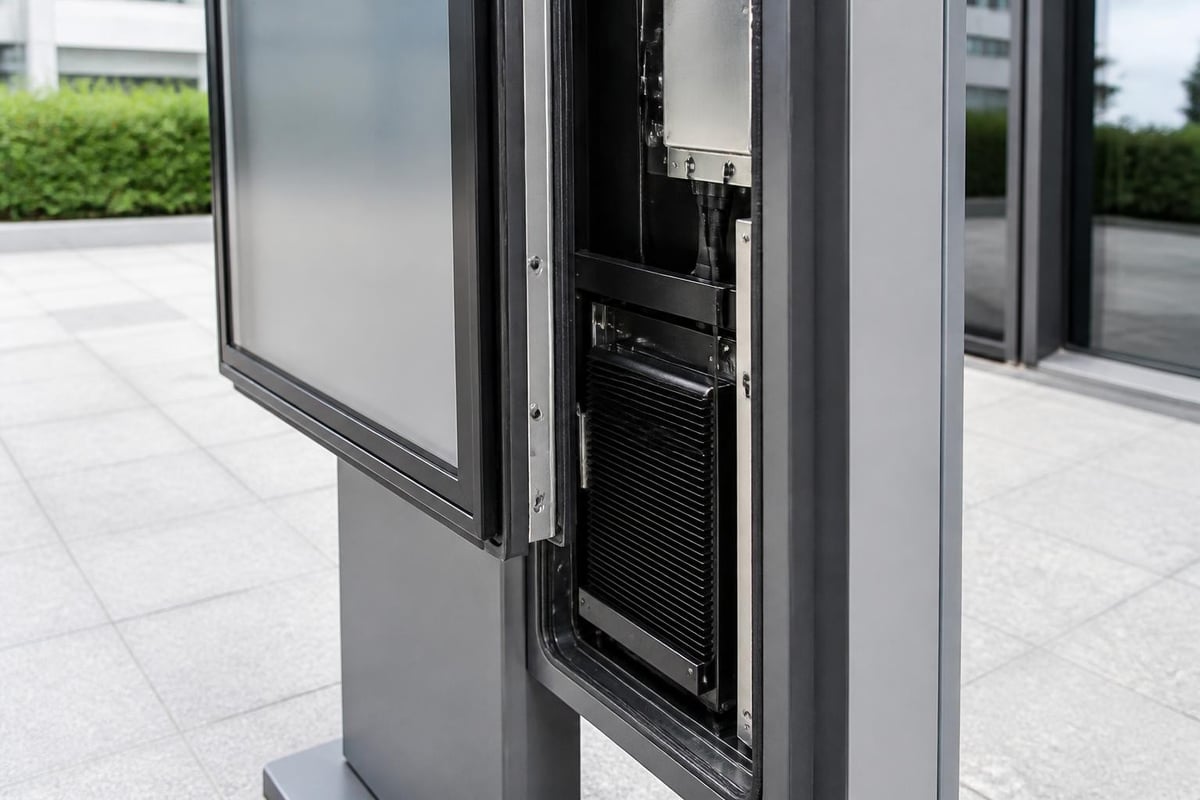
Weatherproofing represents the most critical design consideration for any digital signage display outdoor installation. Enclosures must achieve minimum IP65 ratings, protecting against dust ingress and high-pressure water jets. Premium installations often specify IP66 or IP68 ratings for enhanced protection in extreme climates.
Essential protective features include:
- Sealed, gasket-protected cabinets preventing moisture penetration
- Thermal management systems with active cooling and heating
- Tempered or reinforced glass front panels resisting impact
- Conformal coating on electronic components
- Drainage systems preventing water accumulation
Temperature management extends beyond simple weatherproofing. Components must operate reliably across temperature ranges from -30°C to +50°C in many South African locations. Integrated climate control systems maintain optimal operating temperatures, preventing thermal shutdown during peak summer heat or winter cold snaps.
Technical Specifications and Performance Standards
Selecting appropriate technical specifications ensures your digital signage display outdoor meets both immediate needs and future requirements. Resolution, refresh rate, viewing angle, and brightness control all influence viewer experience and content effectiveness.
| Specification | Minimum Standard | Premium Standard | Application |
|---|---|---|---|
| Brightness | 2,500 nits | 5,000+ nits | Direct sunlight visibility |
| Refresh Rate | 1,920 Hz | 3,840 Hz | Video content quality |
| Viewing Angle | 120° horizontal | 160° horizontal | Wide audience coverage |
| Contrast Ratio | 3,000:1 | 5,000:1 | Image depth and clarity |
| Operating Temp | -20°C to +45°C | -30°C to +50°C | Climate adaptability |
Brightness control systems automatically adjust output based on ambient light conditions. This functionality serves dual purposes: maintaining optimal visibility whilst reducing energy consumption during low-light periods. Advanced sensors measure surrounding light levels, adjusting screen brightness in real-time to prevent glare at night whilst ensuring visibility during daylight hours.
The International Dark-Sky Association provides comprehensive guidance for electronic message centres, addressing environmental impact and light pollution concerns. Responsible installations incorporate these recommendations, particularly in residential areas or environmentally sensitive locations.
Power Consumption and Efficiency Considerations
Energy efficiency directly impacts operational costs over a display's lifespan. Modern outdoor digital displays consume between 200-800 watts per square metre, depending on brightness settings and content type. Displays showing predominantly white or bright content consume more power than darker content palettes.
Strategic power management includes:
- Scheduled dimming protocols during off-peak hours
- Content optimisation favouring darker backgrounds
- Occupancy sensors activating displays only when viewers present
- Solar panel integration for remote locations
- Grid-tied battery systems ensuring uninterrupted operation
The ENERGY STAR programme offers detailed requirements for signage displays, establishing benchmarks for efficiency and standby power consumption. Compliance with these standards reduces operational expenses whilst demonstrating environmental responsibility.
Installation and Infrastructure Requirements
Proper installation forms the foundation of reliable outdoor digital display performance. Structural support must accommodate not only the display's weight but also wind loading, particularly for large-format installations. Engineering assessments should account for local wind speeds, mounting height, and screen surface area.
Foundation requirements vary significantly based on installation type. Ground-mounted displays require concrete footings extending below frost lines, typically 600-900mm depth in most South African regions. Wall-mounted installations demand structural analysis ensuring adequate load-bearing capacity, often requiring reinforcement of existing structures.
Electrical and Network Infrastructure
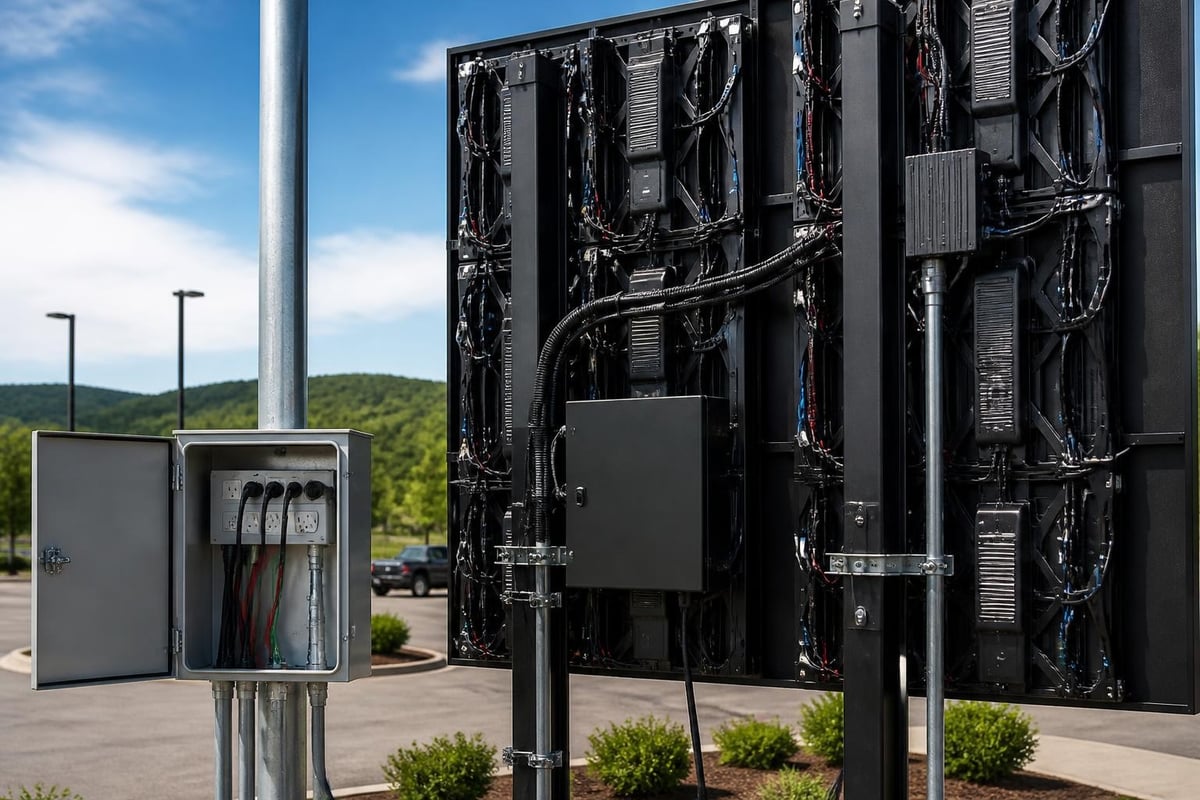
Power delivery to outdoor displays requires dedicated circuits with appropriate overcurrent protection and grounding. Most installations specify three-phase power supplies for displays exceeding 5 square metres, distributing load evenly and reducing voltage drop over cable runs.
Infrastructure planning checklist:
- Dedicated electrical supply with surge protection
- Waterproof junction boxes and cable glands
- Underground conduit routing protecting cabling
- Network connectivity via ethernet or cellular
- Remote monitoring and diagnostics capability
- Maintenance access provisions
Network connectivity enables content management, remote diagnostics, and performance monitoring. Wired ethernet connections provide the most reliable data transmission, though cellular 4G/5G solutions offer flexibility for locations lacking fixed infrastructure. Signs4SA's comprehensive signage solutions include infrastructure planning and installation services, ensuring all technical requirements are properly addressed.
Content Strategy and Display Management
Effective content maximises the impact of your digital signage display outdoor investment. High-contrast designs with large typography ensure readability from distance, whilst animation and video attract attention more effectively than static images. Content should account for varying viewing distances, adjusting text size and layout complexity accordingly.
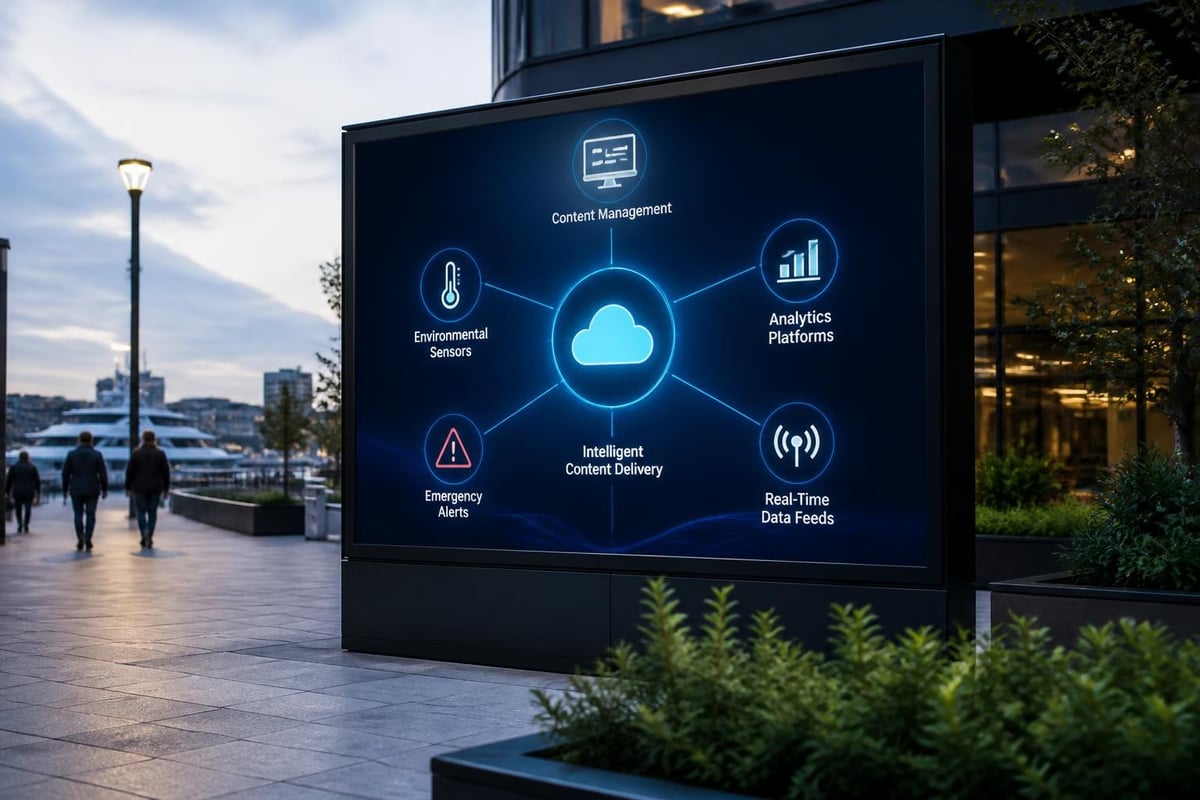
Display management systems provide centralised control over single or multiple installations. Cloud-based platforms enable content scheduling, playlist management, and real-time updates from any internet-connected device. Advanced systems incorporate data integration, pulling live information from weather services, social media feeds, or enterprise databases.
Compliance and Accessibility Considerations
Digital outdoor displays must comply with various regulatory frameworks depending on location and application. Municipal regulations often govern brightness levels, operating hours, and content restrictions, particularly near residential areas or roadways. The U.S. Access Board provides guidance on signs that addresses accessibility requirements for electronic and variable message signs, principles that inform best practices globally.
Traffic-adjacent installations face additional scrutiny. The National Highways signage guidance outlines regulatory considerations for roadside signage, though jurisdictions worldwide maintain similar frameworks prioritising driver safety and minimising distraction.
Many municipalities now require formal applications for digital signage display outdoor installations. The City of Edmonton's Digital Signage Strategic Guidance exemplifies comprehensive municipal policy, addressing permitted locations, brightness controls, and public impact assessments.
Maintenance and Longevity Planning
Proactive maintenance extends display lifespan and prevents unexpected failures. Most commercial outdoor displays are rated for 50,000-100,000 operating hours, translating to 5-11 years of continuous operation. However, environmental factors, usage patterns, and maintenance quality significantly influence actual service life.
Scheduled maintenance should occur quarterly, addressing:
- Screen cleaning removing dust, pollen, and environmental deposits
- Seal inspection identifying gasket degradation before moisture intrusion
- Cooling system maintenance cleaning filters and verifying fan operation
- Electrical connection checks identifying loose terminals or corrosion
- Software updates ensuring current firmware and security patches
Remote monitoring systems alert administrators to developing issues before complete failure occurs. Temperature sensors, power consumption tracking, and pixel diagnostics enable predictive maintenance, scheduling interventions during convenient timeframes rather than emergency responses.
| Maintenance Task | Frequency | Estimated Duration | Critical Priority |
|---|---|---|---|
| Visual inspection | Monthly | 15 minutes | Medium |
| Screen cleaning | Quarterly | 1-2 hours | Medium |
| Seal and gasket check | Quarterly | 30 minutes | High |
| Thermal system service | Bi-annually | 2-3 hours | High |
| Full diagnostic test | Annually | 3-4 hours | High |
Advanced Features and Integration Capabilities
Modern outdoor digital displays incorporate sophisticated features extending beyond simple content playback. Interactive touchscreens, though requiring vandal-resistant protective overlays, enable wayfinding applications, product catalogues, and customer service functions. Camera integration supports audience analytics, measuring viewer demographics and engagement duration.
Environmental sensors enhance display responsiveness. Temperature, humidity, and air quality sensors trigger content changes based on conditions. Retail locations might promote cold beverages during heat waves, whilst construction sites display safety messages when air quality deteriorates.
Integration with enterprise systems creates dynamic content opportunities. Retail digital signage display outdoor installations connect to inventory systems, promoting products currently in stock whilst suppressing out-of-stock items. Corporate campuses integrate with calendar systems, displaying meeting schedules, visitor information, and emergency notifications.
Emerging Technologies Shaping Future Development
Transparent LED displays create unique opportunities for retail applications, allowing window displays maintaining interior visibility whilst presenting digital content. Though currently commanding premium pricing, costs continue declining as manufacturing scales increase.
MicroLED technology promises superior brightness efficiency, longer lifespan, and improved colour accuracy compared to current LED solutions. Whilst still emerging, early commercial deployments demonstrate the technology's potential for outdoor applications requiring extreme reliability and performance.
Artificial intelligence increasingly influences content management. Machine learning algorithms analyse viewer engagement, automatically optimising content placement, timing, and creative elements based on observed performance. Predictive analytics forecast audience presence, adjusting content strategies to maximise impact during peak viewing periods.
Selecting the Right Solution for Your Application
Application requirements drive technology selection more than any single factor. A roadside display requiring visibility at 100 metres demands different specifications than a retail entrance screen viewed from 3 metres. Systematically evaluating your specific needs ensures appropriate technology selection whilst avoiding unnecessary costs.
Decision framework considerations:
- Viewing distance: Determines appropriate pixel pitch and screen size
- Ambient light levels: Influences required brightness output
- Content type: Static, video, or interactive affects processing requirements
- Environmental exposure: Coastal, industrial, or urban locations require different protection levels
- Budget constraints: Balance initial investment against operational costs and lifespan
Working with experienced professionals streamlines the specification and procurement process. Signs4SA's Digital Signage offerings span P10 to P1.8 pixel pitches, providing both internal and external solutions tailored to specific application requirements across corporate, retail, construction, and pharmaceutical sectors.
Regulatory Compliance and Certification Requirements
Multiple regulatory frameworks govern outdoor digital display installations. Electrical safety standards require compliance with local electrical codes, typically mandating certified electrician installation and inspection approval. Display units should carry relevant safety certifications appropriate to the jurisdiction.
Electromagnetic interference (EMI) regulations prevent digital displays from disrupting nearby electronic equipment or communications systems. The FCC digital sign compliance guidance addresses equipment authorisation and EMI considerations relevant to outdoor LED installations, providing a framework applicable internationally despite its U.S. focus.
Environmental regulations extend beyond basic installation permits. Some jurisdictions restrict brightness levels, operating hours, or content types for displays visible from residential properties or environmentally sensitive areas. Thorough regulatory research during planning prevents costly modifications or removal orders after installation.
Enclosure Standards and Protection Ratings
Understanding enclosure ratings ensures appropriate protection selection. The NEMA FAQ on enclosure types provides authoritative guidance explaining NEMA types and their relationship to IP ratings. NEMA 4X enclosures, roughly equivalent to IP66, suit most outdoor applications, offering protection against corrosion, dust, rain, and ice formation.
Coastal installations require enhanced corrosion protection. Stainless steel or specially coated aluminium enclosures resist salt-air degradation better than standard powder-coated steel. Conformal coating on circuit boards provides additional protection against moisture and corrosive atmospheres.
Cost Analysis and Return on Investment
Digital signage display outdoor installations represent significant capital investments, typically ranging from R50,000 to R500,000+ depending on size, features, and installation complexity. However, comprehensive cost analysis must consider the total cost of ownership across the display's operational lifespan.
Total cost components include:
- Initial hardware and installation costs
- Content creation and management expenses
- Electrical consumption during operation
- Scheduled maintenance and cleaning
- Eventual component replacement
- Decommissioning and disposal
Return on investment calculations vary by application. Advertising displays generate direct revenue through rental or sold advertising space. Corporate and retail installations deliver value through enhanced brand visibility, improved customer experience, reduced perceived wait times, and increased sales conversion.
Comparative analysis against traditional signage reveals compelling advantages. Whilst static signage costs less initially, content changes require physical replacement, accumulating costs over time. Digital displays update content instantly at zero incremental cost, enabling responsive messaging aligned with promotions, events, or current conditions.
Future-Proofing Your Investment
Technology evolution accelerates continuously, potentially rendering today's cutting-edge solutions outdated within years. Strategic planning incorporates upgrade pathways, modular designs, and flexible infrastructure accommodating future enhancements.
Modular display systems allow component replacement without complete reinstallation. As LED panel technology improves, individual modules can be swapped, upgrading resolution or brightness whilst retaining existing infrastructure, enclosures, and mounting systems.
Content management platform selection significantly influences long-term flexibility. Cloud-based systems receive continuous updates, adding features without hardware changes. Open-standard platforms avoid vendor lock-in, enabling integration with emerging technologies and alternative content sources as requirements evolve.
Infrastructure planning should anticipate increased power and data requirements. Installing larger conduits than currently needed, specifying oversized power supplies, and providing redundant network connections creates capacity for future expansion without expensive retrofitting.
Successful outdoor digital signage implementation requires careful attention to environmental protection, technical specifications, regulatory compliance, and strategic content management. The investment delivers measurable returns through enhanced communication effectiveness, dynamic messaging capabilities, and superior visual impact compared to traditional static signage. Whether you're enhancing your corporate campus, retail storefront, or construction site, partnering with experienced professionals ensures your installation meets technical requirements whilst delivering long-term value. Signs4SA combines manufacturing expertise with comprehensive installation services, supporting organisations across South Africa with bespoke digital signage solutions tailored to specific industry requirements and operational environments.