


Neon Signs: History, Technology & Modern Applications
The distinctive glow of neon signs has captivated audiences for over a century, transforming ordinary storefronts into beacons of commerce and culture. From the bustling streets of Times Square to the vibrant entertainment districts of Johannesburg and Cape Town, these luminous installations continue to command attention despite the proliferation of modern alternatives. Understanding the technology, design principles, and practical considerations behind neon signage enables businesses to make informed decisions about whether this classic medium suits their branding objectives and operational requirements.
The Science Behind Neon Illumination
At its core, neon lighting operates through a relatively straightforward principle of gas discharge physics. When electrical current passes through a sealed glass tube containing neon gas at low pressure, the gas molecules become energized and emit photons as they return to their ground state. The process involves exciting electrons within the gas atoms, creating the characteristic warm red-orange glow that gives neon its name.
Gas Selection and Colour Production
Contrary to popular belief, true neon gas produces only red-orange hues. The rainbow of colours associated with neon signs comes from several sources:
- Pure neon: Red to orange tones
- Argon with mercury vapour: Blue to violet hues
- Helium: Pink to peach colours
- Krypton: Lavender to grey tones
- Xenon: Blue to grey shades
Manufacturers also achieve additional colours by applying phosphor coatings to the interior of glass tubes, which transform the ultraviolet light produced by certain gas combinations into visible wavelengths. This technique expands the palette significantly, enabling the creation of greens, yellows, pinks, and whites.
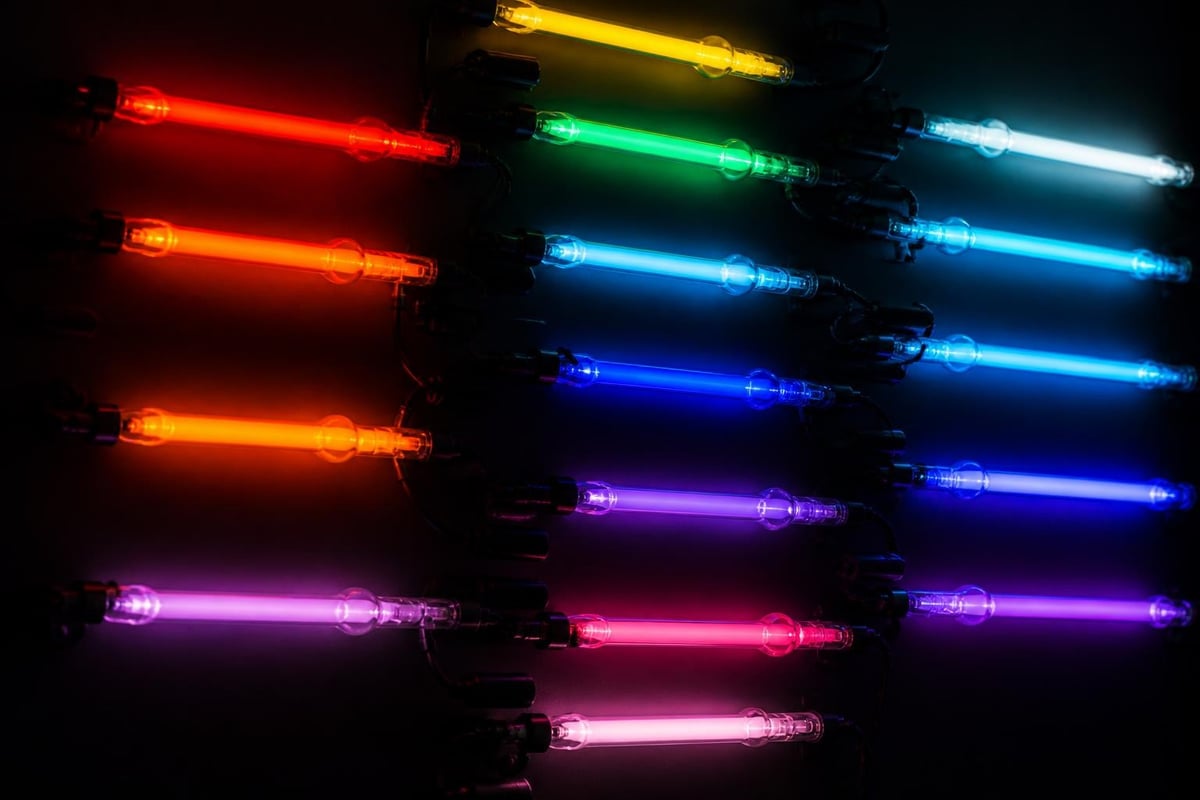
The glass tube itself requires expert craftsmanship. Artisans heat borosilicate glass until pliable, then bend it by hand or with specialized equipment to form letters, logos, and decorative shapes. Each bend must maintain consistent diameter to ensure uniform luminance across the entire sign.
Historical Development and Cultural Significance
The commercial application of neon lighting began in 1910 when French engineer Georges Claude first demonstrated neon lamps at the Paris Motor Show. By 1923, neon signs had crossed the Atlantic, with a Los Angeles car dealership becoming the first American business to install the eye-catching technology. The signs reportedly sold for £24,000 in 2026 currency, adjusted for inflation.
Throughout the mid-20th century, neon dominated urban landscapes worldwide. The evolution from simple text to elaborate animated sequences reflected both technological advancement and cultural shifts in advertising. Cities from Las Vegas to Hong Kong developed signature neon aesthetics that became inseparable from their identities.
The 1980s and 1990s witnessed a decline as fluorescent and LED alternatives offered lower operating costs and simpler installation. However, the past two decades have seen renewed appreciation for neon's distinctive aesthetic qualities, particularly among boutique retailers, restaurants, and cultural institutions seeking authentic vintage character or ironic postmodern statements.
Design Considerations for Commercial Applications
Effective neon sign design requires balancing artistic vision with practical constraints. The medium imposes unique limitations that influence every aspect of planning and execution.
| Design Element | Consideration | Impact |
|---|---|---|
| Letter height | Minimum 100mm for roadside visibility | Determines viewing distance and glass tube requirements |
| Line thickness | Typically 10-15mm for standard tubes | Affects brightness, power consumption, and structural integrity |
| Colour transitions | Require separate tube sections | Increases complexity and installation costs |
| Animation | Needs multiple circuits and control systems | Significantly raises electrical and maintenance requirements |
Typography selection proves particularly crucial. Not all typefaces translate effectively to bent glass tubes. Fonts with intricate serifs, tight curves, or delicate features may prove impossible to execute or create weak points prone to breakage. Many businesses commission custom lettering that respects both brand guidelines and manufacturing realities.
The backing material influences visual impact considerably. Neon signs mounted directly to brick or stone walls create different effects than those on acrylic panels or metal cabinets. Transparent backgrounds allow the glow to spread, whilst opaque surfaces concentrate attention on the illuminated elements themselves. For businesses exploring various signage solutions for different applications, understanding these visual dynamics helps align medium with message.
Electrical Requirements and Safety Standards
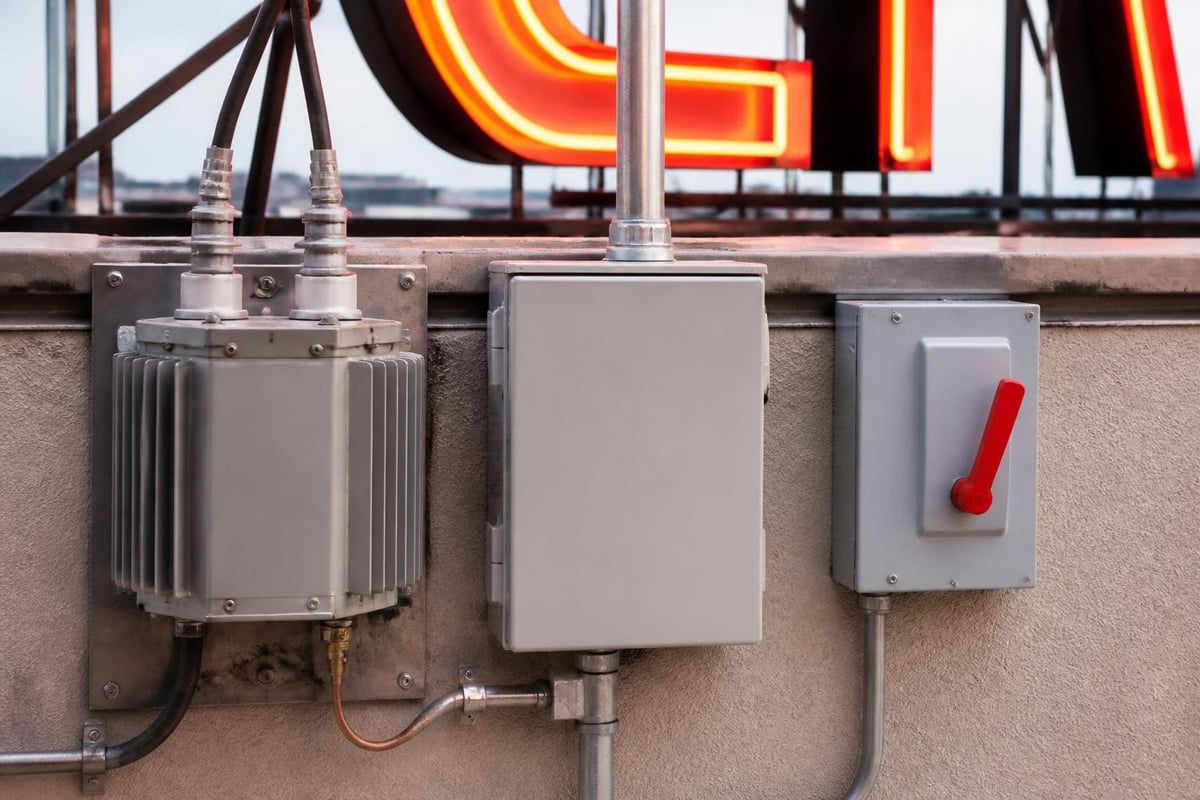
Neon signs operate at high voltage, typically between 2,000 and 15,000 volts, though at very low amperage. This necessitates specialized transformers and careful attention to electrical codes. Article 600 of the National Electrical Code establishes comprehensive requirements for electric sign installation, covering everything from conductor sizing to grounding specifications.
Professional installation requires adherence to several critical safety principles:
- Proper transformer selection based on tube length and gas type
- Adequate grounding of all metal components and enclosures
- Protection from physical damage through appropriate mounting heights and guards
- Weatherproofing for outdoor installations using rated enclosures
- Disconnection means readily accessible for maintenance and emergency shutdown
Component manufacturers must meet UL listing requirements to ensure transformers, wiring, and housings meet minimum safety thresholds. South African installations must comply with both international standards and local electrical regulations, making professional consultation essential for commercial projects.
Installation and Placement Strategies
Location determines visibility, which ultimately drives return on investment for commercial signage. Neon's relatively low luminance compared to LED alternatives means placement requires more careful consideration.
Optimal Positioning Guidelines
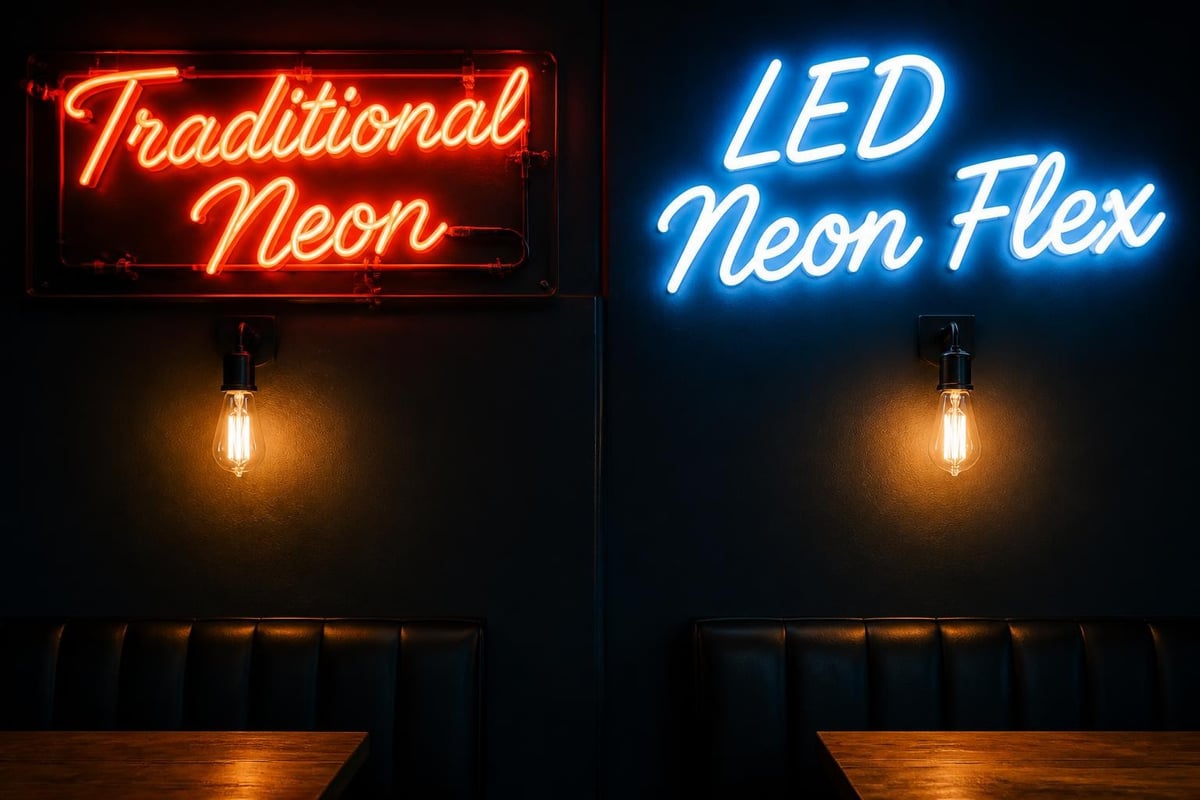
Indoor neon benefits from controlled environments where ambient lighting can be managed. Restaurants, bars, and retail spaces often position neon as feature elements against dark walls or in dimmed areas where the glow achieves maximum impact. The warm tones of traditional neon gas complement hospitality settings particularly well, creating inviting atmospheres that cold LED light struggles to replicate.
Outdoor installations face additional challenges. Direct sunlight diminishes neon's visibility during daylight hours, making these signs most effective during evening trading hours or in shaded locations. Urban environments with significant light pollution require larger installations or strategic placement in darker zones to maintain prominence.
Key placement factors include:
- Viewing angle and sightlines from primary foot and vehicle traffic
- Competition from adjacent signage and environmental light sources
- Protection from weather exposure and potential vandalism
- Accessibility for maintenance and tube replacement
- Compliance with local zoning and signage regulations
Signage regulations vary significantly across municipalities, with some councils imposing restrictions on brightness, operating hours, or historic district installations. Securing necessary permits before fabrication prevents costly redesigns or enforcement issues.
Maintenance Requirements and Longevity
Neon signs demand more regular maintenance than solid-state alternatives, though properly maintained installations deliver decades of service. Understanding the maintenance cycle helps businesses budget appropriately and establish service relationships before issues arise.
Common Maintenance Tasks
Gas-filled tubes gradually lose pressure over time, typically requiring recharging after 8-12 years of continuous operation. Electrodes deteriorate with use, eventually necessitating replacement. Transformers generally outlast tubes but should be tested annually to ensure proper voltage delivery and identify potential failures before they occur.
| Maintenance Item | Frequency | Typical Cost Impact |
|---|---|---|
| Cleaning glass tubes | Quarterly | Low (labour only) |
| Testing transformer output | Annually | Low (diagnostic) |
| Electrode replacement | 10-15 years | Medium (specialized labour) |
| Gas recharging | 8-12 years | Medium to high (specialist equipment) |
| Complete tube replacement | 15-20 years | High (fabrication required) |
Environmental factors accelerate wear considerably. Coastal installations face corrosion from salt air. Industrial areas expose signs to chemical contaminants that cloud glass and degrade seals. Temperature extremes stress both glass and electrical components, particularly in regions experiencing significant seasonal variation.
Conservation research by institutions like the Getty has advanced understanding of preservation techniques for historic neon, many of which apply to commercial installations. Proper documentation of original gas fills, glass types, and colour specifications enables accurate restoration when tubes eventually require replacement.
Modern Alternatives and Hybrid Approaches
The commercial signage landscape now includes several technologies that replicate neon's appearance whilst addressing its limitations. LED neon flex, EL wire, and RGB tube lighting offer neon-like aesthetics with lower power consumption and simplified maintenance.
Comparing Technologies
Businesses evaluating neon against alternatives should consider both initial investment and lifetime costs. Traditional neon typically requires higher upfront expenditure for custom fabrication but delivers unmatched colour accuracy and nostalgic authenticity. LED alternatives reduce operating costs substantially-often consuming 70-80% less electricity-whilst offering programmable features impossible with gas discharge.
For enterprises requiring large-scale installations or dynamic content capabilities, digital signage solutions provide flexibility that static neon cannot match. These systems enable content updates without physical modification, remote management across multiple locations, and integration with broader marketing campaigns. However, they lack the specific aesthetic qualities that make authentic neon distinctive.
Some projects benefit from hybrid approaches. A business might use traditional neon for primary branding elements that reinforce heritage or craftsmanship values, whilst incorporating LED components for variable messaging or cost-sensitive secondary signs. This strategy balances authentic character with operational efficiency.
Industry Applications and Strategic Value
Different commercial sectors derive varying benefits from neon signage based on their brand positioning, target demographics, and operational contexts.
Hospitality and Entertainment
Bars, nightclubs, restaurants, and entertainment venues remain neon's strongest advocates. The technology's associations with nightlife, vintage glamour, and sensory experience align perfectly with hospitality brand values. A carefully designed neon installation creates Instagram-worthy moments that generate organic social media promotion, extending marketing reach beyond the physical sign.
Craft breweries and artisanal food establishments often commission neon to communicate dedication to traditional methods and attention to detail. The handcrafted nature of bent glass tubes resonates with audiences valuing authenticity over mass production.
Retail and Fashion
Boutique retailers use neon to differentiate themselves from chain competitors relying on standardized corporate signage. The technology signals creativity, independence, and curatorial taste-attributes particularly valued by fashion-conscious consumers. Neon's ability to create specific moods through colour temperature and glow quality enhances the shopping experience in ways that support premium positioning.
Heritage and Tourism
Museums, historic sites, and tourism-oriented businesses preserve or recreate vintage neon installations as cultural artefacts. These signs document design history whilst serving functional wayfinding purposes. Academic research into neon's cultural significance reinforces its value beyond mere advertising, positioning it as public art worthy of preservation.
Regulatory Compliance and Professional Standards
The specialized knowledge required for compliant neon installation makes professional expertise non-negotiable for commercial projects. Industry associations like the International Sign Association provide guidance on code interpretation, but local electrical inspectors maintain final authority over installation approval.
Inspection and Certification
Qualified electrical contractors must verify several critical aspects before energizing any neon installation:
- Proper conductor sizing for voltage drop and current capacity
- Adequate working clearances around transformers and electrical connections
- Correct bonding and grounding of all metallic components
- Appropriate enclosure ratings for environmental conditions
- Compliance with height and setback requirements per zoning codes
Professional inspection guidance from electrical industry bodies emphasizes the importance of documentation. Maintaining records of transformer specifications, installation diagrams, and testing results facilitates future maintenance and demonstrates due diligence should issues arise.
Luminance levels also merit attention, particularly for roadside installations. Recommended practices for sign luminance help balance visibility with environmental responsibility, preventing light pollution and glare that might constitute nuisances to neighbouring properties or traffic safety hazards.
Cost Analysis and Investment Planning
Budget planning for neon signage requires understanding multiple cost components that extend beyond initial fabrication.
Initial investment factors:
- Custom design and engineering fees
- Glass tube fabrication and gas filling
- Transformer and electrical components
- Structural mounting and backing materials
- Professional installation and inspection
- Permit fees and regulatory compliance
Operating costs accumulate through electricity consumption and scheduled maintenance. A typical commercial neon sign consuming 400-600 watts costs approximately £35-50 monthly to operate continuously at 2026 South African electricity rates. This represents 3-4 times the operating cost of equivalent LED alternatives.
However, total cost of ownership calculations should factor in replacement cycles. Whilst LED components may require complete unit replacement after 5-7 years, quality neon tubes often function for 15-20 years with periodic servicing. The superior longevity can offset higher operating costs, particularly when installation labour represents a significant portion of total project expense.
For businesses developing comprehensive signage strategies, neon works best as a specialized element rather than a complete solution. Pairing signature neon installations with more cost-effective supporting signage optimizes both budget allocation and visual impact.
Environmental Considerations
Sustainability-conscious businesses evaluate signage options through environmental lenses. Neon presents mixed credentials compared to modern alternatives.
Energy efficiency clearly favours LED and other solid-state technologies. A medium-sized neon installation might consume 500 watts continuously, whilst an equivalent LED sign draws 75-100 watts for comparable visual impact. Over a decade of operation, this difference represents thousands of kilowatt-hours and significant carbon emissions in regions relying on fossil fuel electricity generation.
However, neon's exceptional longevity and repairability counter some efficiency disadvantages. LED units typically require complete disposal and replacement when components fail, generating electronic waste. Neon tubes can be recharged, electrodes replaced, and glass recycled at end of life. The craft-based production model also supports local artisan employment rather than mass manufacturing supply chains.
Material considerations matter as well. Glass production requires high temperatures but uses abundant, non-toxic materials. The noble gases themselves present no environmental hazards and exist in unlimited supply relative to commercial demand. Conversely, LED manufacturing involves rare earth elements, complex semiconductor production, and potentially hazardous materials requiring careful disposal.
Future Outlook and Evolving Applications
Despite competitive pressures from newer technologies, neon retains distinct advantages that ensure ongoing relevance. The artisanal manufacturing process creates inherent scarcity value in an era of digital abundance. Each installation represents unique craftsmanship that algorithms cannot replicate.
Emerging applications suggest neon's evolution rather than obsolescence. Artists increasingly incorporate neon into gallery installations and public art projects. Interior designers specify custom neon as architectural lighting elements that blur boundaries between functional illumination and decorative art. These elevated applications extend beyond traditional commercial signage whilst maintaining the medium's core appeal.
Technological refinements continue improving neon's practical performance. Low-mercury and mercury-free gas formulations address environmental concerns. Improved phosphor coatings expand colour capabilities whilst enhancing efficiency. Solid-state transformers reduce size and weight whilst delivering more precise voltage control, extending tube life and improving colour consistency.
The key question for businesses isn't whether neon remains viable-clearly it does for specific applications-but rather whether its unique attributes align with particular brand objectives and budgetary realities. Understanding these considerations enables informed decisions that leverage neon's strengths whilst acknowledging its limitations.
Neon signs continue offering distinctive aesthetic and cultural value that newer technologies struggle to replicate, particularly for businesses prioritizing authentic character and crafted quality in their visual identity. Whether you're considering traditional neon, modern LED alternatives, or strategic combinations of multiple technologies, selecting the right signage solution requires balancing design vision with practical performance requirements. Signs4SA brings comprehensive expertise across all signage categories, helping South African businesses develop effective solutions that align visual impact with operational realities and budgetary constraints.