Vehicles exceeding 2 tonnes on a single axle prohibited
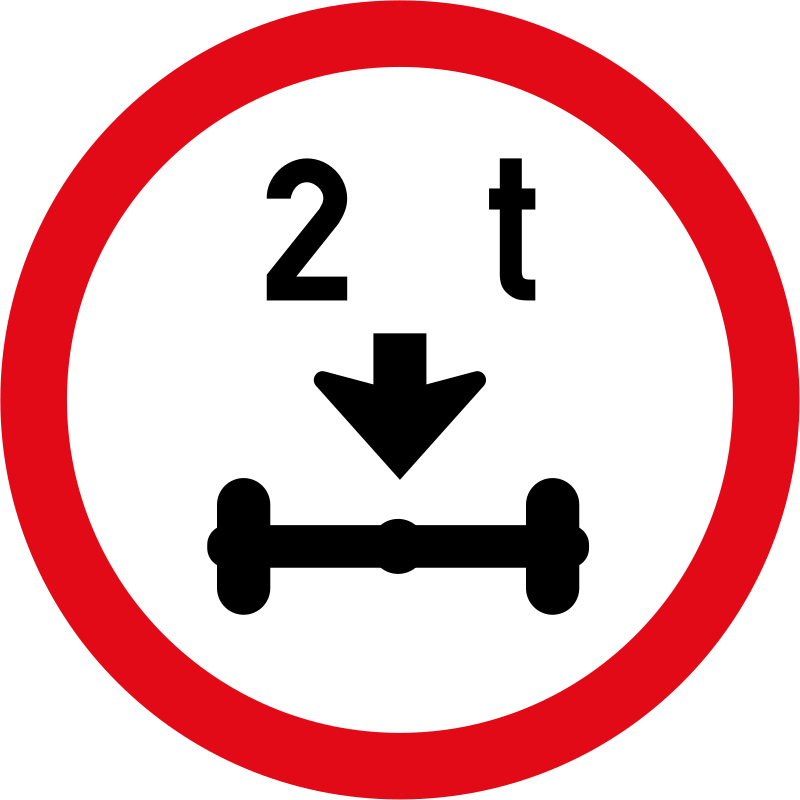
Vehicles exceeding 2 tonnes on a single axle prohibited
The "Vehicles exceeding 2 tonnes on a single axle prohibited - R203" sign is a regulatory road sign used to restrict the use of roads by vehicles that are overweight on a single axle. This sign is typically used on roads that are not designed to handle heavy loads, to help protect the road infrastructure and prevent damage. The sign is typically made of durable materials, such as aluminum or plastic, and is designed to be highly visible, even from a distance. The sign typically features a red circle with a white slash through a representation of an overweight vehicle, and is accompanied by additional text or symbols as necessary. The "Vehicles exceeding 2 tonnes on a single axle prohibited - R203" sign is designed to help drivers understand that they are not allowed to operate vehicles that are overweight on a single axle on the specified road. This can help to reduce the risk of damage to the road infrastructure, and can help to maintain an orderly and safe flow of traffic. It's important for drivers to obey the information indicated on this sign, and to ensure that their vehicles are not overweight on a single axle. This can help to reduce the risk of accidents or incidents, and can help to maintain an orderly and safe flow of traffic. In conclusion, the "Vehicles exceeding 2 tonnes on a single axle prohibited - R203" sign is an important aspect of road safety, helping to ensure that drivers are aware of restrictions on the use of roads by overweight vehicles. By following the information indicated on this sign, drivers can help to maintain a safe and efficient road network.
Vehicles exceeding 2 tonnes on a single axle prohibited signs come in a variety of styles and formats, including danger signs, warning signs, and caution signs. Danger signs are used to indicate an immediate threat that could cause serious injury or death, such as high voltage areas or hazardous materials. Warning signs are used to indicate potential hazards that could cause injury, such as slippery floors or falling objects. Caution signs are used to indicate potential hazards that could cause minor injury, such as low ceilings or uneven surfaces. Another type of safety sign is the Vehicles exceeding 2 tonnes on a single axle prohibited sign, which is used to provide guidance on safe behavior. These signs can include instructions on how to use equipment or machinery safely, as well as reminders to wear personal protective equipment (PPE) or follow specific safety protocols. Vehicles exceeding 2 tonnes on a single axle prohibited signs can also be used to ensure compliance with safety regulations. For example, fire safety signs are required by law in most public buildings and workplaces. These signs indicate the location of fire exits, fire extinguishers, and other fire safety equipment.
Safety signs are an essential part of any workplace or public space. They are used to warn people of potential hazards, provide guidance on safe behavior, and ensure compliance with safety regulations. One type of safety sign is the Vehicles exceeding 2 tonnes on a single axle prohibited sign, which is designed to alert people to potential dangers in a particular area. Vehicles exceeding 2 tonnes on a single axle prohibited signs come in a variety of styles and formats, including danger signs, warning signs, and caution signs. Danger signs are used to indicate an immediate threat that could cause serious injury or death, such as high voltage areas or hazardous materials. Warning signs are used to indicate potential hazards that could cause injury, such as slippery floors or falling objects. Caution signs are used to indicate potential hazards that could cause minor injury, such as low ceilings or uneven surfaces. Another type of safety sign is the Vehicles exceeding 2 tonnes on a single axle prohibited sign, which is used to provide guidance on safe behavior. These signs can include instructions on how to use equipment or machinery safely, as well as reminders to wear personal protective equipment (PPE) or follow specific safety protocols. Vehicles exceeding 2 tonnes on a single axle prohibited signs can also be used to ensure compliance with safety regulations. For example, fire safety signs are required by law in most public buildings and workplaces. These signs indicate the location of fire exits, fire extinguishers, and other fire safety equipment. In addition to these types of safety signs, there are also specialized signs available for specific industries or hazards. For example, construction sites may use signs to indicate the location of underground utilities or to warn of falling debris. Healthcare facilities may use signs to remind employees to wash their hands or to indicate the location of first aid supplies. When selecting safety signs, it is important to choose signs that are appropriate for the specific hazard or situation. Signs should be placed in prominent locations where they are easily visible, and should be made from durable materials that can withstand harsh environmental conditions. By using safety signs effectively, businesses and organizations can help protect their employees, customers, and visitors from harm.